

Controls :

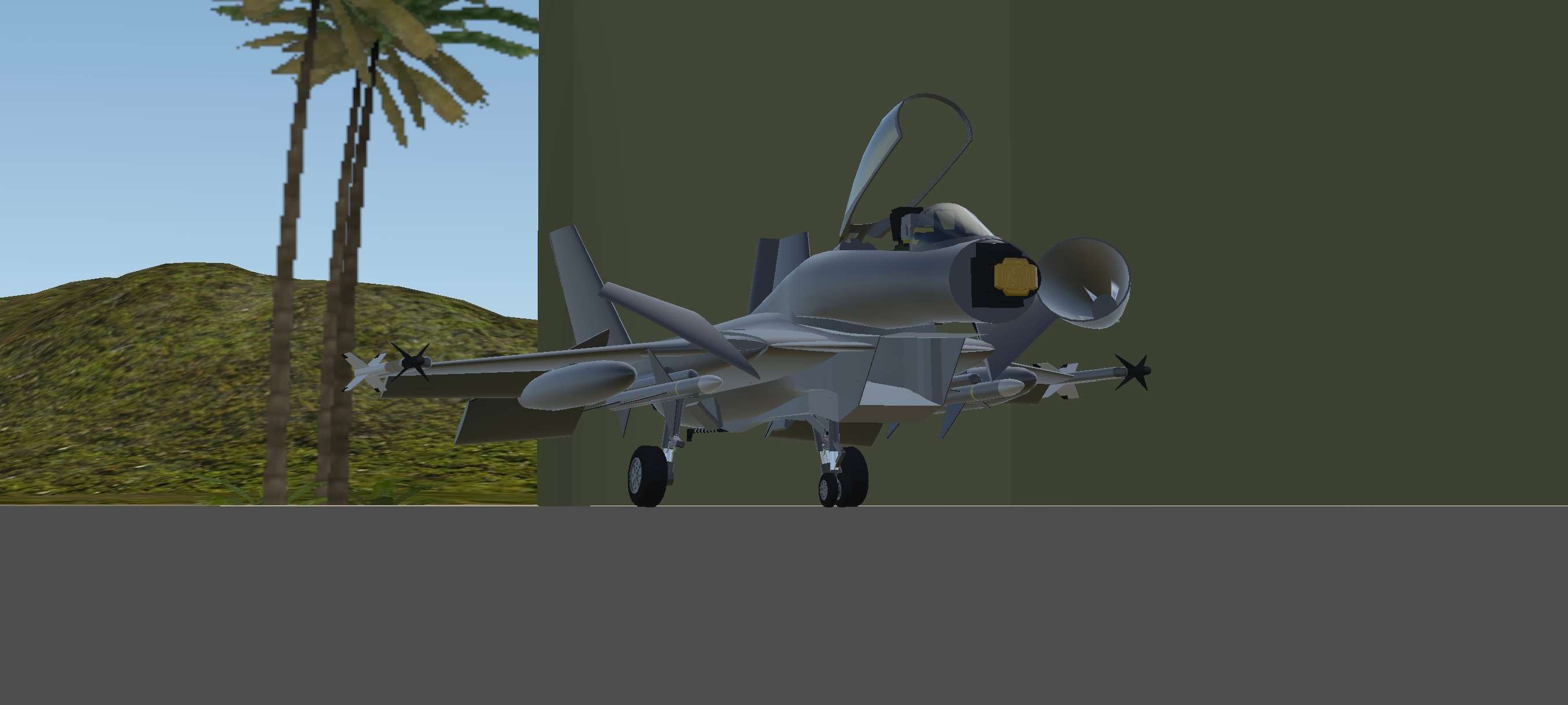
AG1 canopy

AG2 refueling probe

AG3 Nose

AG4 Arm / off lights

AG5 Jettison fueltank

AG6 Jettison missiles

AG7 emergency hook

AG8 radar dish
Instructions :
-Make sure to hold down FireWeapons until the SideWinderM launches.
-Do not pull all the way unless you mean to.
-When you get into a flatspin, burners off immediately and let her recover.
Description / Lore :
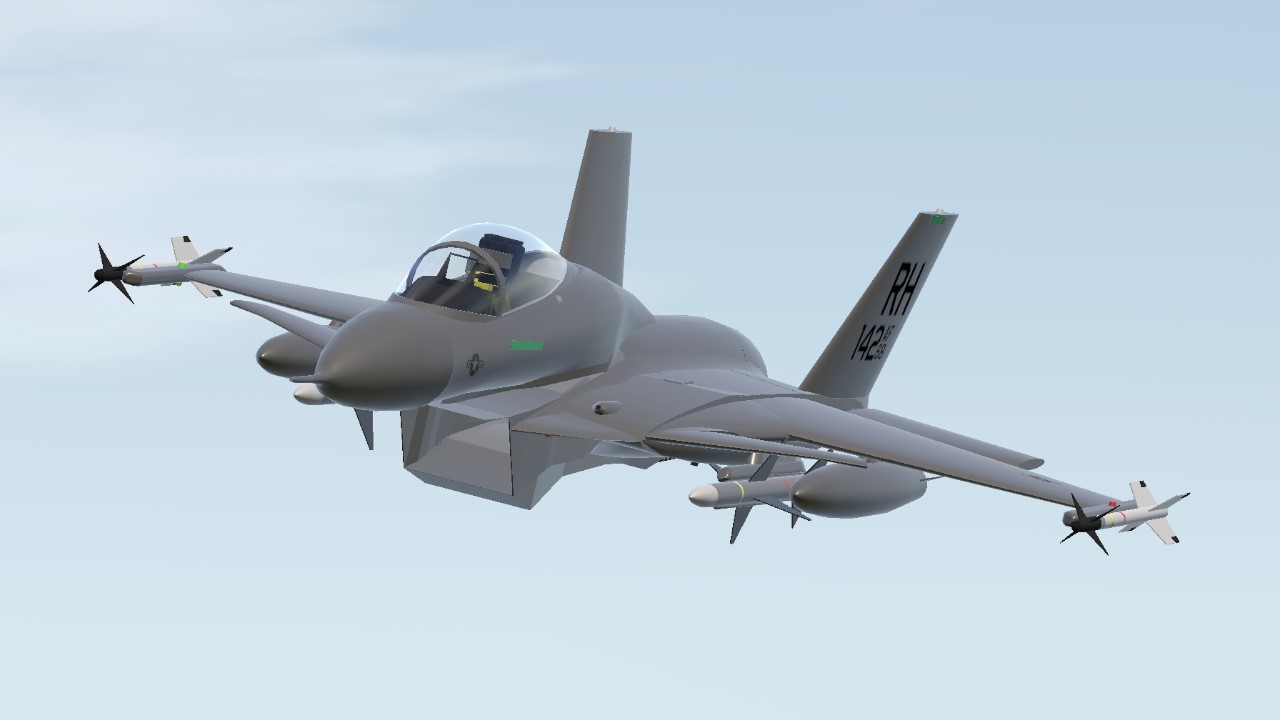
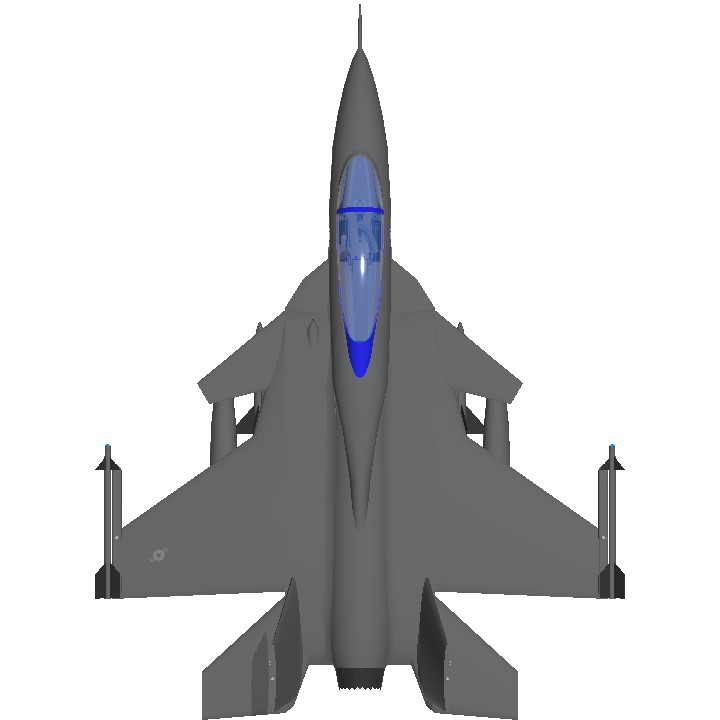
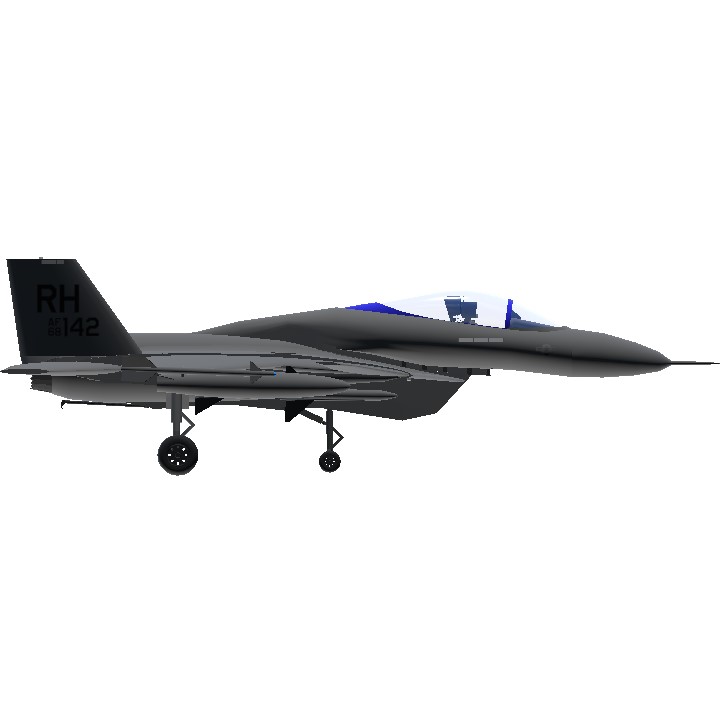
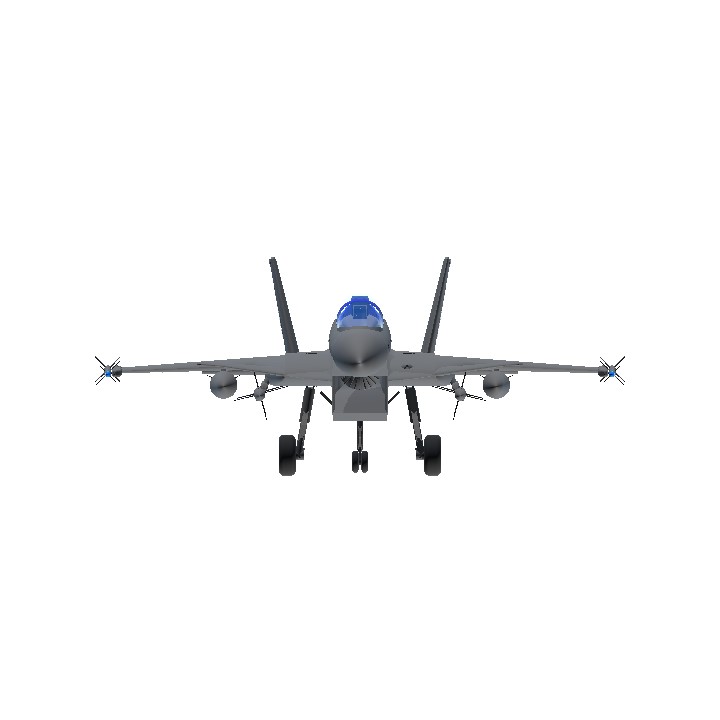
The F‑13 Stiletto is a single-engine, light air superiority fighter developed in the early 1960s by Horizon Dynamics, a small but daring aerospace company known for experimental designs and risk-taking approaches. The program originated in 1958 with the YF‑59, a high-speed delta-wing interceptor. After failing to secure the primary Air Force contract, Horizon Dynamics faced serious financial trouble, and by 1961 the YF‑62 prototype—a radical redesign of the YF‑59—was still incomplete and not flight-ready.
During wind-tunnel testing of the YF‑62, its unique combination of forward canards, blended wing roots, and twin tails drew the attention of a member of the Fighter Mafia, a group of visionary officers and engineers advocating for pilot-focused, high-agility fighters. Recognizing the design’s potential, they invested resources to keep the program alive, providing Horizon Dynamics with enough funding and technical support to finalize the airframe for early flight testing.
The Air Force, observing the prototype’s performance in testing, saw that the YF‑62 could reach operational status significantly earlier than competing programs, and that it could realistically enter production within 5–7 years. As a result, a separate light-fighter contract was awarded as a stopgap measure to fill short-term gaps in air defense and air superiority. What began as a temporary solution soon proved far more capable than anticipated, establishing the Stiletto as a lethal, agile, and pilot-centric fighter.
The YF‑62’s redesign was radical: the original delta wing was removed, leaving a thick root for landing gear; a conventional wing was attached, and forward canards were added to correct center-of-gravity issues. Wind-tunnel testing confirmed that the canards also generated beneficial vortex lift at high angles of attack, enhancing maneuverability. The single vertical stabilizer was replaced with a twin-tail arrangement, and a pioneering fly-by-wire system allowed the rudders to double as airbrakes, reducing weight. Conformal fuel tanks were integrated into the wing roots, which also served as semi-recessed missile mounts.
Performance and Systems
Service ceiling: 55,000–60,000 ft
Top speed: > Mach 1.5 at ~6,000 m
Thrust-to-weight ratio: >1.3 with afterburner
Fuel capacity: ~5,579 L (internal + conformal + external)
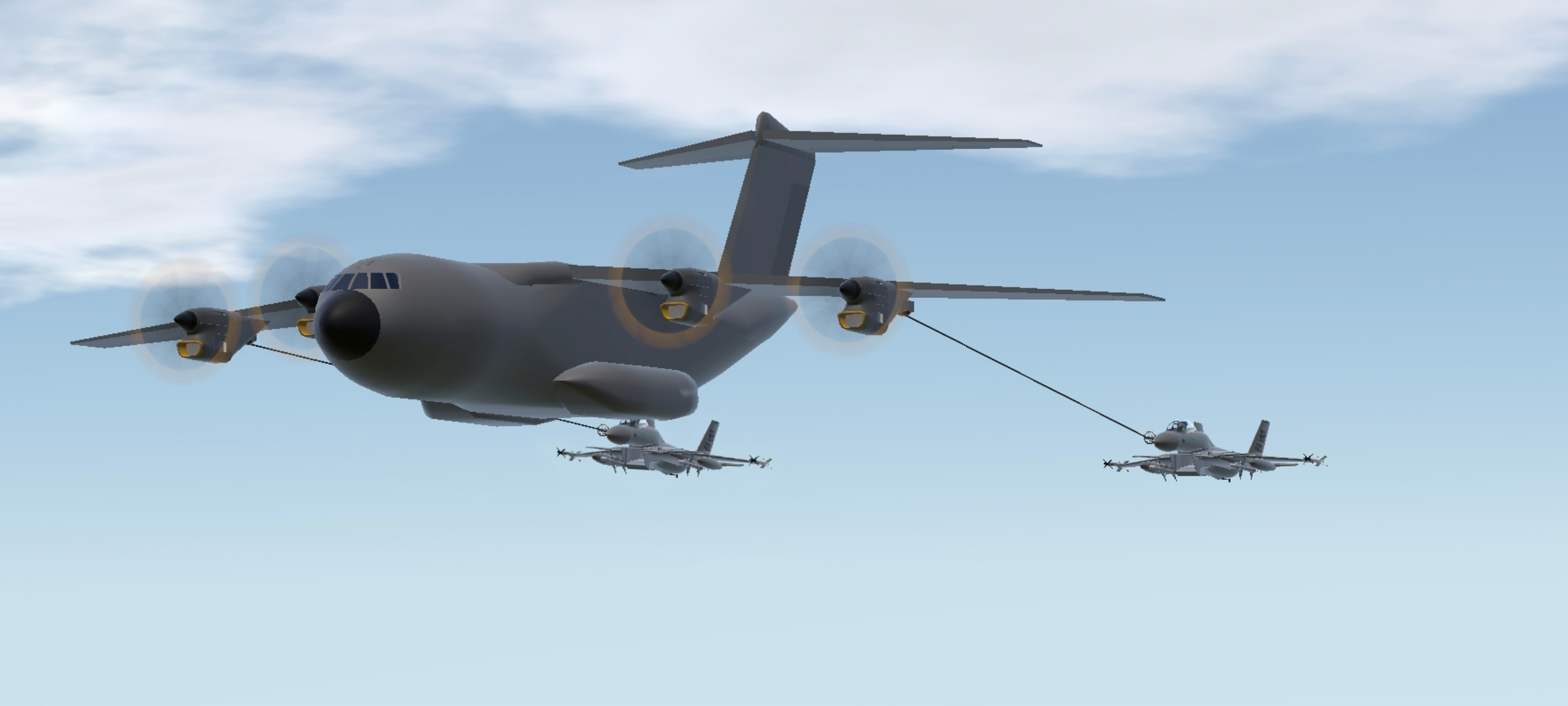
Aerial refueling: retractable probe compatible with drogue systems; chosen for cost efficiency and interoperability with naval forces
Armament:
M61 Vulcan cannon (pilot-controlled, close-range dogfighting)
2× short-range IR-guided missiles
2× semi-active radar-guided missiles (mounted on conformal tanks)
Avionics:
1962 prototypes: early radar and HUD systems, rudimentary for guided missile integration; limited reliability and situational awareness
1966 onward : fitted with a new radar system and upgraded avionics packages, offering better detection range, tracking, and integration with Sparrow missiles; HUD and cockpit systems modernized for faster engagement cycles
FBW system enables precise control at extreme angles of attack; rudders function as airbrakes for weight saving and enhanced maneuvering
Prototype testing in 1962 proved the design concept; avionics were basic due to lack of Air Force funding.
Early production upgrades introduced in 1966 incorporated more capable radar, improved HUD, and incremental electronics improvements, giving later F‑13s a significant edge in situational awareness and missile guidance.
Despite being smaller and lighter than contemporaries, the Stiletto proved highly maneuverable and lethal in dogfights, with agility and acceleration favored over maximum payload.
Screenshots :
Credits for parts used :
-1Parts HUD by PlanariaLab
-Simple RWR by Ku
-Radar screen by Striderxxl
Specifications
Spotlights
- MizeaO an hour ago
General Characteristics
- Predecessor [OTW] The Otesk War (Part II) [Extended Deadline]
- Created On Android
- Wingspan 31.4ft (9.6m)
- Length 42.6ft (13.0m)
- Height 13.7ft (4.2m)
- Empty Weight 22,494lbs (10,203kg)
- Loaded Weight 32,383lbs (14,688kg)
Performance
- Power/Weight Ratio 2.862
- Wing Loading 67.0lbs/ft2 (327.2kg/m2)
- Wing Area 483.2ft2 (44.9m2)
- Drag Points 2614
Parts
- Number of Parts 665
- Control Surfaces 4
- Performance Cost 3,455
@MIGFOXHOUND31BSM26 well I made some final adjustments like limiting taileron deflection to a realistic amount.
@Wiz I tested this earlier and forgot to tell you, but is good
Tags :
@MIGFOXHOUND31BSM26
@KPLBall
Thank you mods. ❤