

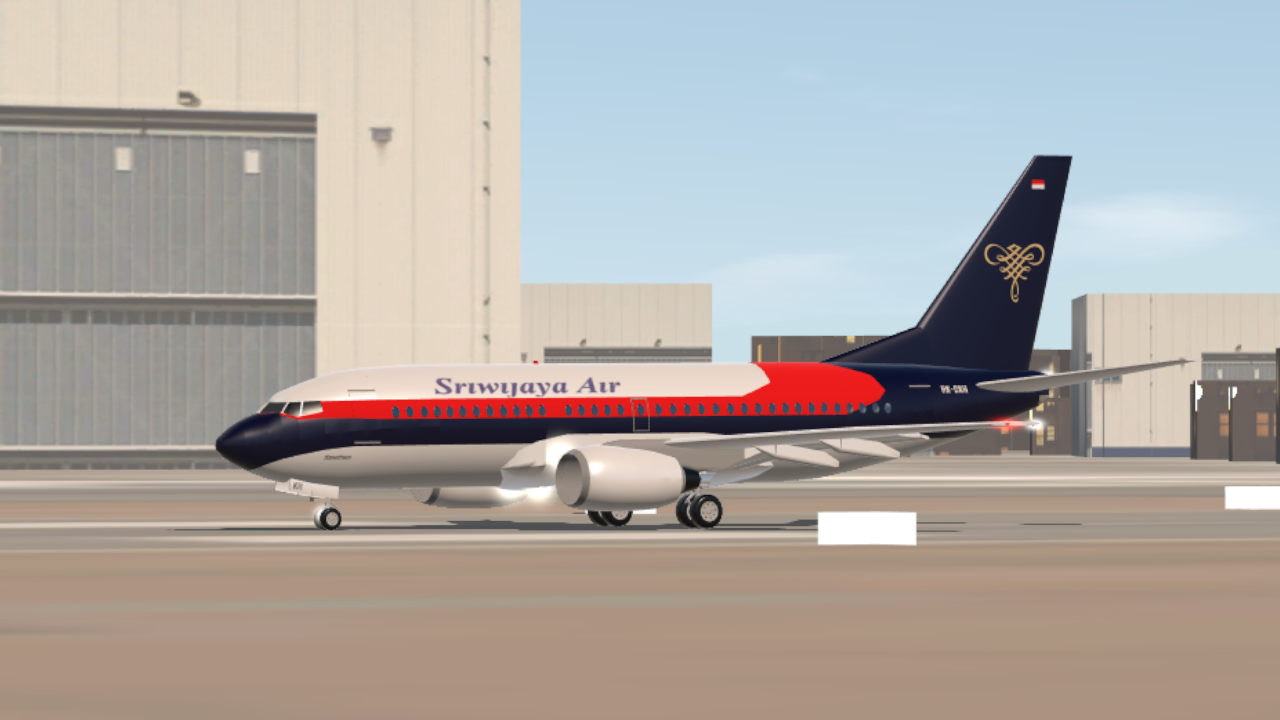
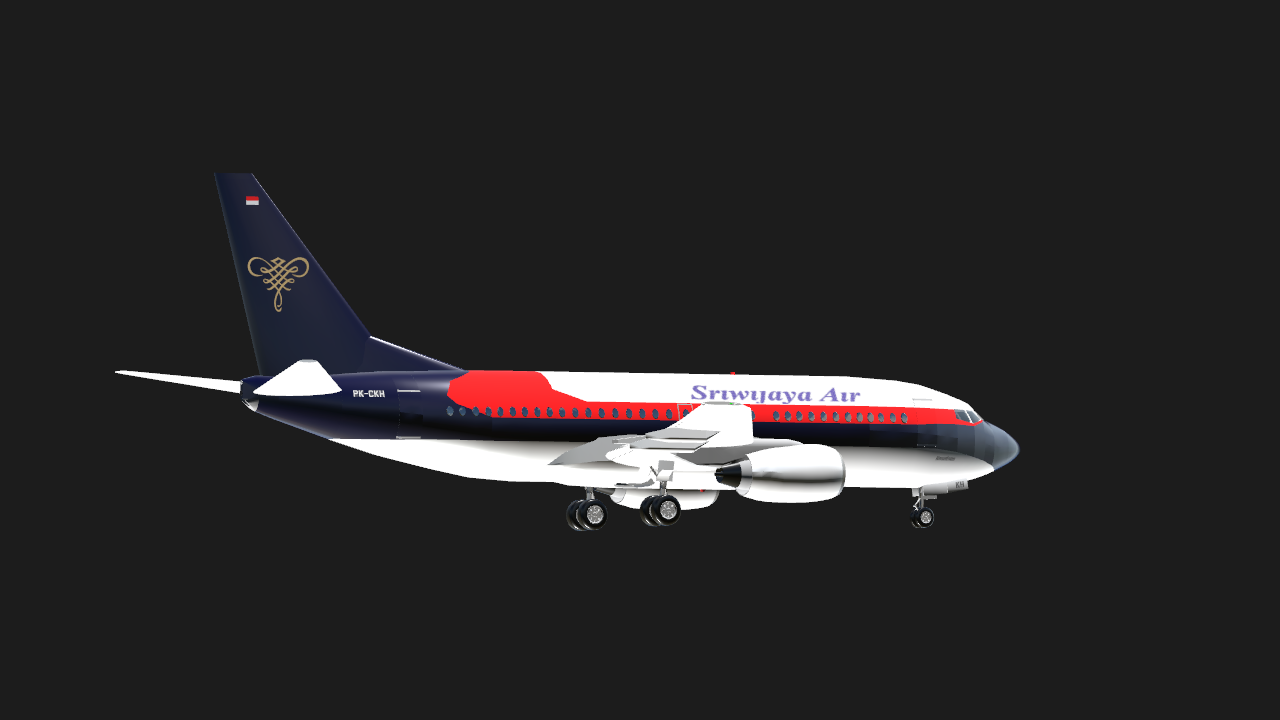
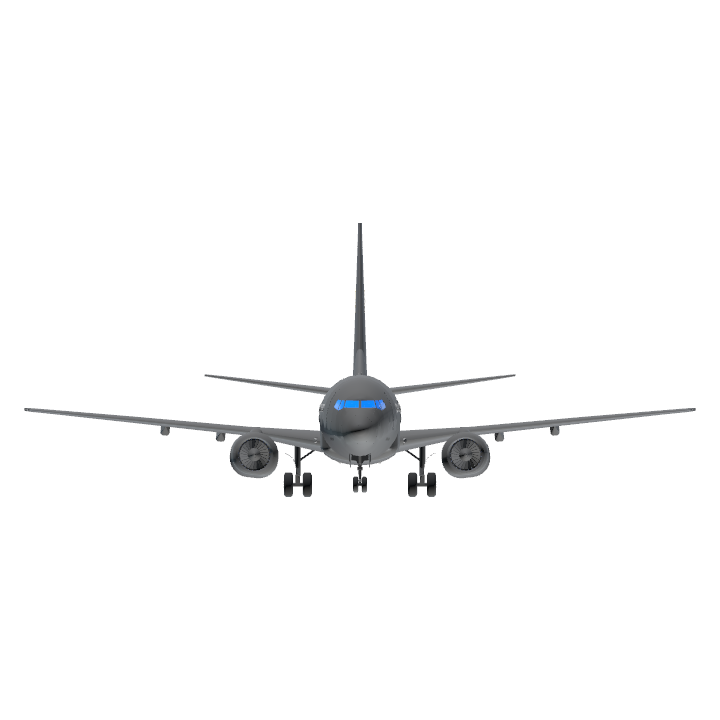
Credits: Remaker65998's 737-500
I did several changes to it to become 737-300
ABOUT
The Boeing 737 Classic is a series of narrow-body airliners produced by Boeing Commercial Airplanes, the second generation of the Boeing 737 series of aircraft. Development began in 1979 and the first variant, the 737-300, first flew in February 1984 and entered service that December. The stretched 737-400 first flew in February 1988 and entered service later that year. The shortest variant, the 737-500, first flew in June 1989 and entered service in 1990.
Compared to the original series, the classic series was re-engined with the CFM56, a high-bypass turbofan, for better fuel economy and had upgraded avionics. With a 133,500–150,000 lb (60.6–68.0 t) MTOW, it has a range of 2,060 to 2,375 nautical miles [nmi] (3,815 to 4,398 km; 2,371 to 2,733 mi). At 102 feet (31 m) the -500 is similar in length to the original 737-200 and can fly 110 to 132 passengers. The 110-foot-long (34 m) -300 can seat 126 to 149 passengers while the 120-foot-long (37 m) -400 accommodates 147 to 168 seats.
It competed with the McDonnell Douglas MD-80 series, then with the Airbus A320 family which prompted Boeing to update its offer with the 737 Next Generation, thus designating the -300/400/500 variants as the 737 Classic. In total, 1,988 aircraft were delivered from 1984 until production ended in the year 2000: 1,113 -300s, 486 -400s and 389 -500s.

A Boeing 737-300, operated by Southwest Airlines
Following the success of the Boeing 737-200 Advanced, Boeing wanted to increase capacity and range, incorporating improvements to upgrade the plane to modern specifications, while also retaining commonality with previous 737 variants. Development began in 1979, and in 1980, preliminary aircraft specifications were released at the Farnborough Airshow. The new series featured CFM56 turbofan engines, yielding significant gains in fuel economy and a reduction in noise, but also posing an engineering challenge given the low ground clearance of the 737 – a trait of its 707-derived fuselage. Boeing and engine supplier CFM International solved the problem by placing the engine ahead of (rather than below) the wing, and by moving engine accessories to the sides (rather than the bottom) of the engine pod, giving the 737 a distinctive noncircular air intake.
The wing incorporated a number of changes for improved aerodynamics. The wing tip was extended 9 inches (23 cm). The leading-edge slats and trailing-edge flaps were adjusted. The flight deck was improved with the optional electronic flight instrumentation system, and the passenger cabin incorporated improvements similar to those on the Boeing 757. The family also featured a redesigned vertical stabilizer with a dorsal fin at the base.
737-300
The prototype of the -300 rolled out of the Renton plant on January 17, 1984, and first flew on February 24, 1984.[9] After it received its flight certification on November 14, 1984, USAir received the first aircraft on November 28. It proved a very popular aircraft: Boeing received 252 orders in 1985, and over 1,000 throughout its production.[9] The 300 series remained in production until the last aircraft was delivered to Air New Zealand on December 17, 1999, registration ZK-NGJ. By then, 1,113 Boeing 737-300s had been produced over more than 15 years.
In December 2008, Southwest Airlines selected Boeing to retrofit the 737-300 with a new set of instruments, hardware, and software, to improve commonality with the 737-700, as well as to support the Required Navigation Performance initiative, but that order was later cancelled and the retrofits never took place
The 737-300 can be retrofitted with Aviation Partners Boeing winglets. The 737-300 retrofitted with winglets is designated the -300SP (Special Performance) first entered service in June 2003. Used passenger -300 aircraft have also been converted to freighter versions. The 737-300 has been replaced by the 737-700 in the Boeing 737 Next Generation family.
ABOUT THE PARTICULAR AIRFRAME

This particular plane was made in 1991 and was delivered to Mozambican flag carrier LAM - Linhas Aéreas de Moçambique and was operated by the airline until 1995 when it was briefly operated by Ukraine International Airlines. The plane then first came to the Southeast Asia in 1996 and was operated by the newly formed Malaysian low cost carrier AirAsia as one of their first plane, which was operated until 2007. After AirAsia, it was operated by a Russian airline KrasAir. The plane finally entered service with its final operator, Sriwijaya Air in 2010 as PK-CKH. It remained in SJ fleet until around 2019 when it was retired and stored
List of my livery projects
Specifications
Spotlights
- BluesynVN 14 hours ago
General Characteristics
- Predecessor B737-500 [737 FAMILY PROGRAM]
- Created On Windows
- Wingspan 101.6ft (31.0m)
- Length 109.0ft (33.2m)
- Height 41.5ft (12.6m)
- Empty Weight N/A
- Loaded Weight 42,373lbs (19,220kg)
Performance
- Power/Weight Ratio 1.176
- Horse Power/Weight Ratio 0.07
- Wing Loading 23.8lbs/ft2 (116.3kg/m2)
- Wing Area 1,778.2ft2 (165.2m2)
- Drag Points 8714
Parts
- Number of Parts 492
- Control Surfaces 9
- Performance Cost 2,833
Bro this awesome
as an indonesian im proud of this