

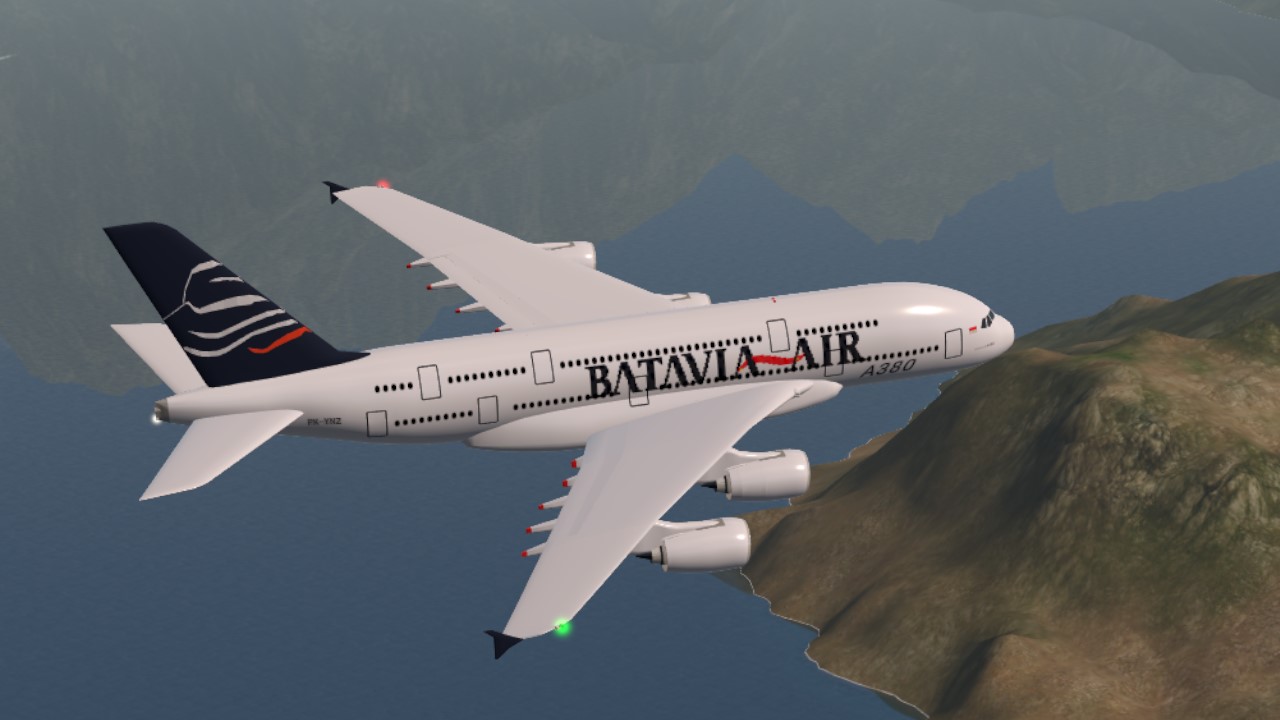
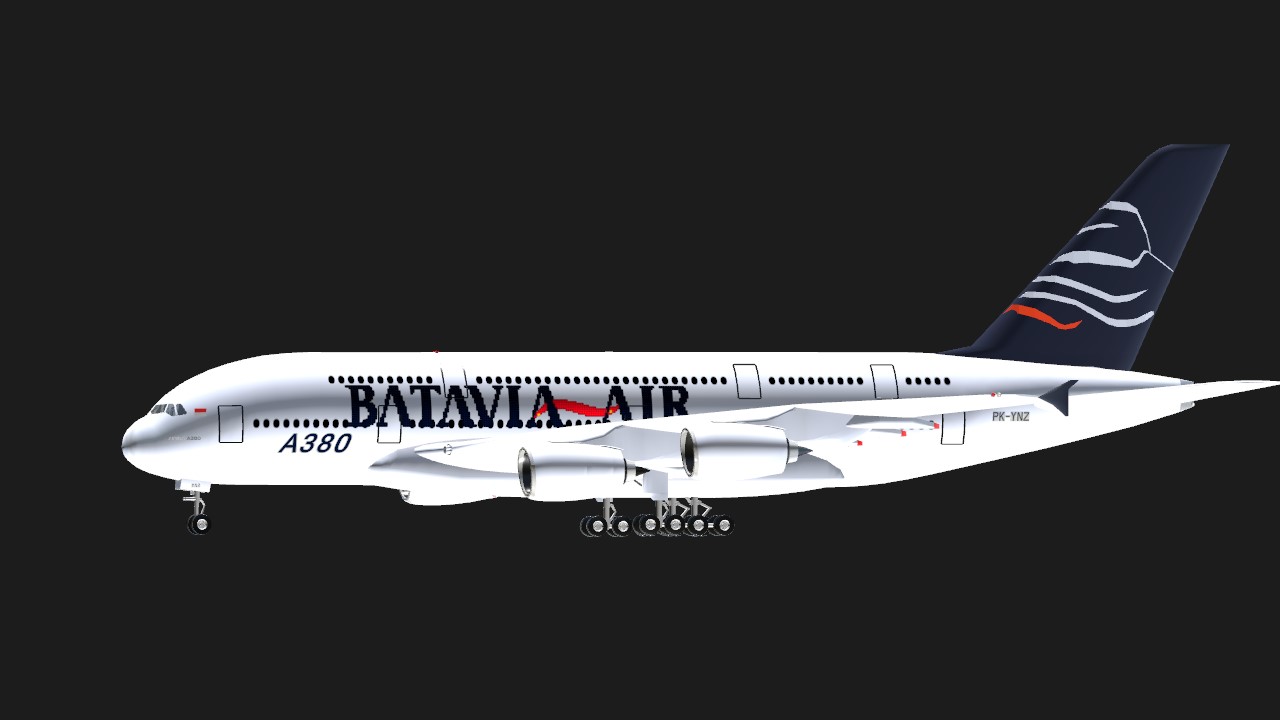
Credit: GalacticaAsia
ABOUT
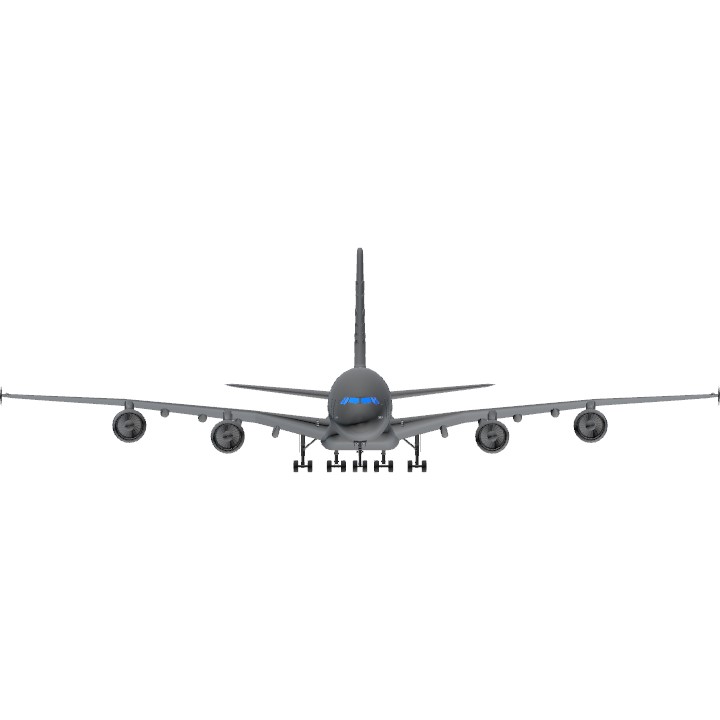
The Airbus A380 is a large wide-body airliner, developed and produced by Airbus until 2021. It is the world's largest passenger airliner and the only full-length double-deck jet airliner.
Airbus studies started in 1988, and the project was announced in 1990 to challenge the dominance of the Boeing 747 in the long-haul market. The then-designated A3XX project was presented in 1994 and Airbus launched the €9.5 billion (US$10.7 billion) A380 programme on 19 December 2000. The first prototype was unveiled in Toulouse, France on 18 January 2005, commencing its first flight on 27 April 2005. It then obtained its type certificate from the European Aviation Safety Agency (EASA) and the US Federal Aviation Administration (FAA) on 12 December 2006.
Due to difficulties with the electrical wiring, the initial production was delayed by two years and the development costs almost doubled. It was first delivered to Singapore Airlines on 15 October 2007 and entered service on 25 October. Production peaked at 30 per year in both 2012 and 2014, with manufacturing of the aircraft ending in 2021. The A380's estimated $25 billion development cost was not recouped by the time Airbus ended production.
The full-length double-deck aircraft has a typical seating for 525 passengers, with a maximum certified capacity for 853 passengers. The quadjet is powered by Engine Alliance GP7200 or Rolls-Royce Trent 900 turbofans providing a range of 8,000 nmi (14,800 km; 9,200 mi). As of December 2021, the global A380 fleet had completed more than 800,000 flights over 7.3 million block hours with no fatalities and no hull losses. As of April 2024, there were 189 aircraft in service with 10 operators worldwide. Of its fifteen total operating airlines, five have fully retired the A380 from their fleets.
LORE (fictional)

A380-861 PK-YNZ departing Ninoy Aquino Int'l Airport, Manila bound for Denpasar
In 2009, Batavia Air announced an order for 25 Airbus A380-800s, all of which is to be powered with Engine Alliance GP7000 engines. The first batch, PK-YNF, arrived in Indonesia in July 2011, making Batavia Air the first user of A380 in Indonesia and instantly overtook Garuda Indonesia and Lion Air as the owner of the largest passenger airplane in the country (both of them operates Boeing 747-400, which was considered the largest at that time). The second airframe, PK-YNZ, followed in the next year. Along with their A330-200s, Batavia Air mainly uses the A380-800 for hajj flights and international routes. The airplane was configured as all economy class, resulting to its capacity become 820 seats, which is unusual for an A380 since it was mainly operated with 2-3 class setting. That configuration also makes Batavia's A380 to become the airplane with densest passenger capacity in the world
Aside of Hajj flights and ocassional international flights to China, Dubai, and the Philippines, it was also used for one domestic flights which is Jakarta to Bali. The A380 only has one domestic route since almost all airports in Indonesia at that time is unable to handle an A380
The operational of this plane proved to become falling point for Batavia Air. The expensive cost for running the plane caused Batavia to suffer more losses. After Batavia Air ceased operations in early 2013, both A380s was returned to lessor. PK-YNF was later operated by Air France and then Emirates, while PK-YNZ was stored in Bangkok, Thailand until it was scrapped in 2016

Specifications
Spotlights
- xXLouisPlayzXx 2 months ago
- BluesynVN 2 months ago
General Characteristics
- Predecessor A380 EA
- Created On Windows
- Wingspan 261.6ft (79.8m)
- Length 238.6ft (72.7m)
- Height 81.6ft (24.9m)
- Empty Weight N/A
- Loaded Weight 180,335lbs (81,798kg)
Performance
- Power/Weight Ratio 0.382
- Horse Power/Weight Ratio 0.049
- Wing Loading 16.4lbs/ft2 (80.1kg/m2)
- Wing Area 10,993.3ft2 (1,021.3m2)
- Drag Points 20392
Parts
- Number of Parts 1139
- Control Surfaces 9
- Performance Cost 4,491
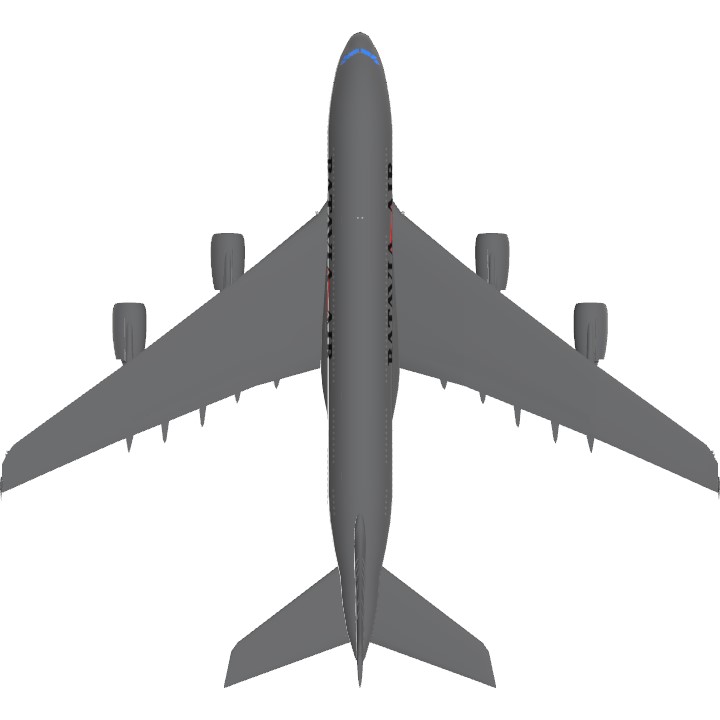
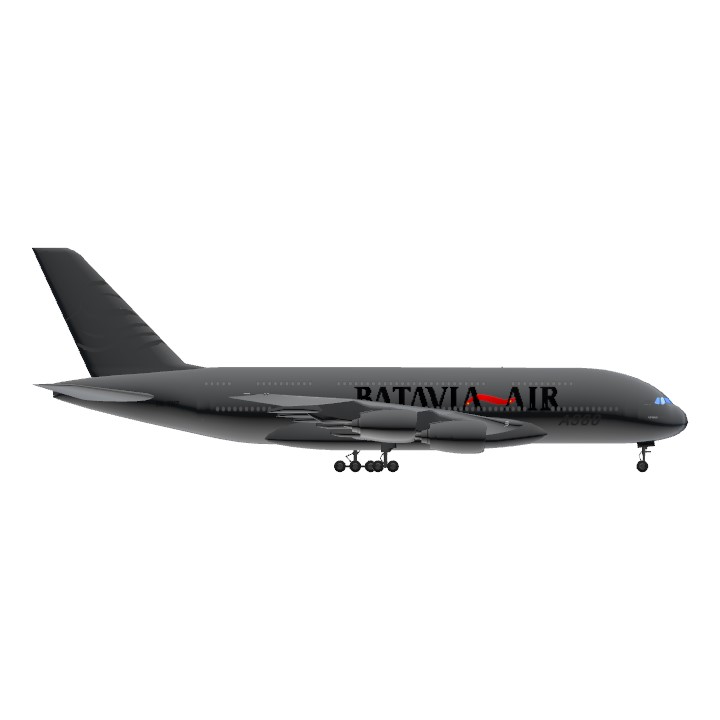
Nah this is a nightmare
oh gosh