

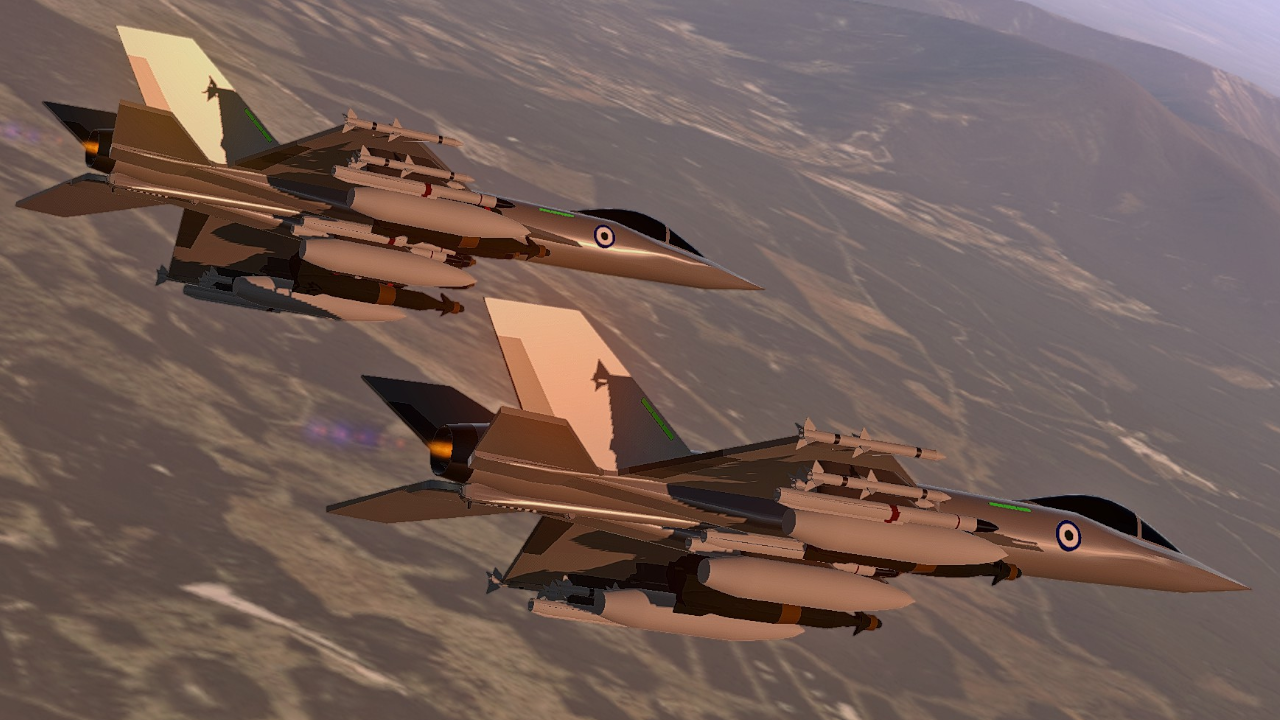

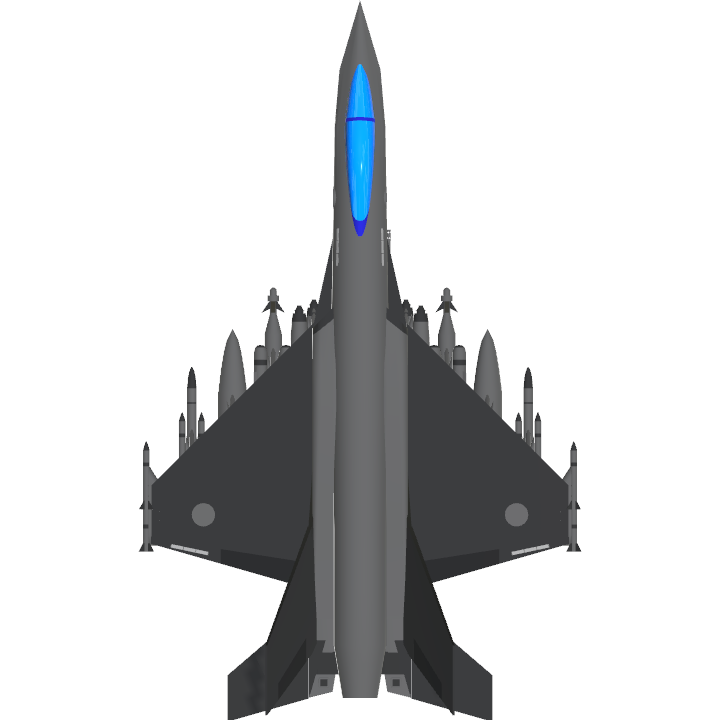
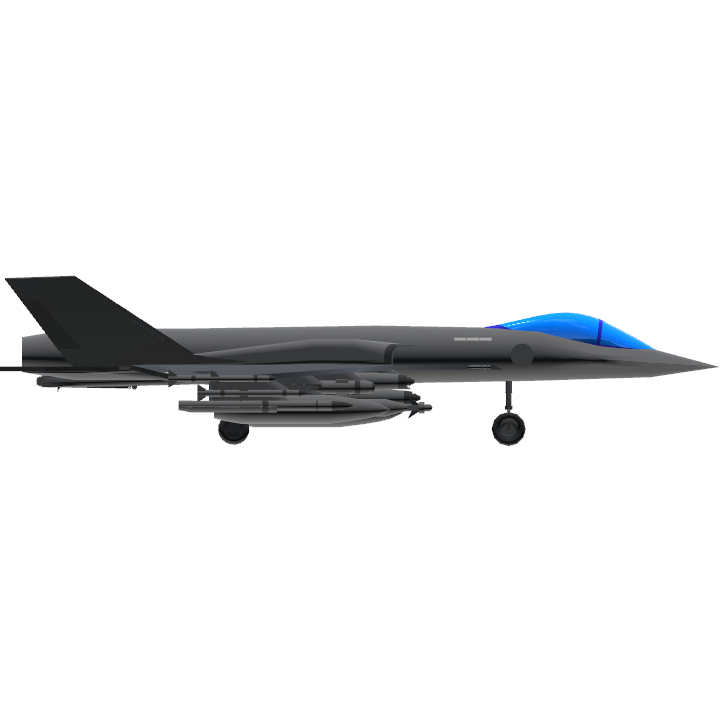
The LF-42 Aruwai is a 4++ generation multirole fighter developed by Hopper Aerospace for the Federalist States of Talui, an Oceanian nation composed of several archipelagoes anchored by three major islands. Conceived as a long-term replacement for the venerable LF-38 Umalae, the Aruwai represents Talui’s first clean-break transition away from Cold War–era airframes that had been repeatedly modernized well past their intended service lives. With 91 aircraft already in Taluian Air Force service and more than 100 additional units on order, the LF-42 is not merely an export product but the backbone of Talui’s future airpower.
Designed for regional air superiority, maritime strike, and coalition operations, the LF-42 emphasizes reduced observability without pursuing full fifth-generation stealth. Its low radar cross-section philosophy places it alongside aircraft such as early KF-21 Boramae variants: difficult to detect and track, but not dependent on absolute invisibility. At its core is the Auctus Computing ACE-34 AESA radar, providing advanced multi-target tracking, electronic counter-countermeasures, and networked battlespace awareness suited to both island defense and expeditionary missions.
The LF-42’s export adoption reinforces this pragmatic design philosophy. The Lebanese Air Force, operating in a politically constrained and highly surveilled airspace, has inducted 8 aircraft into service with 23 more on order, replacing legacy Mirage 2000Ds. In South America, the Peruvian Air Force has fielded 12 aircraft with 65 ordered, using the Aruwai to consolidate and replace a fragmented mix of Mirage 2000P, Su-25 Frogfoot, and A-37 Dragonfly aircraft. The Argentine Air Force follows a similar path, with 14 in service and 79 ordered to retire A-4AR Fightinghawks, Mirage 2000Ds, and Super Étendards, signaling a shift toward a single, modern multirole platform capable of both continental air defense and maritime strike.
Perhaps most significant is adoption by the Brazilian Air Force, which has 28 aircraft in service and more than 100 on order, including licensed domestic production through Embraer. This partnership elevates the LF-42 beyond a conventional export fighter, embedding it within Brazil’s aerospace-industrial base and positioning it as a high-availability workhorse to replace aging F-5E Tigers and A-1 AMX attack aircraft. The decision mirrors Brazil’s Gripen strategy, but with the LF-42 deliberately filling the mass, sortie-generation role rather than competing for top-tier stealth dominance.
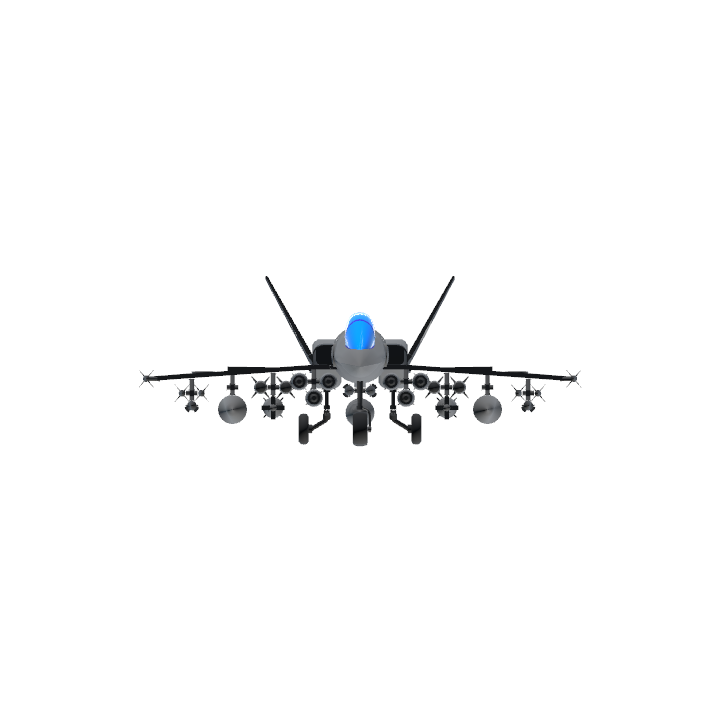
Armament reflects the same doctrine-first approach. The LF-42 mounts the Blackforge Ballistics B2AG-3K internal cannon with an unusually large 2,000-round capacity, underscoring continued emphasis on sustained gun combat and maritime patrol engagements. The aircraft is fully compatible with Western and Israeli munitions, while also integrating select foreign systems such as Starcrest United’s SCATRAM NEO and the Free Republic of Kinto’s Fireball M2 and M3 air-to-air missiles. This wide ordnance compatibility reinforces the Aruwai’s appeal to air forces seeking modernization without supplier lock-in.
Specifications
Spotlights
- KPLBall an hour ago
General Characteristics
- Created On Windows
- Wingspan 30.6ft (9.3m)
- Length 50.8ft (15.5m)
- Height 11.6ft (3.5m)
- Empty Weight 16,700lbs (7,575kg)
- Loaded Weight 34,374lbs (15,592kg)
Performance
- Power/Weight Ratio 4.903
- Wing Loading 59.0lbs/ft2 (288.1kg/m2)
- Wing Area 582.6ft2 (54.1m2)
- Drag Points 5121
Parts
- Number of Parts 214
- Control Surfaces 4
- Performance Cost 1,052
This looks fire
woah cool
F-16 but more budget.