

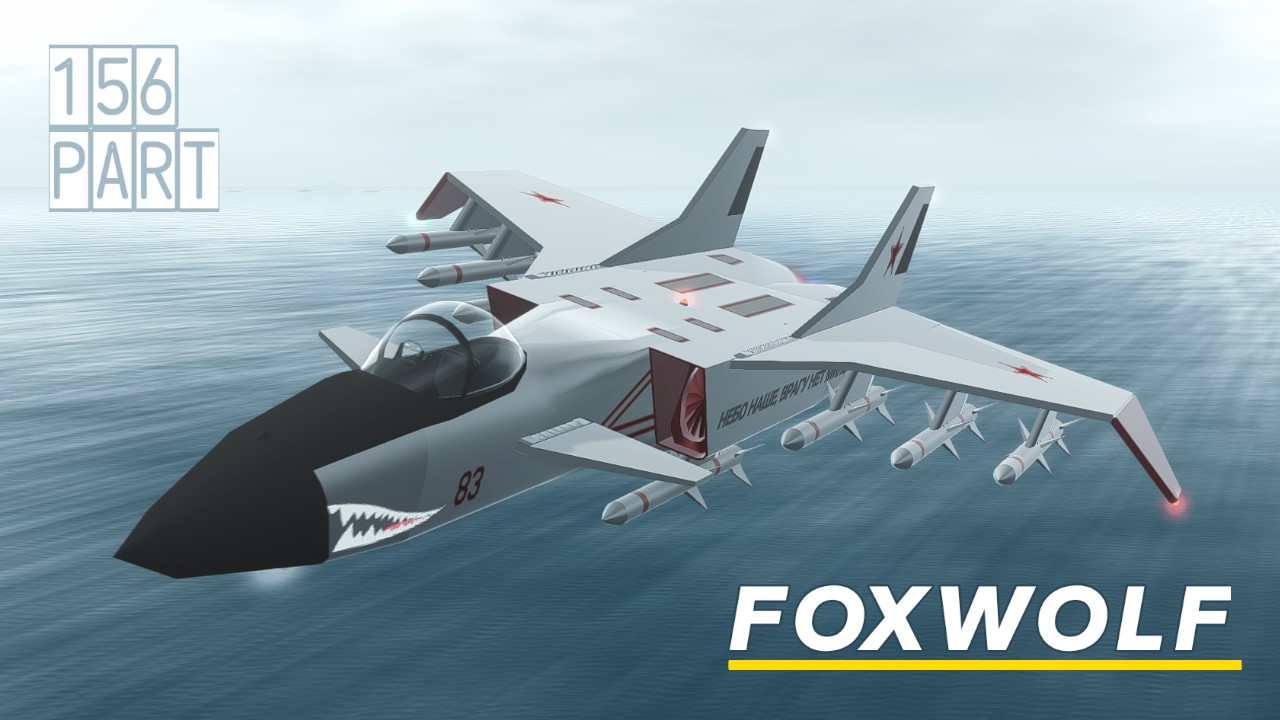


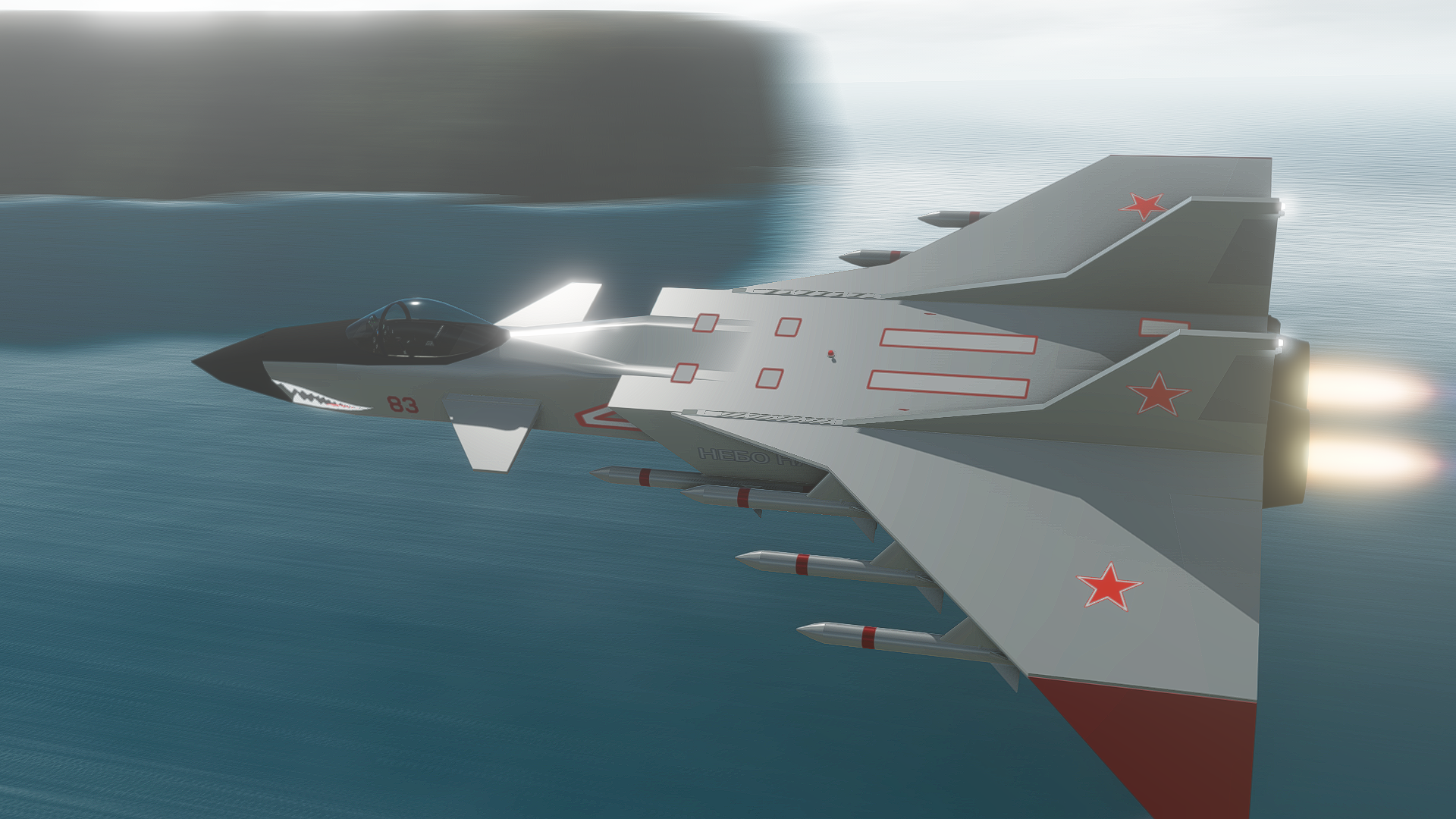
OR-26
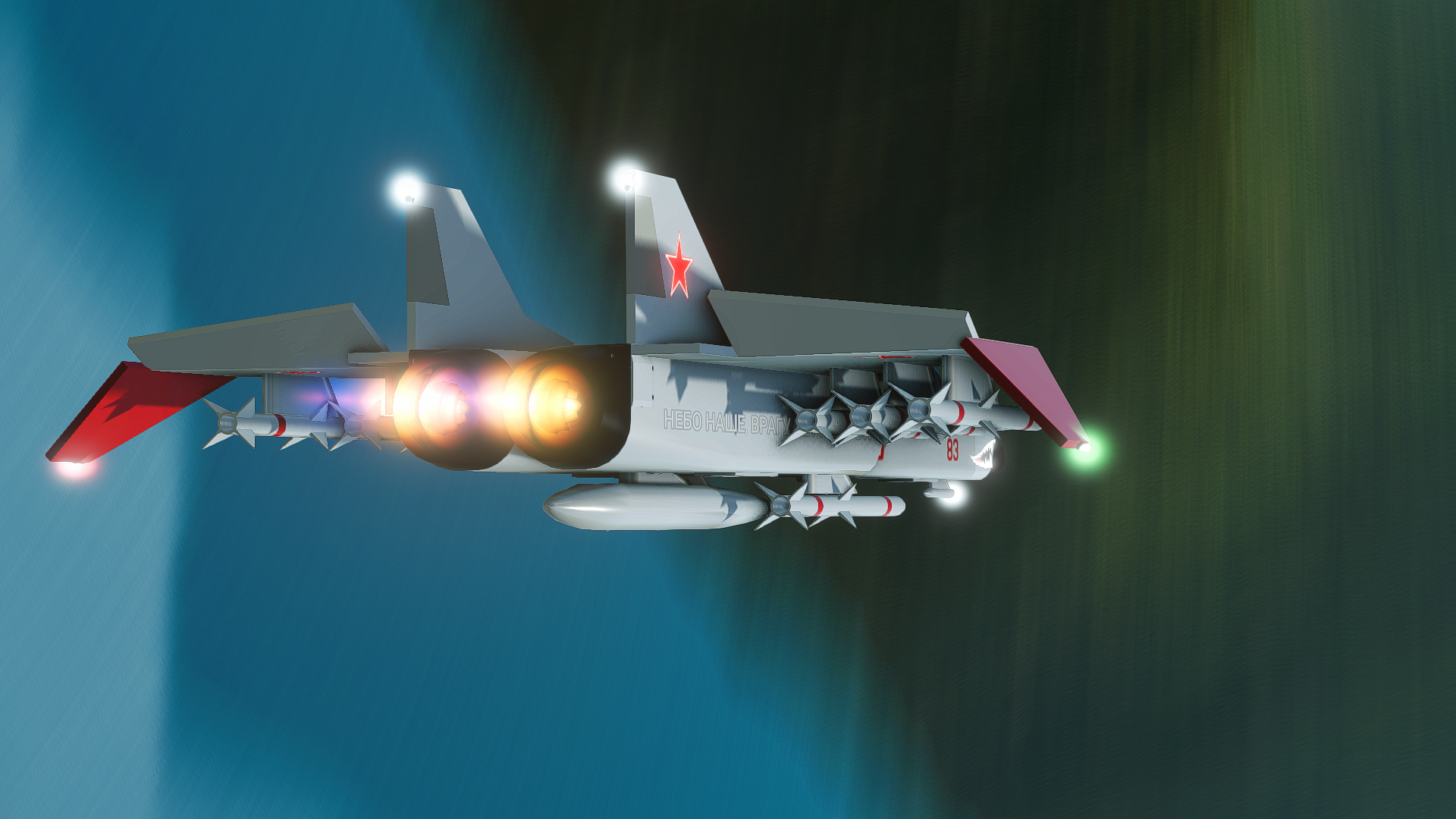
In an alternate world of the mid 20th century, the year 1950 marked a pivotal moment in Soviet aerospace innovation. The Orlov Aerospace Corporation, a formidable entity operating alongside renowned firms such as Mikoyan Gurevich and Sukhoi, was commissioned by the Soviet military to develop a specialized aircraft capable of penetrating enemy defenses through low altitude flight. At this juncture in history, stealth technology as we understand it today had yet to emerge, instead, low level flying was regarded as the era's equivalent of stealth, enabling evasion of radar detection by exploiting the curvature of the Earth and ground clutter.
The result of this ambitious project was OR-26, a groundbreaking aircraft designed primarily for nuclear warfare scenarios. Its initial armament consisted of conventional and nuclear bombs, underscoring its role as a strategic delivery platform. To ensure pilot safety during prolonged low altitude operations, the aircraft was equipped with an advanced terrain following system, automatically adjusted the flight path to prevent collisions with the ground or obstacles. OR-26's mission profile was straightforward, infiltrate enemy airspace below radar horizons at high speeds, deploy its nuclear payload with precision, and execute a rapid egress to safety.
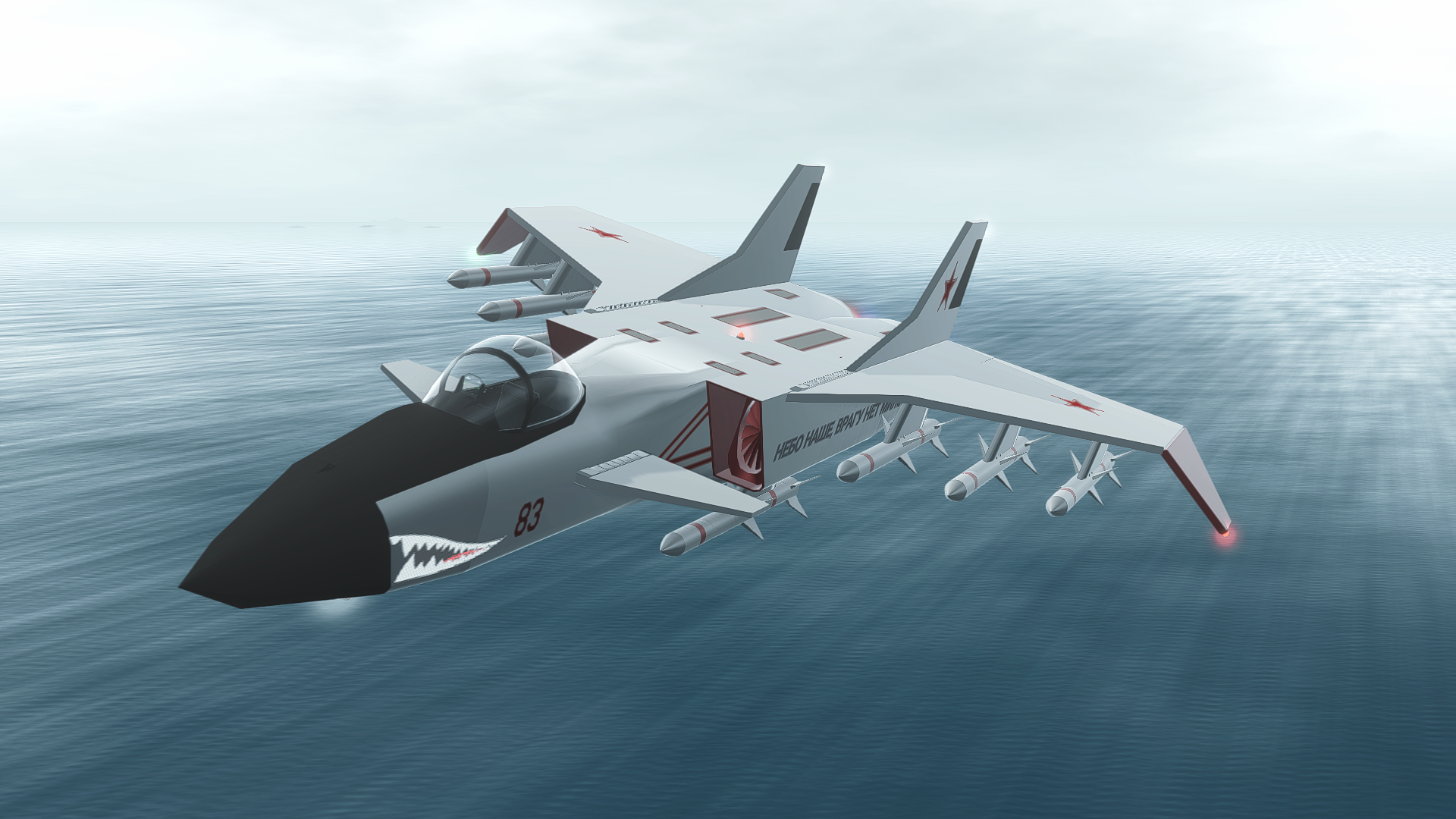
Aerodynamically, OR-26 featured a distinctive wing configuration, which provided exceptional stability and lift at supersonic velocities. Powering this formidable machine was a robust engine derived from modified cruise missile propulsion systems, granting it the endurance to maintain low level, high speed flight over extended distances. Conceived amid the escalating tensions of the Cold War, OR-26 embodied the Soviet Union's preparations for potential nuclear conflict, serving as a deterrent against Western aggression.
As the decades progressed into the 1960s and 1970s, new threats materialized from United States, including low flying bombers and advanced cruise missiles designed to evade traditional air defenses. In response, OR-26 underwent significant repurposing to intercept these emerging dangers while awaiting the dreaded outbreak of nuclear war. Its terrain following system was replaced with sophisticated radar arrays and specialized missiles optimized for engaging low altitude targets, transforming the aircraft from a strategic bomber into a versatile interceptor.
During conventional conflicts, OR-26 proved its mettle by downing cruise missiles, low flying bombers, and occasionally the fighter escorts accompanying them. Throughout its operational career, the aircraft achieved remarkable success, boasting a kill ratio of approximately 20 to 30 enemy bombers, fighters, and cruise missiles for every single loss sustained. This impressive record solidified its reputation as a reliable guardian of Soviet airspace.
Owing to its exceptional low altitude flight capabilities, OR-26 would often materialize on enemy radar screens only when the distance had closed to a perilously short range, leaving adversaries with scant time to react. This stealth like emergence, combined with its tactical deployment in coordinated groups, allowed the aircraft to execute interceptions with an element of profound surprise, frequently approaching from unforeseen angles that confounded defensive strategies. As a result of these cunning and ferocious operational traits, US pilots began to affectionately dub OR-26 the "Foxwolf" a moniker that encapsulated its dual nature, the sly, strategic planning reminiscent of a cunning fox, and the relentless, pack like aggression akin to a horde of wolves descending upon their prey.
However, by the turn of the millennium in 2000s, OR-26 fleet was retired due to structural fatigue accumulated from decades of rigorous service. Though its era had ended, the legacy of OR-26 endures as a testament to Soviet engineering prowess in an alternate timeline where low altitude mastery defined the boundaries of aerial warfare.
WEAPONS
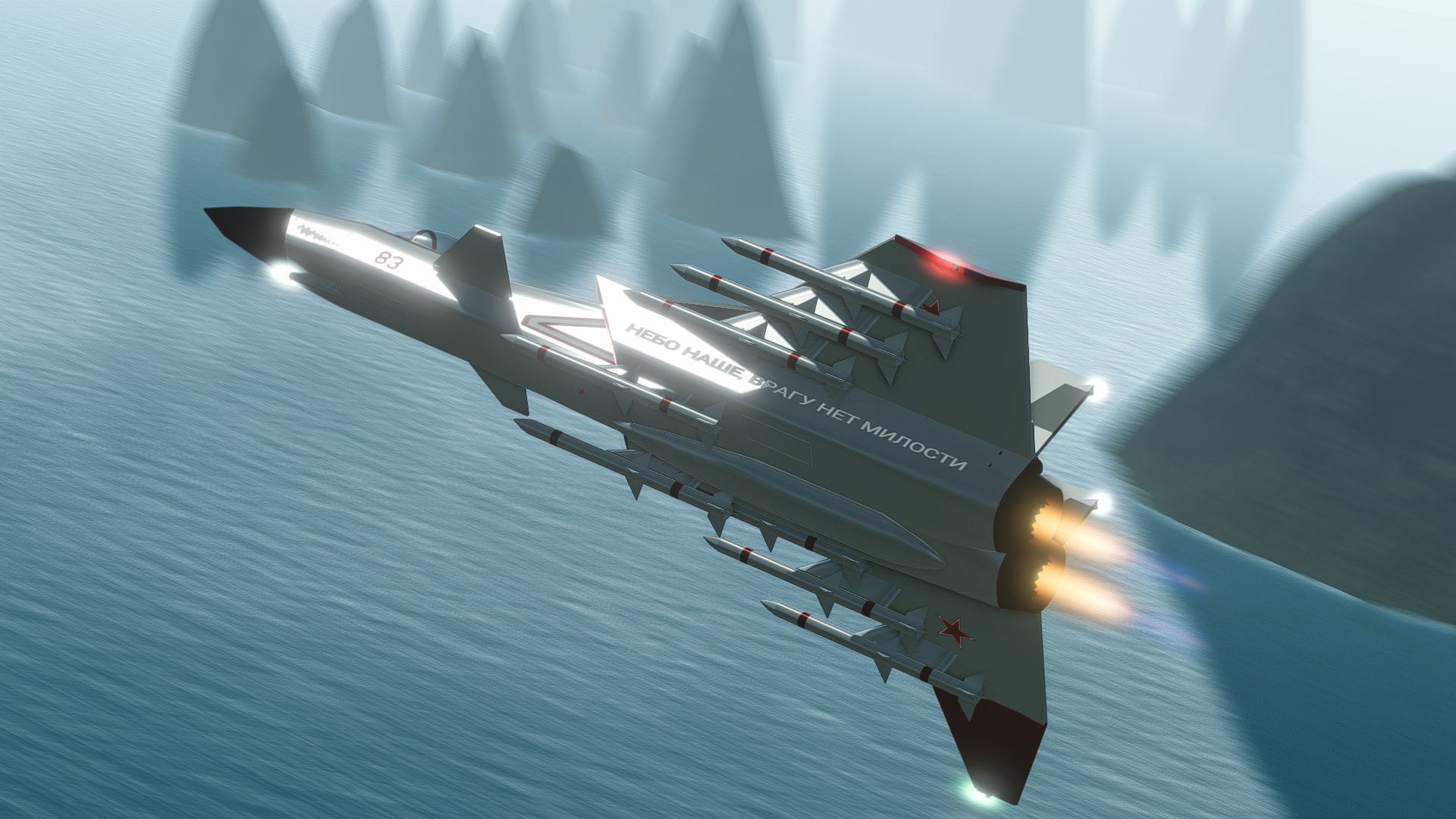
● 20mm gun (Interceptor version).
● 8x Anti Low Altitude Target Missile (Interceptor version).
● 2x Nuclear bomb (Bomber version).
● Flare
GALLERY
BY KSB24

INSPIRATION


Mix of these aircraft...
CONTROL
Interceptor Manual:
Activate1: Canopy
Activate5: Parachute
Activate6: Drop External Fuel Tank
Activate7: Drop All Missile
Activate8: Light System
Please Enjoy!
Thanks for you who upvote!
Specifications
General Characteristics
- Predecessor (CLOSED) The 1960s Challenge by B1
- Created On Android
- Wingspan 38.2ft (11.7m)
- Length 54.9ft (16.7m)
- Height 15.4ft (4.7m)
- Empty Weight 3,280lbs (1,487kg)
- Loaded Weight 16,889lbs (7,660kg)
Performance
- Power/Weight Ratio 7.983
- Wing Loading 35.7lbs/ft2 (174.1kg/m2)
- Wing Area 473.5ft2 (44.0m2)
- Drag Points 4680
Parts
- Number of Parts 156
- Control Surfaces 4
- Performance Cost 1,029


Mustard
Want to be tagged on my future Build, Forum and Videos? Go to my taglist!
https://www.simpleplanes.com/Forums/View/2150548/RB107s-T-A-G-L-I-S-T
TSR-2 MENTIONED :0
I think the vibe from MiG25 is more noticeable than the others
@TitanVector Hell Yeah!! XD
Congratulations! You are at 50K!
@RaySriwijayaAeronautics You are doing great! Keep it up and never lose hope!
This thing Made me lose hope on the challenge lol
@Uber124 Happy building!
@RB107 I'm trying to create a fun, timeless version.
@RB107 I will try
@Uber124 You can help me with fix its performance if you want! XD
@Uber124 Yea it should be good at the lore/story, but its hard to make it has exact same performance ingame with only 154 part. So its my skill and device issue.
@RB107 Is it my problem? If what you said is true, this aircraft has to enter a dogfight, but it's hard to hit targets at high speeds and it's easy to stall at low speeds. What should we do?
@RB107 Is this guy really good at low-altitude maneuverability? I'll try it out later; I'll only test it at high altitude.
@Uber124 Ah yes, i need to put my least technological missile to pass 1960s Challange requirement! Also they used to dogfighting using guns, they are manuverable in low altitude!
However, the missile's lock-on time is too long, For this type of high-speed fighter jet,making it easy to miss the attack opportunity.
I like highways
@B1 Finally someone get the easter egg :3
serigala rubah
@Monarchii Ah, so thats the classification for PEA.
@RB107
stripped down and optimised, it can be! but as of now without changes, no.
.
anything else that you want to know?
@Monarchii Do this plane can be classified as PEA too?
@ThomasRoderick Ah yes, it looks like bacward looking MIG 25, but i cant name it like that because MIG 25 is exist in the universe too and we need the nickname start with F to indicate that this is a fighter
@SomeSPGuyWhoLikesLore Some says rounded cockpit give more visibility!