

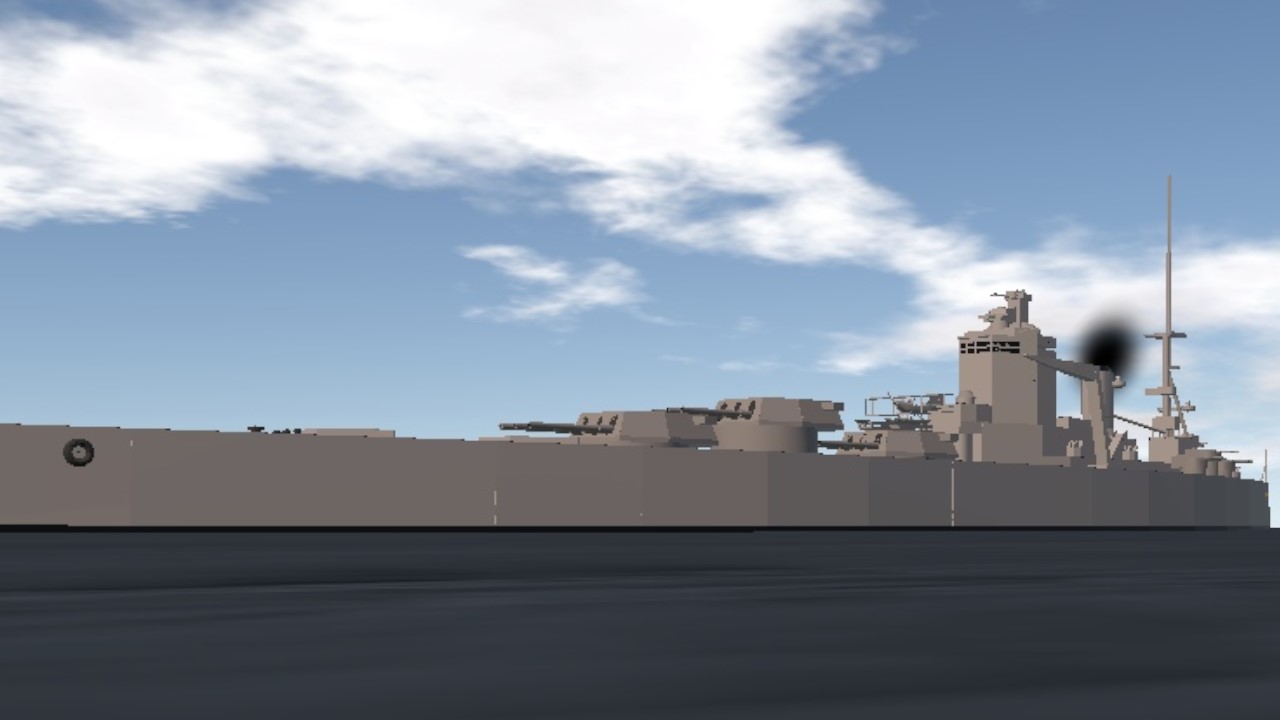
Nice to meet you all again. In this production, many new technologies were introduced, such as the fire control radar for seaplanes and main guns. In order to adapt to the SP2 online mode, the number of parts was specially reduced to less than 1000. Now let's introduce this famous "slipper" in history....

The Nelson class battleship is a unique warship designed by the British Navy during the "Naval Holiday" period to cope with the restrictions of the Washington Naval Treaty, and is famous for its iconic all gun forward layout.
Background and Design Features of Birth
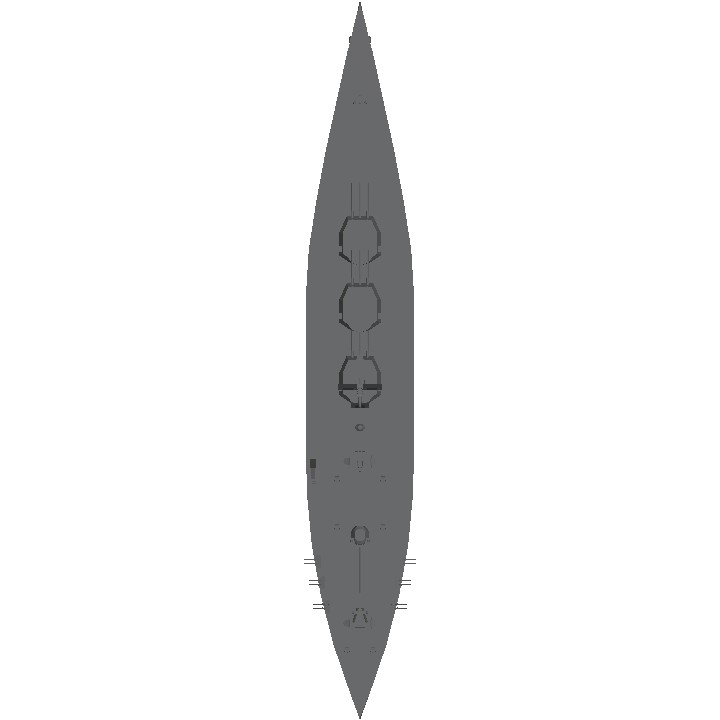
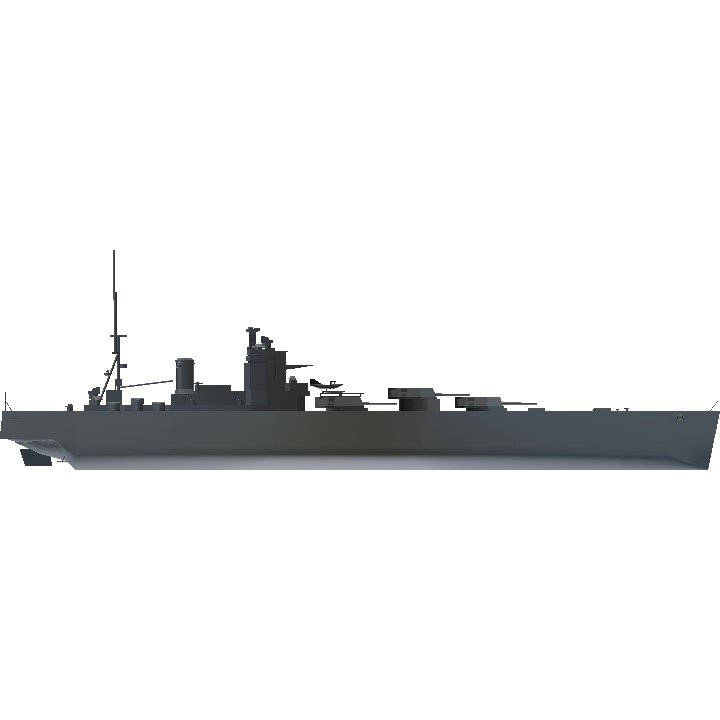
After World War I, various naval powers signed the Washington Naval Treaty in 1922 to limit the arms race. The treaty strictly regulates the tonnage and armament of main warships. In order to enable Britain to build new warships equipped with 16 inch (406mm) main guns, the treaty granted Britain permission to build two new battleships, giving birth to the Nelson class. In order to balance firepower and protection within the displacement limit of 35000 tons, the designer adopted an extremely innovative layout: all three triple main guns were concentrated in front of the bridge, forming a unique pyramid structure to shorten the length of the armor belt for key protection. This design gives it a unique appearance, but it also leads to issues such as relatively slow sailing speed (about 23 knots) and blind spots in the rear for shooting.

Service history and wartime contributions
Two ships of the same class, HMS Nelson and HMS Rodney, were completed and commissioned in 1927. They are known as the "Big Seven" along with Japan's Nagato class and the United States' Colorado class. After the outbreak of World War II, although it was difficult to participate in fleet decisive battles due to speed limitations, the Nelson class still played an important role in several key battles. The Rodney made significant contributions to the encirclement and annihilation of the German flagship Bismarck in 1941; The Nelson provided support for the North African landings, Sicilian landings, and Normandy landings, and witnessed the signing of the Italian surrender agreement on its deck in 1943.
Post war ending
After the war, the era of costly battleships came to an end. Two Nelson class battleships were also sold and dismantled between 1948 and 1949, ending their distinctive service life. As a special product of the treaty era, the Nelson class battleships have left a unique mark in world naval history with their unconventional design and rich combat experience......

Finally, let me introduce how to operate:
AG1 can control the level of three main guns, as well as the pitch and firing of the first two main guns (VTOL controls the level, Trim is the pitch). AG2 can control the pitch and firing of the X turret (AG2 needs to be opened together with AG1).
AG3 can operate six automatic aiming 120mm anti-aircraft guns (divided into L, R, Y parts, L represents the left two guns, R represents the right two guns, Y is the rear two guns), and six 152mm guns, also VTOL controls the level, Trim controls the pitch.
AG4 can turn on the searchlight.
AG5 can control the crane and is used for retrieving seaplanes (which are difficult to use).
AG6 is used to activate the seaplane (note: the correct activation sequence is to activate the main turret to tilt it to one side, turn off the main turret switch, turn off the AG8 engine, fully pull the throttle, pull the Trim to the bottom, activate AG6, and automatically eject after 5 seconds, but it may be difficult to control during takeoff).
AG7 is used to reverse, turn off AG8, and then push the throttle.
AG8 is forward, close AG7, then push throttle....

Next, let's talk about the newly added second-generation fire control radar. You can see that there are three markings on the sight, which are 5km, 10km, and 15km respectively. Remember to calculate the advance when aiming, and you can calibrate it from the perspective of the shell...
Finally, I wish everyone a happy time and remember to vote for me. Thank you
Specifications
General Characteristics
- Created On Android
- Wingspan 110.5ft (33.7m)
- Length 710.7ft (216.6m)
- Height 216.6ft (66.0m)
- Empty Weight 413,239lbs (187,442kg)
- Loaded Weight 501,999lbs (227,703kg)
Performance
- Power/Weight Ratio 0.201
- Horse Power/Weight Ratio 0.002
- Wing Loading 820.9lbs/ft2 (4,008.0kg/m2)
- Wing Area 611.5ft2 (56.8m2)
- Drag Points 444721
Parts
- Number of Parts 971
- Control Surfaces 8
- Performance Cost 3,599
第一次发布该作品时,不知为什么被ban了,所以重新发了一遍
When I first released this work, I don't know why it was taken down, so I reposted it again