

45 UPvotes for a F-14X 4.75Gen
summary
1.1 Introduction
1.2 Creator’s Note
1.3 Aircraft Control Surfaces
⬊1.3B nose strakes
1.4 Engines
⬊1.4B Thrust Vectoring
1.5 Cockpit
⬊1.5B Cockpit Overview
⬊1.5C Multi-Function Display (MFD)
1.6 Ignition/flight procedure
1.1 Introduction
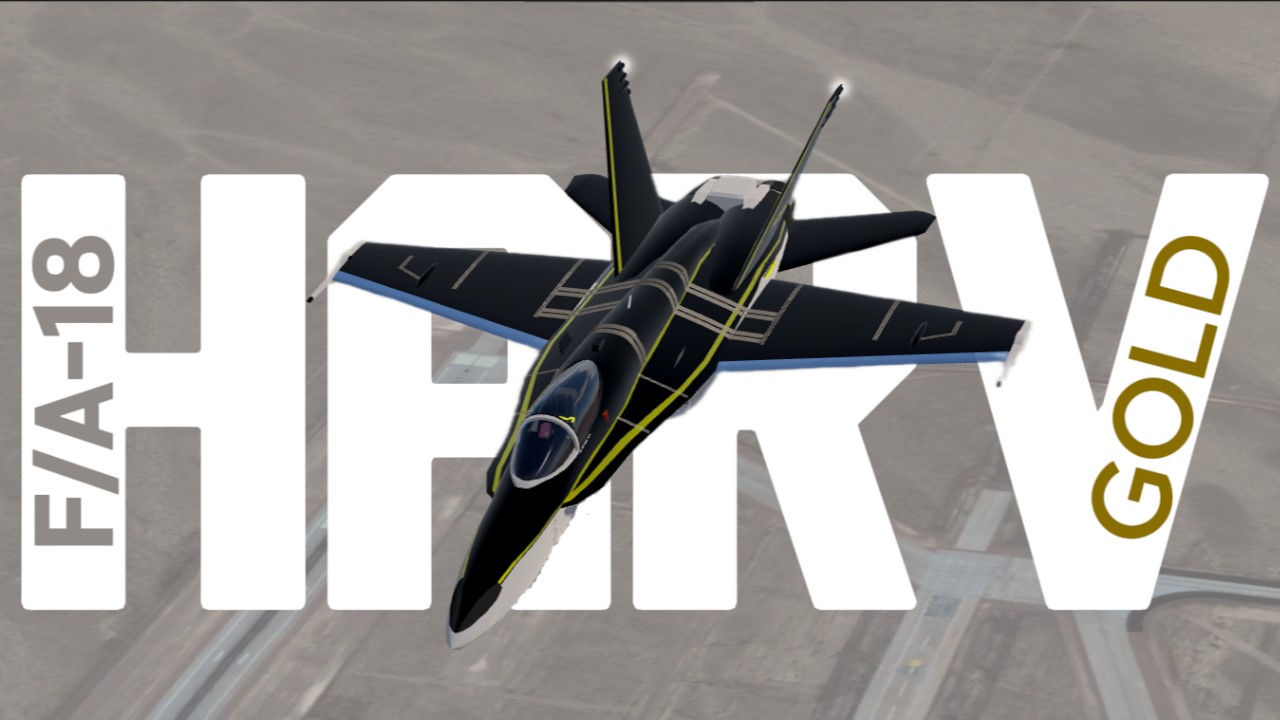
The F/A-18 HARV (High Alpha Research Vehicle) was an experimental program conducted by NASA in partnership with the United States Navy during the 1990s.
The aircraft used was a modified version of the
McDonnell Douglas F/A-18 Hornet multirole fighter, adapted to explore flight at extremely high angles of attack — exceeding 70°.

▶1.1B General Specifications
Dimensions
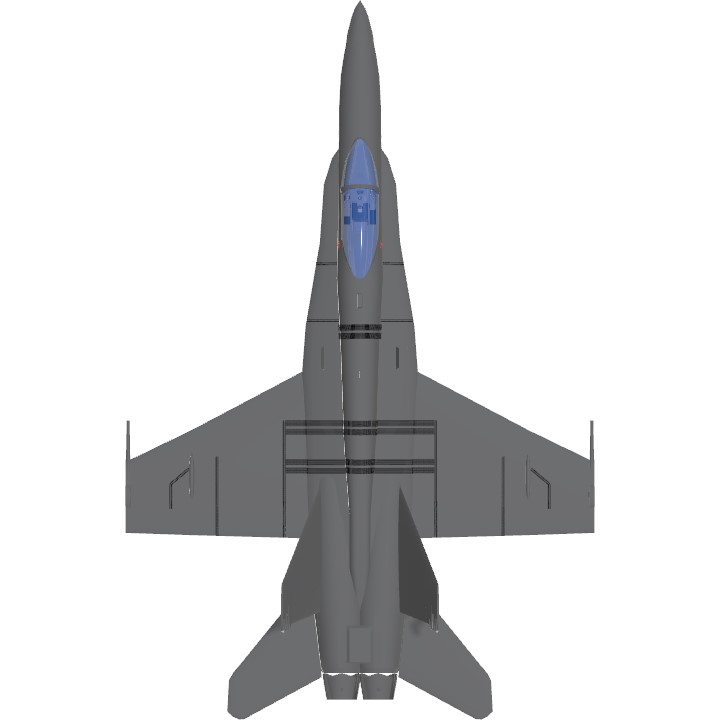
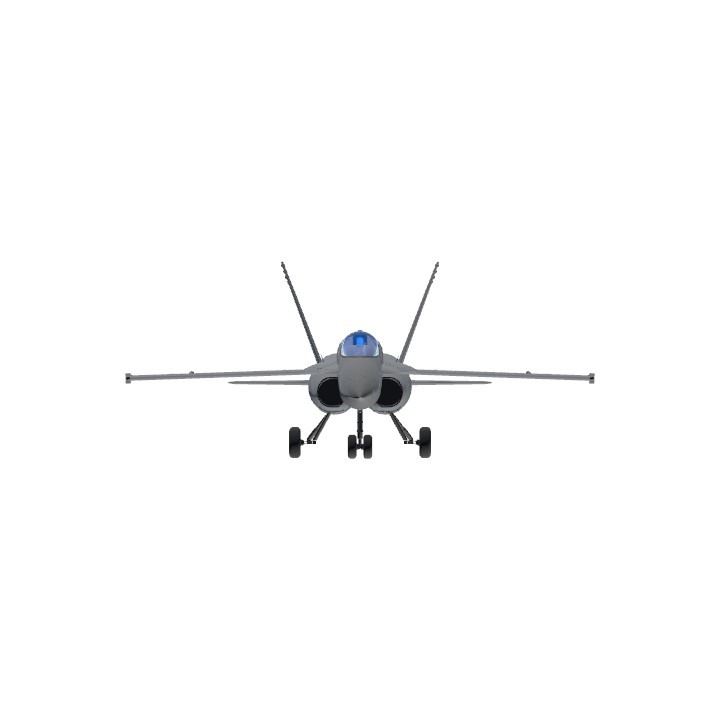
Wingspan 36.6ft (11.2m)
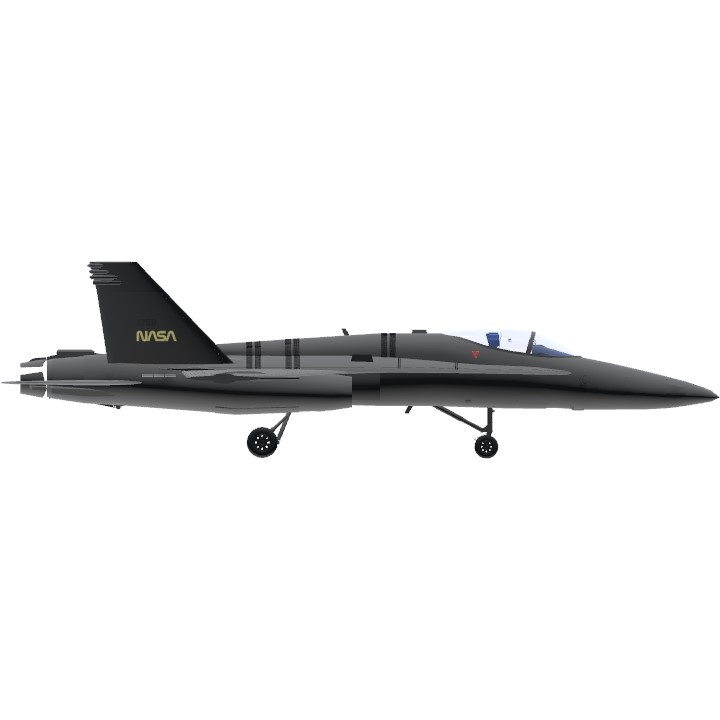
Length 56.2ft (17.1m)
Height 15.4ft (4.7m)
Weight
Empty Weight 33,422lbs (15,160kg)
Loaded Weight 40,115lbs (18,195kg)
Wings information
Wing Loading 76.3lbs/ft2 (372.5kg/m2)
Wing Area 525.7ft2 (48.8m2)
Number of Parts 811
Performance Cost 3,353
1.2 Creator’s Note
Well… this was one of my longest projects here on SP.
This build has been in the prototyping phase since before I posted my A-23, and over the last 15 months I’ve been building, tearing down, and rebuilding it multiple times
For greater immersion in the project, enable the ‘Show instructions on start’ option.
This model represents the best balance between my time and my coding skills that I’ve achieved so far.
It’s worth noting that this is still a prototype, and the final version will be made in SP2.
1.3 Aircraft Control Surfaces

1. Elevator - controls the pitch movement, that is, it makes the aircraft’s nose go up or down.
2. Aileron - controls the roll movement, tilting the wings to one side or the other.
3. Trailing edge flaps - increase lift (and also drag) during takeoffs and landings.
4. Rudder - controls the yaw movement, turning the aircraft’s nose left or right.
▶1.3B Nose strakes

The nose strakes are currently decorative, but in future versions they will be fully functional and play an important role in post-stall control and advanced maneuvers.
1.4 Engines

The engines on this aircraft are without a doubt the most complex I’ve ever built in my 4 years of SimplePlanes.
Each unit was made with around 70 parts, requiring a lot of patience and attention to detail — it took approximately 2 months of work just for this part of the project.
▶1.4B Thrust Vectoring

By far, this is the most complex system I’ve ever built in the entire project.
Each engine features around 30 dedicated Hinge Rotator,
ensuring extremely smooth and precise response even at high angles of attack or during aggressive maneuvers.
This system was designed to maximize post-stall maneuverability, allowing the aircraft to remain controllable even under extreme aerodynamic conditions.
Future updates will include an anti-flatspin system, further enhancing stability and safety during advanced maneuvers.
1.5 Cockpit

I won’t go into too much detail here…
But basically, this was the part that kept me from posting the project back in June. The cockpit was one of the most time-consuming stages and required a lot of work, procrastination, and random ideas that came to me while I was taking a shower
▶1.5B Cockpit Overview

▶1 Auxiliary Power Unit (APU) / Engine Operation
Controls related to APU activation and the operation of both engines.
▶2 T.V.S System
Interface for the Thrust Vectoring System (T.V.S), including control surfaces and vectoring modules.
▶3 Generator Control Panel
Panel dedicated to electrical power management, including:
Left Generator (L.Gen)
Main Generator (M.Gen)
Right Generator (R.Gen)
▶4 Throttle Lever
Primary power control lever, used to regulate engine thrust during all phases of flight.
▶5 Afterburner Activation Switch
Engages the afterburner system, providing additional thrust when required.
▶6 In-Flight Refueling Probe
Controls the deployment and operation of the aerial refueling probe.
▶8 Brake Control
Responsible for ground braking during taxi, landing rollout, and parking.
Note: Item 7 was intentionally omitted.
▶Multi-Function Display (MFD)
The following displays illustrate the primary Multi-Function Display (MFD) interfaces and their associated control inputs.


1 – Power ON / OFF
Controls the activation and shutdown of the selected MFD or system interface.
2.1 – Previous Weapon Selection
Cycles to the previously selected weapon in the onboard weapon system.
2.2 – Next Weapon Selection
Cycles to the next available weapon in the onboard weapon system.
3 - Target Mode Selector
Switches target acquisition modes between:
Air Targets (A/A)
Ground Targets (A/G)
4 – Catapult Activation
Engages the aircraft carrier catapult system.
5 – Aerial Refueling Probe (Alternate Control)
Deploys or retracts the in-flight refueling probe through an alternate control interface.
Operational Notes
Weapon selection controls (2.1 / 2.2) are active only when the weapon system is powered and armed.
1.6 Aircraft Start-up Procedure
This procedure describes the correct sequence for aircraft start-up.
Failure to comply with the established order may result in system malfunction or operational damage.
▶1 Auxiliary Power Unit (APU) Activation
Locate the APU switch, positioned on the rear lateral side of the engine power control unit, Activate the APU.
Verify illumination of the green status indicator
confirming proper system operation.
Proceed to the next step only after visual confirmation.
▶2 Engine Start
Initiate start-up of the right engine.
After engine parameters stabilize
initiate start-up of the left engine.
Confirm nominal operation of both engines before continuing.
▶3 T.V.S System Configuration
Access the T.V.S system panel.
Activate the controls in the following order:
Left Front Control Surface
Right Front Control Surface
TVS1
TVS2
after Verify proper response of the control surfaces.
Gallery


THANK YOU TO SKYTECH FOR THE HELP WITH THRUST VECTORING
And to all of you who waited for this labor-intensive project, I hope you enjoy it.
Sky Tech Aerospace 12/16/2025
Specifications
Spotlights
- RicardoACE one month ago
- HOPKINS234 one month ago
- SuperSuperTheSylph one month ago
- P0LARIS one month ago
- TheFlightGuySP one month ago
- CrazyEngine one month ago
- M109simp one month ago
- dabestsock one month ago
General Characteristics
- Created On Windows
- Wingspan 36.6ft (11.2m)
- Length 56.2ft (17.1m)
- Height 15.4ft (4.7m)
- Empty Weight 28,812lbs (13,069kg)
- Loaded Weight 42,537lbs (19,294kg)
Performance
- Power/Weight Ratio 1.537
- Wing Loading 80.9lbs/ft2 (395.0kg/m2)
- Wing Area 525.7ft2 (48.8m2)
- Drag Points 1814
Parts
- Number of Parts 822
- Control Surfaces 1
- Performance Cost 3,385
@SkyTechAerospace i already used it. rate from 1 to 10 if you want)
@alexJgameYTukraine000000 yes bro!
@SkyTechAerospace Hi broski! can i use your description Idea/scheme for my aircraft? i'm just struggling with making my own. thanks
@Rakoval500k Hudson Hornet, Green Hornet... any name
Should we call it "Harvey Hornet"?
EXCELLENT 👌
Holy shit this is cool!
Nice paint
Dude, this is absolutely incredible!! No other way to describe it. Totally perfect!
Amazing bro
It was a pleasure building this for you. I’ll return in SP2...
Or if I get a random burst of creativity that only SimplePlanes can provide.