

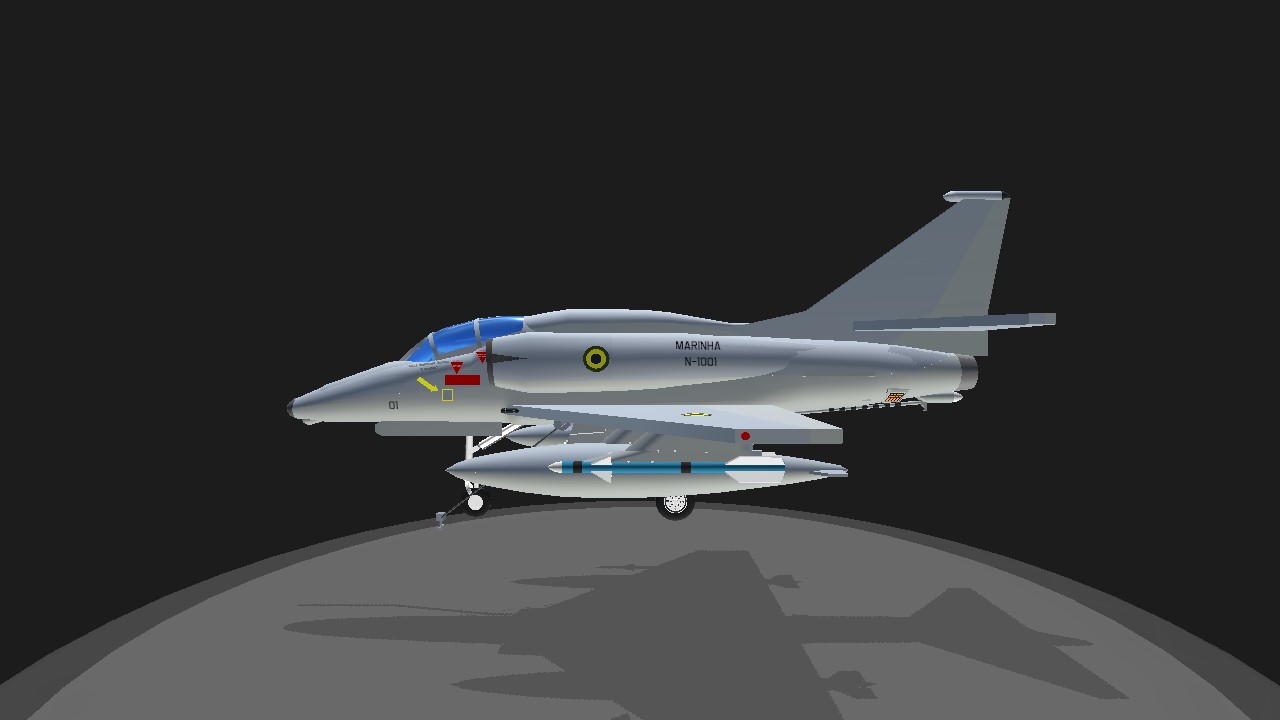
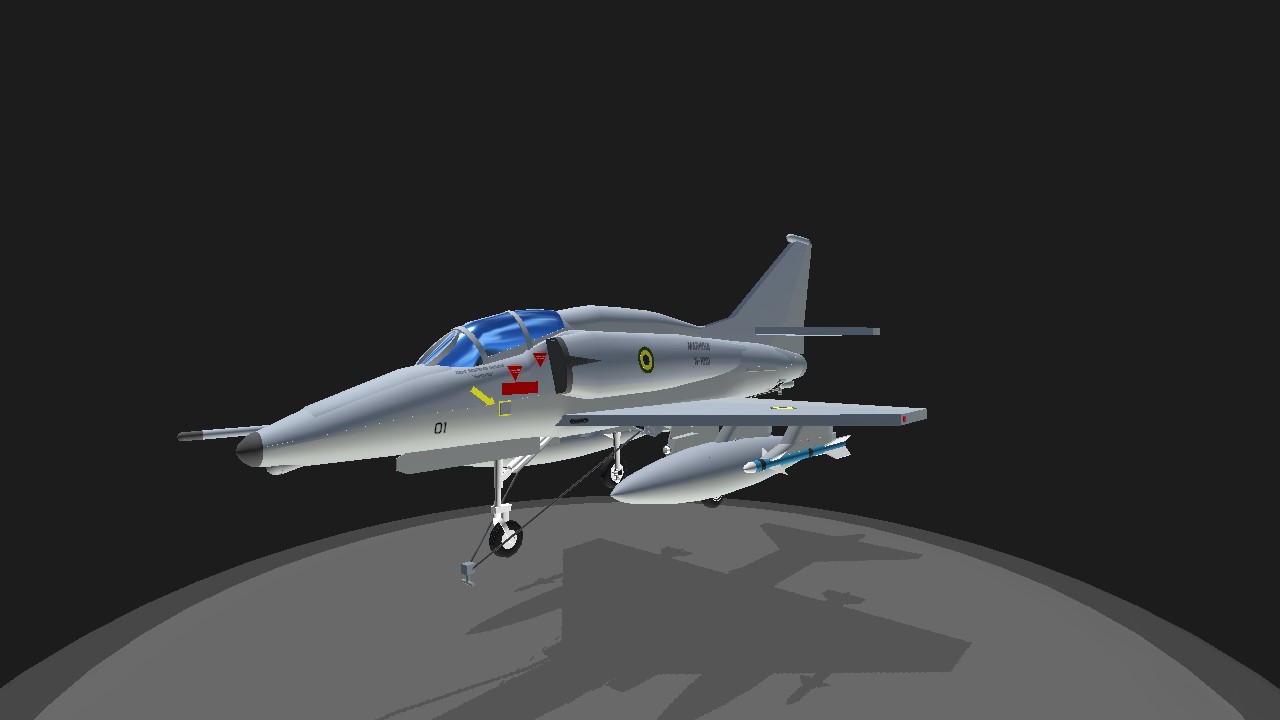
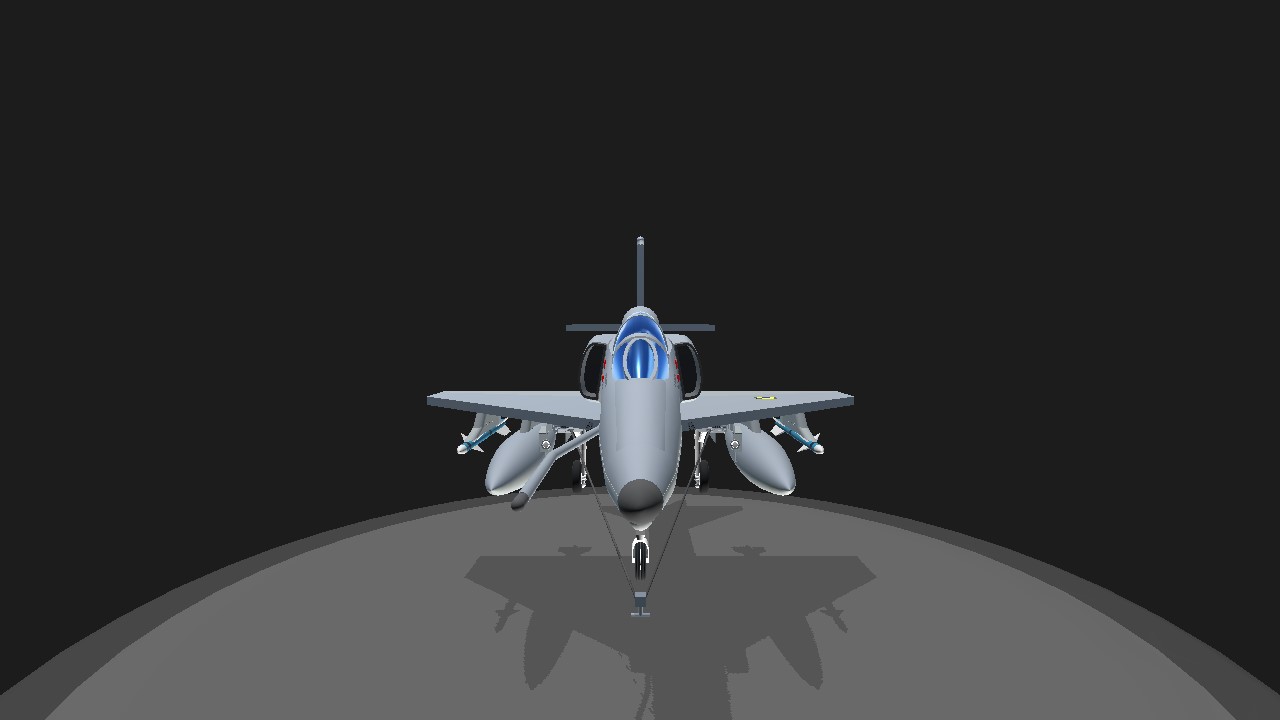
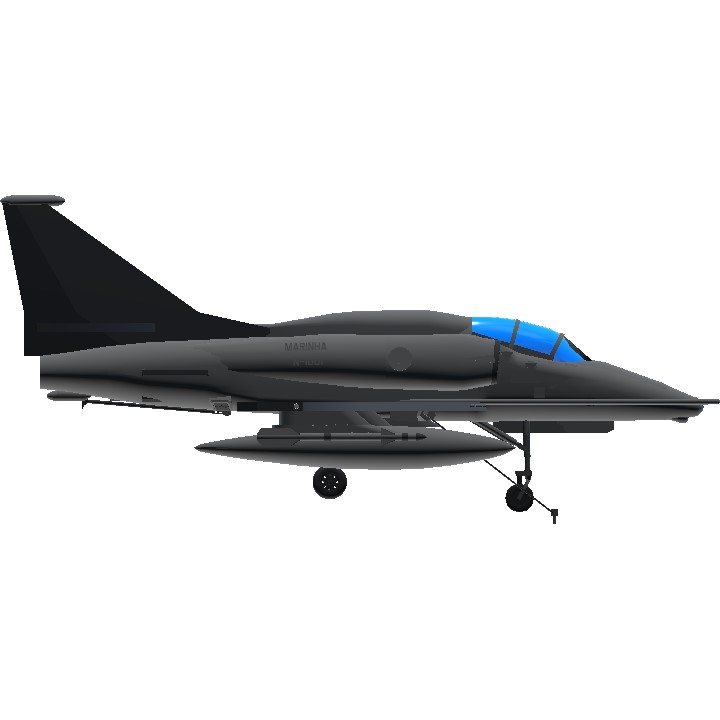
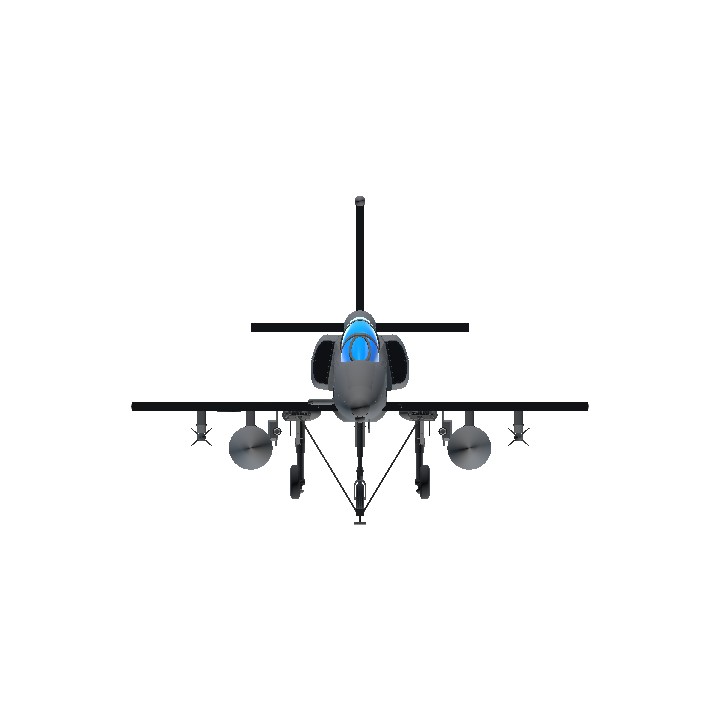
AF-1C Skyhawk II MB – Brazilian Naval Aviation Trainer and Multirole Jet
The AF-1C Skyhawk II MB is the Brazilian Navy’s modernized two-seat version of the McDonnell Douglas A-4KU Skyhawk, originally acquired from Kuwait in the late 1990s. Operated by the Força Aeronaval da Marinha do Brasil, the AF-1C plays a key role in training, operational conversion, and maritime support missions.
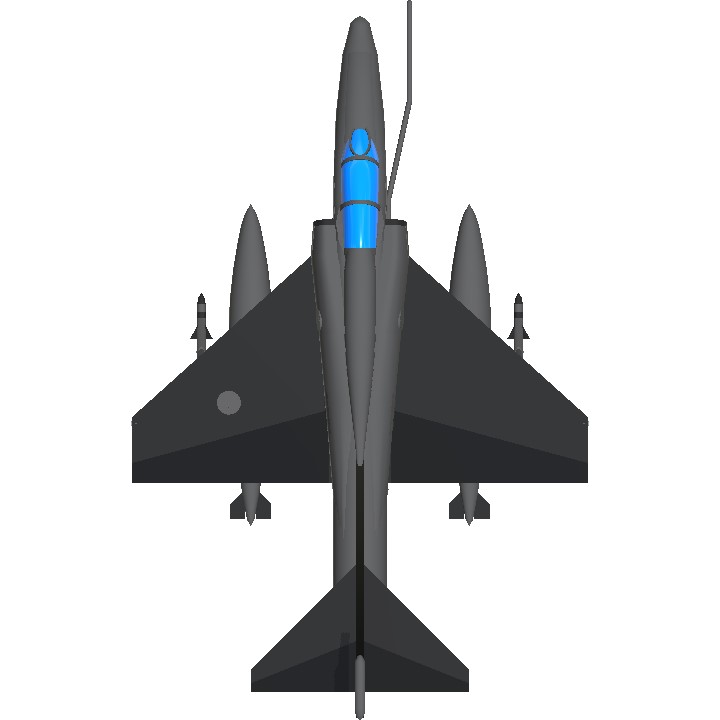
These aircraft were extensively modernized by Embraer under a program aimed at extending their service life and enhancing combat effectiveness. The upgrades include a glass cockpit, Hands-On Throttle and Stick (HOTAS) controls, digital mission systems, and a multimode radar suitable for both air-to-air and air-to-ground missions. Although not equipped with advanced guided munitions such as AMRAAM or precision targeting pods, the AF-1C can carry AIM-9 Sidewinder missiles, Mk 82 bombs, unguided rockets, and various pods, making it well-suited for fleet defense, strike training, and light attack roles.
Powered by the Wright J65-W-20 turbojet, the AF-1C reaches speeds of up to 670 mph (1,078 km/h) and has an ordnance capacity of 8,200 lbs (3,720 kg). Its compact dimensions and agility were originally optimized for carrier-based operations aboard the now-retired NAe São Paulo, but the aircraft currently operates from land bases, continuing to provide valuable naval aviation training and tactical capability.
As the two-seat variant, the AF-1C allows for pilot instruction, tactical coordination, and lead-in fighter training, while retaining full operational capabilities. It is an essential asset for preserving the Brazilian Navy’s fixed-wing aviation expertise in the post-carrier era.
Key Features of the AF-1C Skyhawk II MB:
Two-seat variant of the upgraded ex-Kuwaiti A-4KU Skyhawk.
Modernized with glass cockpit, HOTAS, digital systems, and multimode radar.
Capable of fleet defense, strike training, and reconnaissance.
Supports AIM-9 Sidewinder missiles, Mk 82 bombs, unguided rockets, and pods.
Powered by the Wright J65-W-20 turbojet engine.
Land-based operations after retirement of NAe São Paulo.
Vital for operational conversion and naval aviation readiness.
Controls (simulated):
AG1: Jettison fuel tank
AG6: Deploy drag chute
AG7: Extend tail hook
AG8: Lights
VTOL: Flaps
Trim: Elevator trim
Specifications
Spotlights
- PrussianAirWorks one month ago
General Characteristics
- Created On Android
- Wingspan 24.7ft (7.5m)
- Length 38.9ft (11.9m)
- Height 17.8ft (5.4m)
- Empty Weight N/A
- Loaded Weight 7,833lbs (3,553kg)
Performance
- Power/Weight Ratio 1.936
- Wing Loading 25.5lbs/ft2 (124.4kg/m2)
- Wing Area 307.4ft2 (28.6m2)
- Drag Points 3564
Parts
- Number of Parts 331
- Control Surfaces 15
- Performance Cost 1,389
Honourable Mentions:
@PrussianAirWorks
Honorable Mentions
@WarLightning
@kav
Honorable Mentions:
@nwa
@Kris102874837