

Build credit:
@Beetlejuice6156
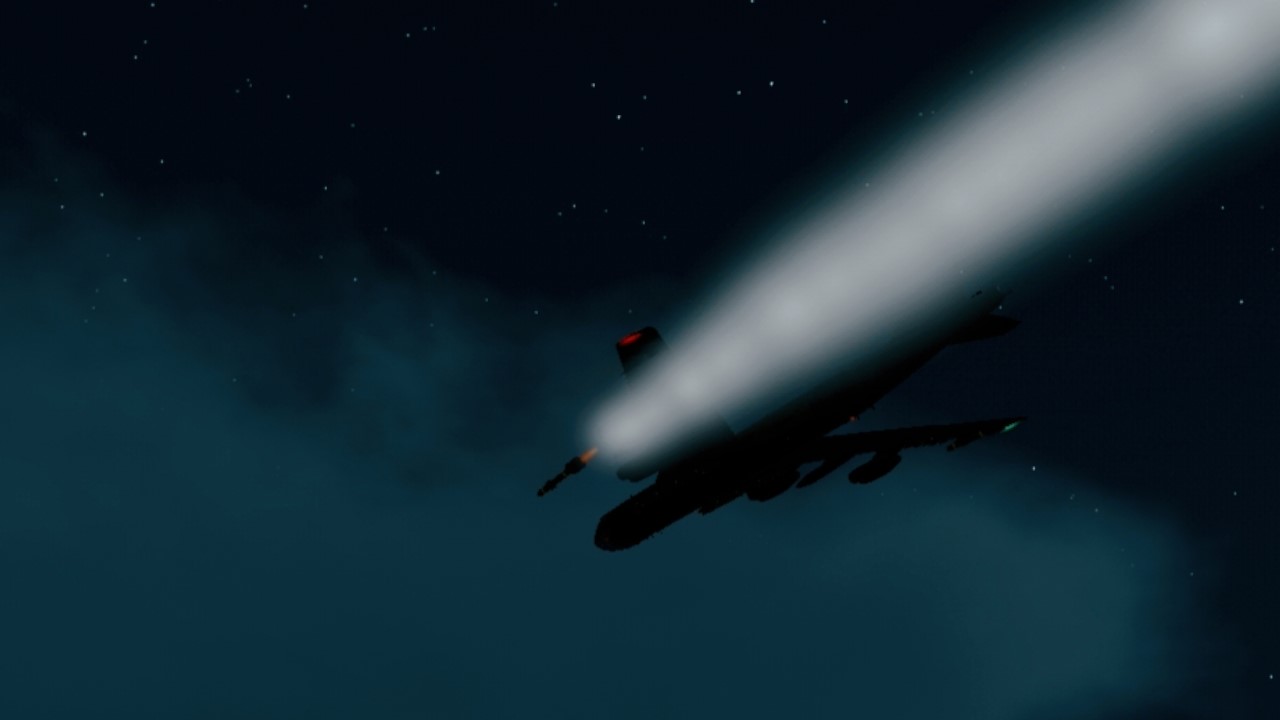
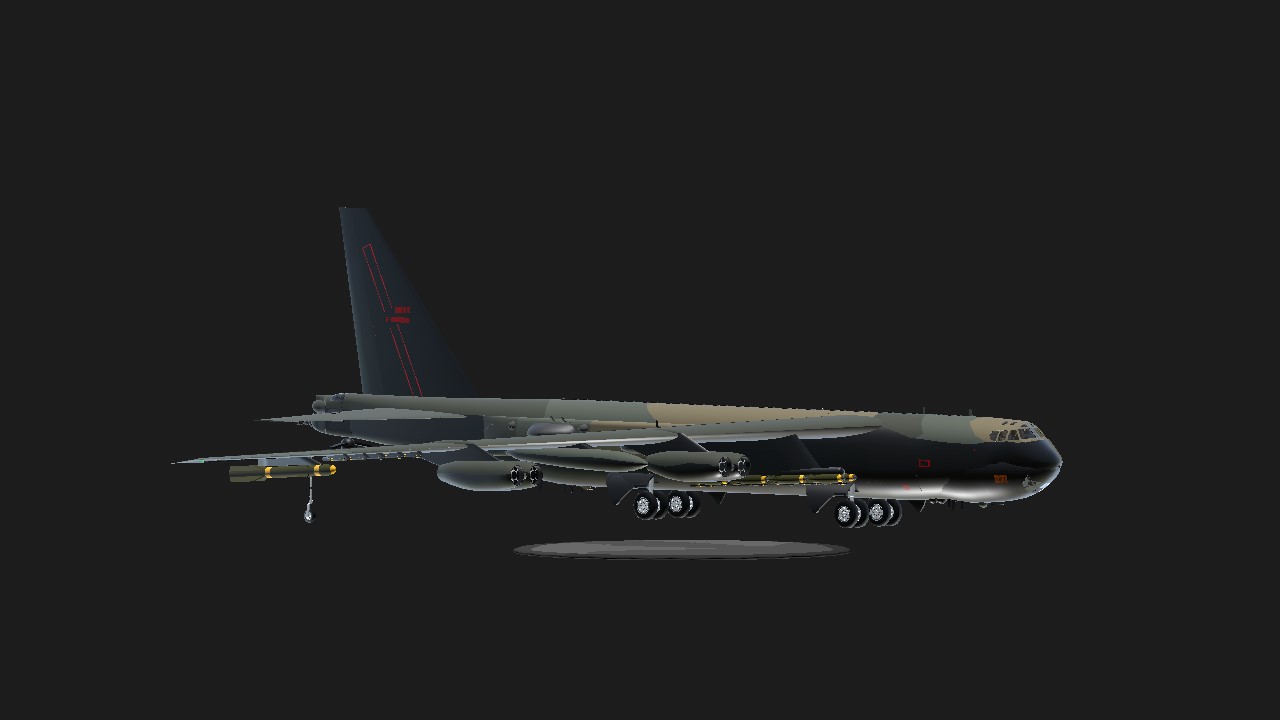
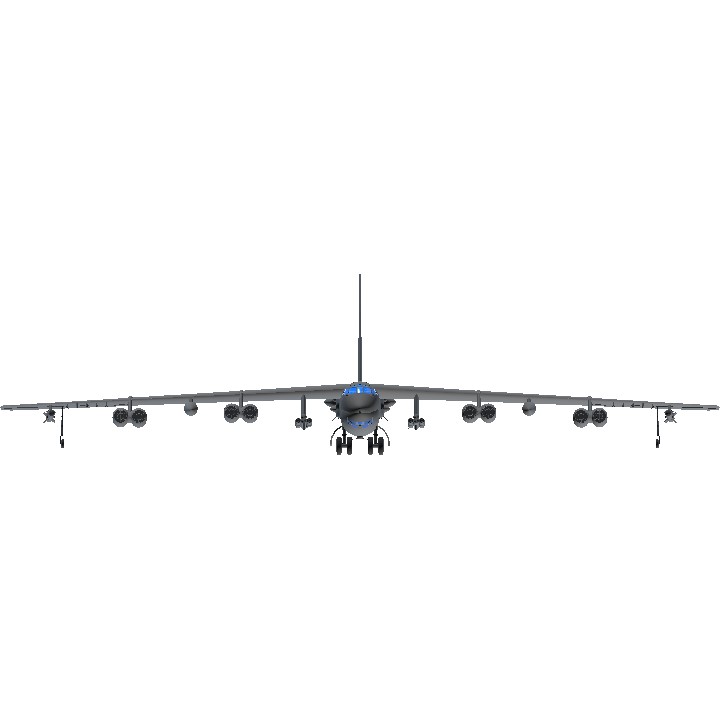
The Boeing B-52 Stratofortress is an American long-
range subsonic jet-powered strategic bomber. The B-52 was designed and built by Boeing, which has continued to provide support and upgrades. It has been operated by the United States Air Force (USAF) since 1955 and was flown by NASA from 1959 to 2007.[2] The bomber can carry up to 70,000 pounds (32,000 kg) of weapons[3] and has a typical combat range of around 8,800 miles (14,200 km) without refueling (wiki)
Development
The YPB-52C was an experimental heavy bomber variant developed from the Boeing B-52C Stratofortress airframe in the late 1950s. While retaining the basic structural layout of the B-52C, the YPB-52C was extensively modified for long-range maritime patrol and electronic warfare (EW) operations. The program was initiated to address the growing need for wide-area ocean surveillance and stand-off electronic support during Cold War naval operations. Due to high costs, technical complexity, and shifting strategic priorities, production was limited to only ten aircraft.
Operational History
The YPB-52C entered limited service in the early 1960s and was assigned primarily to Pacific-based units. During the Vietnam War, the aircraft was deployed in a classified support role rather than conventional bombing missions. Operating from forward air bases and offshore patrol corridors, YPB-52Cs conducted extended-duration flights over the Gulf of Tonkin and surrounding regions.
Their primary mission was electronic reconnaissance and electronic countermeasures support. The aircraft monitored North Vietnamese radar emissions, communications traffic, and air defense networks, relaying intelligence to command centers and supporting strike aircraft. In several documented operations, YPB-52Cs provided stand-off jamming coverage to disrupt surface-to-air missile guidance systems and early warning radars during major air campaigns.
Due to its low agility and slow maneuverability, the YPB-52C was not intended to penetrate heavily defended airspace. Instead, it relied on high-altitude operation, distance from hostile zones, and onboard electronic warfare systems for survivability. The aircraft’s long endurance allowed it to remain on station for extended periods, making it a valuable force multiplier despite its limited numbers.
Retirement
By the early 1970s, advances in dedicated electronic warfare platforms and maritime patrol aircraft rendered the YPB-52C increasingly obsolete. All ten aircraft were withdrawn from service shortly after the Vietnam War, with several airframes reportedly used for testing and training before being scrapped. None are known to have survived into museum preservation.
Armament:
X-67:Long range hypersonic missile build for destroying ships with thick armor
AGM 114 HellFire ER:Hellfire with extended range up to 60km
TLAM-NAL: Tomahawk Land Attack Missile - with Nuke, Launched from Aircraft
(Classified)
Boom 50: Basicly mark 82
.50 cals
50mm anti ship cannon
Specifications
General Characteristics
- Predecessor B-52
- Created On Android
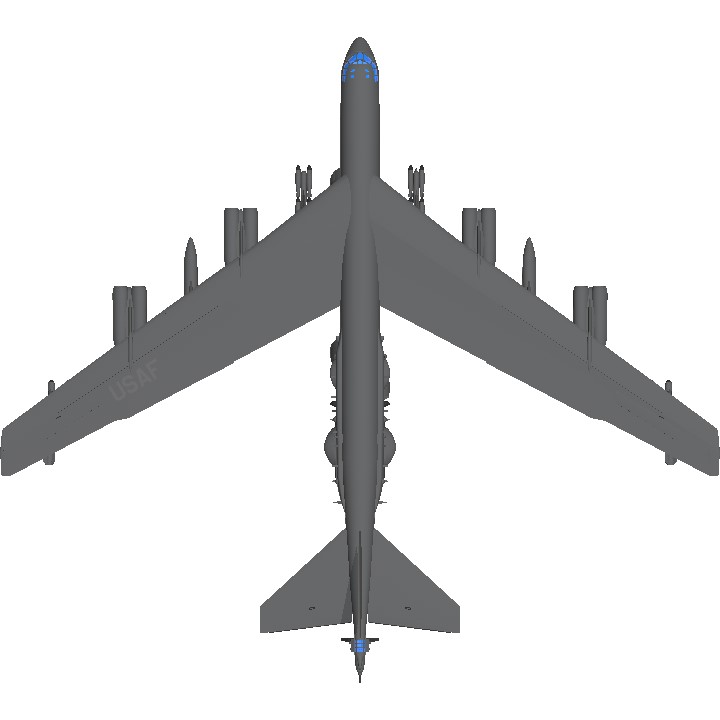
- Wingspan 188.4ft (57.4m)
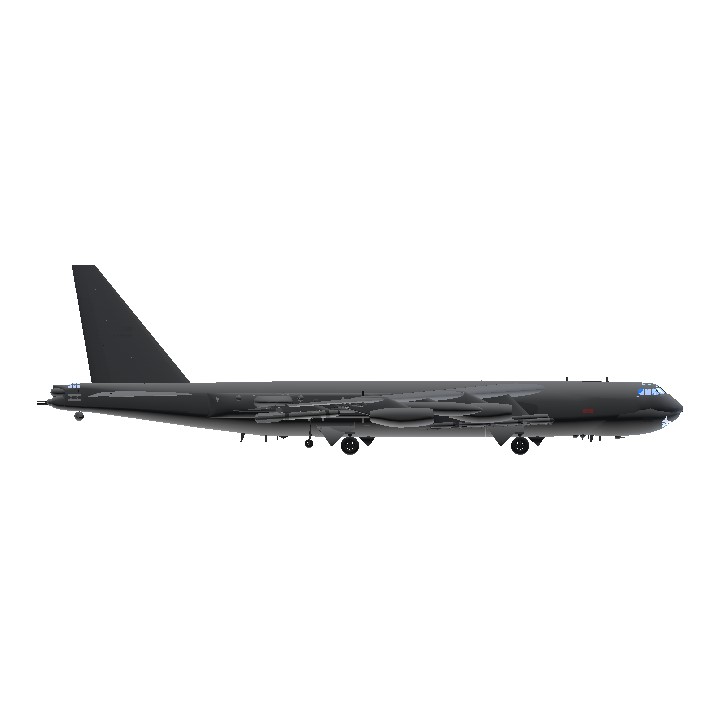
- Length 169.1ft (51.5m)
- Height 49.6ft (15.1m)
- Empty Weight 46,580lbs (21,128kg)
- Loaded Weight 56,346lbs (25,558kg)
Performance
- Power/Weight Ratio 4.187
- Wing Loading 43.6lbs/ft2 (213.0kg/m2)
- Wing Area 1,291.6ft2 (120.0m2)
- Drag Points 9266
Parts
- Number of Parts 1040
- Control Surfaces 4
- Performance Cost 4,314
Displays credit:
@Beetlejuice6156