Good morning, afternoon, or evening, whenever you are reading this, may the Lord bless you.
Today I introduce you to...
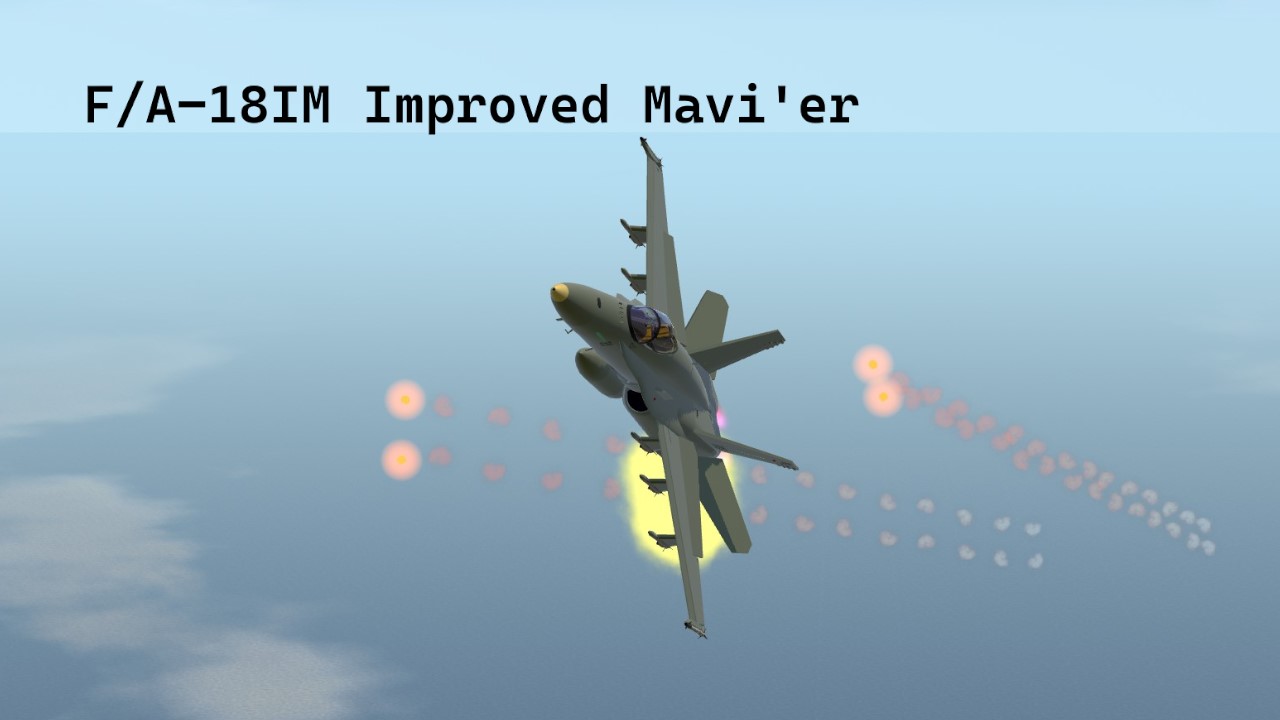
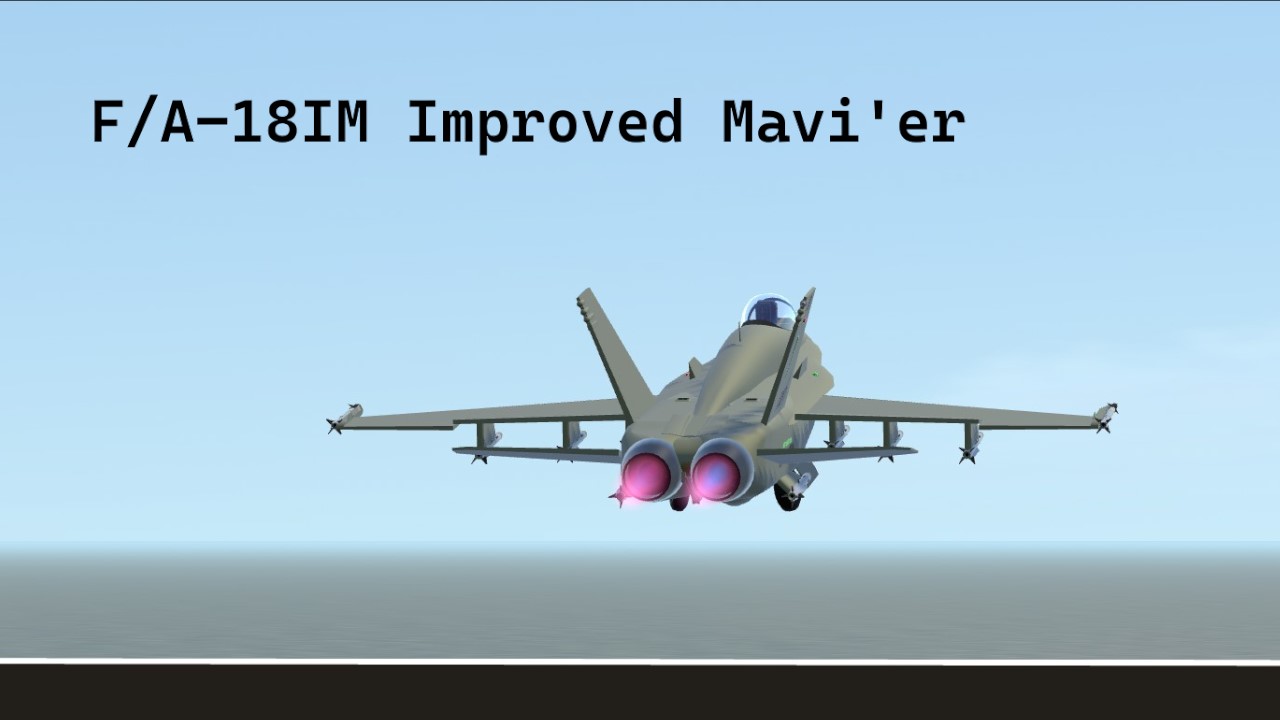
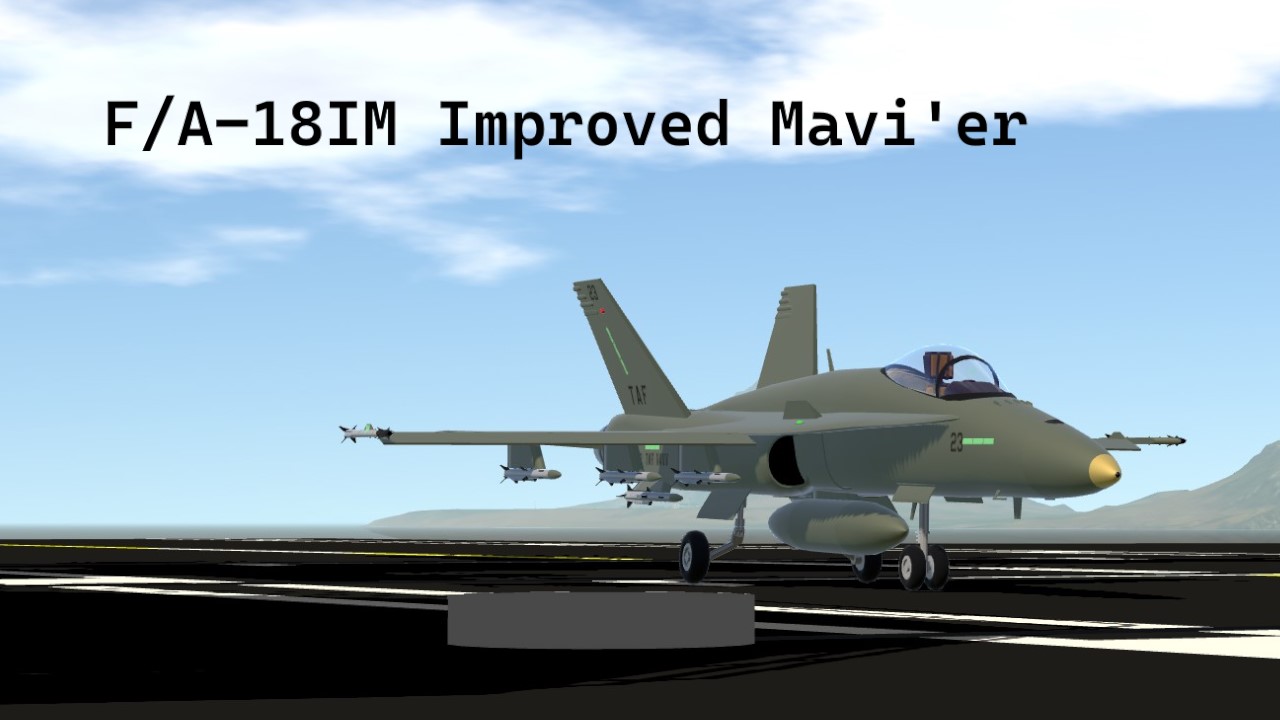
F/A-18IM Improved "Mavi'er"
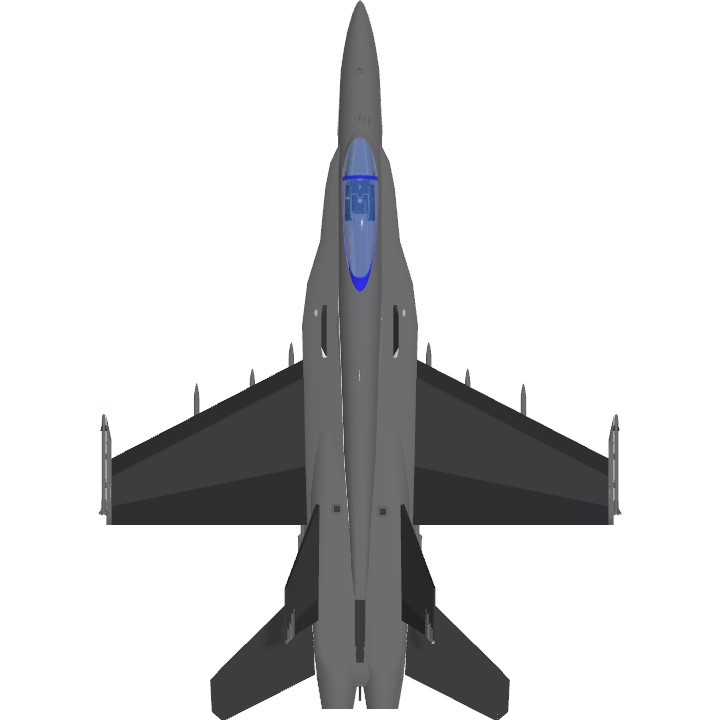
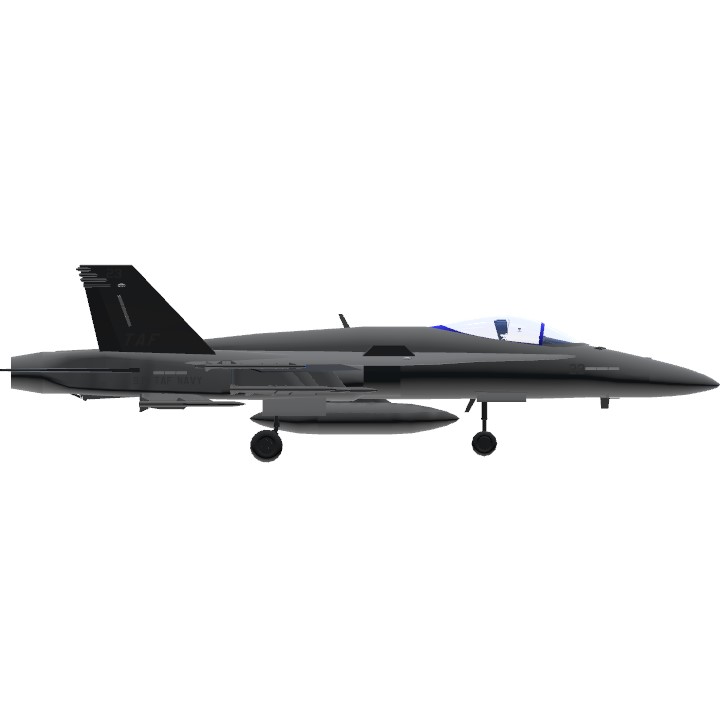
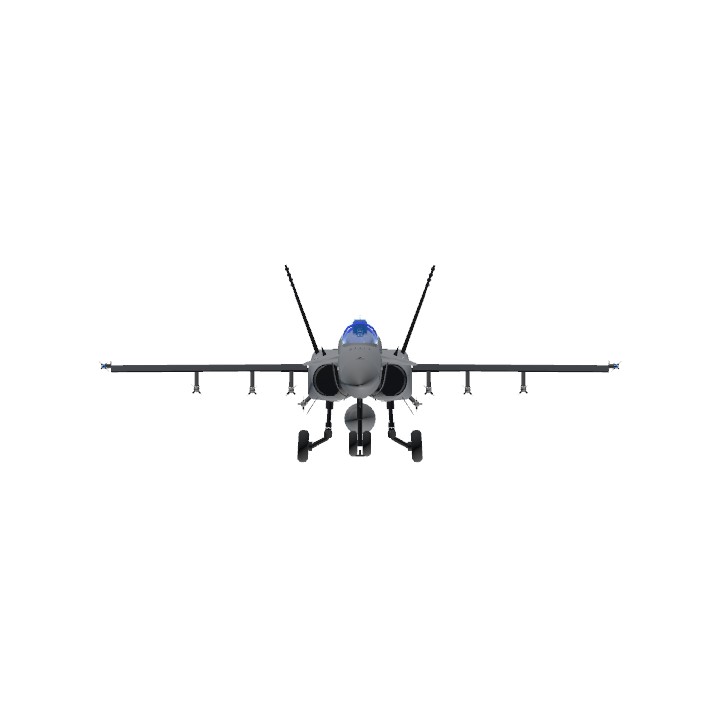
Today I'm sharing this model, which I recently modified. It was a long project that took some time to complete, but thinking about it, I'll probably upgrade this variant to Block II. It's literally a modified and modernized "Wasp." The appearance remains largely the same, although with camouflage more suited to that used by the Israeli Air Force. As you know, the "Wasp" is largely based on the F/A-18C Hornet.
History of the F/A-18IM Improved "Mavi'er" (Fictional)
Before becoming an F/A-18IM, there was the F/A-18I, which was the basis for the development of the 18IM, although this 18I only managed to go out with 5 production fighters in total (because it was desired to maintain performance since the 18IM was still under development), the 18I used a mechanically scanned radar, AAM-14B BVR AAM, LANCE-T BVR AAM and R-97M WVR AAM.
The project, designated "F/A-18I", arose during the ongoing collaboration between OKB-147 "Vostok" and the American aerospace development company "Boeing". The T.A.F. NAVY. was facing multiple counterparts of the Yak-39M, and operating only this fighter, which was subsonic, did not exceed Mach 1, and was poorly maneuverable, with a rather limited radar compared to its counterparts, mechanically scanned (neither PESA nor AESA), and its AAM-14B missiles were already quite outdated compared to the enemy's newer Fox-3s with AESA radar seekers. The development of the Izdeliye 18I began. This project was simple: take a standard F/A-18C Hornet, modernize its payload, armament, radar, and avionics.
Boeing was tasked with presenting an F/A-18C Hornet model to begin the modernization process. The fighter was delivered to OKB-147 to carry out the complete upgrade. The process began with modernizing the cockpit avionics, replacing many analog systems with MFD displays to improve pilot operation and access. OKB-147 then began developing and manufacturing new missiles. At that time, the newest variant of the AAM-14 family, the AAM-14D-3, was already available. This Fox-3 air-to-air missile was comparable to the Chinese PL-15.
AA Weapons Development
But remember this, the AAM-14B was heavily used on the Yak-39M, so it wouldn't be worth continuing to produce the F/A-18I with this missile, which was already outdated compared to its counterparts. Then began the development of the AAM-14C for use on the upcoming F/A-18IM. The AAM-14C itself had a maximum range of 144km and was quite effective, but it caused problems when fired from the F/A-18IM's pylons. So, a missile was developed specifically for the F/A-18IM, which would be the AAM-14C-6, an improvement on the original AAM-14C. This one had a range of 149km (more extended, although not by much). The missile was a success, but it wasn't enough at this point. The F/A-18IM's radar was outdated; it was a mechanically scanned "R001V" radar with a range of only 110km.
So what was done? The decision was made to develop a new AESA radar to replace the aging R001V. This would be replaced by the new AESA "R014C" with a maximum range of 265 km and an effective range of 200 km. Quite a range, wouldn't you say? The AAM-14C-6 fell short after this upgrade. But it didn't stop there. The AAM-14D was then developed as an external project, although it wasn't a good match for the F/A-18IM. The AAM-14D was released alongside the AAM-14D-3, both with the same design, although the D-3 had a longer range and improved sustained propulsion (the AAM-14D was one of the first ramjet AAMs developed by OKB-147). The AAM-14D-3 would have a maximum range of 245 km, while the early AAM-14D would only have 230 km. Finally, the AAM-14D-3 was the perfect candidate for the F/A-18IM and became the perfect Fox-3 for it.
F/A-18IM "R014C" AESA Radar
F/A-18IM "AAM-14D-3" In Pylon


Here we enter the realm of WVR combat, and frankly, the R-97M, while performing well, was already obsolete. There was the R-97M3, the K-72M2, the K-30M2, the IIRHM-X, the SMRAAM-ET, the AAM-9X BII, and others. Honestly, the most modern was the K-72M2, outperforming the American AIM-9X and the European IRIS-T. However, the K-72M2 wasn't a good match for the F/A-18IM due to its avionics, which at that time weren't modern enough to be adapted to the F/A-18IM. So they opted for the AAM-9X Block II (derived from the AIM-9X design). It was the perfect solution for this fighter: an agile missile with a good IIR seeker, including TVC, and a high IRCCM. It was simply perfect for this new fighter.
F/A-18IM "AAM-9X Block II" In Pylon

The fighter jet was almost finished; it had the radar and the WVR and BVR AAM missiles. The cockpit still needed some modernization, although it was already quite modern. Then, the need for a GPS or GLONASS radar system was identified, and it was decided to integrate one into the cockpit to facilitate target detection, designate opponents, etc. The final touches included adding two rear pylons near the engine nozzles to mount AAM-14D-3 missiles.
Engines
I can't say much, from its beginnings the F/A-18I until becoming the F/A-18IM implemented new, more powerful engines with thrust vectoring, a TVC system that helps it to be more maneuverable and can be directly activated from the cockpit by the pilot.
AIRCRAFT ARMAMENT CHARACTERISTICS:
- x8 Misiles "AAM-14D-3".
- x2 Misiles "AAM-9X Block II".
- x1 "M61A1" Gatling Gun.
Having concluded this, I only wish you a very nice day, afternoon or evening and that the Lord bless you enormously and keep you wherever you go.
Specifications
General Characteristics
- Predecessor Wasp
- Created On Windows
- Wingspan 40.8ft (12.4m)
- Length 56.1ft (17.1m)
- Height 15.6ft (4.8m)
- Empty Weight 17,872lbs (8,106kg)
- Loaded Weight 34,496lbs (15,647kg)
Performance
- Power/Weight Ratio 5.863
- Wing Loading 68.6lbs/ft2 (335.0kg/m2)
- Wing Area 502.8ft2 (46.7m2)
- Drag Points 6610
Parts
- Number of Parts 684
- Control Surfaces 10
- Performance Cost 3,245