

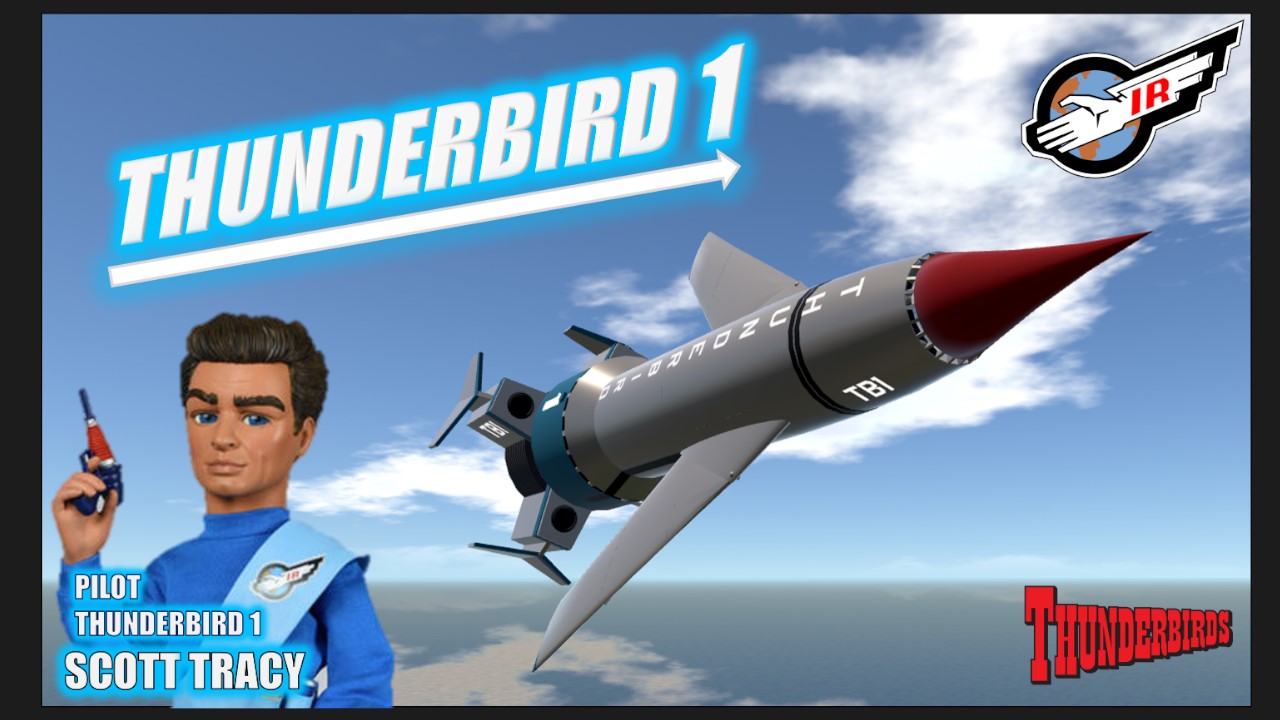
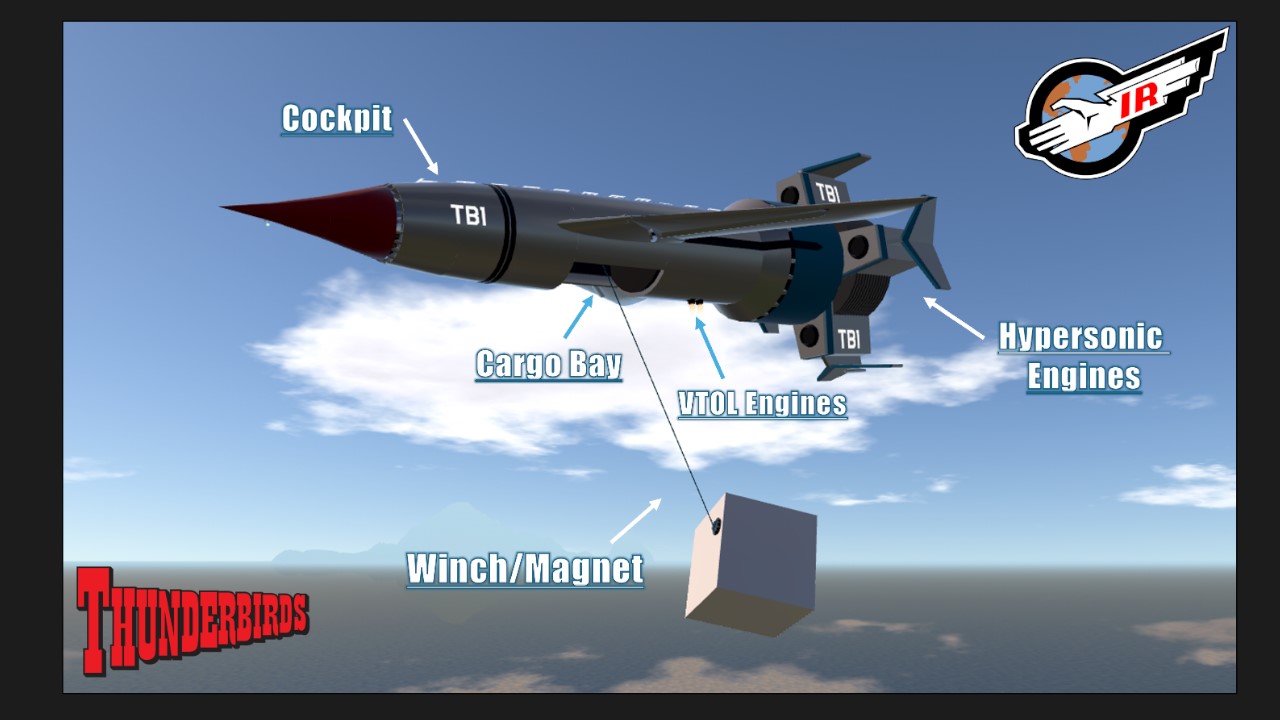
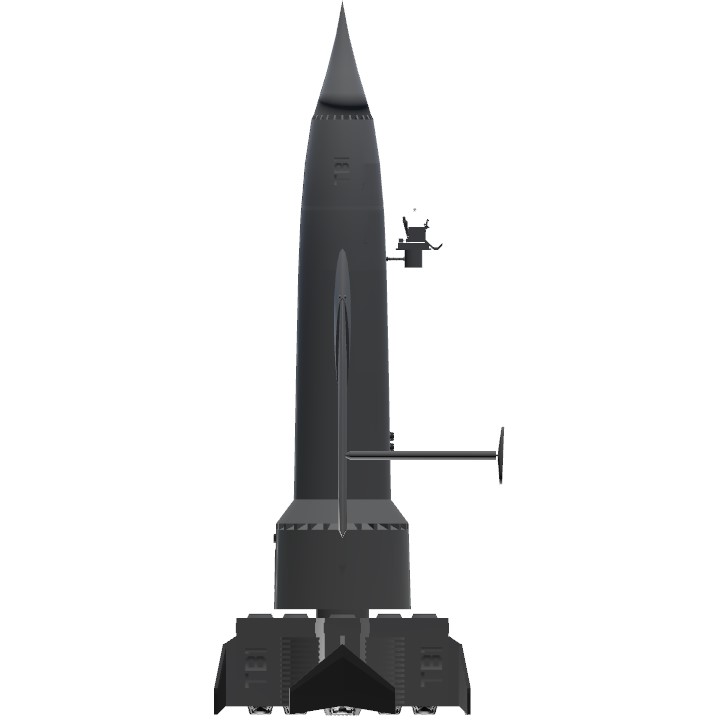
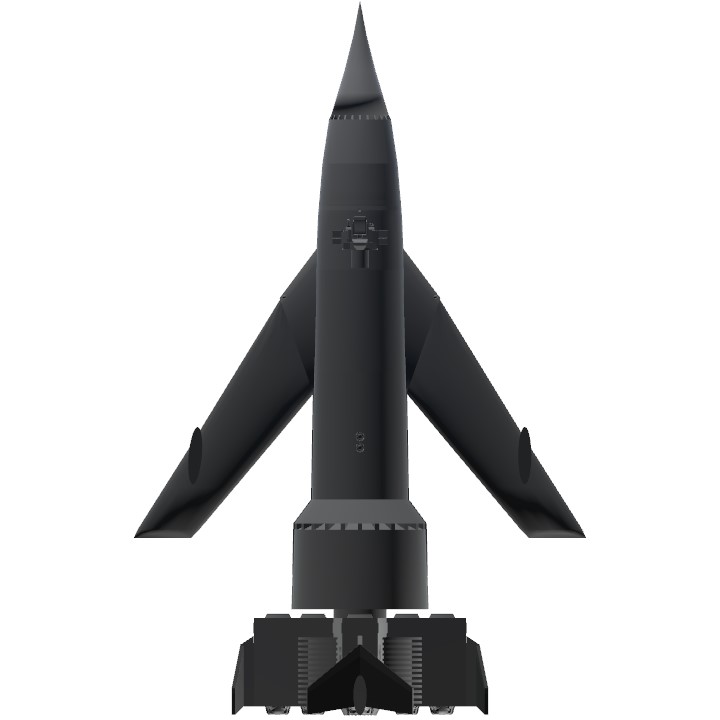
“Thunderbird 1” is a hypersonic rapid-response rescue vehicle designed by International Rescue and is usually the first to arrive at the danger zone to scout and locate victims of a particular disaster. It can reach a top speed of 15,000 mph (24,140 km/h) and has a service ceiling of 150,000 feet. Thunderbird 1 is mostly piloted by Scott Tracy, although it can also be piloted by his younger brother, Alan Tracy.
This particular craft had days of building and testing to make it easy to fly and handle for both horizontal and vertical flight. I attempted to give it its actual of 15,000 mph but found it too risky for the craft and can only reach a top speed of 2,000 to 3,000 mph (if you’re not constantly maneuvering the damn thing). I decided to combine design elements from the original 1965 model and the 2015 remake.
This model was based on an existing Thunderbird 1 build with a sci-fi cockpit but this was scaled up to accommodate the size of Jundroo’s pilot seat and tried to make it as accurate to the original, like the landing skids being positioned in the riskiest of areas (I don’t know how Brains came up with this), reconfiguring the cockpit and adding elements from other Thunderbird 1 models, old or new, especially with the gadgets needed for a rescue operation.
For stabilization, I simply yanked two gyroscopes from a Yak-38 Forger and added it to this build to stabilize it during VTOL operations and made it slightly easy to land vertically on its thrusters or horizontally on its skids. I also buffed the yaw power since this thing is heavy. During flight tests, this had similar attributes and flight characteristics to the 2015 model from Thunderbirds Are Go!
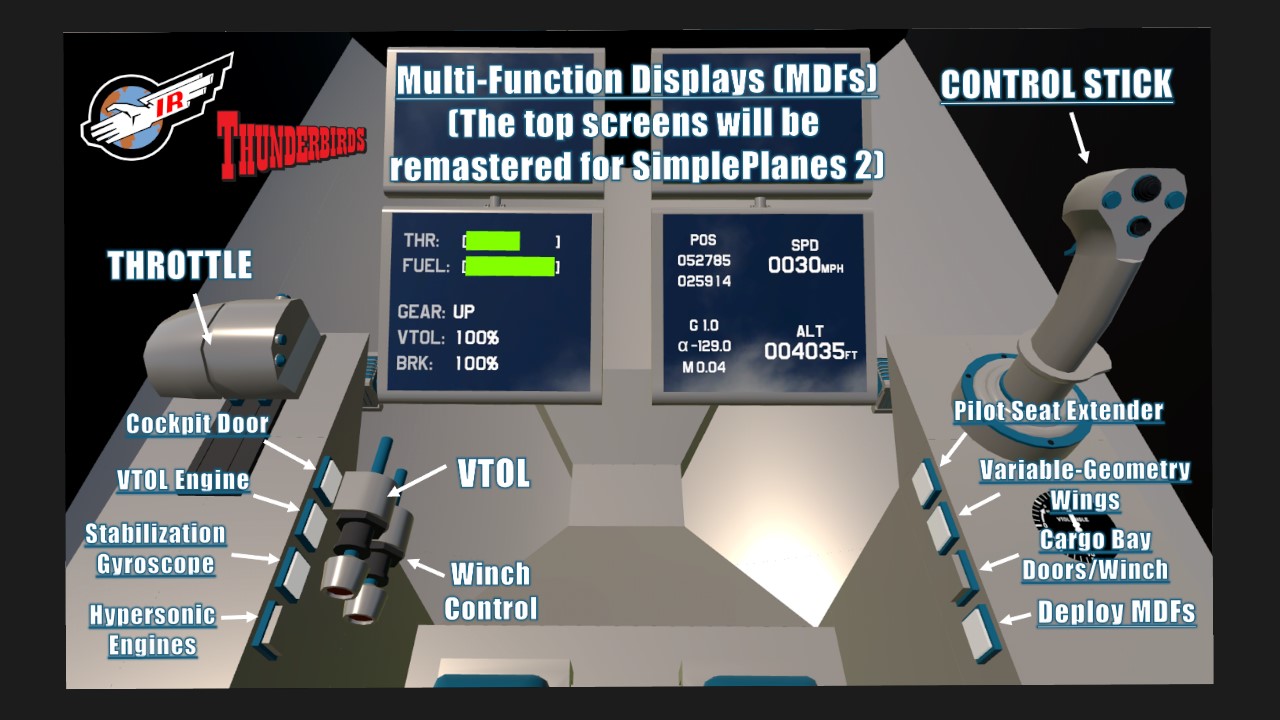
The pilot seat is a custom design and partially based on the 2015 design with its hydraulic retractable arm able to put Scott in and out of the cockpit before, during and after a rescue mission, and be rotated up to the horizontal position as it was depicted in the show. The seat also has deployable multi-function displays for the speed, altitude, fuel, and throttle while the top screens were reserved for external cameras or maps and will be updated soon once SimplePlanes 2 is released.
Inside the cockpit, everything is completely obscured, no external viewing ports, which is almost like Charles Lindbergh’s Spirit of St. Louis, except there are windows and a periscope. Not really a fan of this design, but there is an instrument panel behind the nosecone with a similar role to the MFDs (Note: The artificial horizon is unreliable because takes off vertically like in the series). The two screens are also reserved for external cameras.
Behind the pilot is the cargo bay where a lot of the rescue equipment are stored during transit and be deployed during a rescue operation. This build mostly focused on lifting of seemingly lighter objects like cars, aircraft and people, so the (un)reliable winch and magnet were the tools for this type of rescue. Not really my favorite and I wholeheartedly dislike the constant swinging of the magnet, but it's just skill issue. I’m not Scott Tracy, after all.
Thunderbird 1 Control Systems:
Main Controls:
A & D = Ailerons
W & S = Elevators
Q & E = Rudder
Landing Gear = Forward and Aft Landing Skids
Activation Groups:
AG1 = Primary Hypersonic Engines
AG2 = Stabilization Gyroscopes
AG3 = VTOL Engines
AG4 = Cockpit Doors
AG5 = Pilot Seat Extender
AG6 = Pilot Seat to Horizontal and Variable-Geometry Wings
AG7 = Main Bay Doors and Winch/Magnet
AG8 = Pilot Seat Screens
VTOL Controls:
VTOL Up = Set Gyroscope to Horizontal
VTOL Neutral = Set Gyroscope to Vertical
Trim Controls:
Trim Down = Reel Winch/Magnet Down
Trim Neutral = Reel Winch/Magnet Down
Credits to:
“SpetzavodHeavyIndustries” for the Gyroscopes from their Yak-38 Forger…
“zap210” for the base model and inspiration of the build…
"Thunderbirds are go!" - International Rescue
Specifications
General Characteristics
- Created On Windows
- Wingspan 42.0ft (12.8m)
- Length 26.7ft (8.2m)
- Height 66.8ft (20.4m)
- Empty Weight 26,738lbs (12,128kg)
- Loaded Weight 40,032lbs (18,158kg)
Performance
- Power/Weight Ratio 48.308
- Wing Loading 120.1lbs/ft2 (586.6kg/m2)
- Wing Area 333.2ft2 (31.0m2)
- Drag Points 73880
Parts
- Number of Parts 325
- Control Surfaces 8
- Performance Cost 1,579
Thank you, I was just thinking about the toys i had of these, Any plans for the others?