

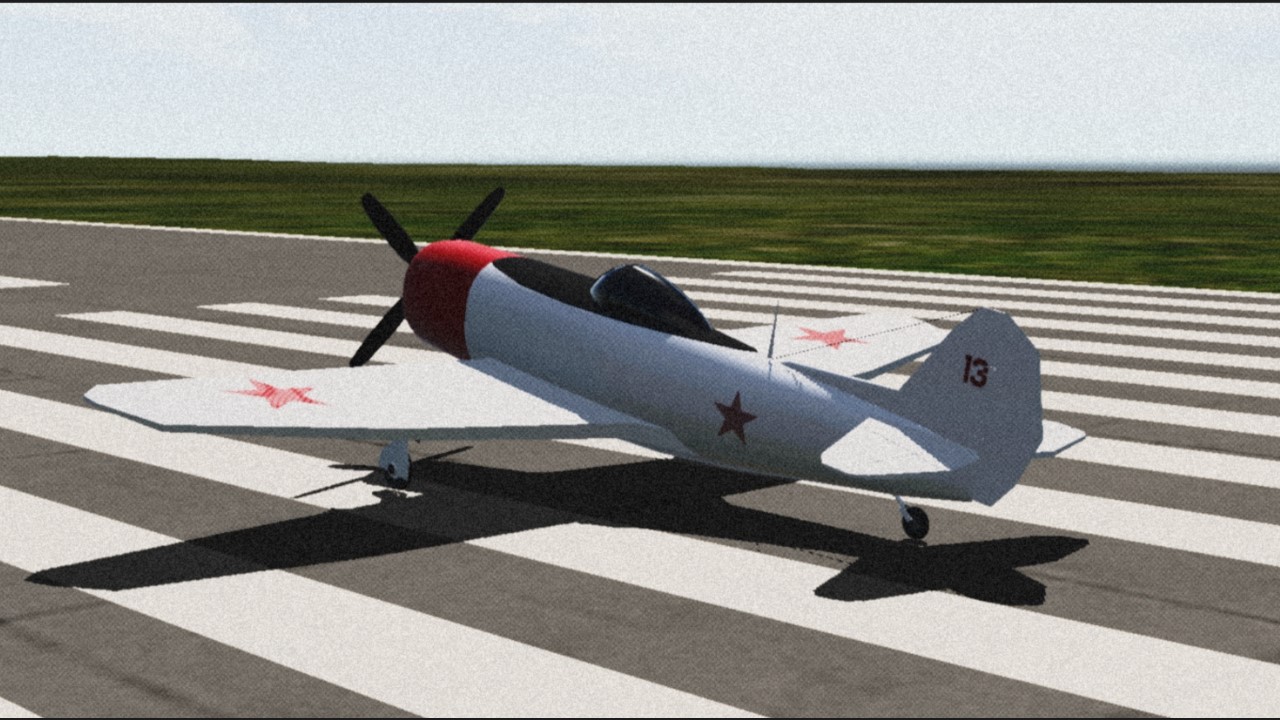
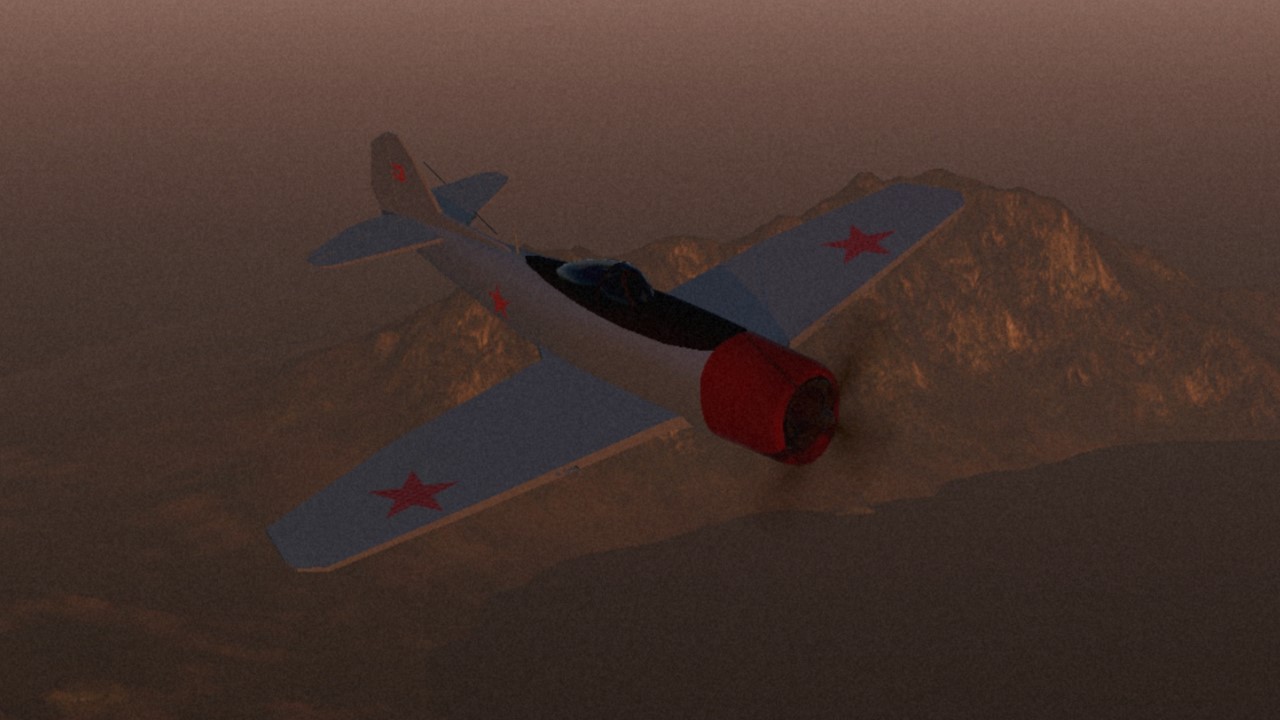
What is Republic P-47 Thunderbolt?
The Republic P-47 Thunderbolt was one of the heaviest, most powerful, and most overbuilt fighter aircraft ever produced by the United States during the Second World War. Designed primarily for high-altitude air combat over Western Europe, the P-47 became a symbol of American industrial philosophy: large, powerful, rugged, and created under the assumption of abundant logistics. When the aircraft reached the Soviet Union through the Lend-Lease program, it entered a completely different war environment in terms of geography, doctrine, and technical demands. As a result, the operational history of the P-47 in Soviet service was not a story of triumph, but rather one of brief experimentation that ended with a cold evaluation and a quiet withdrawal.

Background of P-47 Use by the Soviet Union
The introduction of the P-47 Thunderbolt into Soviet service occurred during the final stages of World War II, when the nature of Lend-Lease had evolved from urgent wartime lifeline into redistribution of surplus Allied production. By 1944, American aircraft manufacturing capacity exceeded the immediate operational needs of the USAAF, while the Red Army had already secured strategic initiative on the Eastern Front. In this environment, the P-47 was no longer a decisive necessity but a candidate for limited operational testing.
The Soviet Union did not actively request the P-47 as a frontline fighter. Soviet priorities lay firmly with aircraft that were lightweight, agile, and effective at low to medium altitudes, such as the Yak-3, La-5FN, and La-7. Aircraft genuinely sought through Lend-Lease included the P-39 Airacobra, which matched Soviet tactical preferences far better. The P-47 arrived largely because it was available, not because it was needed.
Another factor behind the P-47’s transfer was its changing role within the USAAF. As the P-51 Mustang assumed dominance as the primary long-range escort fighter, the P-47 was increasingly reassigned to fighter-bomber duties or replaced in frontline escort units. Serviceable aircraft that were no longer optimal for American needs became candidates for transfer to Allied air forces, including the Soviet Union.
Soviet reception of the P-47 was pragmatic and reserved. There was no major propaganda campaign or doctrinal shift accompanying its arrival. Instead, Thunderbolts were assigned to specific units for limited evaluation, primarily to determine whether they could function as heavy ground-attack aircraft or medium-range escorts under Eastern Front conditions.
Crucially, the timing of the P-47’s arrival limited its potential impact. By late 1944 and early 1945, Soviet forces were already advancing deep into Eastern Europe, and there was little operational necessity for introducing a completely new fighter type. As a result, the P-47 never had the opportunity to influence the decisive phases of the war.
Variants of the P-47 Used by the Soviet Union
The primary variant of the P-47 operated by the Soviet Union was the P-47D series, particularly mid- to late-production subvariants. These included both the early razorback models with the high dorsal spine and older canopy design, as well as a smaller number of bubble-canopy aircraft that offered improved rearward visibility.

The bubble-canopy version attracted some interest among Soviet pilots due to its superior visibility, especially during low-altitude operations and situational awareness in contested airspace. However, this advantage alone was insufficient to significantly alter the aircraft’s overall evaluation.
All Soviet-operated P-47s retained the Pratt & Whitney R-2800 engine paired with its large turbo-supercharger system. While this combination was a technical achievement, it proved to be a mixed blessing in Soviet service. The system excelled at high altitude but was heavy, mechanically complex, and demanding in terms of maintenance.
There is no credible evidence that the Soviet Union operated P-47M variants in meaningful numbers, and no confirmed operational use of the long-range P-47N. If such aircraft were delivered at all, they left no notable combat record. Their intended roles did not align with Soviet operational requirements.
Overall, the P-47 variants received by the Soviet Union were largely standard American configurations, without extensive modification for Eastern Front conditions. This lack of adaptation further limited their effectiveness.
Operational Record in Soviet Service

The operational record of the P-47 in the Soviet Air Force was limited and understated, reflecting its marginal role within Soviet aviation. The aircraft were deployed in small numbers and typically assigned to secondary missions or evaluation duties rather than major combat operations.
In ground-attack missions, the P-47 demonstrated impressive survivability. The aircraft was capable of returning to base with substantial damage, a quality that Soviet pilots respected deeply. However, this durability came at the cost of high fuel consumption and complex maintenance demands.
In air-to-air combat, the P-47 was rarely employed for traditional dogfighting. Soviet pilots preferred domestic aircraft that offered superior agility and responsiveness at low altitude. The Thunderbolt was considered ill-suited to the turning engagements common on the Eastern Front.
No prominent Soviet aces became associated with the P-47, in stark contrast to the P-39 Airacobra, which produced many of the Soviet Union’s highest-scoring pilots. This absence reflects not propaganda bias but the aircraft’s limited and cautious use.
Ultimately, the P-47 was gradually withdrawn from frontline consideration. It was neither rejected outright nor embraced enthusiastically. Instead, it faded quietly from operational relevance, leaving behind a modest paper trail rather than a combat legacy.
Strengths of the P-47 from the Soviet Perspective
The most frequently acknowledged strength of the P-47 was its exceptional durability. Its robust airframe, substantial pilot armor, and relatively well-protected fuel systems allowed it to withstand damage that would have destroyed lighter aircraft.
The aircraft’s stability during straight-line flight and attack runs was highly valued. As a weapons platform, the P-47 was steady and predictable, enabling accurate strafing and bombing runs against ground targets.
The P-47’s diving performance was another notable advantage. Its mass and aerodynamic design allowed it to disengage rapidly from unfavorable situations by entering a high-speed dive, a tactic that proved effective when used correctly.
Its payload capacity was also impressive. The Thunderbolt could carry a significant combination of bombs and rockets, making it capable of delivering substantial destructive force against soft and semi-hardened targets.
For pilots accustomed to relatively fragile fighters, the sense of physical protection inside the P-47 cockpit was unusual and reassuring, even if it did not fully compensate for the aircraft’s other shortcomings.
Weaknesses of the P-47 in the Soviet Operational Environment
The primary drawback of the P-47 was its weight. The aircraft was too heavy to suit Soviet tactical doctrine, which emphasized agility, rapid response, and maneuverability at low altitude. In turning engagements, the P-47 was consistently outperformed.
Its optimal performance envelope lay at altitudes higher than those where most Eastern Front combat occurred. As a result, the aircraft’s turbo-supercharger advantage was often wasted, while its mass remained a constant liability.
Fuel consumption posed a serious logistical issue. Soviet supply systems were already strained, and the P-47’s appetite for fuel made it an inefficient choice for sustained operations.
Maintenance complexity further reduced its appeal. The engine and supercharger systems required skilled technicians and reliable spare parts, both of which were often in short supply at forward Soviet airfields.
Finally, the P-47 suffered from a lack of psychological acceptance. Soviet pilots felt more confident and connected to domestic designs or to the proven P-39, while the Thunderbolt was perceived as foreign, excessive, and doctrinally mismatched.
Armament and Equipment
The P-47s operated by the Soviet Union retained standard American armament, consisting of eight .50 caliber Browning M2 machine guns mounted in the wings, along with the ability to carry up to approximately 1,100 kilograms of bombs and various air-to-ground rockets. While this firepower was formidable for ground-attack missions, Soviet pilots accustomed to large-caliber autocannons often viewed machine guns as effective but unremarkable. American gunsights and avionics were considered modern and reliable, yet they offered no decisive advantage within the specific demands of Eastern Front combat.
Specifications
General Characteristics
- Predecessor Soviet's WW2 Planes Challenge [OPEN]
- Created On Android
- Wingspan 38.6ft (11.8m)
- Length 29.2ft (8.9m)
- Height 10.9ft (3.3m)
- Empty Weight 1,949lbs (884kg)
- Loaded Weight 7,668lbs (3,478kg)
Performance
- Horse Power/Weight Ratio 0.26
- Wing Loading 21.3lbs/ft2 (103.8kg/m2)
- Wing Area 360.6ft2 (33.5m2)
- Drag Points 1400
Parts
- Number of Parts 101
- Control Surfaces 4
- Performance Cost 610
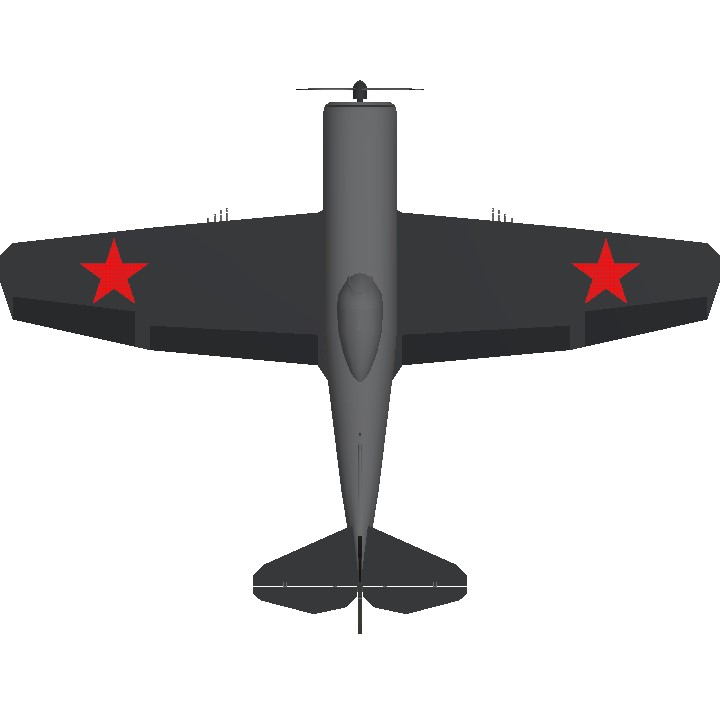
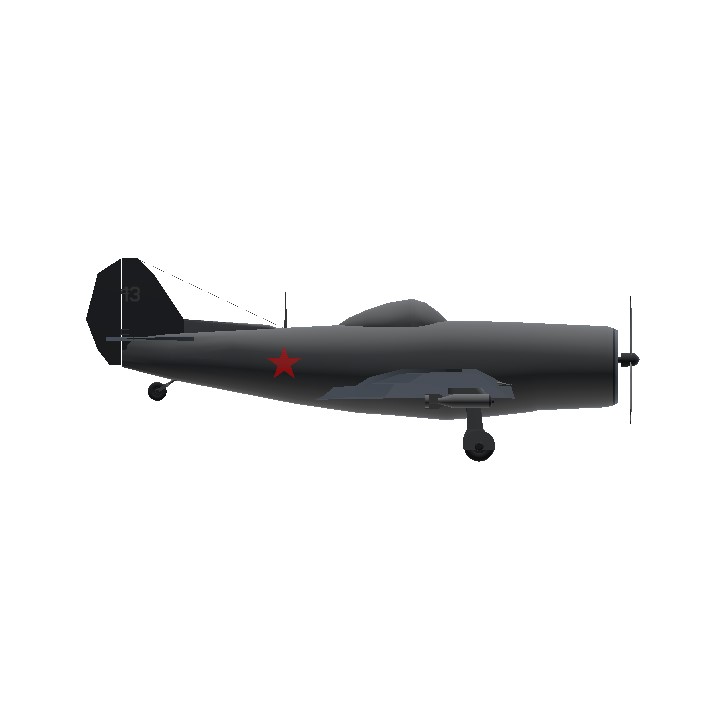
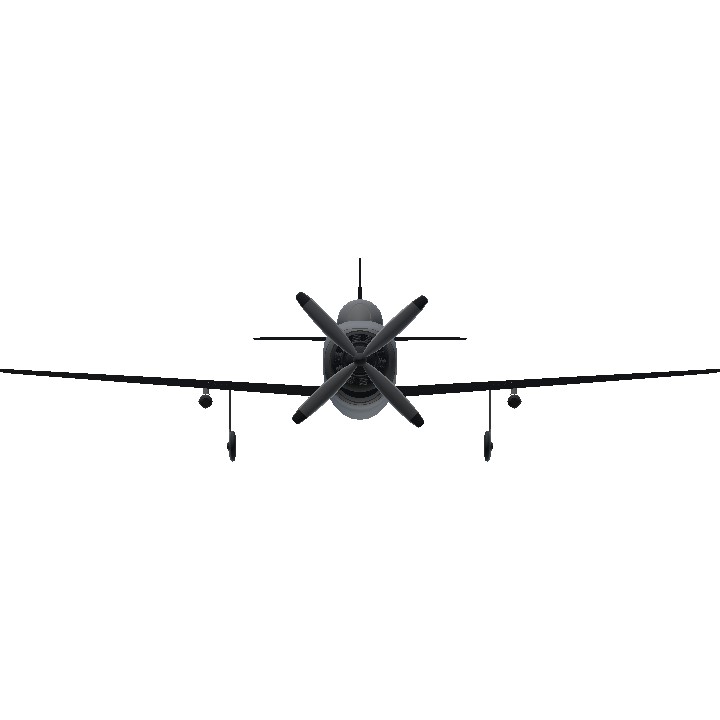
Challenge Score
Maneuverability : 9/10
Speed acceleration : 8/10
Weight : 9/10
Climb rate : 7/10
Stabilize : 7/10
Dogfight : 10/10
High/Low Alt Handling : 8/10
No Cockpit/camo
Total Score : 8,3/10
Tag List here
Auto Tag
@avDude4
@Cadvalto
I was done
@Jaspy190 I made it so it wouldn't be too leggy and that's the result XD
I love how I'm reading the description, and it basically boils down to "Soviets liked it, but didn't think it was Russian enough". Genuinely humorous to me.
@avDude4 Ehe, coincidentally because of the challenge of allowing Land-Lease aircraft, I made it :D
Oh you made it
It’s awsome