

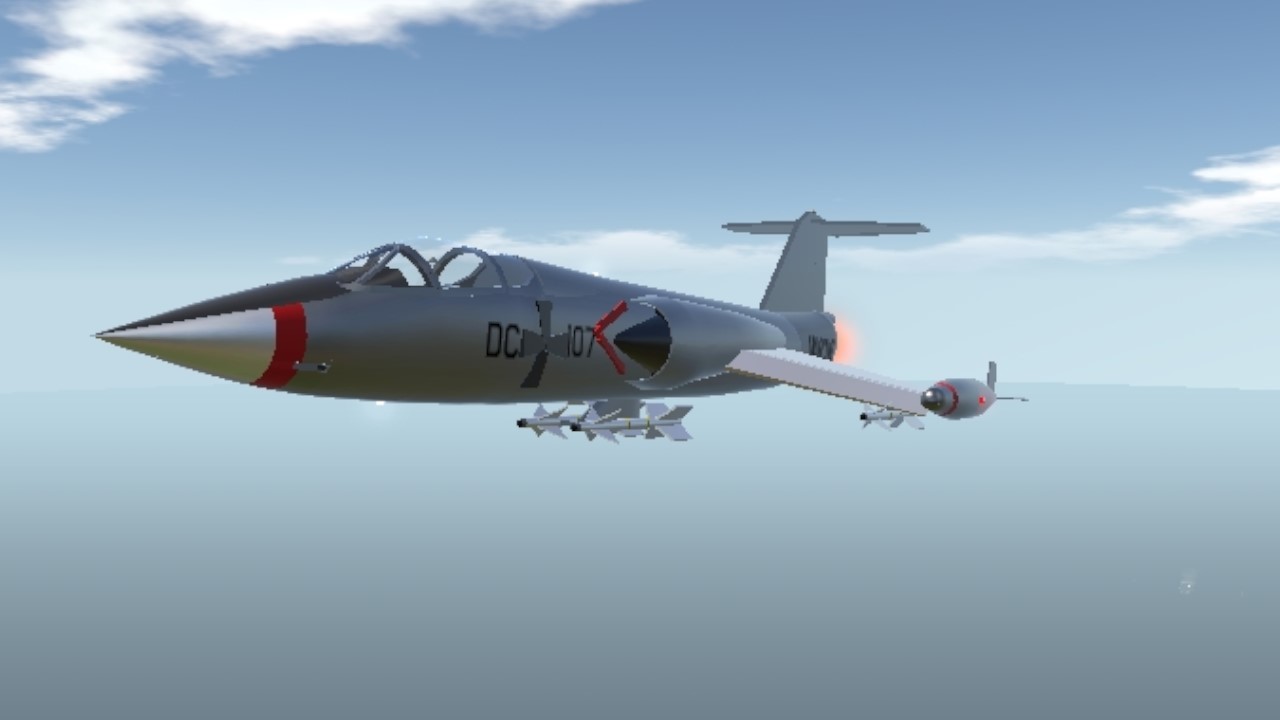
flying pencil
The F-104
The Lockheed F-104 Starfighter is an American single-engine, supersonic interceptor. Created as a day fighter by Lockheed as one of the "Century Series" of fighter aircraft for the United States Air Force , it was developed into an all-weather multirole aircraft in the early 1960s and extensively deployed as a fighter-bomber during the Cold War. It was also produced under license by other nations and saw widespread service outside the United States.
The Starfighter featured a radical design, with thin, stubby wings attached farther back on the fuselage than most contemporary aircraft. The wing provided excellent supersonic and high-speed, low-altitude performance, but also poor turning capability and high landing speeds. It was the first production aircraft to achieve Mach 2, and the first aircraft to reach an altitude of 100,000 ft (30,000 m) after taking off under its own power. The Starfighter established world records for airspeed, altitude, and time-to-climb in 1958, becoming the first aircraft to hold all three simultaneously. It was also the first aircraft to be equipped with the M61 Vulcan autocannon.
The F-104 : G Variant
In response to a 1957 German Air Staff Paper asking for a single aircraft to fulfill its fighter, fighter-bomber, and reconnaissance mission requirements, Lockheed redesigned the entire F-104 airframe, including 96 new forgings, additional skin panels, and reinforced landing gear with larger tires and improved brakes. The proposed F-104G (for Germany) "Super Starfighter" featured a more powerful J79-11A engine, a larger tail with powered rudder, improved blown flaps with a mode for improved maneuverability, electric de-icing equipment for the air intake inlets, and a larger drogue chute. Avionics were improved as well, primarily with the Autonetics F15A NASARR multi-mode radar and the LN-3 inertial navigation system by Litton Industries, the first such system to be placed into operational service. Altogether, these changes increased the amount of external weapons that could be carried to 3,000 lb (1,400 kg), and also allowed the aircraft to fulfill the NATO requirement of carrying a 2,000 lb (910 kg) "special store" (nuclear weapon) under the fuselage.
General Information
Type: Interceptor aircraft/ Fighter-bomber
National origin: United States
Manufacturer: Lockheed
Status: Retired from military service; in use with civilian operators as warbirds
Primary users:
United States Air Force
German Air Force
Turkish Air Force
Italian Air Force
Number built2,578
Breif history:
Introduction date: 20 February 1958 (United States)
First flight: 4 March 1954 (XF-104)[1]
Retired:
1969 (USAF)
1975 (US ANG)
1972 (Pakistan)
1997 (Taiwan)
31 October 2004 (Italy)
Developed from:
Lockheed XF-104 Starfighter
Variants:
Lockheed NF-104A
Canadair CF-104 Starfighter
Aeritalia F-104S Starfighter
Developed into:
Lockheed CL-1200 Lancer/X-27
Lockheed CL-288
General characteristics
Crew: 1
Length: 54 ft 8 in (16.66 m)
Wingspan: 21 ft 9 in (6.63 m)
Height: 13 ft 6 in (4.11 m)
Wing area: 196.1 sq ft (18.22 m2)
Airfoil: Biconvex 3.36% root and tip
Empty weight: 14,000 lb (6,350 kg)
Max takeoff weight: 29,027 lb (13,166 kg)
Powerplant: 1 × General Electric J79 afterburning turbojet, 10,000 lbf (44 kN) thrust dry, 15,600 lbf (69 kN) with afterburner
Performance
Maximum speed: 1,528 mph (2,459 km/h, 1,328 kn)
Maximum speed: Mach 2
Combat range: 420 mi (680 km, 360 nmi)
Ferry range: 1,630 mi (2,620 km, 1,420 nmi)
Service ceiling: 73,000 ft (22,000 m)
Rate of climb: 48,000 ft/min (240 m/s) Initially
Lift-to-drag: 9.2
Wing loading: 105 lb/sq ft (510 kg/m2)
Thrust/weight: 0.54 with max. takeoff weight (0.76 loaded)
Armament
Guns: 1 × 20 mm (0.787 in) M61A1 Vulcan 6-barreled rotary cannon, 725 rounds
4x AIM-9J sidewinders
Controls:
AG1 for canopy
AG2 for nav lights
AG3 for emergency arresting hook( not designed for carriers, but go ahead anyways)
AG4 for drogue chute
AG5 for nose wheel steering
AG6 for jettison wing-tip fuel tanks.
AG7 for ejection.
VTOL down for leading edge flaps
Trim for trim.
Took a while to make this. Upvote would be appreciated. Happy flying!
Specifications
Spotlights
- TateNT34 one month ago
- avDude4 one month ago
- MetallicBeef6572 one month ago
General Characteristics
- Predecessor (CLOSED) The 1960s Challenge by B1
- Created On Android
- Wingspan 24.5ft (7.5m)
- Length 49.0ft (14.9m)
- Height 13.3ft (4.0m)
- Empty Weight N/A
- Loaded Weight 9,757lbs (4,425kg)
Performance
- Power/Weight Ratio 3.593
- Wing Loading 19.9lbs/ft2 (97.2kg/m2)
- Wing Area 489.9ft2 (45.5m2)
- Drag Points 1032
Parts
- Number of Parts 300
- Control Surfaces 8
- Performance Cost 1,366
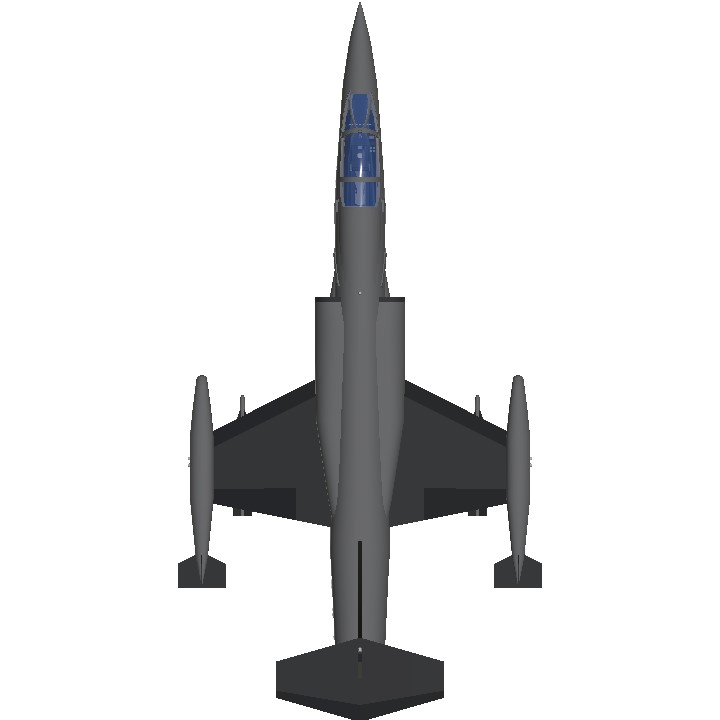
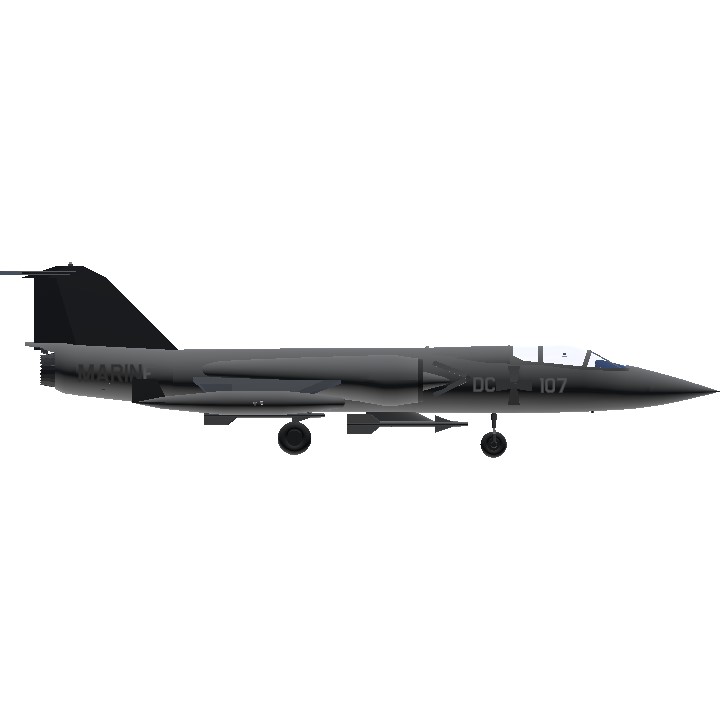
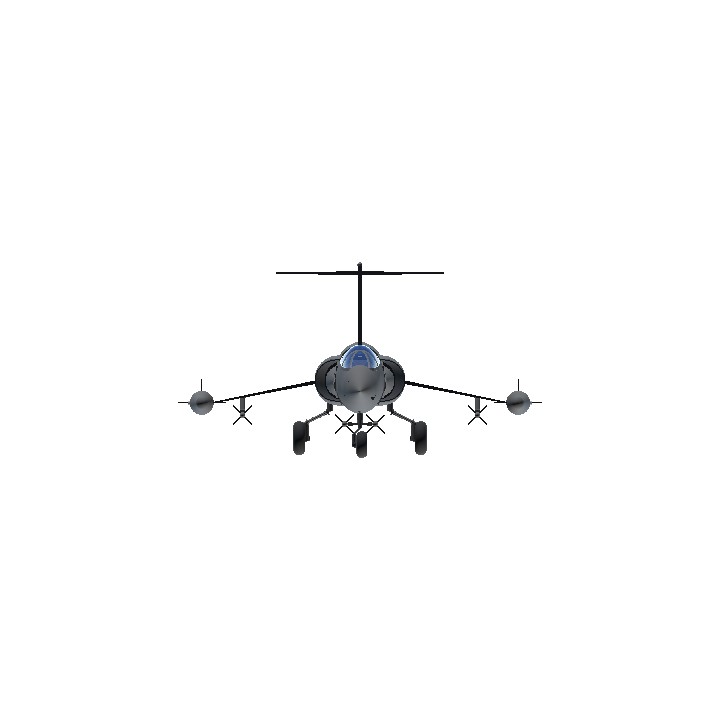
Comment T to on my tag list to be tagged on future builds
Very cool plane i like it
@SomeSPGuyWhoLikesLore I mean,we all had the same minds,T tail,supersonic,early jets,3rd gen..
Basically a rocket with a T tail and short wings
DEAR GOD IT'S ALL STARFIGHTER
@MetallicBeef6572 thank you! Much appreciated
Damn, I'm too late lol. Good shii bro👍
@Seeras thank you!
@Hooha12
Done 👌
@Seeras could you change this to be an auto credit to This?
@B1 here my entry for the challenge
@TheRLAF @Sed