

History & Info
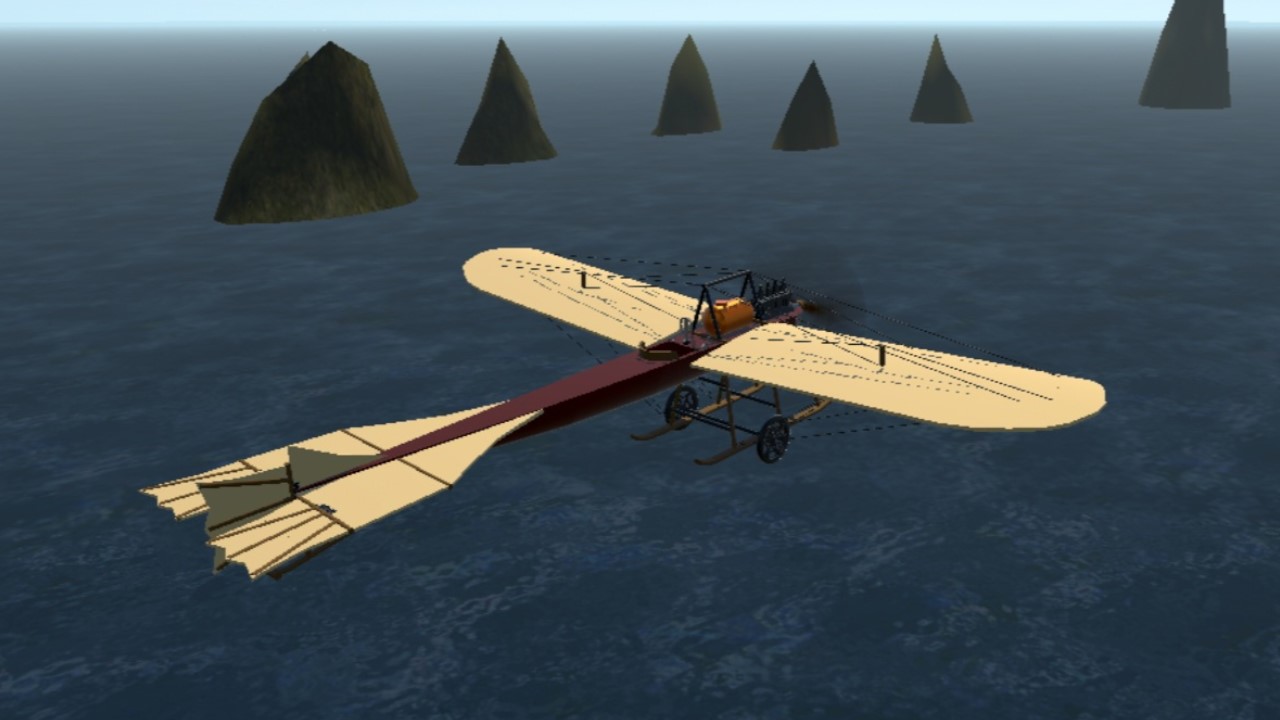
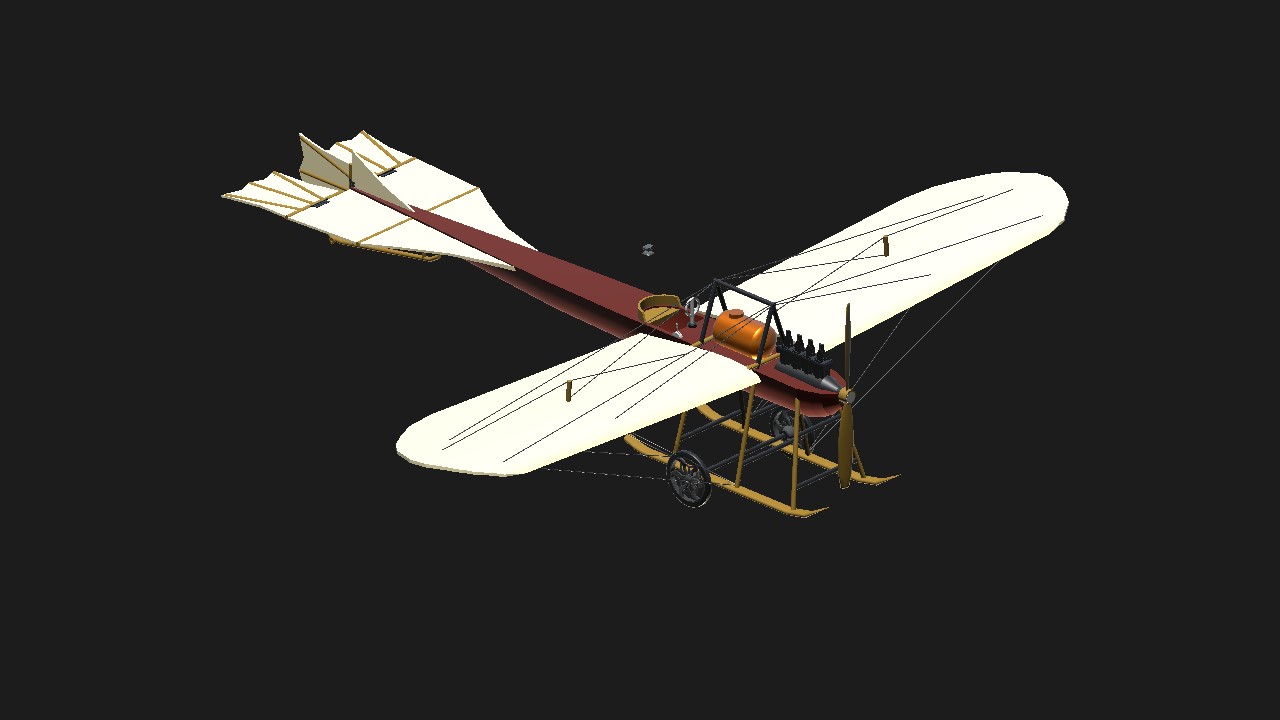
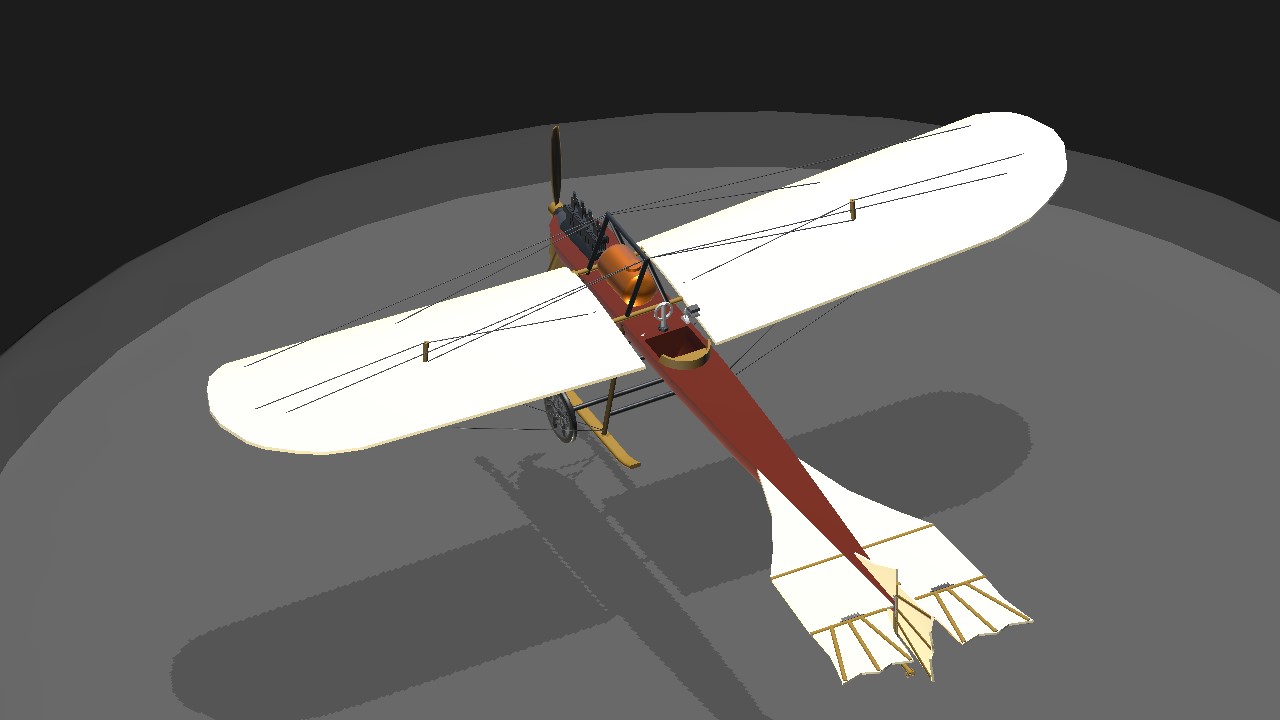
Unfortunately not much info exists about this aircraft for me to go into much detail. It was built by Hanriot in 1910, and featured an iconic design with a fuselage like a racing skiff, sail-like tailplanes and elegant round-tipped wings. Roll control was done with wing warping. Much like the similar Antoinette VII, the pilot sat precariously on top of the fuselage, with only their legs inside. Power was provided by a 35hp ENV 4 cylinder inline engine. Estimates for top speed are inconsistent, ranging from about 70km/h to about 100km/h. This replica can do about 80km/h in level flight
Flying
Takeoff
The hanriot has a fairly long takeoff run. Set throttle to max and allow the aircraft to get up to around 60km/h with the tail off the ground. Then gently pull up. Do not pitch up more than a few degrees until you are well over 70km/h
Turning
There's not really any issues here. The aircraft rolls fairly slowly, and you shouldn't bank more than about 30° at low altitudes.
Landing
Landing is fairly straightforward. Slow down to about 70km/h and a few meters above the ground. You can now decrease your throttle to 0%, and keep the aircraft level as it naturally descends and touches down
Never apply full brakes above 40km/h. Either brake partially or in small increments, or the aircraft will flip over. Under 40km/h flipping is very unlikely
Cockpit
The cockpit is very simple. The stick controls all flight surfaces. To the right is a lever to control throttle. The switch on the left is for the engine and disconnects throttle input when off (tied to group 8)
Specifications
General Characteristics
- Created On Android
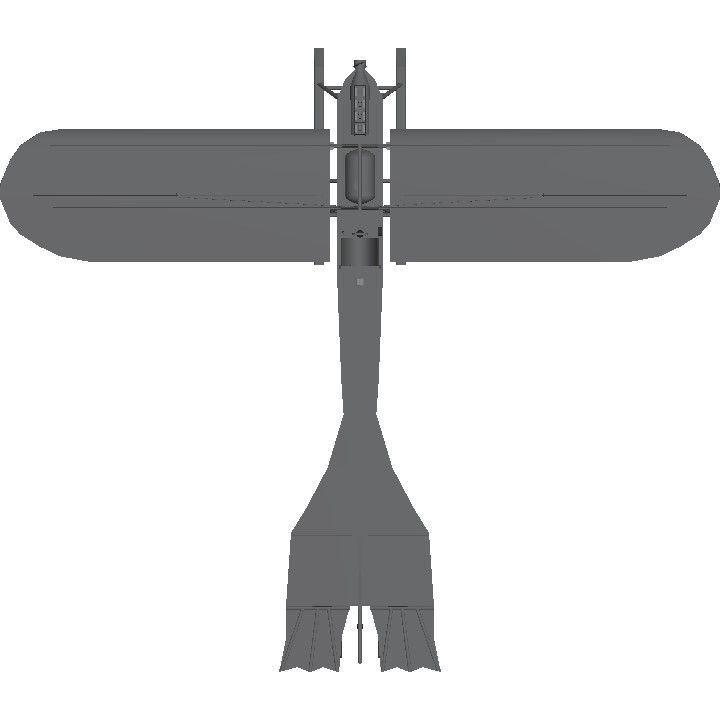
- Wingspan 29.8ft (9.1m)
- Length 25.9ft (7.9m)
- Height 8.1ft (2.5m)
- Empty Weight 124lbs (56kg)
- Loaded Weight 501lbs (227kg)
Performance
- Horse Power/Weight Ratio 0.069
- Wing Loading 2.8lbs/ft2 (13.7kg/m2)
- Wing Area 178.3ft2 (16.6m2)
- Drag Points 1315
Parts
- Number of Parts 166
- Control Surfaces 0
- Performance Cost 662
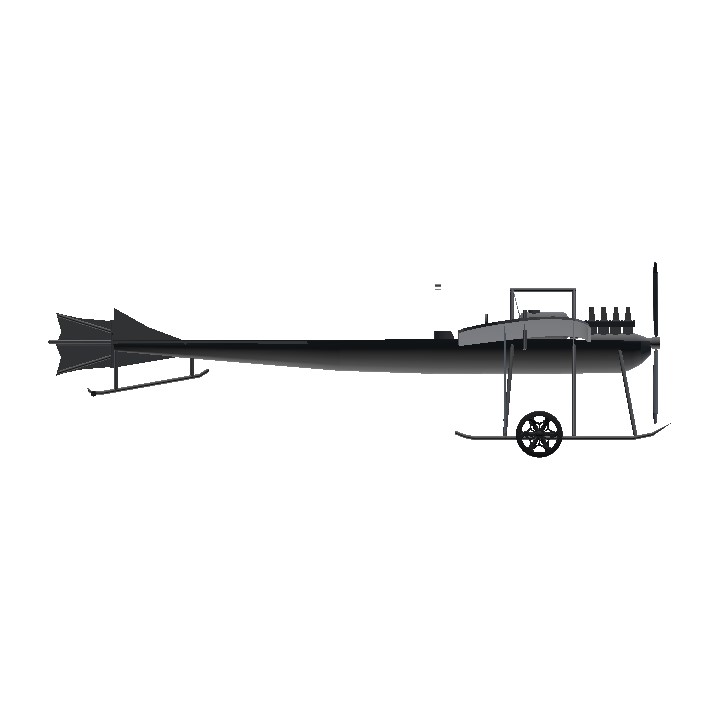
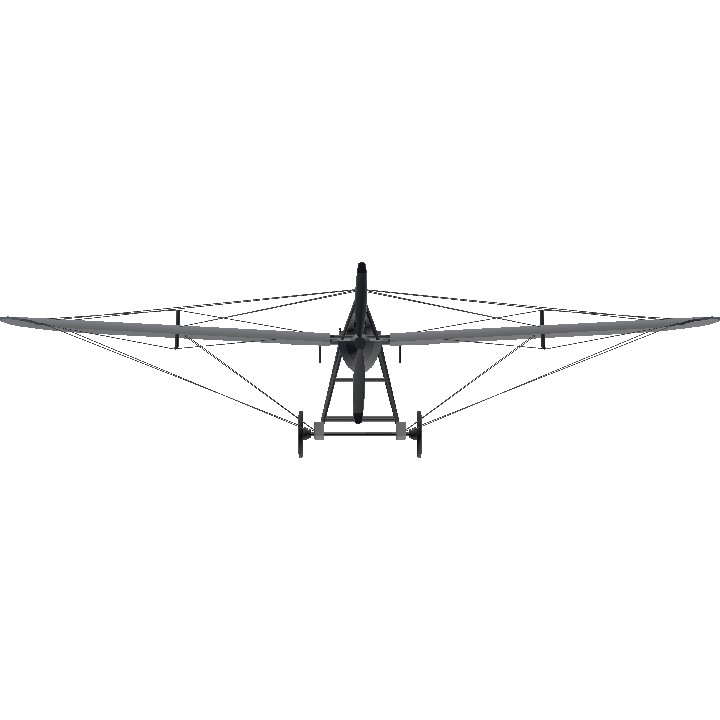
@Sockdragger I've flown yours before! It actually inspired me to make this one. Initially I wanted to just modify yours to have more historical specs and some more detail, but for some reason the scale and weight values seem to be edited on every single part, so I decided it was easier to just build it from scratch rather than drive myself crazy editing everything, haha
I actually built the same airplane one year ago. Yours has by far the better engine and other details, and it flies easier as well. Congratulations
@Ericshideout Ay, that'd be helpful. I did manage to find one or two already but more references wouldn't hurt.
It's kinda weird how hard it can be to find information even on really important aircraft. Sometimes I literally only have pictures to work from because the schematics (especially period ones) are incorrect
@KaruKurokami I will do some searching around to see if I can find you some schematics. You would think there would be more since it was the first time a plane that big flew!
@Ericshideout That one is actually on my list. I even started building one a while ago but scrapped it because I didn't feel ready. If I can find good schematics though I'll probably try it again soon, I'm getting a bit tired of single engine small aircraft
Amazing build! Hopefully one day you also build the first multi engined aircraft the 1913 Sikorsky Russky Vityaz. I feel it would make a great addition to all your current builds!