Hispano Aviación HA-250 Lanza
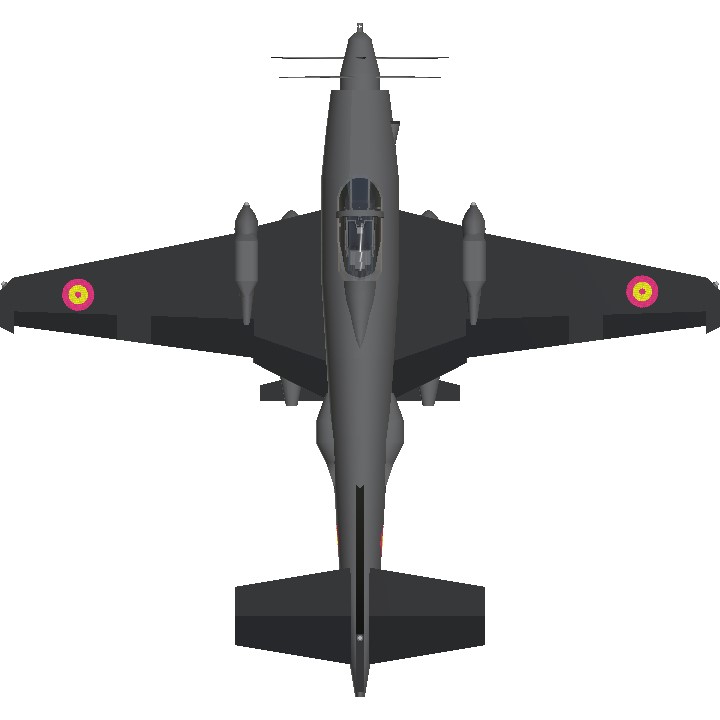
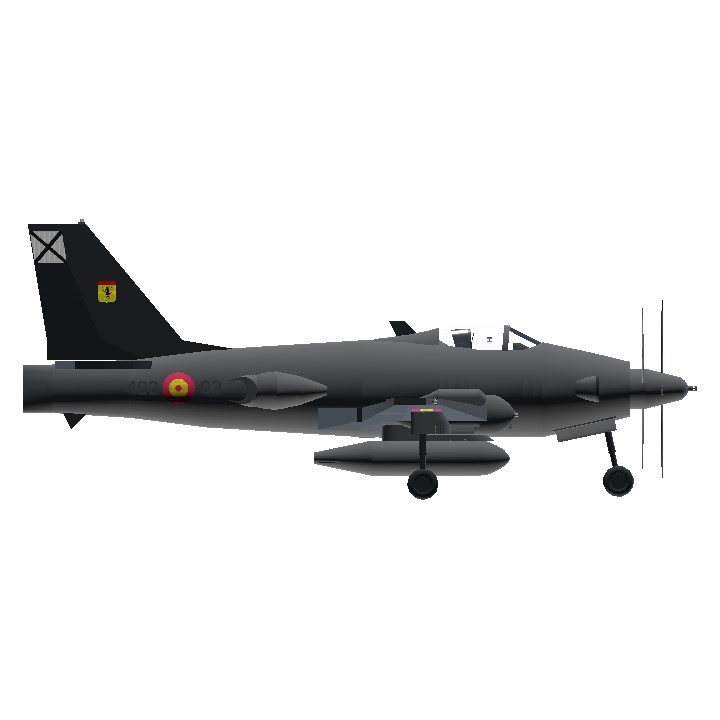
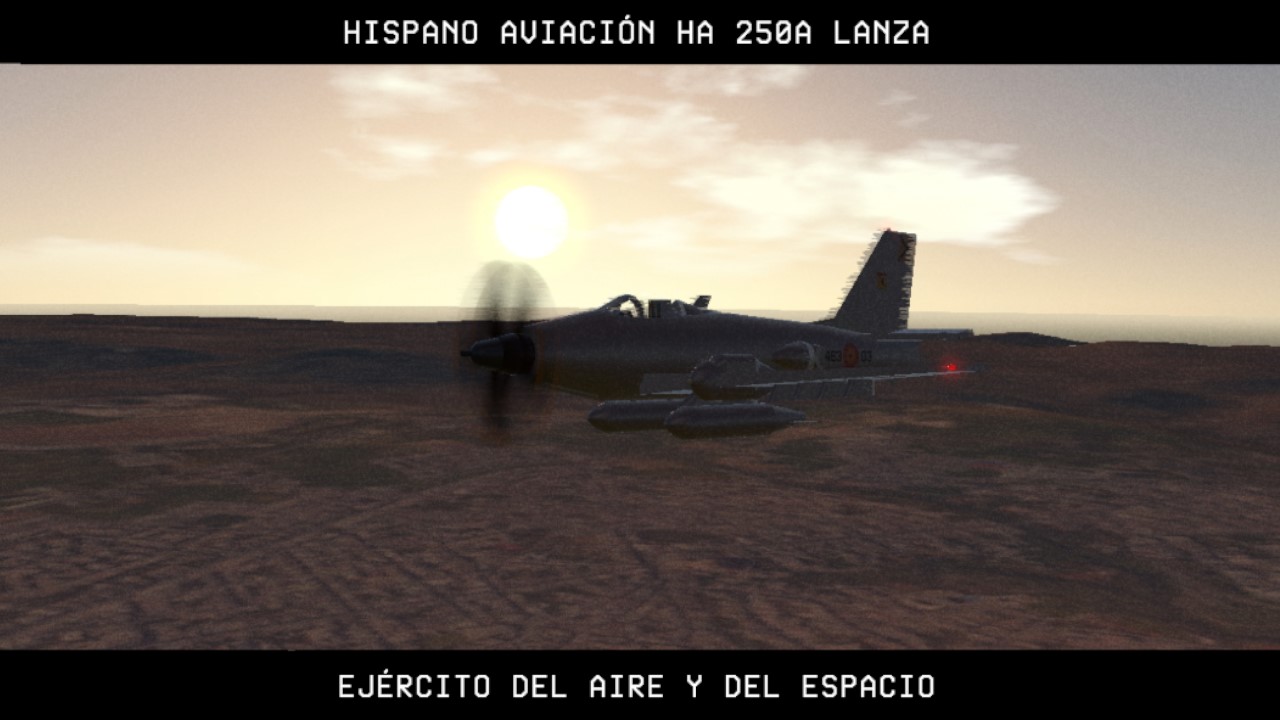
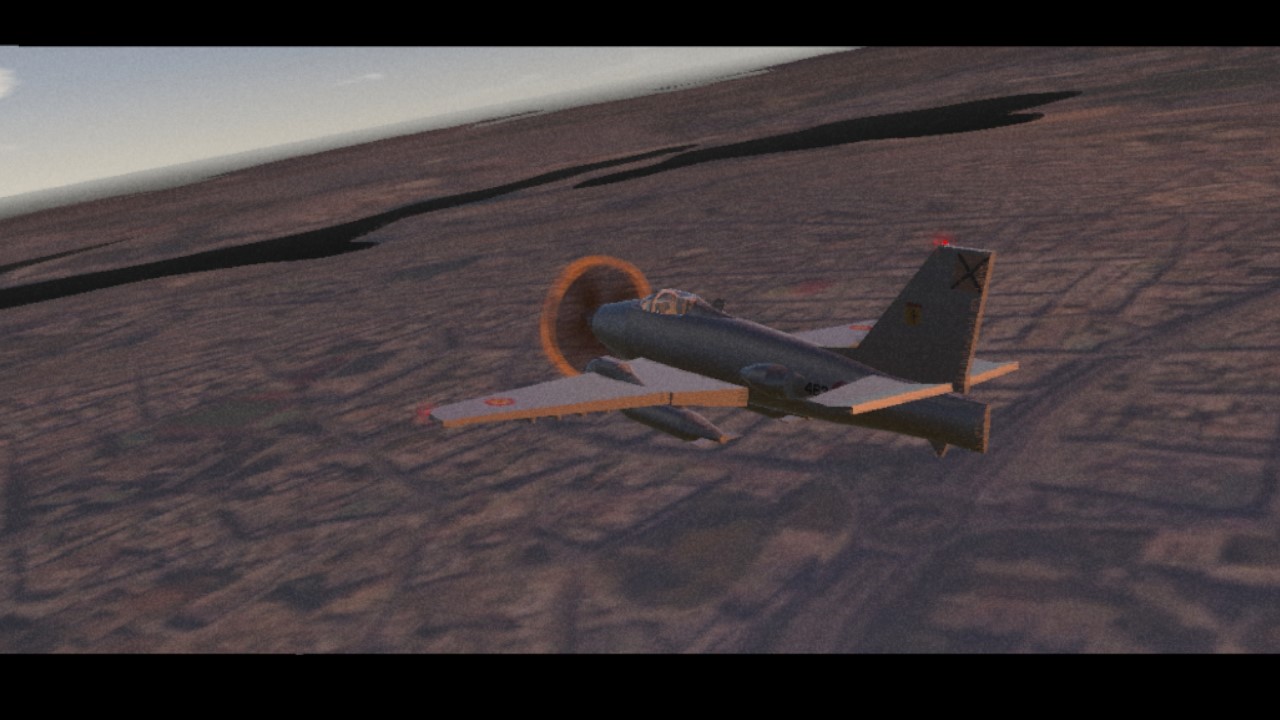
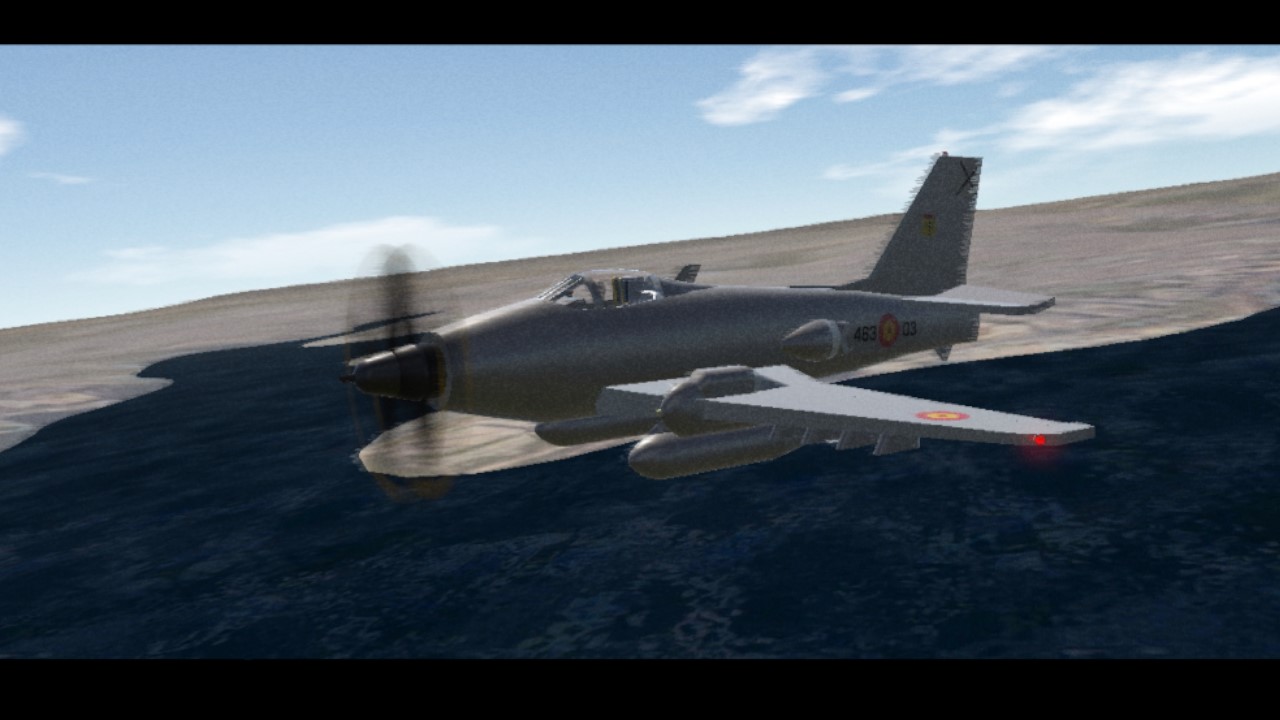
The Hispano Aviación HA-250 "Lanza" was an attack aircraft built by the Hispano factory of Seville for the Spanish Air Force in the sixties.
In the Spanish Civil War, the rebel side formed the "grupos de ca-denas" (chain groups), specialized in close air support. Are equipped with biplanes such as the He 51 and the Hs 123. But in the post-war period, economic shortages and international isolation precluded their replacement, and the planes that the U.S. supplied in the fifties cannot be deployed in colonial wars. When the Ifni crisis erupted in 1957, only the HA 1112 "Buchon" (local copy of the Bf 109) was available, but perform bad. Texan trainers was purchased, but they were too vulnerable.
In 1951 Hispano Suiza (later called Hispano Aviación) began the de-velopment of a specialized CAS aircraft, inspired in the central engine Messerschmitt Me 509. The EdA required an aircraft with heavy weapons, well protected against ground fire, and with a range of 1,500 km (to reach the Canary Islands from the mainland). Later, a maximum speed of 700 km/h was required, to be escorted by the jet that Hispano was building (the HA-200 Saeta). These requisites seemed impossible, but in 1953 Dr. Ferdinand Brander, an Austrian engineer who had been taken to the USSR in 1945 to lead the team who developed the Kuznetsov NK-12 turboprop, reached Spain. Brander came the drawings of the 4,500 kN (6000 HP) TW-2, a turboprop derived from the Jumo 004.
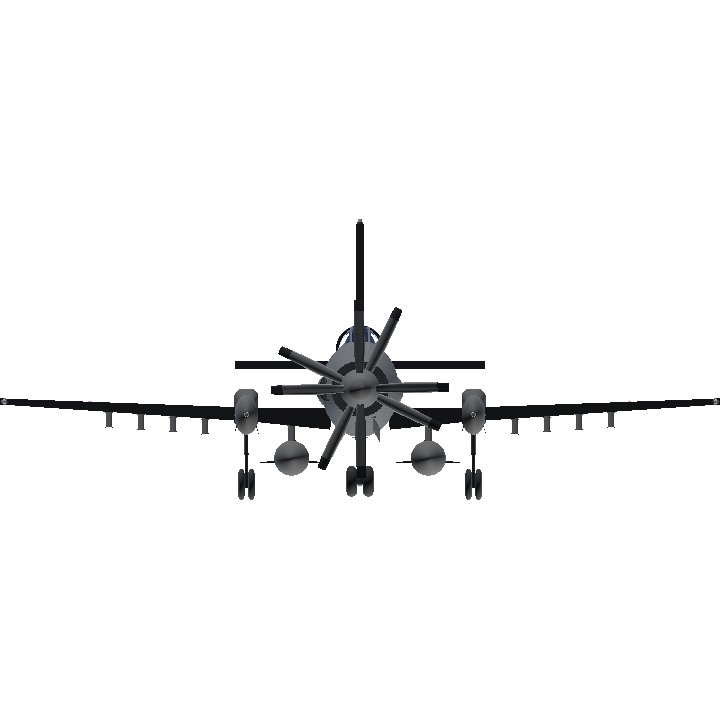
The HA-250 was a large aircraft (almost like a Dornier Do 17) with a 6,200 HP Elizalde León turboprop (Spanish copy of the TW-2). It was fitted with a constant speed counter-rotating propeller, and a 20 mm revolving cannon was housed in the shaft. A complex gearbox moved the two propellers and the barrels. The aircraft carried 800 kg of armour for the cockpit (similar to the Northrop F-5A) and the fuel tanks (located on the fuselage and wing roots). The control was hydraulic, but could be manual in case of loss of the system. Two bulges in the wings hosted the landing gear, and protected the aircraft in hard landings with the gear retracted.
The development was very long due to troubles with the Lion engine and the gearbox, and it wasn't until 1960 that the first prototype flew, which was shown in 1961 in the Le Bourget Air Show. The plane attracted a lot of interest, but due to the end of the colonial wars no orders were placed, with the exception of that of the Spanish Air Force. In 1965 the first serial aircraft were delivered, and production ended in 1973 after 230 units.
The HA-250 Lanza (Spear) was engaged in combat in 1967, in the second Ifni war against insurgent bands supported by Morocco. The HA-250 operated from poorly prepared fields on reconnaissance, attack or helicopter escort missions. Despite its size was very agile and was able to escape of the Moroccan MiG-17 fighters. Only four aircraft were lost, three in accidents and one by ground fire.
The HA-250 attracted the attention of Portugal, which needed to strengthen its aviation force in its African colonies. Forty Spanish planes were purchased, which after few modifications were sent to Angola, and operated until the end of the war in 1974. None were shot down, although three were damaged by Strela missiles. At the end of the war the aircraft returned to Portugal, but were withdrawn shortly afterwards. Spain withdrew the last plane in 1981.
(Source: Shipbucket)
Gallery


Notes
- This aircraft is based on this livery:

- Weapons such as the rocket pods (or rockets) and bombs can be mounted onto wing pylons on both sides.
Specifications
General Characteristics
- Created On Android
- Wingspan 36.9ft (11.2m)
- Length 34.5ft (10.5m)
- Height 14.4ft (4.4m)
- Empty Weight 6,102lbs (2,768kg)
- Loaded Weight 9,551lbs (4,332kg)
Performance
- Horse Power/Weight Ratio 83.758
- Wing Loading 41.9lbs/ft2 (204.8kg/m2)
- Wing Area 227.7ft2 (21.2m2)
- Drag Points 3638
Parts
- Number of Parts 161
- Control Surfaces 10
- Performance Cost 773