

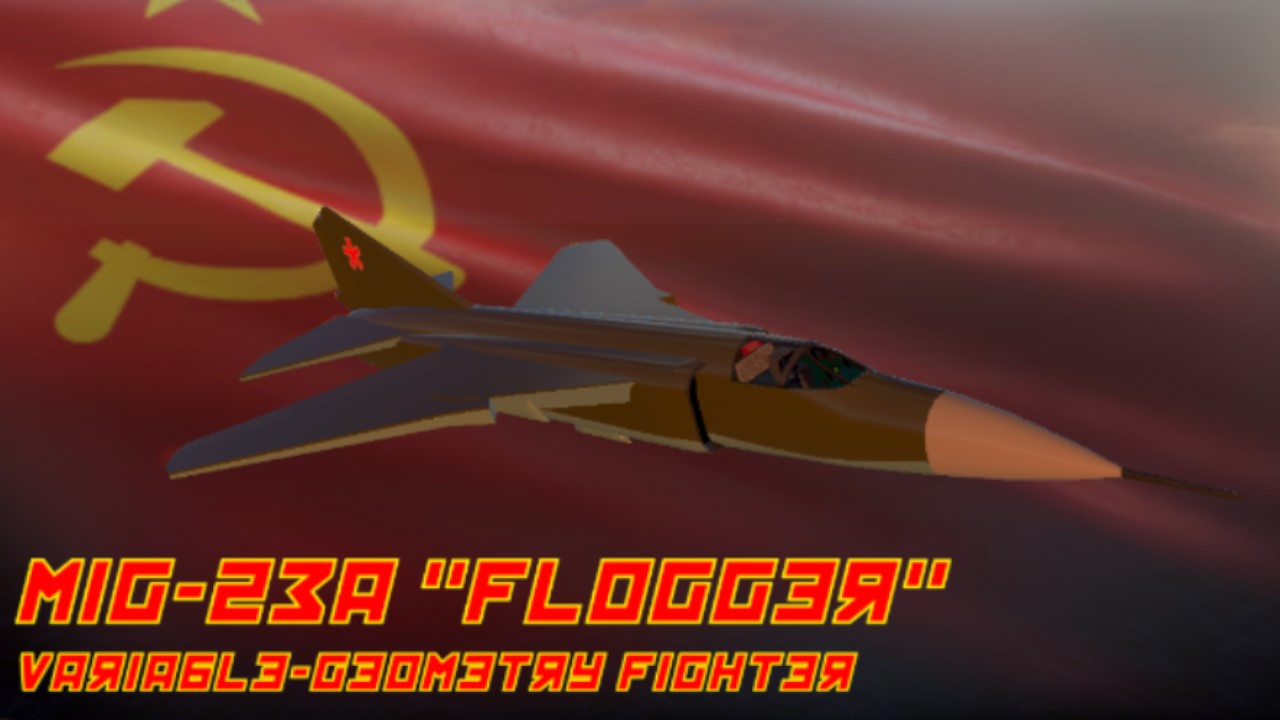
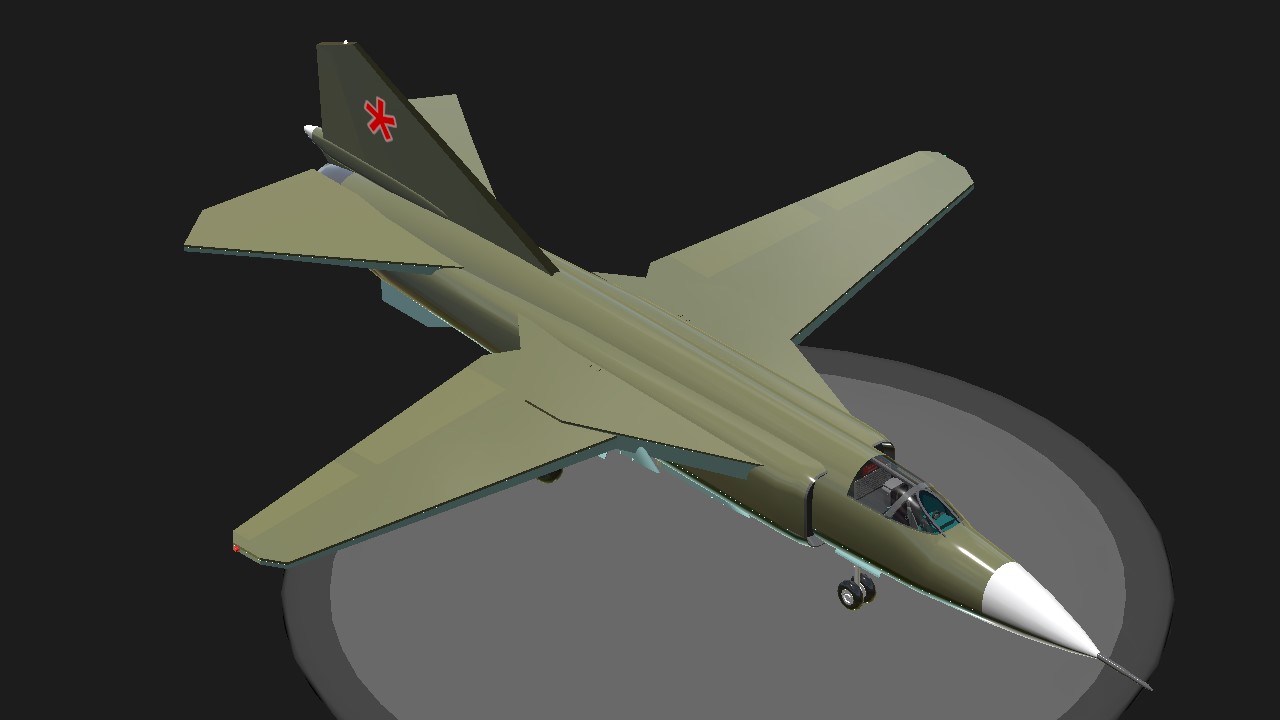
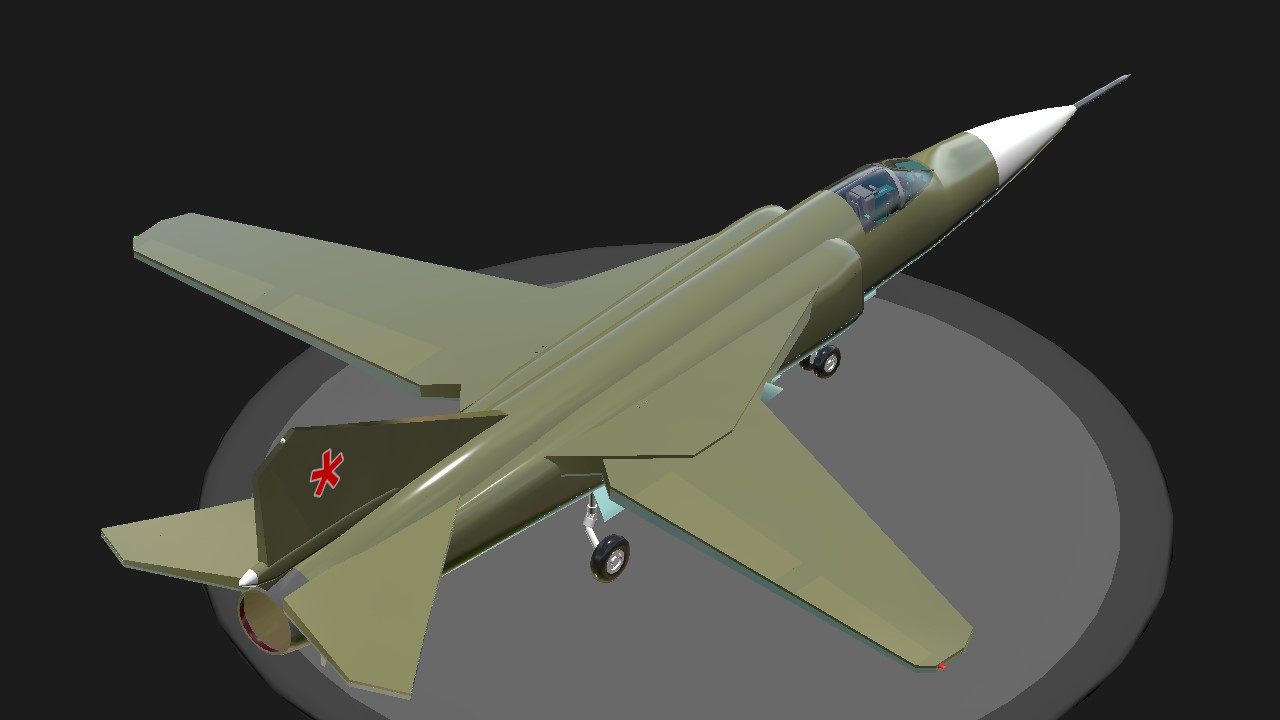
PLATINUM ESPECIAL!

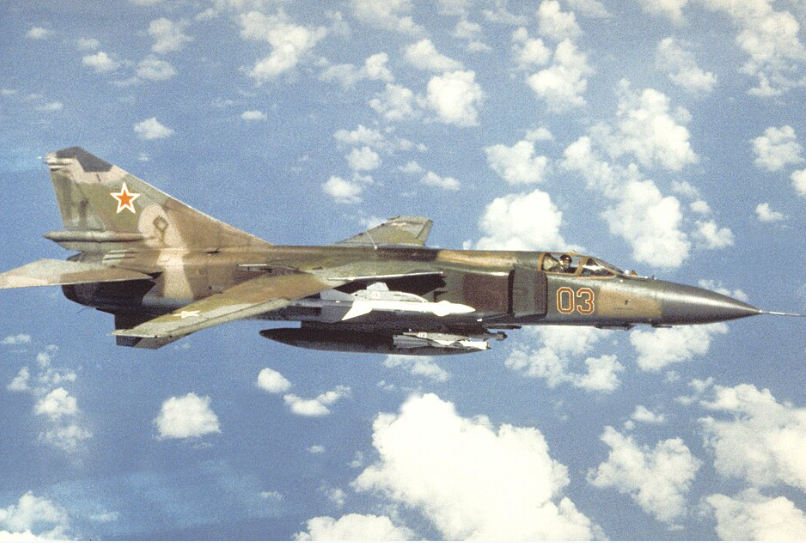
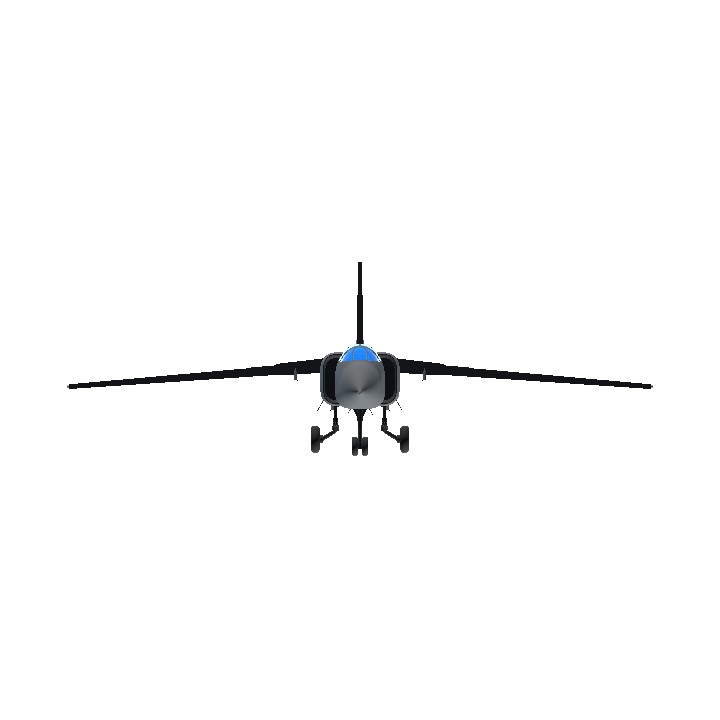
The Mikoyan-Gurevich MiG-23 (Russian: Микоян и Гуревич МиГ-23; NATO reporting name: Flogger) is a variable-geometry fighter aircraft, designed by the Mikoyan-Gurevich design bureau in the Soviet Union. It is a third-generation jet fighter, alongside similar Soviet aircraft such as the Su-17 "Fitter". It was the first Soviet fighter to field a look-down/shoot-down radar, the RP-23 Sapfir, and one of the first to be armed with beyond-visual-range missiles. Production started in 1969 and reached large numbers with over 5,000 aircraft built, making it the most produced variable-sweep wing aircraft in history. The MiG-23 remains in limited service with some export customers.
The basic design was also used as the basis for the Mikoyan MiG-27, a dedicated ground-attack variant. Among many minor changes, the MiG-27 replaced the MiG-23's nose-mounted radar system with an optical panel holding a laser designator and a TV camera.
Operational History (Warsaw pact)

The MiG-23 was first officially commissioned into the Soviet Air Forces (VVS) on 4 January 1974, but even before its mass introduction there had been many teething problems with the brand-new fighter. Stability issues and limited maneuverability resulted in numerous flight restrictions placed on the fighter as efforts to rectify these concerns began in the mid-1970s. Despite numerous updates, these restrictions would only be partially lifted with the introduction of the MiG-23MLD. Still, the large number of MiG-23s deployed in Central Europe represented a sufficiently potent threat in a possible war with the West.[37]
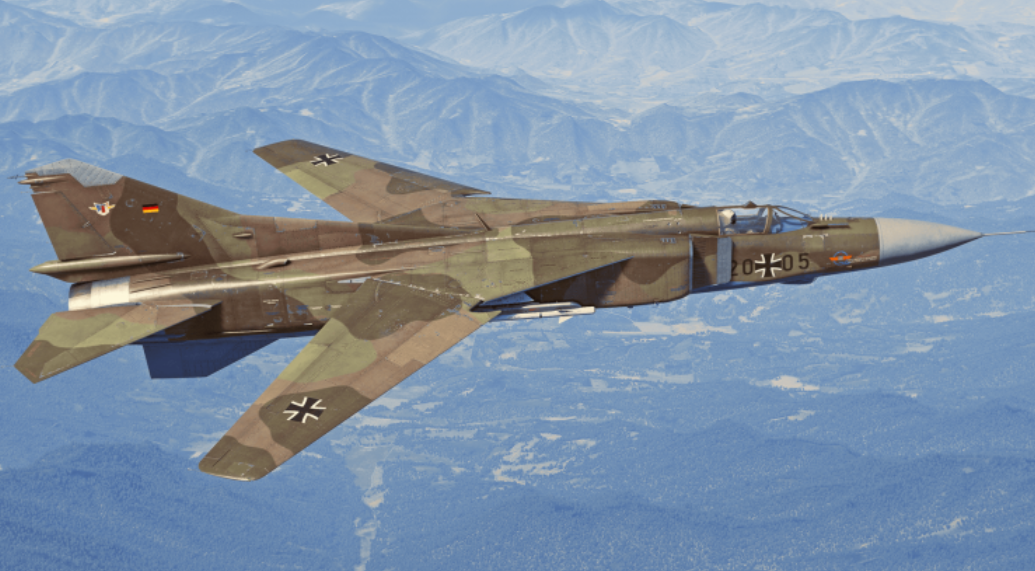
Although many MiG-23 pilots were disappointed to discover their fighter would lose in a turning engagement with the MiG-21, the MiG-23 gave the VVS capabilities which the MiG-21 simply lacked, particularly as a high-energy fighter with BVR missiles. However, throughout the 1970s and early 1980s Soviet pilots continued to train and operate the MiG-23 in the same inflexible manner as the MiG-21: a high-speed point defense interceptor closely guided by GCI. It was not until the widespread introduction of the MiG-23MLD that Soviet pilots began to use the MiG-23 as a true air-superiority fighter.
By the 1980s, the MiG-23's accident rate in the VVS averaged 12.5 losses per 100,000 flying hours. This was often worse in the air forces of the Warsaw Pact allies: 24.3 major mishaps per 100,000 flying hours in the Hungarian Air Force; 20.4 losses per 100,000 flying hours in the East German Air Force; 18 losses per 100,000 flying hours in the Bulgarian Air Force; and 11.3 losses per 100,000 flying hours in the Polish Air Force.[38]
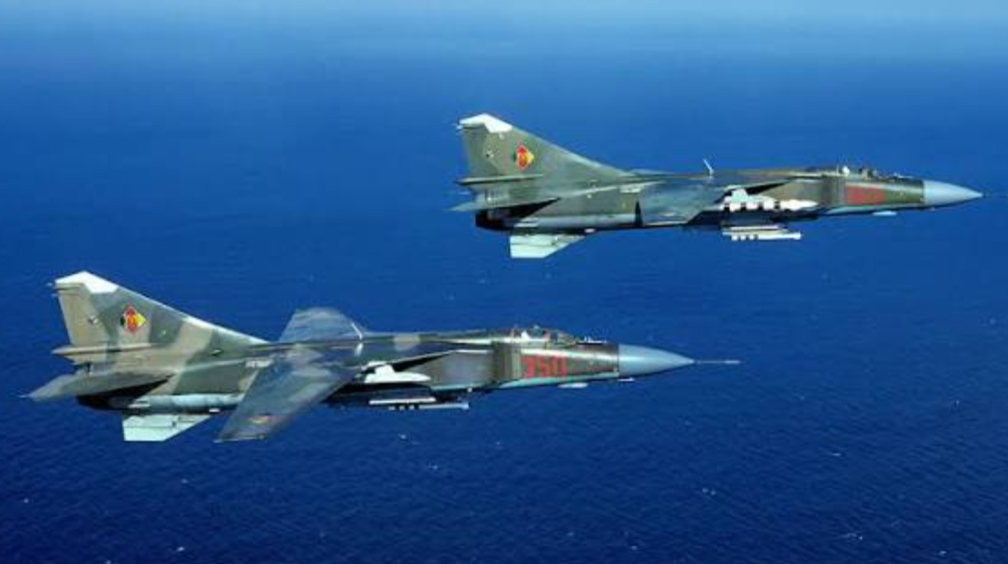
By 1990, over 1,500 MiG-23s of different models were in service with the VVS and the V-PVO. With the dissolution of the Soviet Union, the new Russian Air Force began to cut back its fighter force, and it was decided that the single-engine MiG-23s and MiG-27s were to be retired to operational storage. The last model to serve was the MiG-23P air-defense variant: it was retired on 1 May 1998.[39]
When East and West Germany unified, no MiG-23s were transferred to the German Air Force, but twelve former East German MiG-23s were supplied to the United States. When Czechoslovakia split into the Czech Republic and Slovakia, the Czechs received all the MiG-23s, which were retired in 1998. Hungary retired its MiG-23s in 1996, Poland in 1999, Romania in 2000, and Bulgaria in 2004.
The MiG-23 was the Soviet Air Force's "Top Gun"-equivalent aggressor aircraft from the late 1970s to the late 1980s. It proved a difficult opponent for early MiG-29 variants flown by inexperienced pilots. Exercises showed when well-flown, a MiG-23MLD could achieve favorable kill ratios against the MiG-29 in mock combat by using hit-and-run tactics and not engaging the MiG-29s in dogfights. Usually the aggressor MiG-23MLDs had a shark mouth painted on the nose just aft of the radome, and many were piloted by Soviet–Afghan War veterans. In the late 1980s, these aggressor MiG-23s were replaced by MiG-29s, also featuring shark mouths.
Specifications
Spotlights
- nwa 22 hours ago
General Characteristics
- Created On Android
- Wingspan 62.5ft (19.1m)
- Length 76.9ft (23.4m)
- Height 20.6ft (6.3m)
- Empty Weight 27,822lbs (12,620kg)
- Loaded Weight 37,615lbs (17,062kg)
Performance
- Power/Weight Ratio 1.362
- Wing Loading 21.0lbs/ft2 (102.4kg/m2)
- Wing Area 1,793.9ft2 (166.7m2)
- Drag Points 5934
Parts
- Number of Parts 201
- Control Surfaces 9
- Performance Cost 909
@Mitterbin thanks mit! :D
Congratulation, keep going in the future and very cool Mig
@Kav thanks! :D
You're platinum! Congrats bro! :)
I really like this plane! Nice job bro! :D