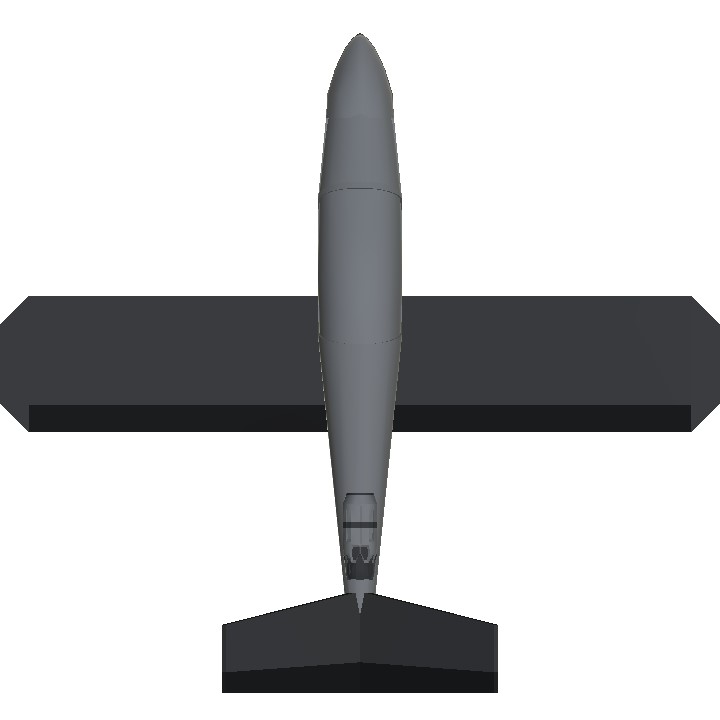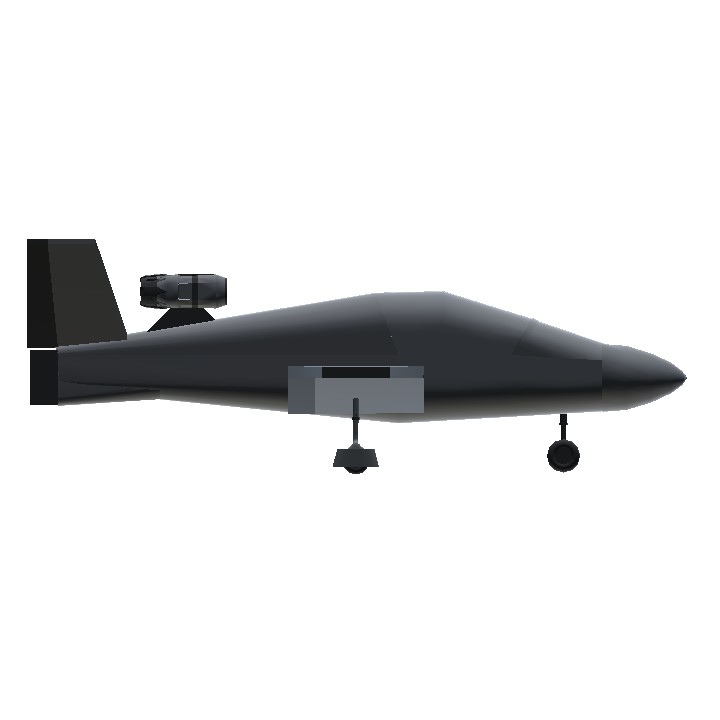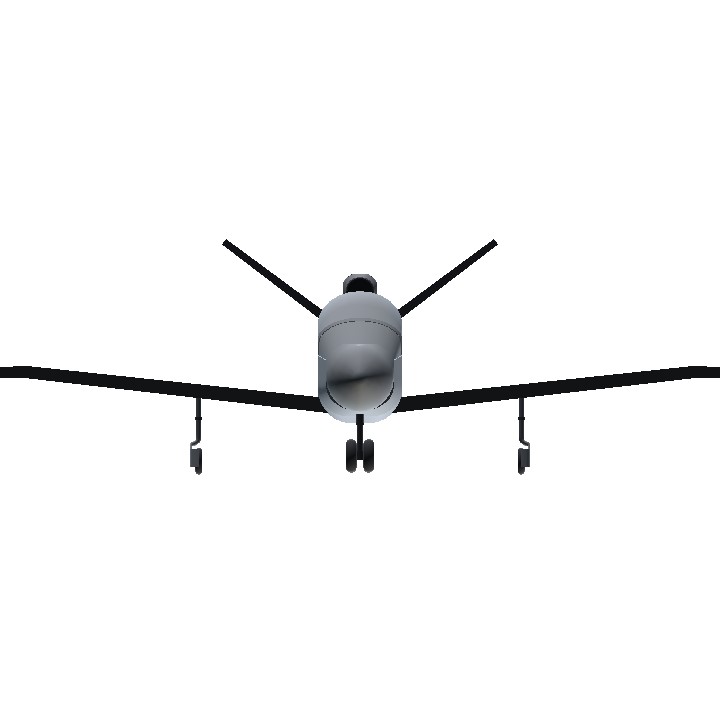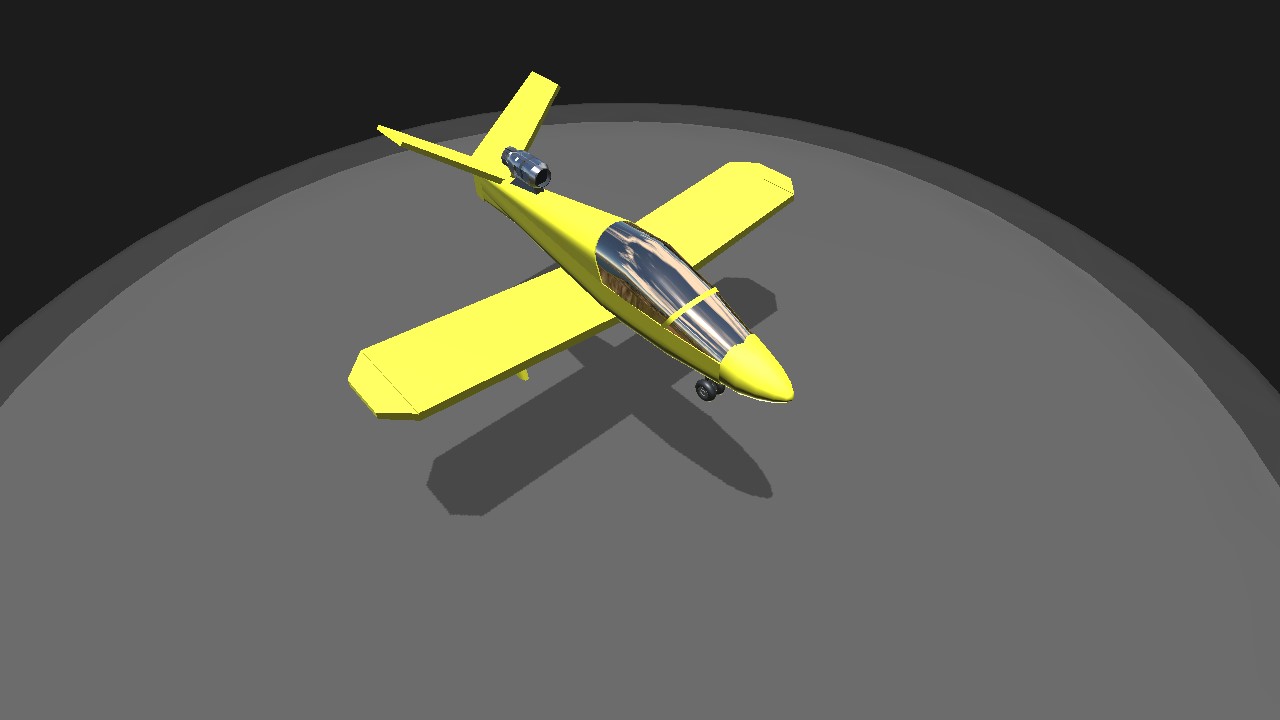
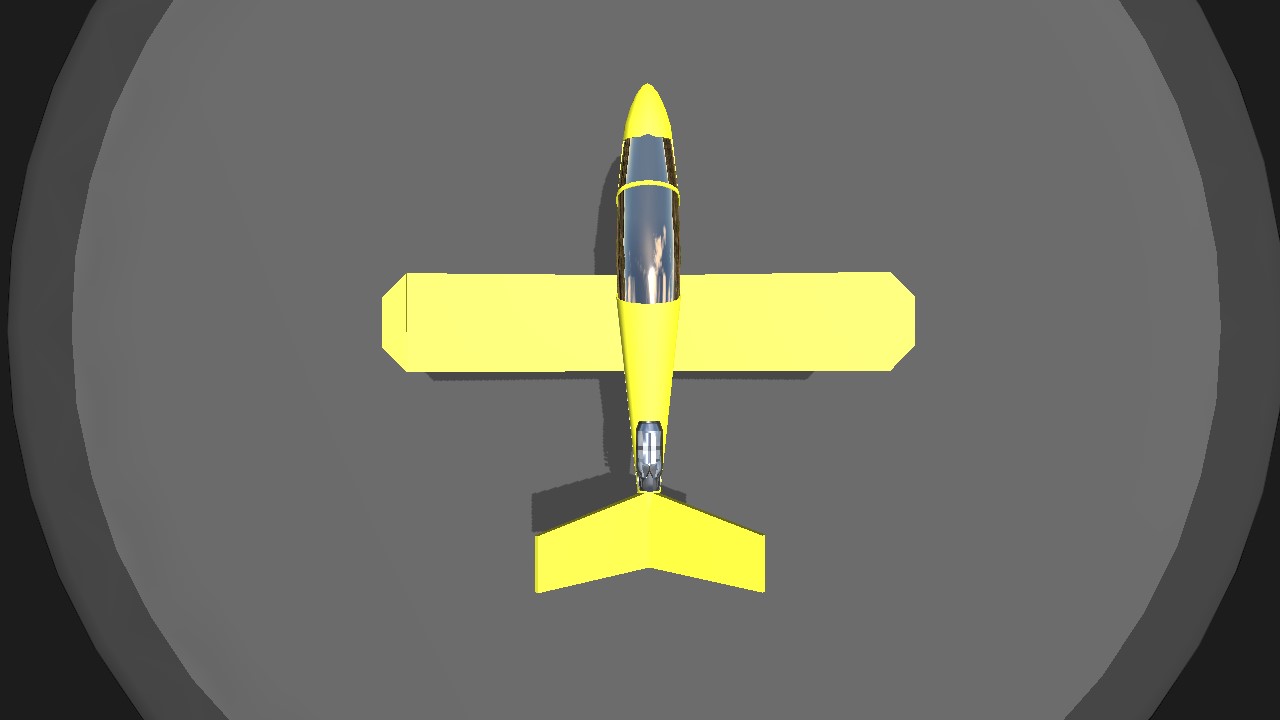
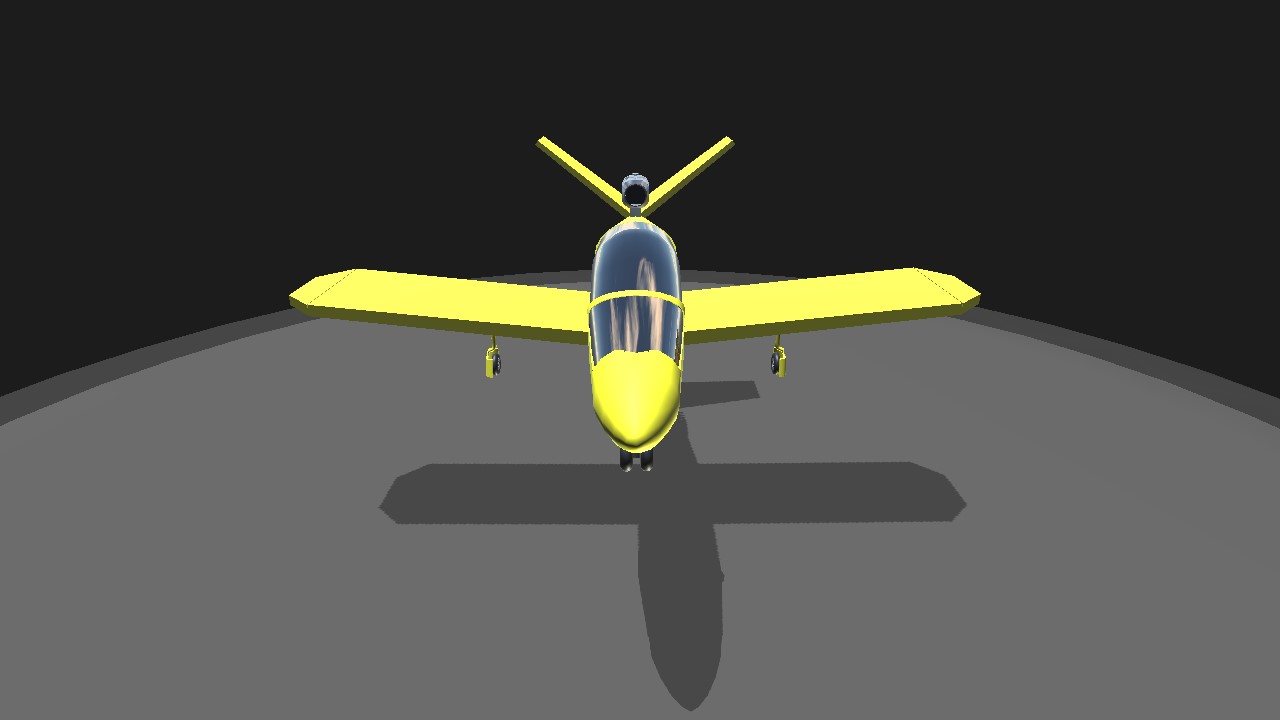
Hello everyone! This is a SubSonex JSX-2. It’s my first attempt at making something in a realistic style based on a real airplane. I tried to get close to the original in appearance, function, and flight characteristics while sticking to mostly stock parts and a low total part count. SimplePlanes doesn’t calculate the physics of the engine placement very well on a plane so small and light, so I “cheated” by embedding an engine for power, and leaving a separate external engine without power for show. Therefore, the thrust vector and thrust to weight ratio are not accurately displayed, but it flies correctly.
What follows is my comparison to the real airplane with data from wikipedia:
JSX-2
Second version with a BRS parachute, wider fuselage, more streamlined nose, and fully retractable undercarriage.
My version includes the safety parachute (activation group 1), and the retractable landing gear.
General characteristics
Crew: 1
Length: 16 ft 6 in (5.03 m)
Wingspan: 18 ft (5.5 m)
Wing area: 60 sq ft (5.6 m2)
Airfoil: 64-415
Empty weight: 500 lb (227 kg) average
Gross weight: 1,000 lb (454 kg) utility configuration
Fuel capacity: 40 U.S. gallons (150 L; 33 imp gal)
Powerplant: 1 × PBS TJ-100 turbojet, 290 lbf (1.3 kN) thrust
My version is a wee bit smaller, and has more wing area (I think it’s because SP includes tailplane area).
64-415 is a semi-symmetric foil, so I’ll leave it at that.
My empty weight is 729 lbs for balance, so let’s pretend there is a hefty pilot.
Gross weight is very close.
Fuel capacity is very close.
Thrust is based on capping the throttle input of the J15 to 0.24, so should technically be higher than the real plane but it seems about right for speed.
Performance
Cruise speed: 210 kn (240 mph, 390 km/h) TAS
Stall speed: 50 kn (58 mph, 93 km/h) landing configuration
Never exceed speed: 249 kn (287 mph, 462 km/h)
Range: 420 nmi (480 mi, 770 km) with 30 minute reserve
g limits: +4.4/-2.2 in utility configuration, +6/-3 in aerobatic configuration
Rate of climb: 1,600 ft/min (8.1 m/s) initial at sea level
Fuel consumption: 18 US gallons (68 L) per hour
Cruise speed is close, with TAS in the 230-250 mph range, 85%-100% throttle, sea level-10,000 ft.
My version doesn’t have enough pitch authority to initiate a full stall, it just sinks. It sinks around 70-80 mph, so I think a 60-ish mph stall is close.
My flaps are just control surfaces, so they don’t add much lift. They do seem to result in a lower attitude for a given speed and rate of descent.
Speaking of lift characteristics, my version lifts off around 80 mph if you rotate at 70 mph. Never exceed speeds aren’t really a factor in SP.
Range, no idea.
G limits, again no factor.
My version climbs much faster initially, about 100 ft. per second, which is 6,000 ft per minute. just the limitations of SP. It does taper off when it gets into the 8,000 ft+ range.
Fuel consumption is much faster in SP, and you will burn though all 40 gallons in a few minutes instead of 2 hours.
Other things: I didn’t model the Y-tail completely. I did include the small rudder below, but the tail surfaces only act as elevators currently.
As far as planes in SP go, I think it at least captures the vibe of micro jet flight characteristics, and gets close to the JSX-2 flight envelope, on paper at least. My only real flight experience to compare it to is about 6.5 hours of instruction in a Cessna 172, 16 years ago when I was in CAP.
Let me know what you think!
Thanks!
Specifications
Spotlights
- RCCM15 1.5 years ago
General Characteristics
- Created On Mac
- Wingspan 17.4ft (5.3m)
- Length 15.8ft (4.8m)
- Height 5.4ft (1.7m)
- Empty Weight 728lbs (330kg)
- Loaded Weight 1,006lbs (456kg)
Performance
- Power/Weight Ratio 6.7
- Wing Loading 13.9lbs/ft2 (68.0kg/m2)
- Wing Area 72.3ft2 (6.7m2)
- Drag Points 386
Parts
- Number of Parts 27
- Control Surfaces 6
- Performance Cost 223