

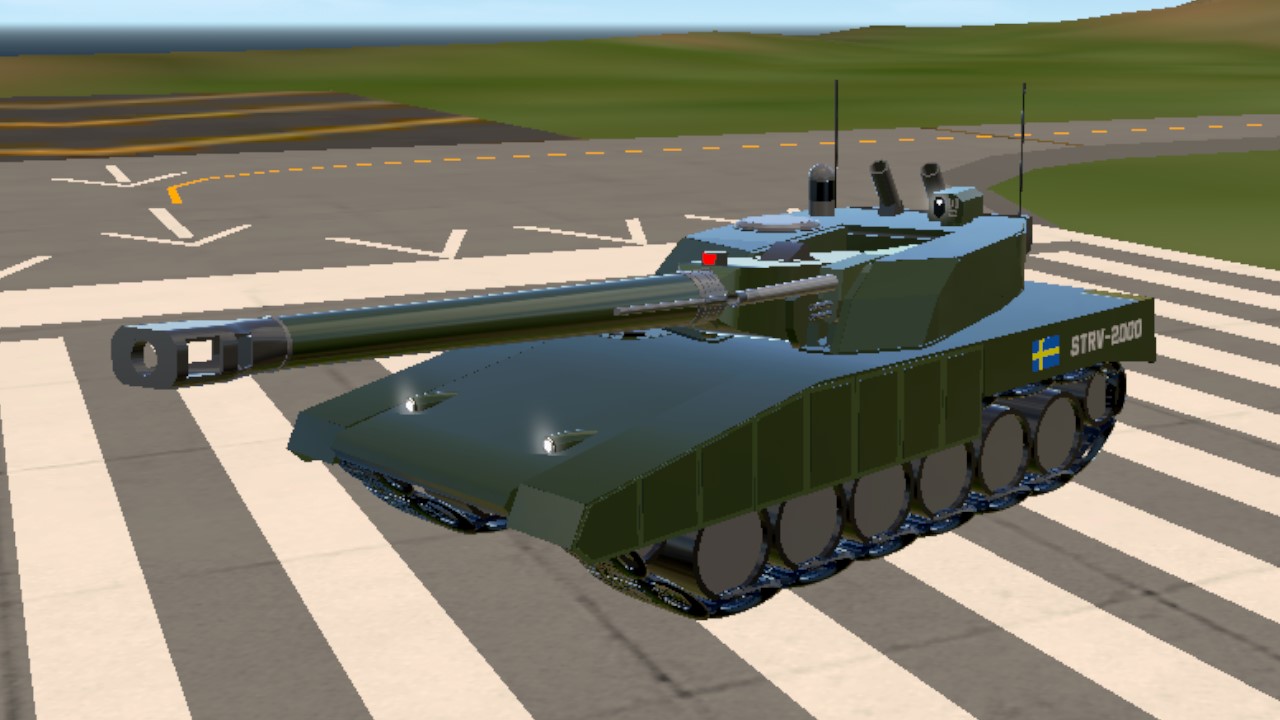
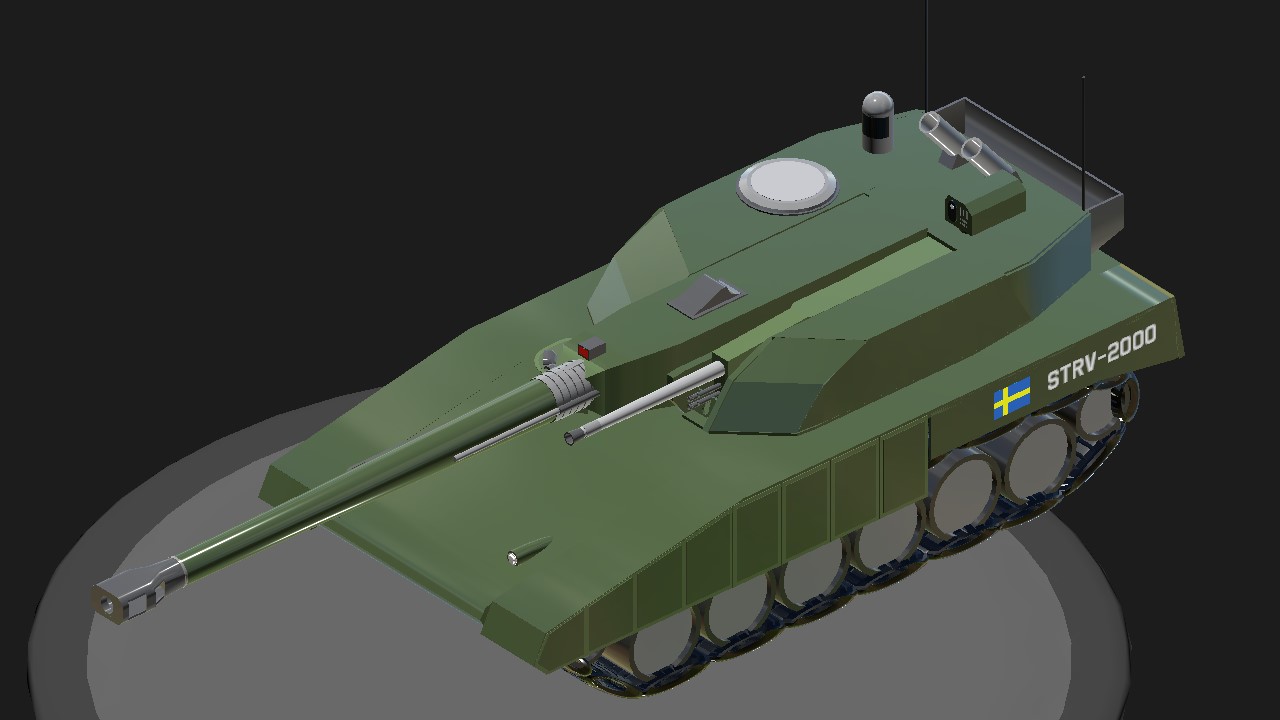
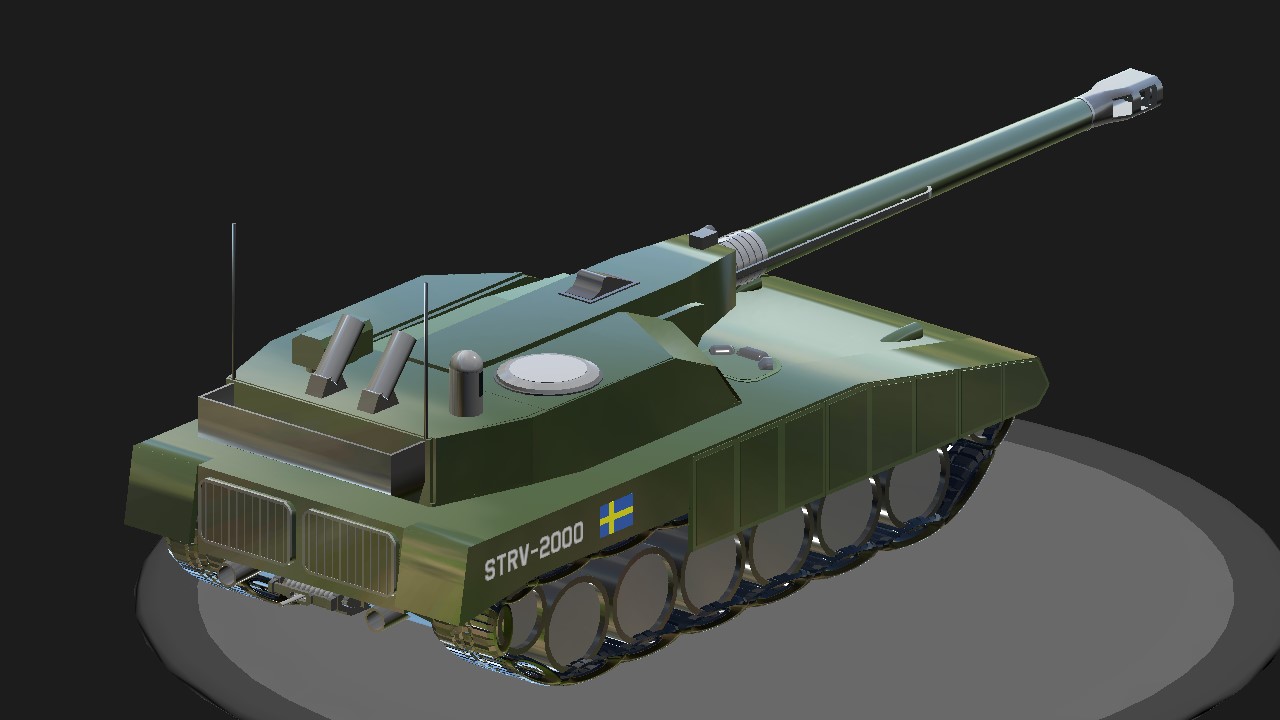
Introduction :
The Strv 2000 project was intended to fulfill Sweden’s need for a modern main battle tank (MBT). In 1984 the Swedish government began to look into replacing the Strv 103 and Strv 104 tanks it had in service.
The intent was to assess the feasibility of a Swedish design, as well as to look foreign designs. These were to be either to be built under license in Sweden or ordered from a foreign manufacturer. The vehicle that would be chosen would come into service around the year 2000, hence the name of the Swedish prototype.
Armament:
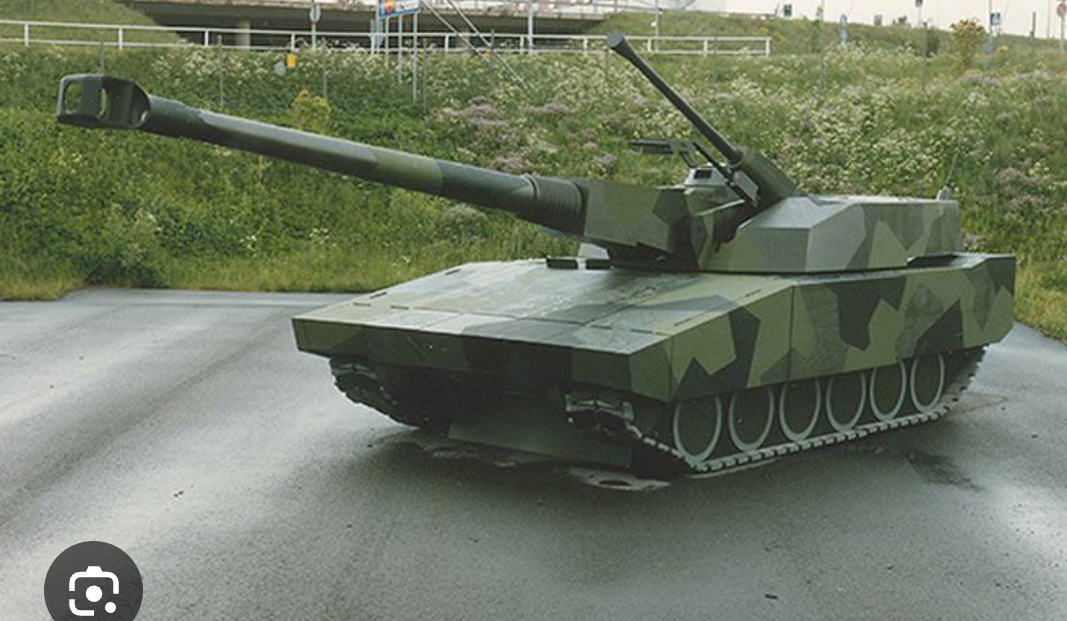
Initially, the use of the 120 mm (4.72 in) cannon was seen as most favorable for the Strv 2000 project. However, some thought was put into using a larger 140 mm (5.51 in) cannon in order to achieve better armor penetration. The 140 mm cannon was shown to have 25% to 50% better armor penetration (up to 800 mm/2ft7 of penetration) and twice the muzzle energy of the 120 mm cannon. However, it also came at a cost. First of all, the 140 mm rounds were very large, so fewer of them could be carried and an autoloader was essential.
It was also an unproven weapon for an MBT. It would require a lot of time, money and effort in order to get a properly functioning weapon system. In order to address the issues of a limited number of rounds stored for the 140 mm gun, a proposal was made to mount a 40 mm (1.57 in) cannon to the side of the main gun. This would serve to engage targets that did not require the larger weapon. This concept could greatly enhance the performance of the tank, as it would have a heavy hitting weapon for well-protected targets, and a smaller but very effective and well-supplied weapon for softer targets.
T140/40 variant:
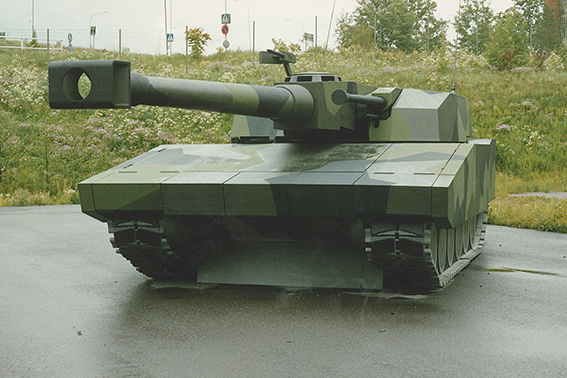
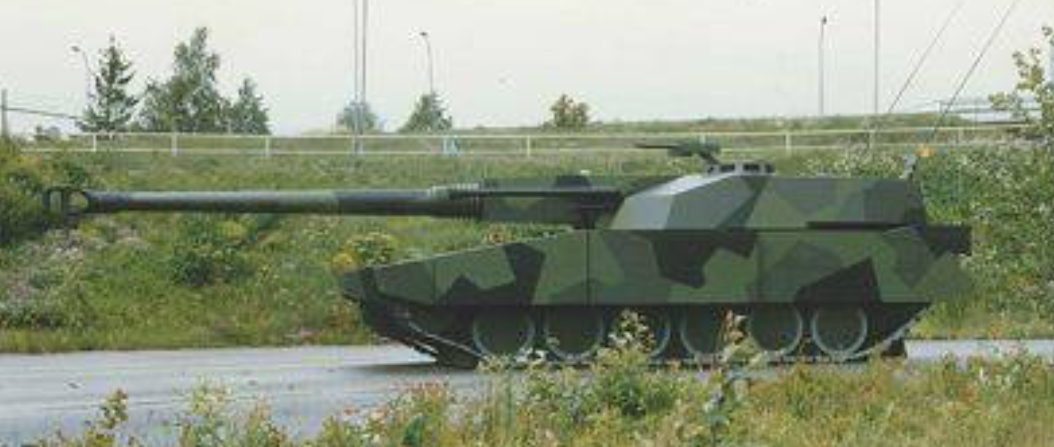
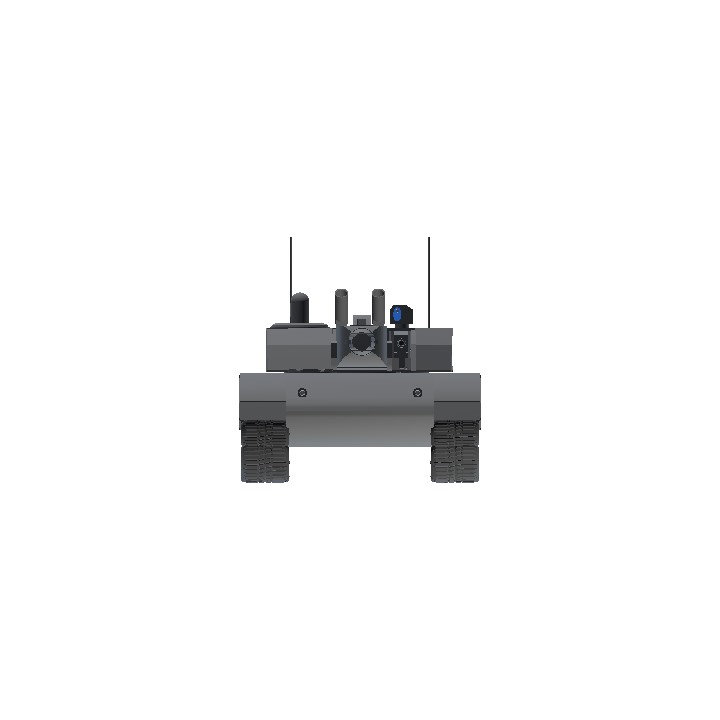
The T140/40 version was the only one to be turned into a full-scale model and came nearest to achieving production of all the Strv 2000 designs. It was to be armed with a 140 mm cannon, mounted centrally, and a 40 mm autocannon independently mounted on the left side. Two machine-guns are also featured in the plans, one coaxial with the 40 mm and one on the commander’s hatch.
Both the cannons were served by an autoloader, 29 shots being available for the main gun, and 148 for the secondary. The large caliber ammunition was held in a drawer-like storage container at the rear of the hull, which could be ejected in case of detonation. The vehicle also had two flare launchers, which were to be used to illuminate targets at night. The vehicle was not fitted with night vision equipment.
The T140/40 mock-up, showing the secondary 40 mm autocannon. Credits: Ointres.se
The frontal protection should have been equivalent to 800 mm of RHA against kinetic penetrators and 1200 mm against HEAT rounds. This was achieved with the use of modular ERA plates which were placed at a certain distance from the body. Also in order to help protect the crew, the 1500 hp engine and the transmission were placed at the front of the vehicle.
The 3 crewmembers were all placed on the right side of the vehicle, with the driver in the hull, the gunner in the turret front and the commander just behind him, having the most elevated position. It can be argued that there is a rather large blindspot on the left side of the vehicle.
However, in the end, the production of the Strv 2000 T140/40 would have been costly and slow to implement, and given the changing geopolitical climate, it was abandoned in favor of a foreign design.
Specifications
General Characteristics
- Predecessor STRV-2000 (PV) (Chassis)
- Created On Android
- Wingspan 21.5ft (6.5m)
- Length 63.8ft (19.5m)
- Height 21.7ft (6.6m)
- Empty Weight 31,466lbs (14,273kg)
- Loaded Weight 36,618lbs (16,609kg)
Performance
- Wing Loading 43,544.9lbs/ft2 (212,605.0kg/m2)
- Wing Area 0.8ft2 (0.1m2)
- Drag Points 18139
Parts
- Number of Parts 327
- Control Surfaces 0
- Performance Cost 1,433
@Kav thanks! :D
Ikea tank
It's very nice my friend! Like it!