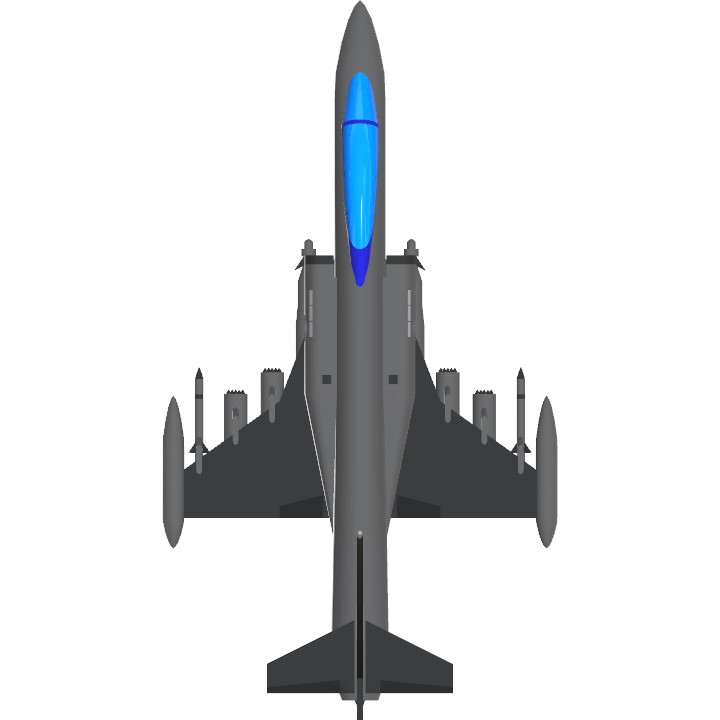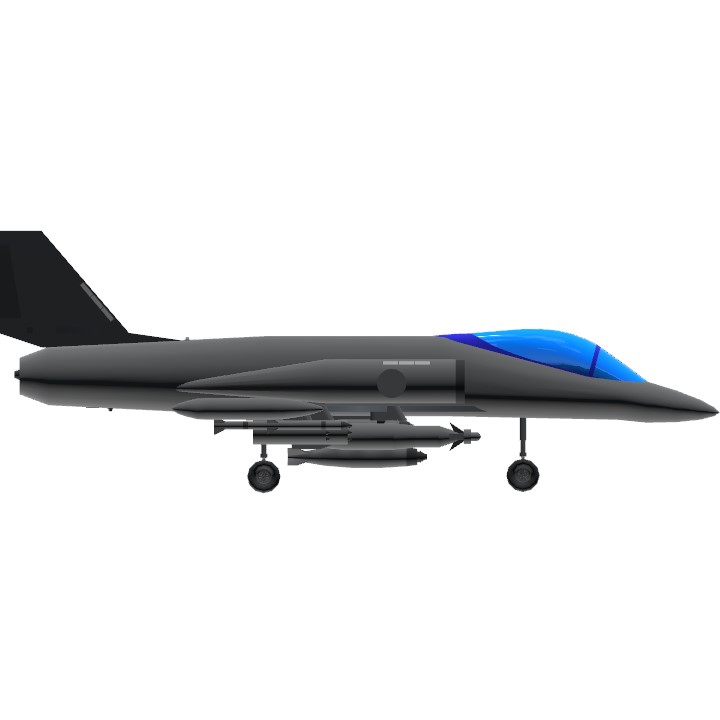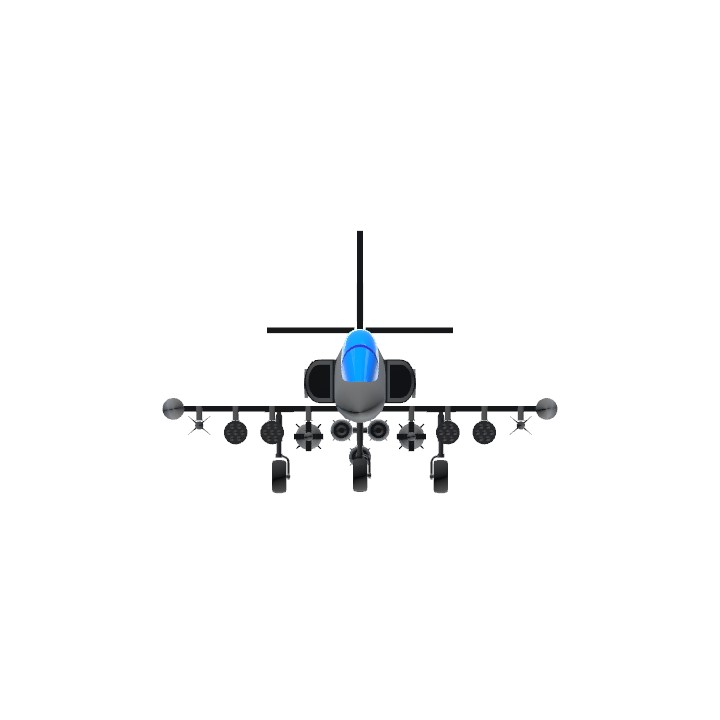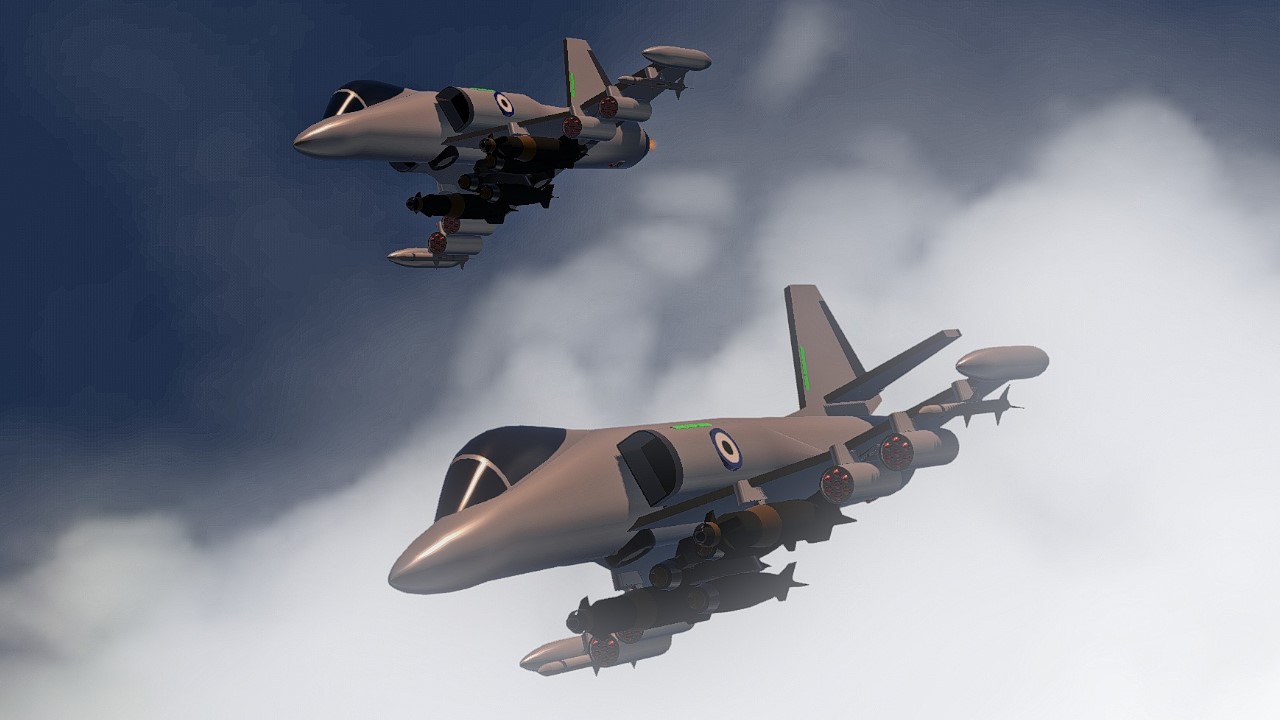

The LF-38C Umalae is a light attack and multirole aircraft developed by Hopper Aerospace in 1961 for the Air Force of Talui, entering operational service in 1963. Designed specifically to defend Talui’s sprawling archipelagic territory, the Umalae was conceived as a rugged, flexible aircraft capable of operating in poor weather, from dispersed airstrips, and under demanding maritime conditions.
The Umalae is a single-seat, single-engine, all-weather light attack aircraft featuring eight external hardpoints, allowing it to carry a wide variety of ordnance for strike, maritime attack, and limited air-to-air roles. Its standard weapons suite leaned heavily on Starcrest United munitions, including the Slash 75 and 125 unguided bombs, the SGB-12 Buster II, the GASSAM-9E air-to-ground missile, and most notably the SCATRAM Mk.1, an active radar-homing air-to-air missile. The inclusion of SCATRAM gave the Umalae a beyond-visual-range capability that was unusually advanced for a light attack aircraft of its era.
The LF-38 was developed to replace Talui’s fleet of F-104A Starfighters and LF-104A license-built variants. Although the Starfighter was still relatively modern, it was fundamentally a high-speed interceptor optimized for bomber interception, poorly suited to Talui’s defensive needs. The Air Force required a multirole workhorse: agile, maintainable, and adaptable to both maritime defense and close air support across island chains. In achieving this, the Umalae deliberately traded raw speed for handling, endurance, and maintainability. Its comparatively modest top speed was offset by the integration of the SCATRAM missile family, allowing it to threaten faster opponents without needing to out-run them.
The LF-38 Umalae proved to be a significant export success, particularly among nations seeking an affordable, adaptable platform for counter-insurgency and regional defense. Export operators included Venezuela, Colombia, Brazil, Argentina, Chile, and Paraguay, many of which employed the aircraft extensively in COIN operations. The Umalae was also sold to Iran prior to the 1979 Iranian Revolution, reflecting its appeal beyond the Western Hemisphere.
Remarkably, the Umalae remains in production today in civilian, trainer, and modernized military variants, a testament to the soundness of its original design. Within Talui, the LF-38 also holds cultural significance as the aircraft flown by the Air Force of Talui’s aerobatic demonstration team, the Seabreezers, where its agility and forgiving handling characteristics are put on full display.
Specifications
General Characteristics
- Created On Windows
- Wingspan 22.2ft (6.8m)
- Length 40.5ft (12.3m)
- Height 14.3ft (4.3m)
- Empty Weight 14,897lbs (6,757kg)
- Loaded Weight 22,303lbs (10,116kg)
Performance
- Power/Weight Ratio 1.813
- Wing Loading 94.2lbs/ft2 (459.8kg/m2)
- Wing Area 236.8ft2 (22.0m2)
- Drag Points 4405
Parts
- Number of Parts 120
- Control Surfaces 5
- Performance Cost 555