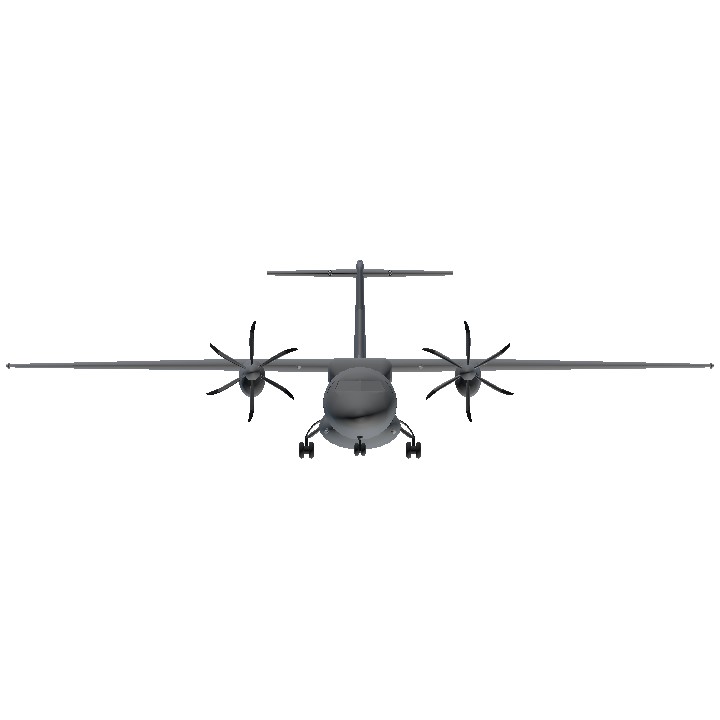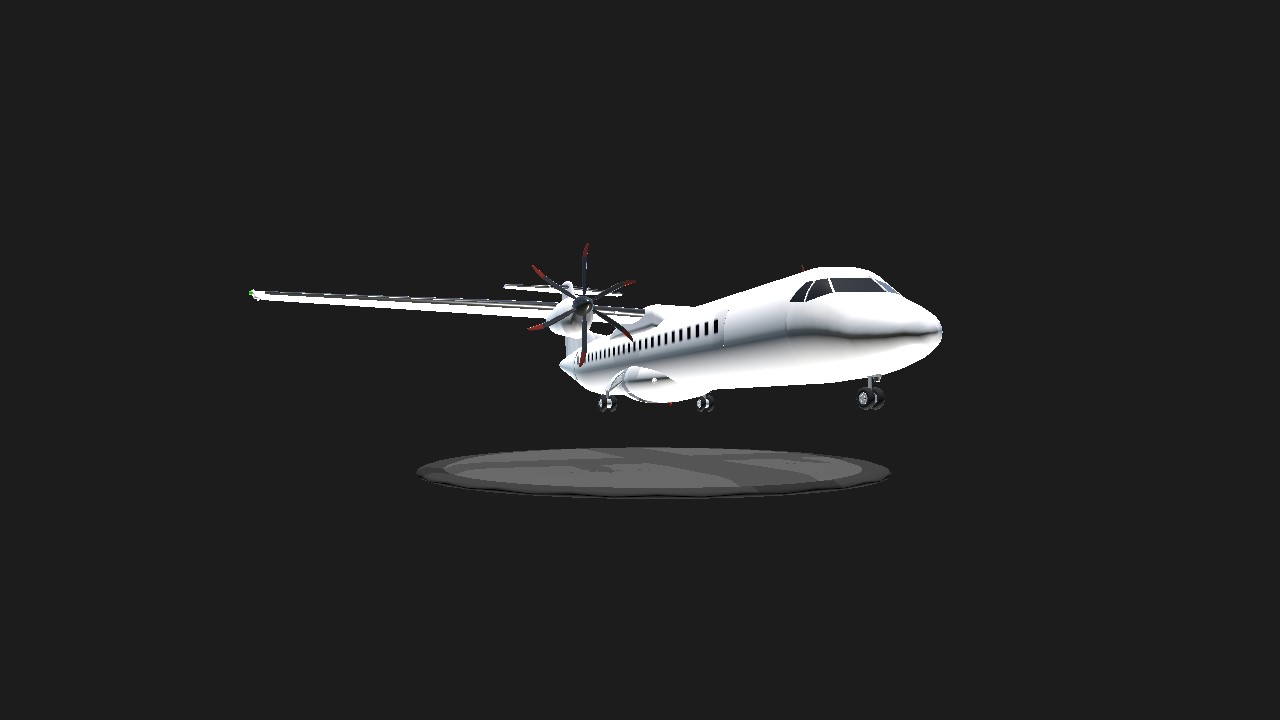
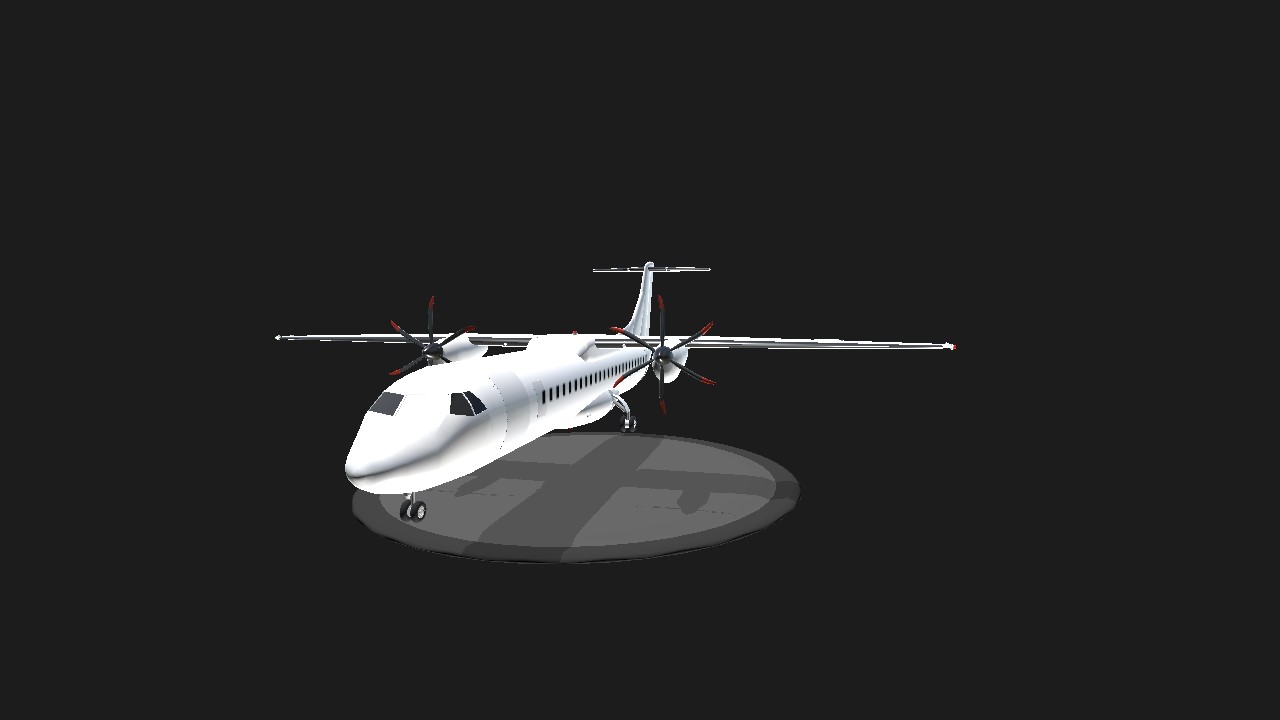
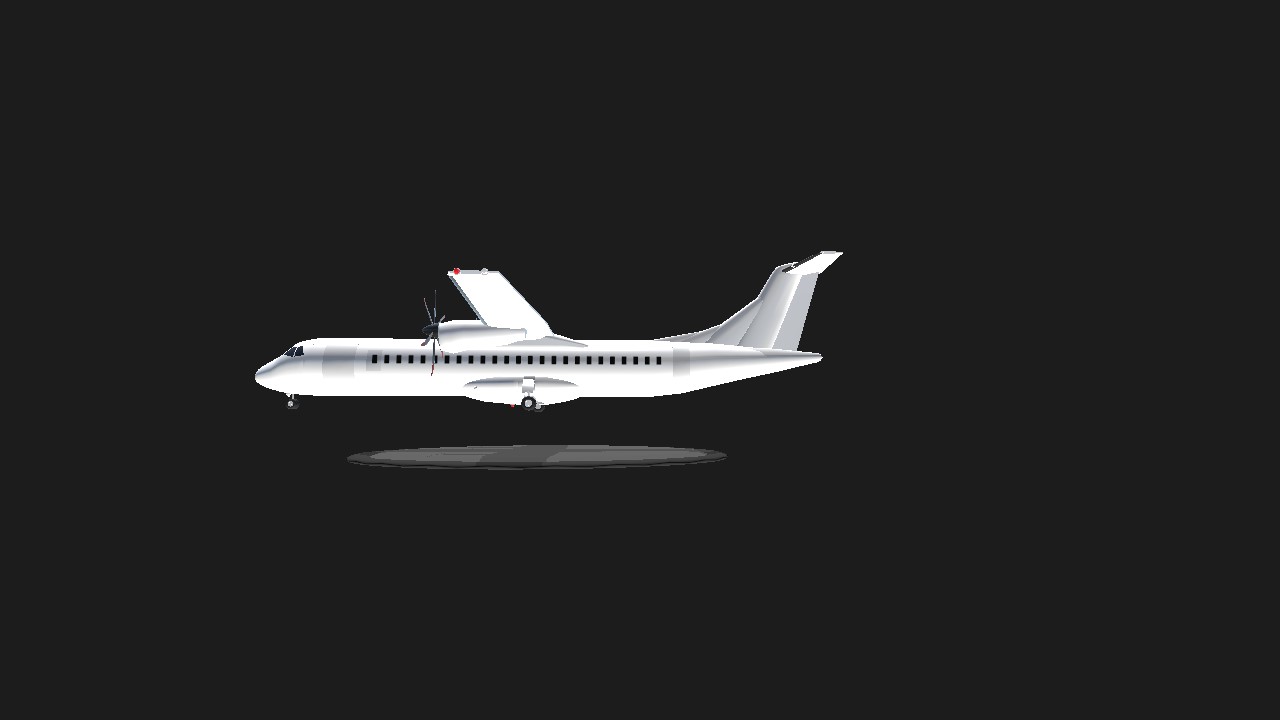
Atr 72
Speed for takeoff landing and cruising altitude
Takeoff speed: 100+ mph
landing speed: 95+ mph
Cruising speed: 225+ mph
Ag1: brakesAg2/3/4: Landing gear lights/Cabin lights/strobe lights
Ag5: Reverse thrust
Ag6: Can be customised
Ag7: Can be customised
Ag8: Engine/navigation lights /gear turning
About the ATR-72:
The ATR 72 is a twin-engine turboprop, short-haul regional airliner developed and produced in France and Italy by aircraft manufacturer ATR. The number "72" in its name is derived from the aircraft's typical standard seating capacity of 72 passengers. The ATR 72 has also been used as a corporate transport, cargo aircraft, and maritime patrol aircraft.
To date, all of the ATR series have been completed at the company's final assembly line in Toulouse, France; ATR benefits from sharing resources and technology with Airbus SE, which has continued to hold a 50% interest in the company. Successive models of the ATR 72 have been developed. Typical updates have included new avionics, such as a glass cockpit, and the adoption of newer engine versions to deliver enhanced performance, such as increased efficiency and reliability and reductions in operating costs. The aircraft shares a high degree of commonality with the smaller ATR 42, which remains in production as of 2025.
The ATR 72 is a turboprop-powered regional airliner, capable of accommodating a maximum of 78 passengers. It is powered by a pair of Pratt & Whitney Canada PW100 turboprop engines, which drive an arrangement of four or six-bladed propellers supplied by Hamilton Standard. Earlier models of the ATR 72 are equipped with the older PW124B engine, rated at 1,800 kilowatts (2,400 shp), while later-built aircraft are powered by the newer PW127 engine, rated at a maximum of 2,050 kW (2,750 shp) to achieve improved "hot and high" takeoff performance. It can land and takeoff in high airports with short runways like Andorra Airport. It employs carbonfibres for 30% of the wing by weight, for a 20% weight reduction.
In a standard configuration, the aircraft does not have an auxiliary power unit; when present it is installed within the C4 cargo section. Most operators of the ATR 72 equip their aircraft with a propeller brake that stops the propeller on the No. 2 (right) engine while allowing the turbine to continue running, to provide both airflow and electrical power to the aircraft while on the ground. (This arrangement is referred to as "Hotel Mode".)
In the majority of configurations, passengers board the ATR 72 using the rear door, a relatively unusual configuration for a passenger aircraft, while the front door is typically used for the loading and unloading of cargo; early customer Finnair intentionally ordered its ATR 72s with a front passenger door so that it could utilize the jet bridges at Helsinki Airport, while operator Air New Zealand's standard rear door aircraft can use jet bridges at airports with this equipment. While passengers are boarding or disembarking, a tail stand is set into place as standard procedure to guard against the aircraft nose lifting off the ground.
Specifications
Spotlights
- PZLAgencies 2 months ago
- DARZAVIATION 2 months ago
General Characteristics
- Created On Android
- Wingspan 87.8ft (26.8m)
- Length 89.3ft (27.2m)
- Height 25.0ft (7.6m)
- Empty Weight 7,692lbs (3,489kg)
- Loaded Weight 15,700lbs (7,121kg)
Performance
- Power/Weight Ratio 0.715
- Horse Power/Weight Ratio 0.063
- Wing Loading 20.7lbs/ft2 (101.2kg/m2)
- Wing Area 757.5ft2 (70.4m2)
- Drag Points 3380
Parts
- Number of Parts 161
- Control Surfaces 9
- Performance Cost 732