

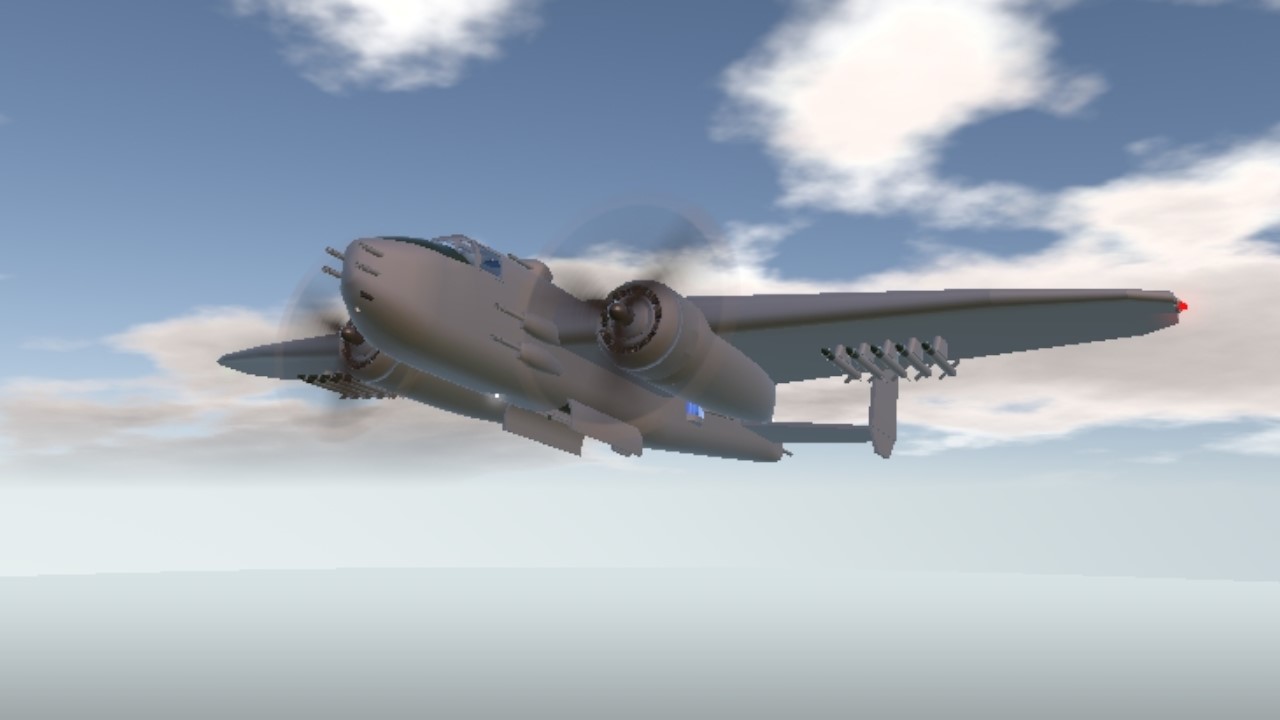
The B-25
The North American B-25 Mitchell is an American medium bomber that was introduced in 1941 and named in honor of Brigadier General William "Billy" Mitchell, a pioneer of U.S. military aviation. Used by many Allied air forces, the B-25 served in every theater of World War II, and after the war ended, many remained in service, operating across four decades. Produced in numerous variants, nearly 10,000 B-25s were built. It was the most-produced American medium bomber and the third-most-produced American bomber overall. These included several limited models such as the F-10 reconnaissance aircraft, the AT-24 crew trainer, and the United States Marine Corps' PBJ-1 patrol bomber.
General Information
Type Medium bomber
National origin United States
Manufacturer North American Aviation
Primary users:
United States Army Air Forces
Royal Air Force
Soviet Air Force
United States Marine Corps
Number built9,816
History
Introduction date 1941
First flight 19 August 1940
Retired 1974 (Indonesia)
Developed from North American NA-40
Developed into North American XB-28 Dragon
General characteristics
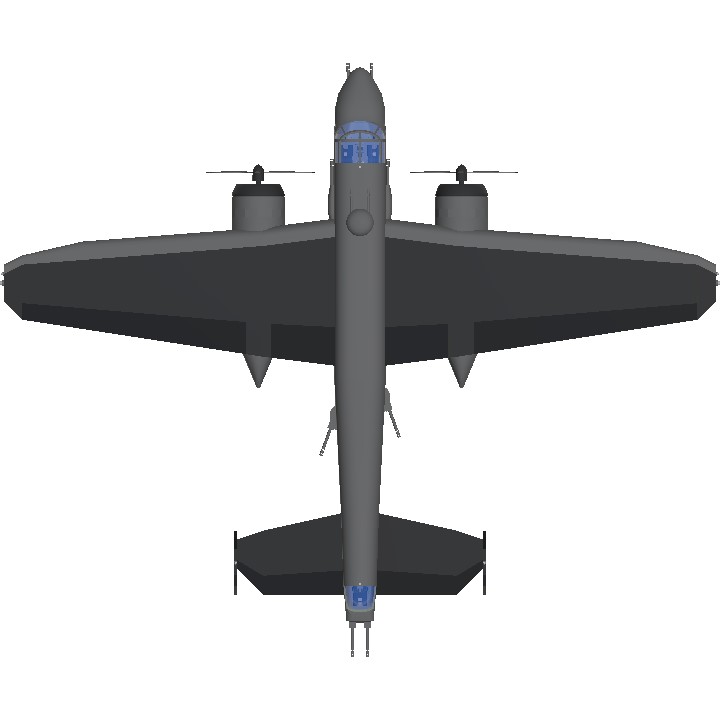
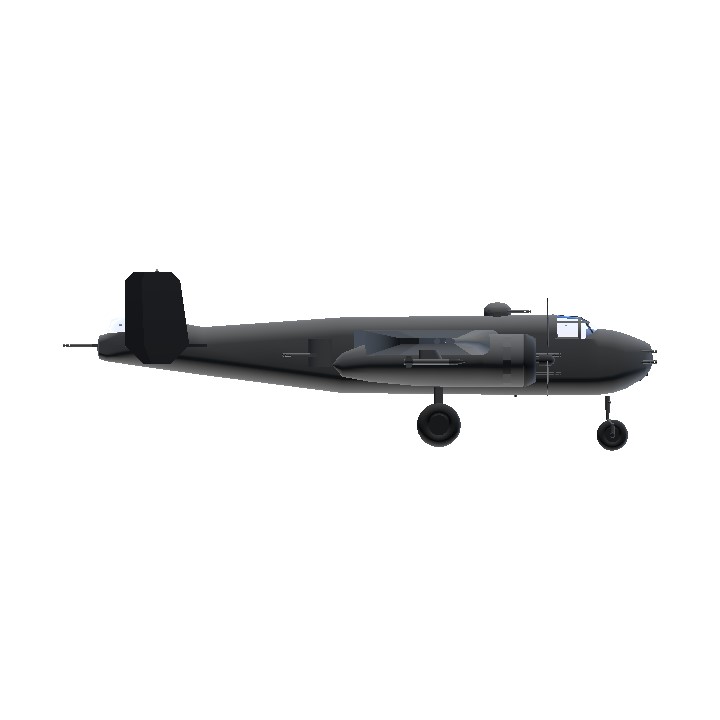
Crew: 5 (one pilot, navigator/bombardier, turret gunner/engineer, radio operator/waist gunner, tail gunner)
Length: 52 ft 11 in (16.13 m)
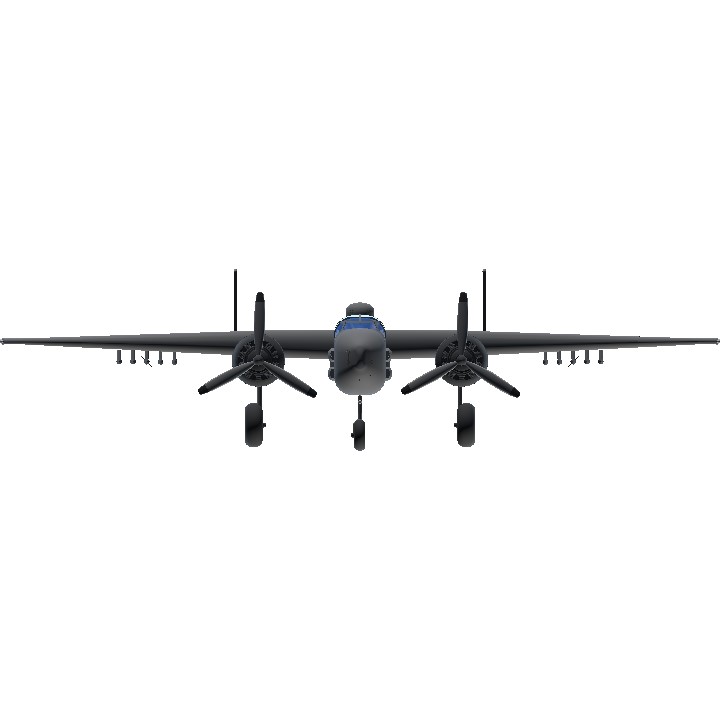
Wingspan: 67 ft 7 in (20.60 m)
Height: 16 ft 4 in (4.98 m)
Wing area: 618 sq ft (57.4 m2)
Airfoil: root: NACA 23017; tip: NACA 4409R[65]
Empty weight: 19,480 lb (8,836 kg)
Max takeoff weight: 35,000 lb (15,876 kg)
Powerplant: 2 × Wright R-2600-92 Twin Cyclone 14-cylinder two-row air-cooled radial piston engines, 1,700 hp (1,300 kW) each
Performance
Maximum speed: 272 mph (438 km/h, 236 kn) at 13,000 ft (4,000 m)
Cruise speed: 230 mph (370 km/h, 200 kn)
Range: 1,350 mi (2,170 km, 1,170 nmi)
Service ceiling: 24,200 ft (7,400 m)
Armament
Guns: 12–18 × .50 in (12.7 mm) machine guns and 75 mm (2.95 in) T13E1 cannon
Hardpoints: 2,000 lb (900 kg) ventral shackles to hold one external Mark 13 torpedo
Rockets: racks for ten 5 in (127 mm) high velocity aircraft rockets (HVAR)
Bombs: 3,000 lb (1,360 kg) bombs
The B-25H
In antishipping and strafing operations, the USAAF had an urgent need for hard-hitting aircraft, and North American responded with the B-25G. In this series, the transparent nose and bombardier/navigator position was changed for a shorter, hatched nose with two fixed .50 in (12.7 mm) machine guns and a manually loaded 75 mm (2.95 in) M4 cannon.
The B-25H series continued the development of the gunship version. NAA Inglewood produced 1000. The H had even more firepower; most replaced the M4 gun with the lighter T13E1, designed specifically for the aircraft, but 20-odd H-1 block aircraft completed by the Republic Aviation modification center at Evansville had the M4 and two-machine-gun nose armament. The 75 mm (2.95 in) gun fired at a muzzle velocity of 2,362 ft/s (720 m/s). Due to its slow rate of fire (about four rounds could be fired in a single strafing run), relative ineffectiveness against ground targets, and the substantial recoil, the 75 mm gun was sometimes removed from both G and H models and replaced with two additional .50 in (12.7 mm) machine guns as a field modification.
Controls
AG1 for canopy
AG2 for bomb bay
AG3 for ability to fire rear turret guns (I'm too dumb to make them auto target)
AG4 for nav lights
AG8 for engines
VTOL down for flaps
Trim for trim
Comes with quite detailed interior(for me at least) and quite good flight handling.
Happy flying!
Specifications
General Characteristics
- Predecessor [CLOSED] WW2 Attack Plane Challenge
- Created On Android
- Wingspan 64.1ft (19.5m)
- Length 52.8ft (16.1m)
- Height 16.1ft (4.9m)
- Empty Weight 10,335lbs (4,687kg)
- Loaded Weight 20,917lbs (9,487kg)
Performance
- Horse Power/Weight Ratio 0.095
- Wing Loading 14.3lbs/ft2 (69.7kg/m2)
- Wing Area 1,464.6ft2 (136.1m2)
- Drag Points 2599
Parts
- Number of Parts 318
- Control Surfaces 16
- Performance Cost 1,752
Comment T to be on tag list for my future builds!
@ADWaircrafts thank you! Much appreciated
Very nice congratulations!
nice
@Warsforyou @Sed @TheRLAF