


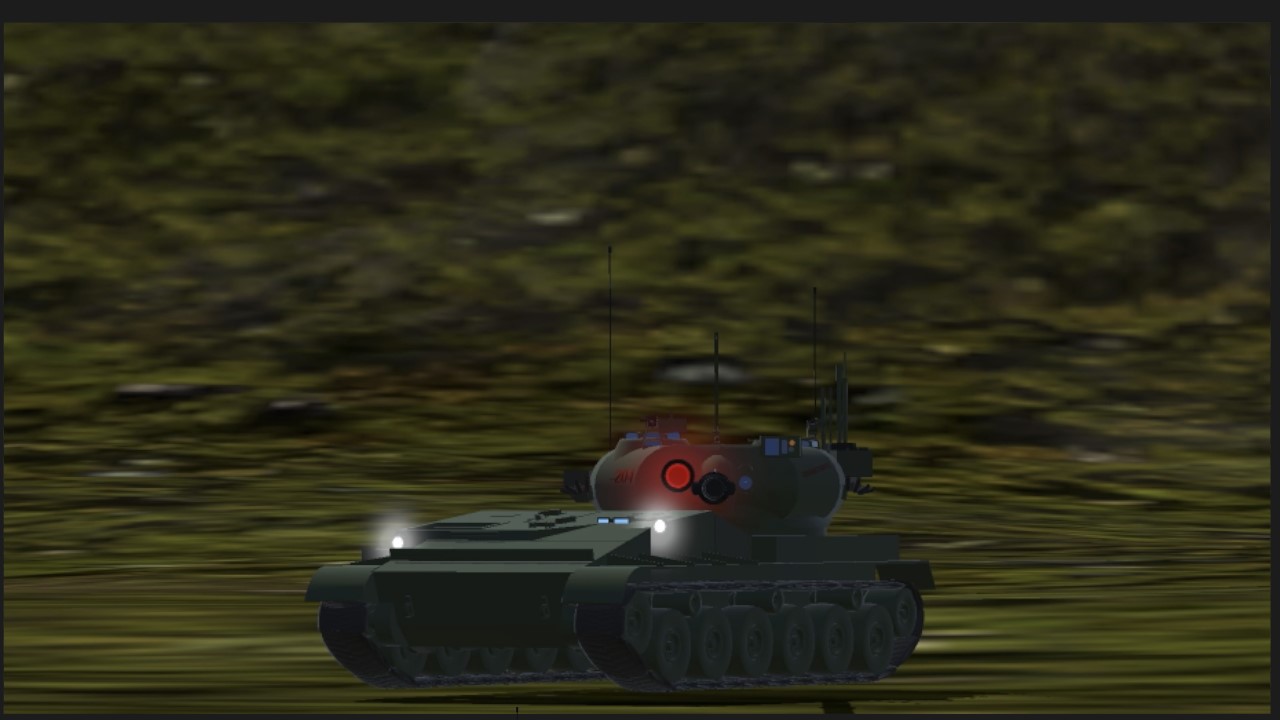
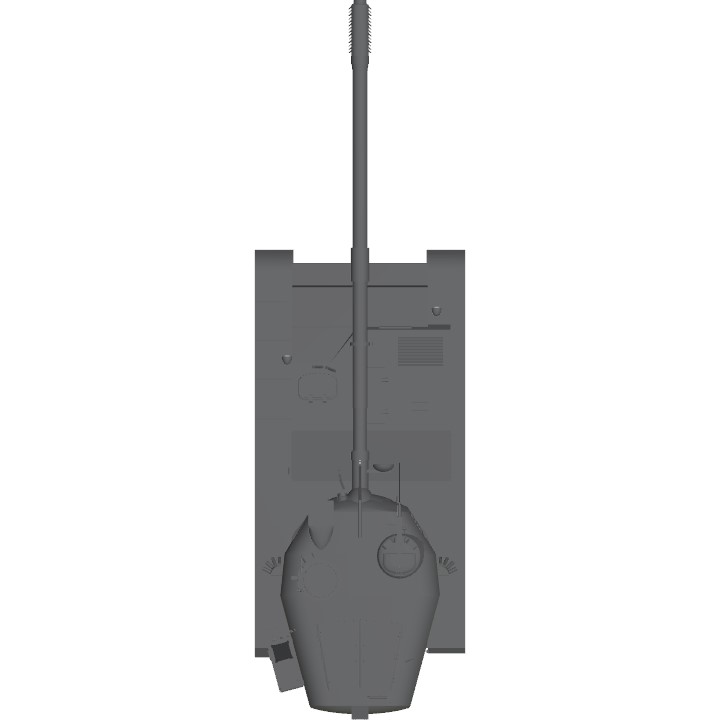
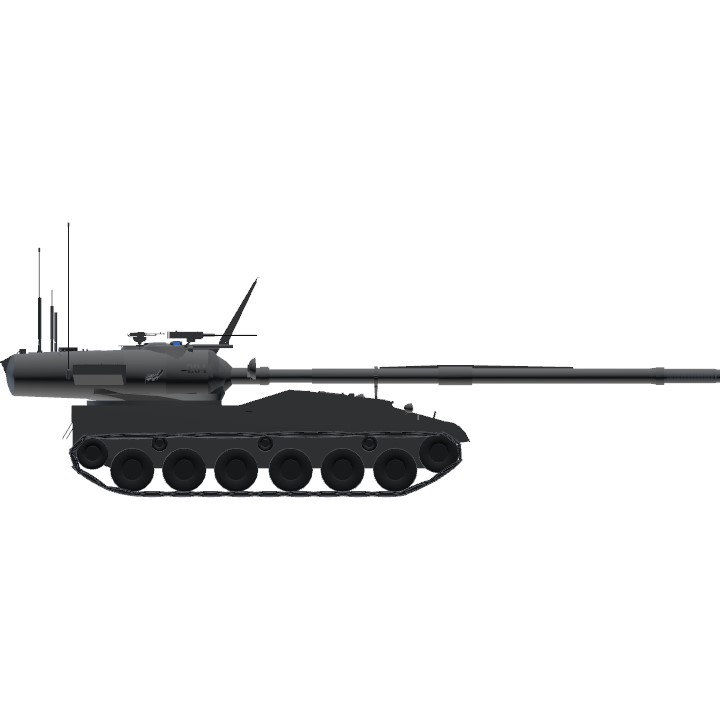
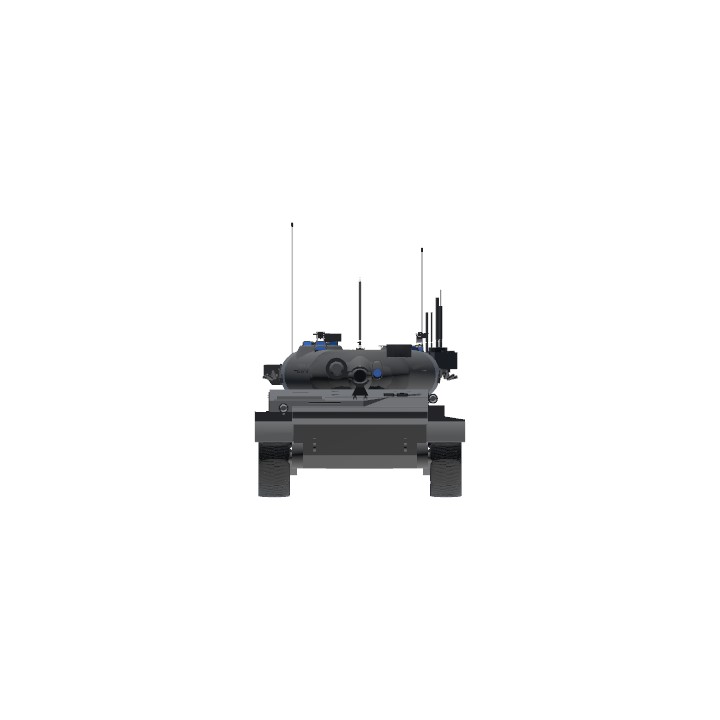
ZPK-152 “Tisza” or Object 579, is a fictional TD from ukraine I designed and built. It is supposed to give of this “field mod/improvised” feeling.
It took 30 HOURS to build this so please upvote!
!!Please set everything to maximum, if not possible, high physics are minimum because it was designed for it!!
It is quite detailed so make sure to check out everything that moves at least!
For example the moving release bolt on the wire cutter or the barrel support.
LORE
NATO Codename: Longblade
A 152 mm L/55 high-velocity smoothbore cannon, a French/Japanese-inspired ram-type autoloader, and the chassis of an SU-100P.
The result was one of the strangest, cheapest, and most feared improvised tank destroyers of the early 21st century.
Origin
(1993–2001): Collapse, Cannibalization, Creativity
After the fall of the Warsaw Pact, Romania’s defense industry imploded while Ukraine faced brutal budget cuts. Both countries had large stockpiles of SU-100P chassis rotting in depots—remnants of engineering projects and canceled SPGs.
In 1996, an unlikely joint idea emerged between Uzina Automecanică Moreni in Romania and a Ukrainian engineering group in Kharkiv:
“Could a modern, ultra-long-range tank destroyer be built cheaply from Soviet leftovers?”
The forgotten Object 120 served as the conceptual seed. It hadn’t failed—Moscow simply chose missiles instead. But Romania and Ukraine lacked the money, technology, and factories for modern ATGMs. A big gun was the realistic answer.
Thus began Object 579 — the future Tisza.
Armament
Primary Gun
A 152 mm high-velocity smoothbore inspired by the 2A53 but rebuilt using Romanian metallurgy and Ukrainian barrel technology.
Not as refined as Western designs — but absolutely devastating.
Secondary Weapons
An M2 Browning and an M240 were mounted externally, hinting at:
• foreign support,
• battlefield recovery,
• or simple black-market practicality.
The crew jokingly called the roof guns the “NATO Hat.”
Operational History
When the conflict in Ukraine escalated, Ukraine suddenly needed long-range firepower against modern Russian armor. ATGMs were limited, tanks were few, and desperation pulled old folders from dusty archives.
Object 579 was revived.
A small batch — 12 to 18 vehicles — was reportedly completed using the best SU-100P hulls available.
Combat Use
The ZPK-152 “Tisza” quickly earned a fearsome reputation for:
• ambushes from concealed treelines,
• engagements at ranges Russian tanks didn’t expect,
• long-range overwatch of fortified positions,
• and terrifying first-shot lethality.
But it came with serious drawbacks:
• thin armor,
• vulnerability to drones,
• and only average mobility.
A monster with glass skin.
Crew Perspective — Tisza #204
Gunner’s View
“The cannon is a monster. You don’t operate it — you survive it.”
The 152 mm loads itself with a violent metallic slam that rattles your teeth.
The optic mount vibrates whenever the engine hits certain RPMs.
Firing the gun is less recoil and more detonation:
Your bones vibrate.
Your helmet taps the seat.
Dust falls from the ceiling like snow.
Commander’s View
Cramped beneath the twin Western machine guns, the commander sits under what the crew jokingly calls the NATO Hat.
“It looks like a museum piece rebuilt by a drunk mechanic — but I’ve never seen Russians scatter faster than when the .50 cal starts singing.”
What the Crew Calls It
Not a tank destroyer.
They prefer:
• “The Spear”
• “The Whip”
• “The Coffin with Attitude”
Designation Meaning — What is “ZPK”?
ZPK = “Znist Placevyi Kompleks”
(ЗНІСТ ПЛАЦЕВИЙ КОМПЛЕКС)
Literal translation:
“Long-Range Engagement System.”
An intimidating name for an intimidating gun.
The Drone Jammer Story
After a cheap quadcopter nearly dropped a grenade on their vehicle, the crew of Tisza #204 decided luck was not a survival strategy.
They visited a volunteer tech group in Kharkiv, where a student handed them a rugged civilian RF-blocker — not military, but good enough to confuse common drones.
The crew bolted it onto the left rear of the turret, using:
• an old spotlight bracket
• a cut-up truck mudflap for rain protection
It looked ugly.
It looked improvised.
It looked perfect.
A week later, a drone flew toward them.
Its signal scrambled, it spiraled into the dirt.
The commander laughed for an hour and stenciled next to the mount:
“DON’T TOUCH — MAGIC INSIDE.”
Features
622 added parts
Around 2500 more complexity points
-Moving levers/bolts on barrel support and wire cutter.
-Wobbly antennas
-Hatches open when MG is operating
-Rear Munition ejection mechanism
-Fire control system
-Moving fan blades
-Smokes
-Retractable Wire cutter
-IR spotlight
-Wind sensor extends
-Recoil on both MG’s simulated
When using MG’s
Cross on M2 indicates M240 zero
Cross indicates 65.32 clicks (1/4 MOA)
Specifications
General Characteristics
- Predecessor SU-100P
- Created On iOS
- Wingspan 10.2ft (3.1m)
- Length 35.0ft (10.7m)
- Height 13.4ft (4.1m)
- Empty Weight 113,369lbs (51,423kg)
- Loaded Weight 113,501lbs (51,483kg)
Performance
- Wing Loading 2,863.6lbs/ft2 (13,981.1kg/m2)
- Wing Area 39.6ft2 (3.7m2)
- Drag Points 7288
Parts
- Number of Parts 833
- Control Surfaces 0
- Performance Cost 4,769
Brooohhh just "Taran" Ukrainian variation