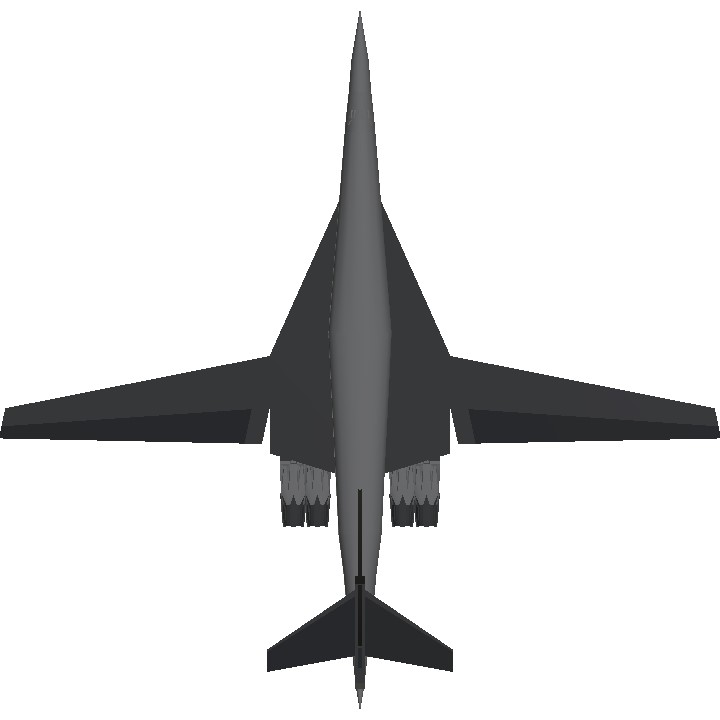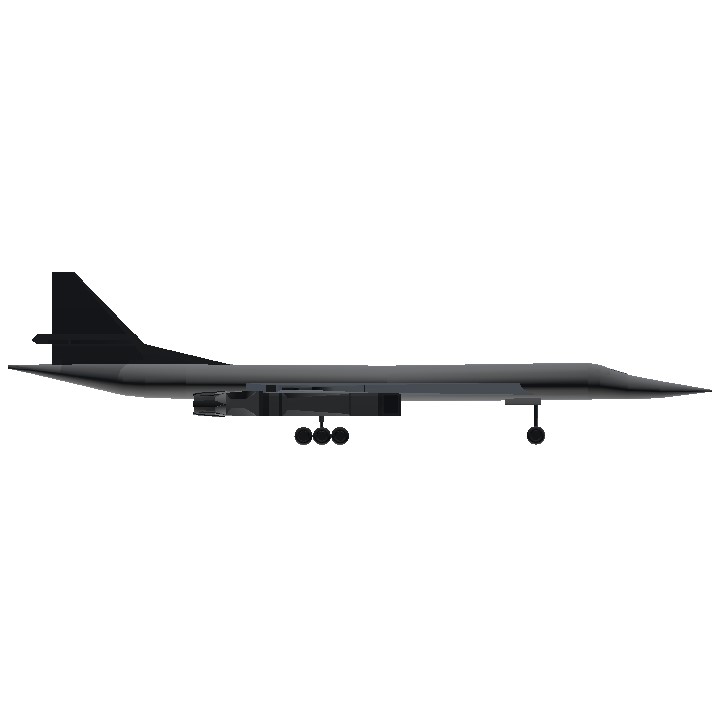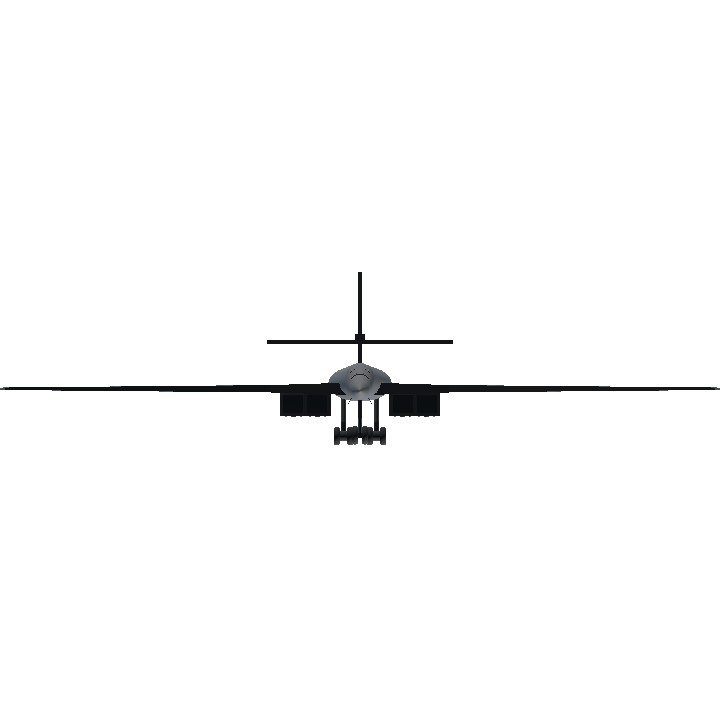
Auto Credit Based on Alvinwilson345's 50 Parts Challenge! (CLOSED)
Start of the Description.
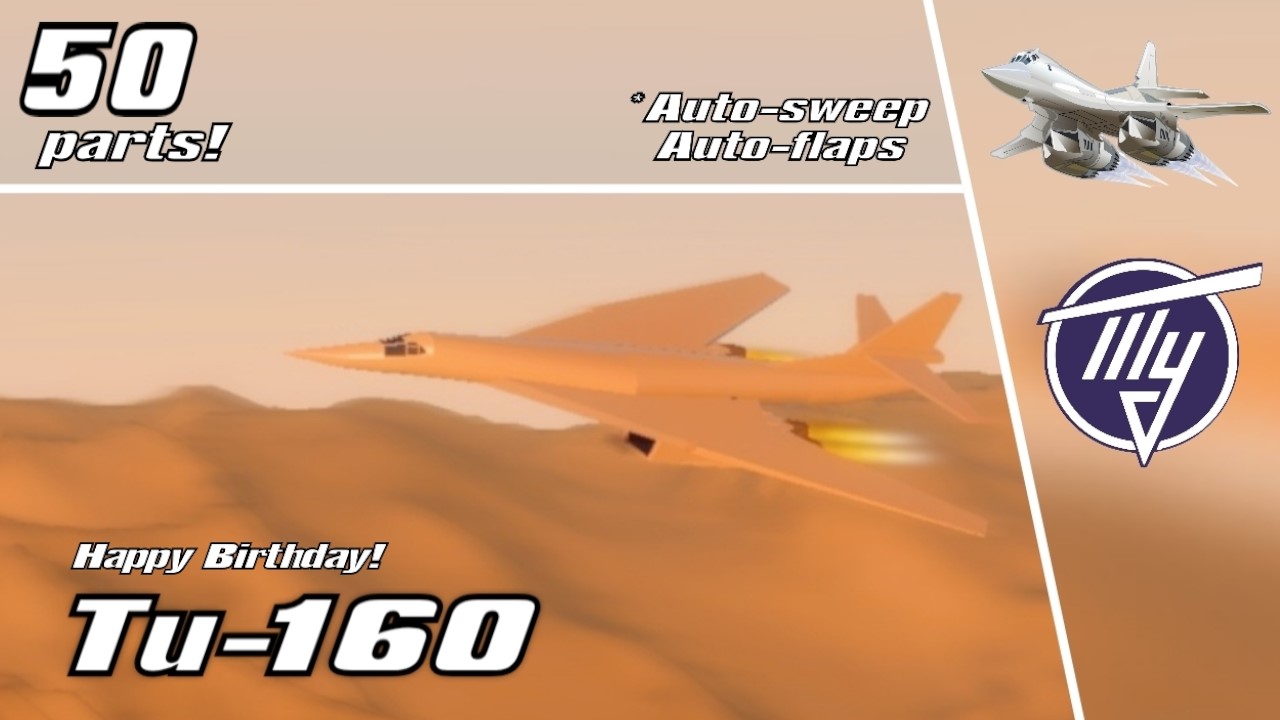
44th Years Tu-160!
Context!: The Tu-160 (Prototype) had its maiden/first flight on December, 18 1981.
So that's why I'm celebrating birthday of this Aircraft, long live the Russian's Heaviest & Fastest Bomber ever Made!.
This post was created on December, 18 2025*
FYI: Make sure you read the Instructions before flying this Aircraft!.
Additional Information:
How does the Auto-Flaps & Auto-Sweep/Swing actually works?:
Auto-Flaps, 1/2 (HALF/50%) Deployed:
- If it's activated, that means you're on the Approaching Stage.
- The Aircraft airspeed is Below 280 knots (IAS).
- It can also mean that you're slowing down too quick.
Auto-flaps, 2/2 (FULL/100%) deployed:
- Automatically activates when you're finally on the Landing Stage!.
- The Flaps will Fully Deployed when the aircraft is reaching the airspeed of 205 knots (IAS) and below.
- In some cases, this Aircraft is capable of landing at a very short runway, such as USS Beast, but sadly not capable in USS Tiny, due to it's oversized body.
Stalls on 135 kts, IAS.
auto-sweep/swing, 1/2 (HALF-SWING) swept:
- Automatically activates when you're on the Airspeed of 760 kts (IAS) and above.
- The most Ideal stage for cruising (when compared to slower airspeeds & Fully-swept stage/Afterburner mode.)
- Full-efficient enough for short-to-mid range travels.
- I'd recommend to go first on this stage before you enter the approaching stage (
Step-By-Stepmethod).
lastly, auto-sweep/swing, 2/2 (FULL-SWING) swept (a.k.a Afterburner Mode):
- After (about) 1-4 seconds (depending on your technique of flying this aircraft) from Activating Group 4 (which is for activating afterburner), you'll enter this aircraft's possible maximum-power stage.
- Suitable for dodging missiles (by outrunning them, e.g: you spawned on Ice Base Assault location and you're attempting to dodge their missiles), escaping from a specific danger real-quick, etc.
- Also, subjectively, when you're entering this stage, you're going to be the coolest guy ever seen by those noobs.
- IMPORTANT: watch out for your Aircraft's Vne (I've added these in the Instructions)!, (as an example) for a old-cellphone
(like: Nokia 3310)player who plays this game on the lowest-quality option, the Vne is about 2550~ kts (IAS) (However,it can be depending on how high/Altitudedo you fly in this Aircraft). - This Aircraft will be slightly more fuel-inefficient when you're on the Full-Throttle set & Also don't fly/move too fast if you don't want the wings to flutter.
About: Tupolev Tu-160 White Swan
Source: Wikipedia
The Tupolev Tu-160 (Russian: Туполев Ту-160 Белый лебедь, romanized: Bely Lebed, lit. 'White Swan'; NATO reporting name: Blackjack) is a supersonic, variable-sweep wing nuclear-capable heavy strategic bomber and airborne missile platform designed by the Tupolev Design Bureau in the Soviet Union in the 1970s. The aircraft is large, longer than a Boeing B-52 Stratofortress at 54 m, with wingspan 56 m when spread, 36 m when swept back. The Tu-160 is operated by the Long Range Aviation branch of the Russian Aerospace Forces.
The first competition for a supersonic strategic heavy bomber was launched in the Soviet Union in 1967. In 1972, the Soviet Union launched a new multi-mission bomber competition to create a new supersonic, variable-geometry ("swing-wing") heavy bomber with a maximum speed of Mach 2.3, in response to the US Air Force B-1 bomber project. The Tupolev design, named Aircraft 160M, with a lengthened blended wing layout and incorporating some elements of the Tu-144, competed against the Myasishchev M-18 and the Sukhoi T-4 designs. Work on the new Soviet bomber continued despite an end to the B-1A and, in the same year, the design was accepted by the government committee. The prototype was photographed by an airline passenger at a Zhukovsky Airfield in November 1981, about a month before the aircraft's first flight on 18 December 1981. Production was authorized in 1984, beginning at the Kazan Aircraft Production Association (KAPO).
The Tu-160 entered service in 1987, the last strategic bomber designed for the Soviet Air Forces. It was built to serve as both a conventional and nuclear bomber. Production was stopped in 1992 following the dissolution of the Soviet Union in 1991, and the newly independent Russian and Ukrainian air forces inherited a fleet of 13 and 19 Tu-160s, respectively. Following protracted negotiations, the Russian Federation purchased eight Ukrainian Tu-160s, while the remaining 11 were scrapped in the late 1990s under the Nunn–Lugar Cooperative Threat Reduction agreement. Following these actions, the sole operator of the aircraft type became the Russian Aerospace Forces' Long Range Aviation branch, which still had 17 Tu-160s in service as of 2022. The type had its combat debut in November 2015 during the Russian military intervention in the Syrian Civil War, conducting numerous airstrikes using Kh-101 air-launched cruise missiles. Various overseas deployments have been conducted, including to distant nations such as Venezuela and South Africa.
Since the early 2000s, the active fleet has undergone several upgrades, largely focusing on various electronic systems. A program of modernising existing aircraft to a new Tu-160M standard and building new aircraft was embarked upon, with the first updated aircraft delivered in December 2014. Plans were announced in 2015 for the delivery of 50 new-built Tu-160Ms and the upgrading of 16 existing aircraft.
The new bombers are reported to have more sophisticated armament, engines, and avionics than the original Tu-160. In January 2022, the first newly-built Tu-160M performed a test flight, with two new aircraft planned for delivery in 2022 of ten on order.
End of Description.
Specifications
Spotlights
- SuperSuperTheSylph one month ago
- ACEOFFICERS one month ago
- IMCI 11 days ago
General Characteristics
- Predecessor 50 Parts Challenge! (CLOSED)
- Created On Android
- Wingspan 287.8ft (87.7m)
- Length 281.7ft (85.9m)
- Height 70.0ft (21.3m)
- Empty Weight 24,325lbs (11,033kg)
- Loaded Weight 96,284lbs (43,674kg)
Performance
- Power/Weight Ratio 17.738
- Wing Loading 24.4lbs/ft2 (119.2kg/m2)
- Wing Area 3,943.6ft2 (366.4m2)
- Drag Points 24182
Parts
- Number of Parts 50
- Control Surfaces 7
- Performance Cost 519