FV1A Plus
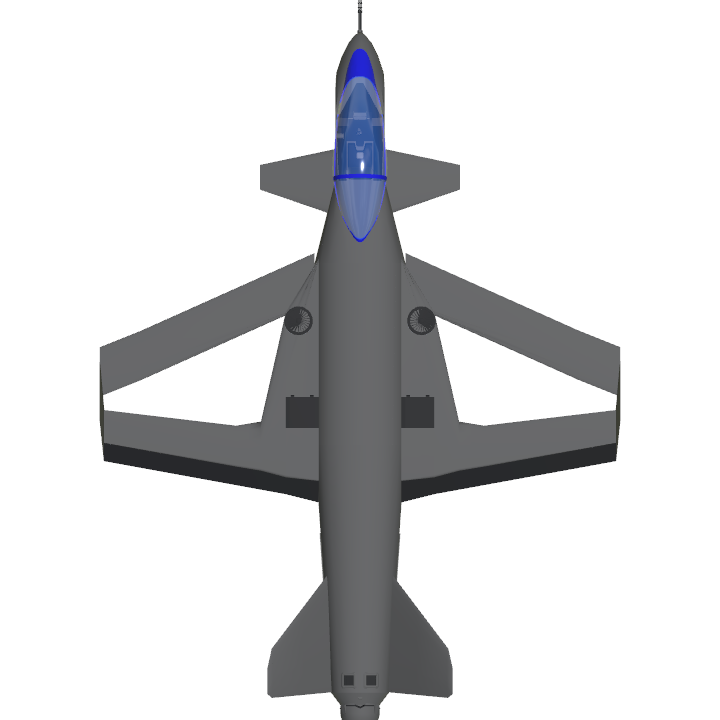
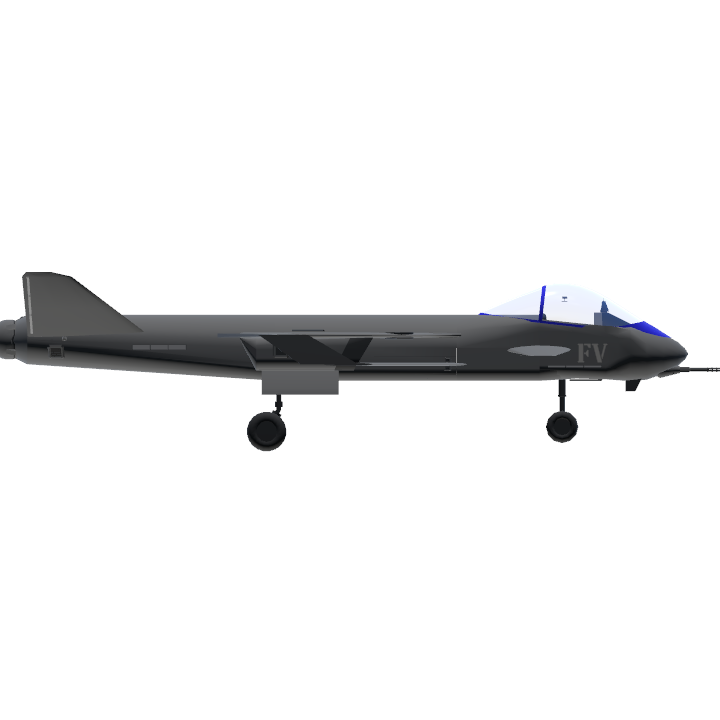
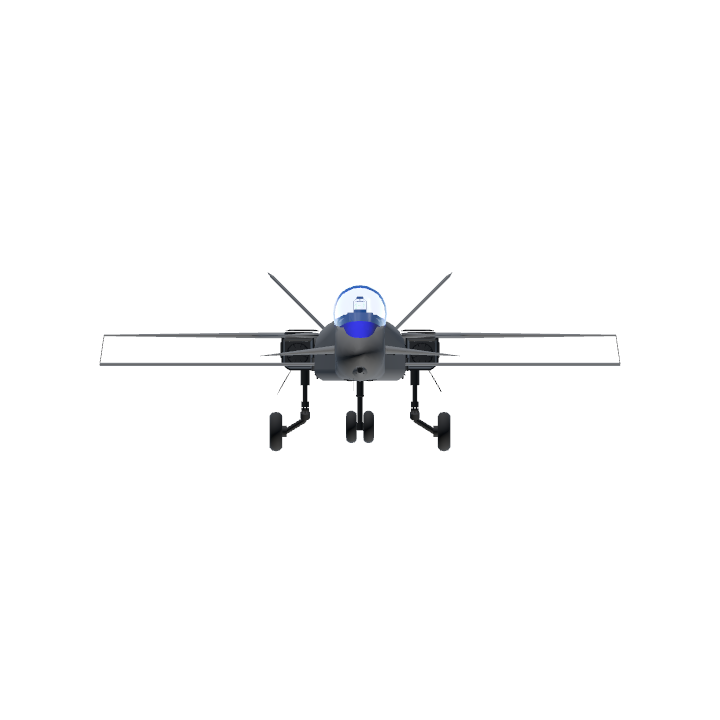
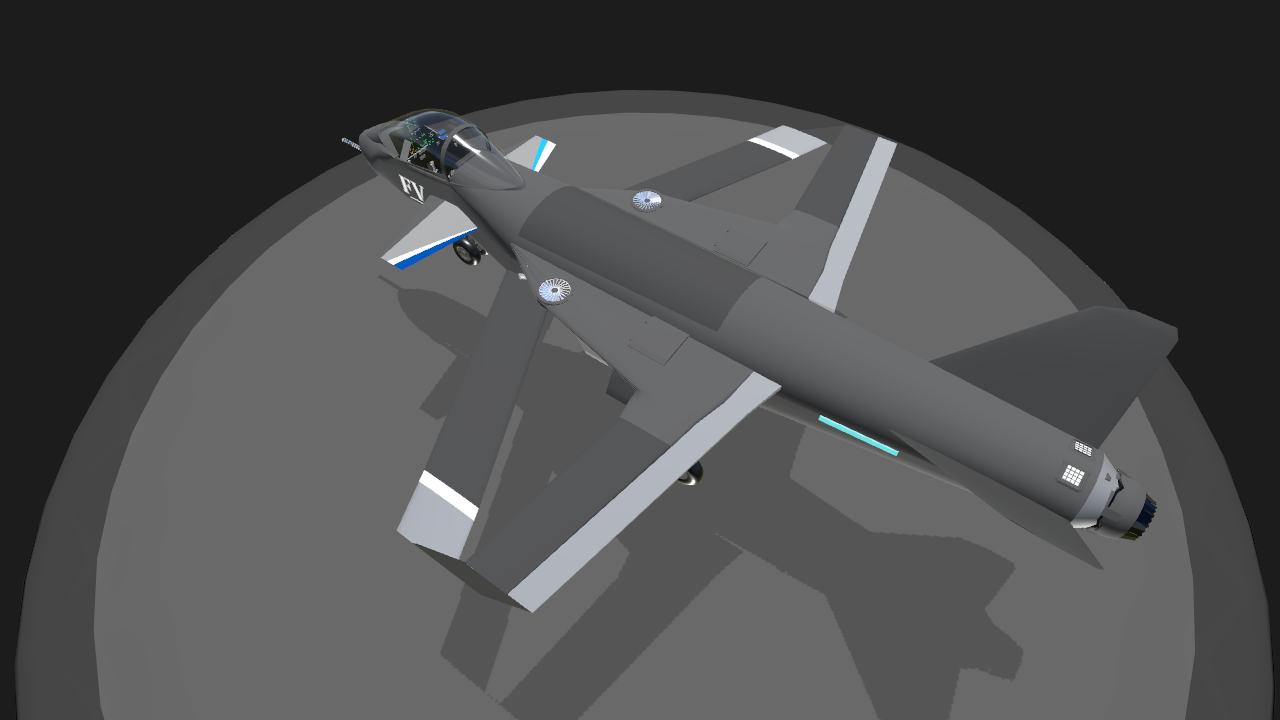
FV1A Plus is the first improved variant of the FV1A, a single-engine, single-seat light VTOL fighter equipped with a complete multi-mode fly-by-wire flight control system and a full weapon suite. It features a canard + special dual-wing + variable V-tail configuration.
Updates from FV1A
- Updated livery to dark grey
- Slightly optimized airframe lift configuration for better post-stall control
- Redesigned refueling probe
- Enhanced maneuverability in VTOL mode
- Key Update: Added inertial navigation system to AGB-50ER, enabling fire-and-forget capability
Controls
- AG1: Disable AOA limiter
- AG2: Release the AGB-50ER (bomb). Keep AG2 open to manually control AGB-50ER; the plane will be controlled by Auto Pilot
- AG3: All bay doors open
- AG4: Refueling probe
- AG5: Angle mode
- AG6: Drag Chute
- AG7: Cockpit
- AG8: Control a portion of FBW system, useful for debug
Angle Mode (AG5)
Angle mode is an assisted flight mode where your stick input corresponds to the aircraft’s pitch/roll angle, with a 40-degree limit in both axes. It can be simply understood as a flexibly controllable Auto Pilot mode. This mode also makes aerial refueling much easier.
Angle mode includes an additional feature: speed control. You can set the target speed by adjusting the Trim lever, with a range of 300-900 km/h. The Target Speed indicator can be found on the cockpit instruments.
VTOL Operations
Entering VTOL mode:
Push the VTOL lever to the top to enter VTOL mode. Use the Trim lever to control altitude, and the pitch/roll stick to control forward/backward and lateral movement. Center the Trim and release the pitch/roll stick to achieve a 0 km/h hover.
VTOL to level flight:
Ensure throttle is at 100% and the aircraft has a positive pitch angle (nose up), then center the VTOL lever to transition to level flight.
Level flight to VTOL:
Ensure airspeed is around 200 km/h and the aircraft is as level as possible, then push the VTOL lever to the top to enter VTOL mode.
Aerodynamic Configuration
Due to its special dual-wing layout, over 60% of the main wing area consists of control surfaces with large deflection angles. Combined with the canards, this aircraft can enter any angle of attack at any speed and perform post-stall maneuvers.
Armament
- 4× AIM-120X (fictional air-to-air missile with high off-boresight launch capability)
- 2× Cleaver (stock air-to-ground missile)
- 1× AGB-50ER (multi-role weapon serving as both loyal wingman drone and long-range guided bomb)
- Auto-aiming cannon (automatically targets enemies within a 60×60 degree forward cone; guarantees 100% hit rate against ground targets within 10 km when the carrier aircraft is not maneuvering aggressively. This weapon is not original; the auto-aim FunkyTrees code is from <https://www.simpleplanes.com/a/4uU7Yn/ultimate-dogfight-Autoaim> )
AGB-50ER Operating Instructions
This is a sophisticated weapon system equipped with a complete flight control system, a small jet engine, and a 500 lb warhead.
As of now, the AGB-50ER is likely the first and only guided bomb in the SimplePlanes community to achieve fire-and-forget capability using pure FunkyTrees code.
Note: You must first activate AG2 to release the AGB-50ER from the carrier aircraft before the following operations take effect.
Guidance Methods
The AGB-50ER supports two guidance methods:
- Datalink Guidance: The carrier aircraft maintains target lock, continuously updating target position via datalink. Suitable for all target types.
- Inertial Navigation Guidance (New): Fire-and-forget mode. The AGB-50ER autonomously navigates and attacks based on the target’s position and motion state at the time of launch. Can be launched from 16 km away with approximately 20-meter accuracy (error is caused by floating-point calculation limitations in the game; accuracy decreases with distance).
Operating Modes
- Manual Control Mode
Keep AG2 open and switch your view to “bomb” to manually control the AGB-50ER. The carrier aircraft will be taken over by the autopilot, but you can still use the Trim lever to control the carrier’s speed (or altitude if the carrier is in VTOL mode). Target Strike Mode
Activate AG2 to release the bomb, then immediately close AG2. Select the weapon “drone” and lock onto a ground target to put the AGB-50ER into attack mode. It will climb to 1600 meters altitude (or maintain current altitude if already above 1600 m) and execute a top-attack on the target.- Datalink Guidance: Maintain target lock, and the AGB-50ER will use the real-time target position provided by the carrier’s datalink.
- Inertial Guidance: After entering attack mode, release the lock, and the AGB-50ER will automatically switch to inertial navigation mode for autonomous attack. If you re-acquire target lock while in inertial mode, it will automatically switch back to datalink guidance.
Follow Carrier Mode
When AG2 is closed and the weapon “drone” is not selected or no target is locked, the AGB-50ER will automatically follow the carrier aircraft, maintaining a position 10 meters behind and to the left, and 8 meters above the carrier. If the carrier is in VTOL mode or has landed, the AGB-50ER will orbit within a 100-meter radius above the carrier until it resumes cruise flight.
Cancel Attack / Switch Modes
While in attack mode, if you need to cancel the attack and return the AGB-50ER to follow mode, simply activate AG2 and immediately close it.
Inertial Guidance Recommendations
Inertial navigation is only suitable for large targets moving at constant speed or stationary, such as surface vessels or air defense positions. For ground targets that move randomly at irregular intervals (such as SAM vehicles or tanks), it is recommended to use datalink guidance with continuous lock. Inertial guidance cannot accurately hit randomly moving targets.
Specifications
General Characteristics
- Created On iOS
- Wingspan 26.0ft (7.9m)
- Length 35.7ft (10.9m)
- Height 8.7ft (2.7m)
- Empty Weight N/A
- Loaded Weight 3,119lbs (1,414kg)
Performance
- Power/Weight Ratio 10.471
- Wing Loading 6.6lbs/ft2 (32.2kg/m2)
- Wing Area 473.5ft2 (44.0m2)
- Drag Points 1195
Parts
- Number of Parts 254
- Control Surfaces 10
- Performance Cost 2,148