

Mikoyan MiG-44 DINGO
The Mikoyan MiG-44 DINGO (Russian: МиГ-44 «Динго») is a fictional two-seat, tandem-configuration heavy air superiority fighter developed by the Mikoyan Design Bureau. Designed during the late post–Cold War period, the MiG-44 was conceived as a simplified and more practical evolution of the cancelled MiG-1.44 project, prioritizing speed, range, and radar performance over experimental features such as thrust vectoring.
The aircraft is capable of sustained supersonic flight up to Mach 1.5 and features a front-to-back seating arrangement for a pilot and weapons systems officer (WSO). The MiG-44 served as the basis for the later MiG-45M HYENA, a multirole derivative optimized for strike and ground-attack missions.
Development:
Background
Following the collapse of the Soviet Union, the ambitious MiG-1.44 fifth-generation fighter program was cancelled due to funding constraints and technical complexity. However, several aerodynamic and structural concepts from the program—such as blended wing-body shaping, forward fuselage chines, and internal weapons carriage—were considered viable for future platforms.
In this fictional timeline, Mikoyan initiated the MiG-44 DINGO program in the early 2000s as a cost-reduced heavy fighter, removing thrust-vectoring nozzles and advanced experimental avionics in favor of proven systems. The decision to adopt a two-seat configuration was driven by the aircraft’s long-range interception role and complex sensor suite.
Design Philosophy
Unlike the MiG-1.44, the MiG-44 emphasizes:
Mechanical simplicity
Reduced maintenance burden
Long-range air superiority and interception
Crew workload sharing
Thrust vectoring was removed entirely, resulting in fixed exhaust nozzles optimized for high-speed cruise and acceleration rather than extreme maneuverability.
The aircraft’s NATO reporting name, “DINGO,” reflects its role as a fast, aggressive interceptor rather than a stealth-optimized dogfighter.
Design
Airframe
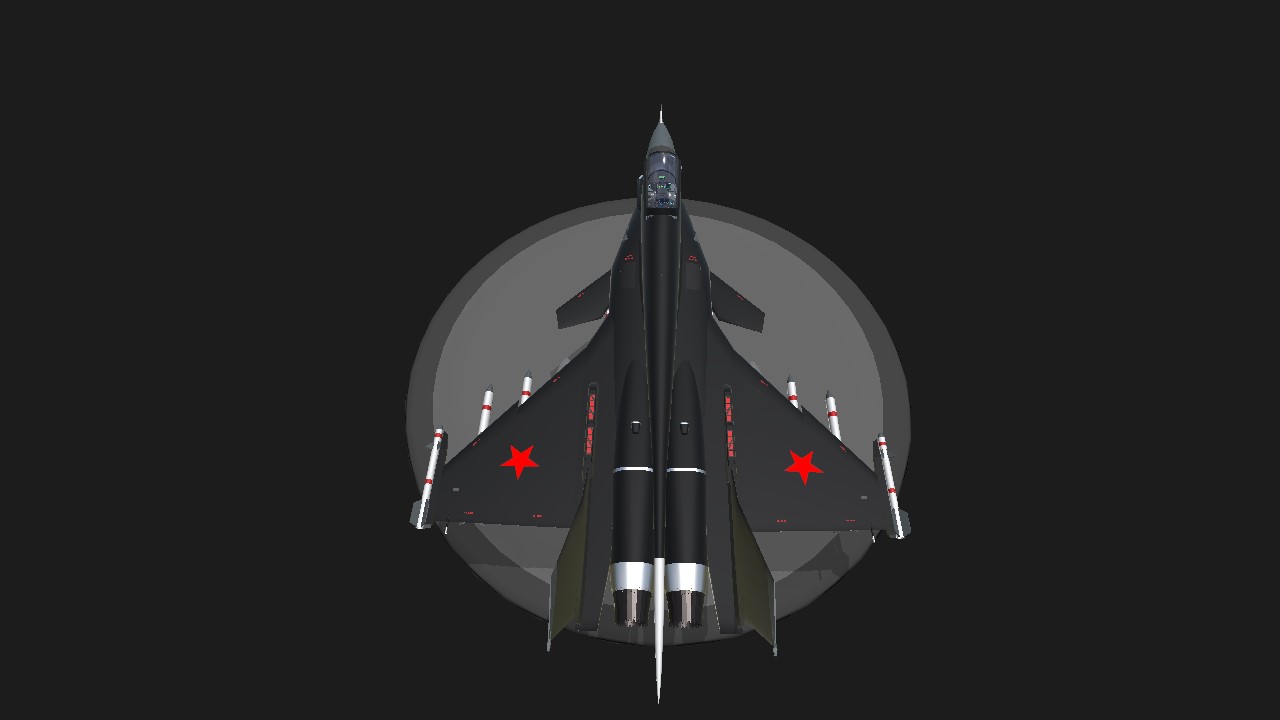
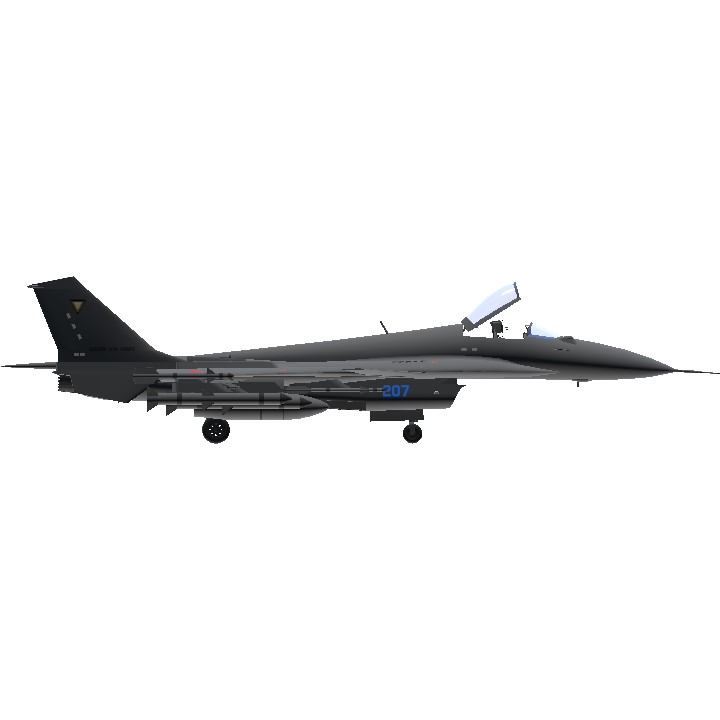
The MiG-44 retains a delta wing with close-coupled canards, a design inherited from the MiG-1.44. The airframe incorporates limited radar cross-section reduction techniques but does not qualify as a true stealth aircraft.
Key structural features include:
Blended fuselage with pronounced chines
Twin canted vertical stabilizers
Tandem cockpit under a single-piece canopy
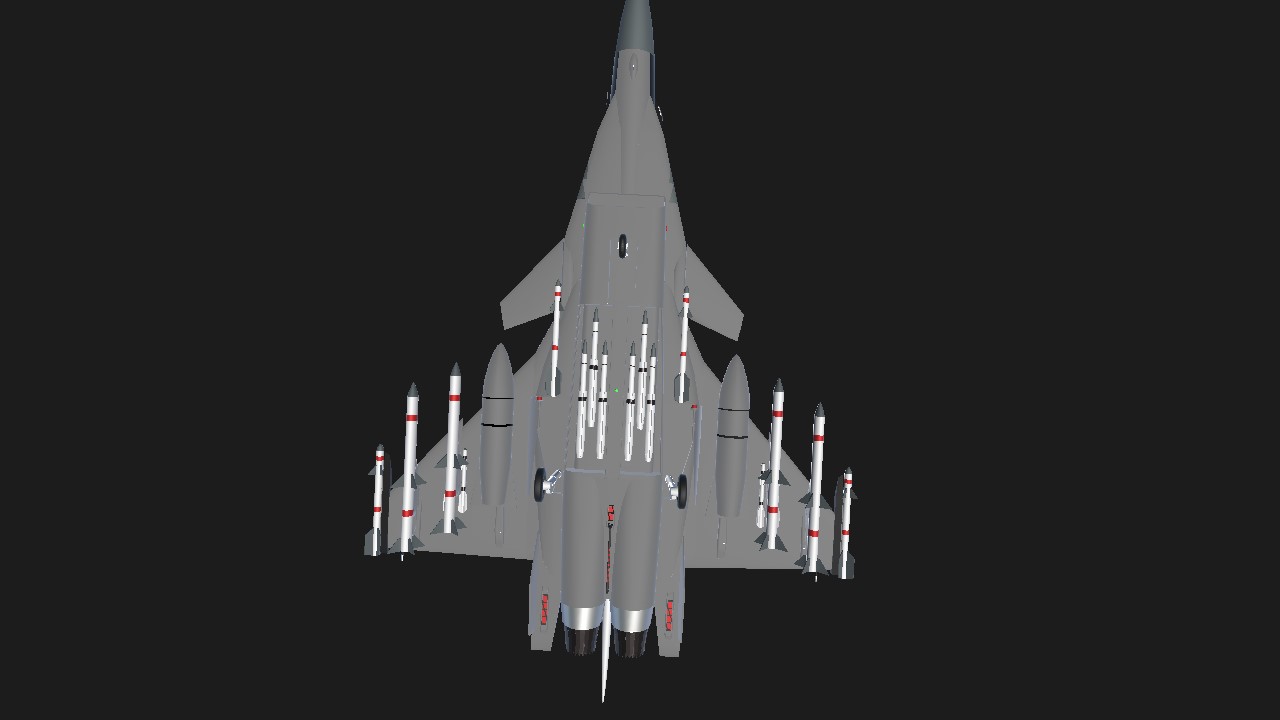
Internal weapons bays supplemented by external hardpoints
Cockpit
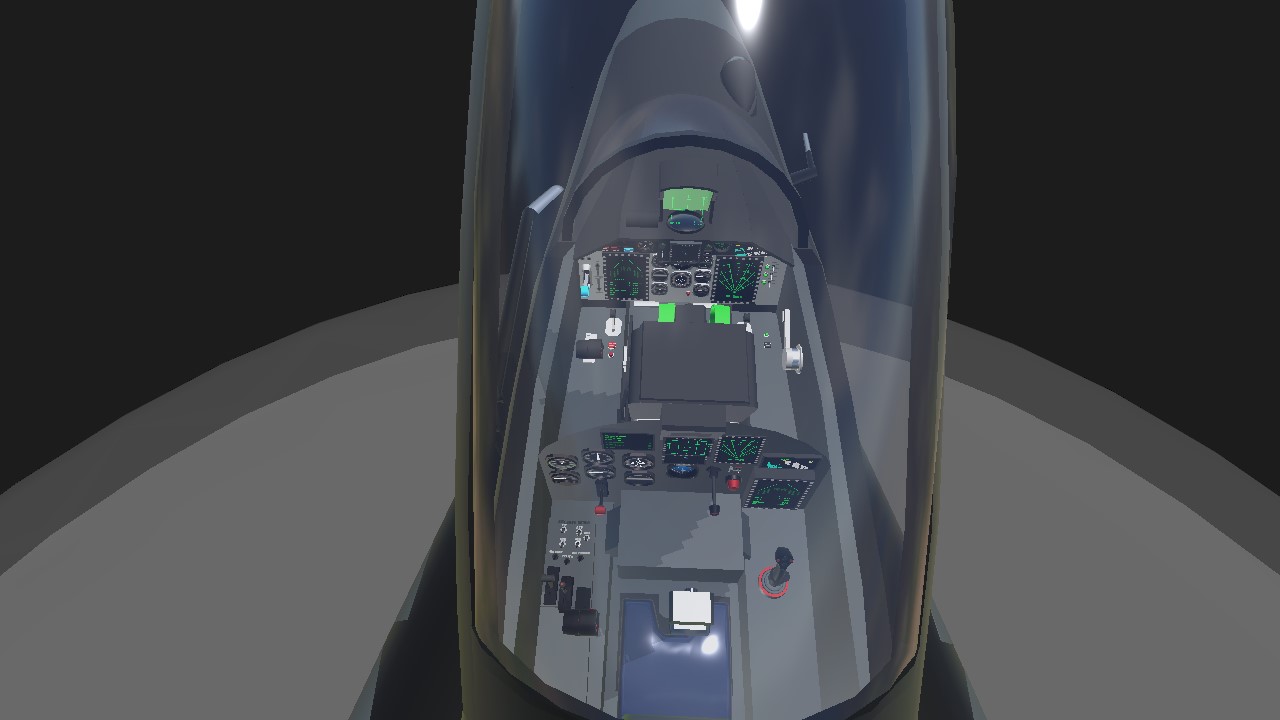
The aircraft features a two-seat, front-to-back layout, with:
Front seat: Pilot
Rear seat: Weapons Systems Officer (WSO)
Both cockpits are equipped with glass displays, hands-on-throttle-and-stick (HOTAS) controls, and helmet-mounted cueing systems. The WSO manages radar, electronic warfare, and long-range missile engagements.
Powerplant
The MiG-44 is powered by two afterburning turbofan engines, derived from late-generation Klimov designs. Unlike its predecessor, the aircraft uses fixed exhaust nozzles, improving reliability and reducing cost.
Performance
The MiG-44 is capable of supercruise-assisted supersonic dash but relies on afterburners to reach its maximum speed of Mach 1.5. While less agile than thrust-vectored contemporaries, it compensates with high thrust-to-weight ratio and strong climb performance.
Armament
Internal
1 × 30 mm autocannon
Internal weapons bay capable of carrying:
Beyond-visual-range Hypersonic missiles
Short-range infrared-guided missiles
External
Up to 8 external hardpoints for:
Additional air-to-air missiles
Drop tanks
Electronic warfare pods
Specifications
General Characteristics
- Predecessor MiG-45M Hyena (2 person heavy multi purpose fighter)
- Created On Android
- Wingspan 39.7ft (12.1m)
- Length 66.5ft (20.3m)
- Height 15.5ft (4.7m)
- Empty Weight N/A
- Loaded Weight 54,319lbs (24,638kg)
Performance
- Power/Weight Ratio 5.895
- Wing Loading 101.3lbs/ft2 (494.6kg/m2)
- Wing Area 536.2ft2 (49.8m2)
- Drag Points 5408
Parts
- Number of Parts 619
- Control Surfaces 2
- Performance Cost 3,560
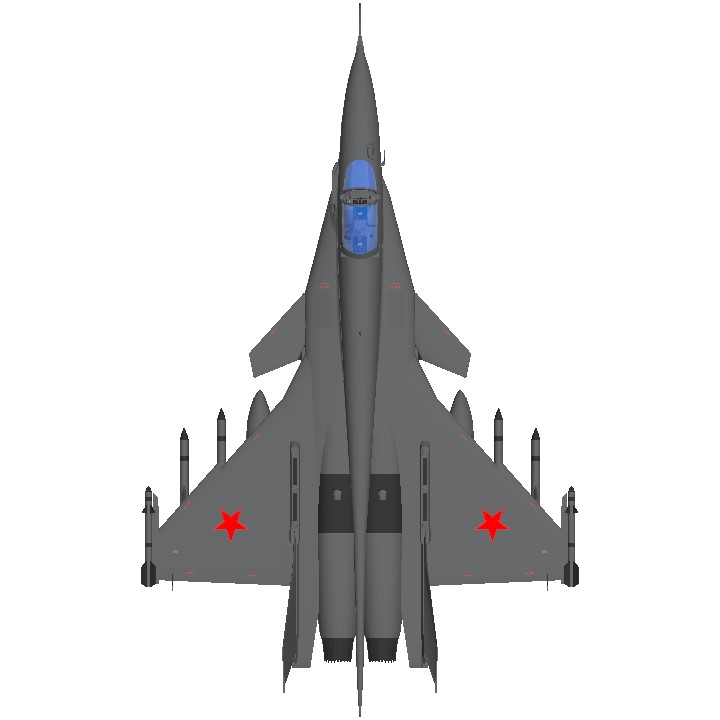
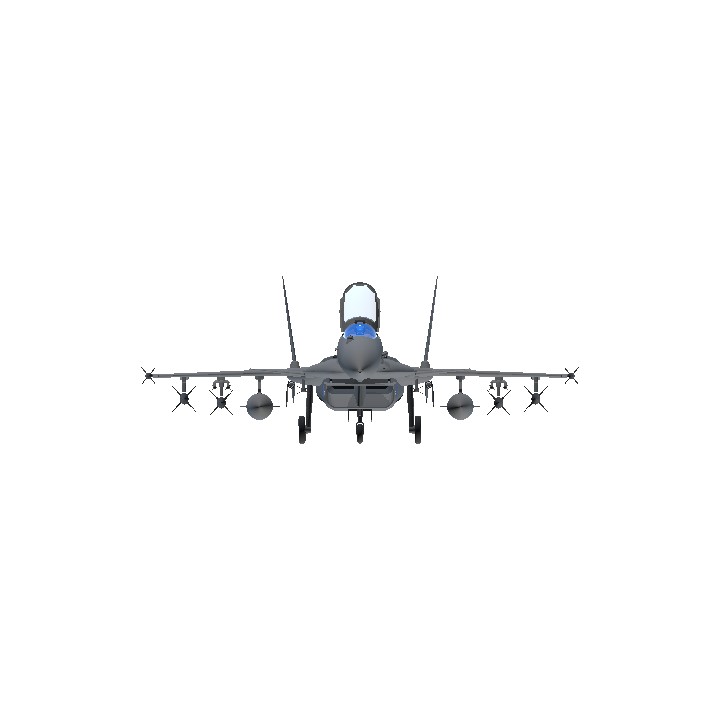
I FORGOT TO FIX THE DISMOUNT OF THE EXTERNAL GAS TANKS, PLEASE JUST SET THE DETACHER ATTACHED TO IT TO NO. 3