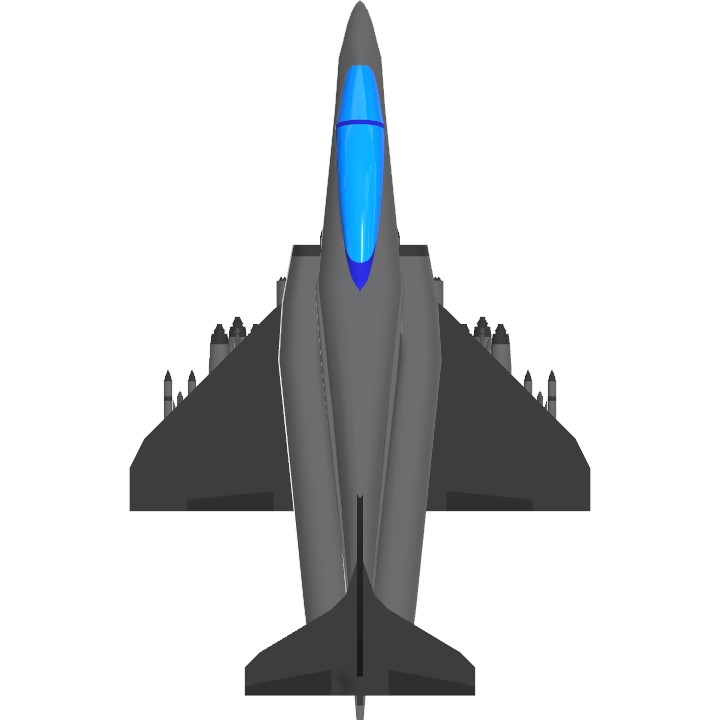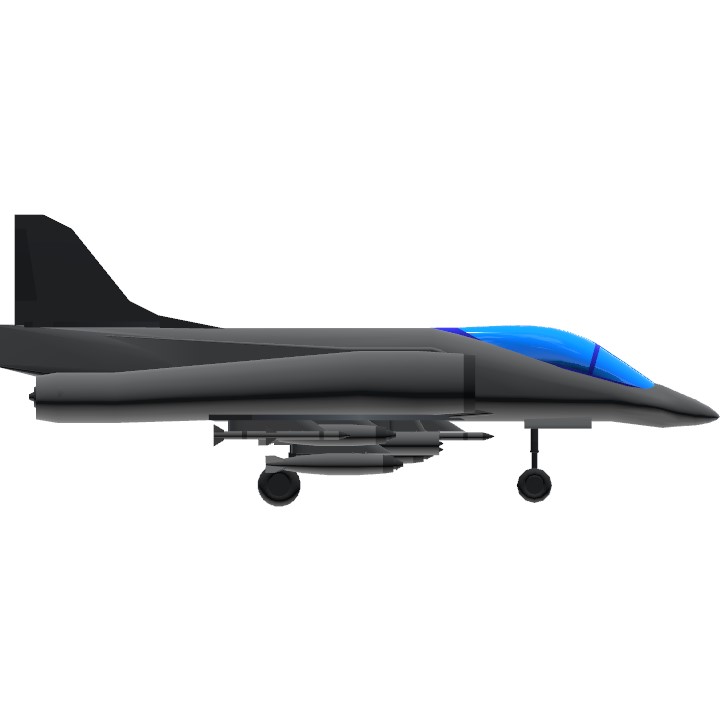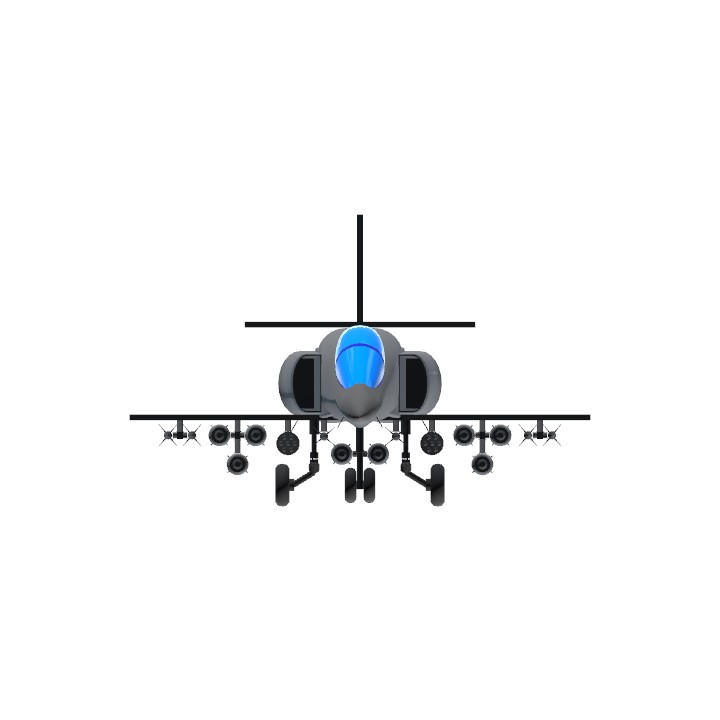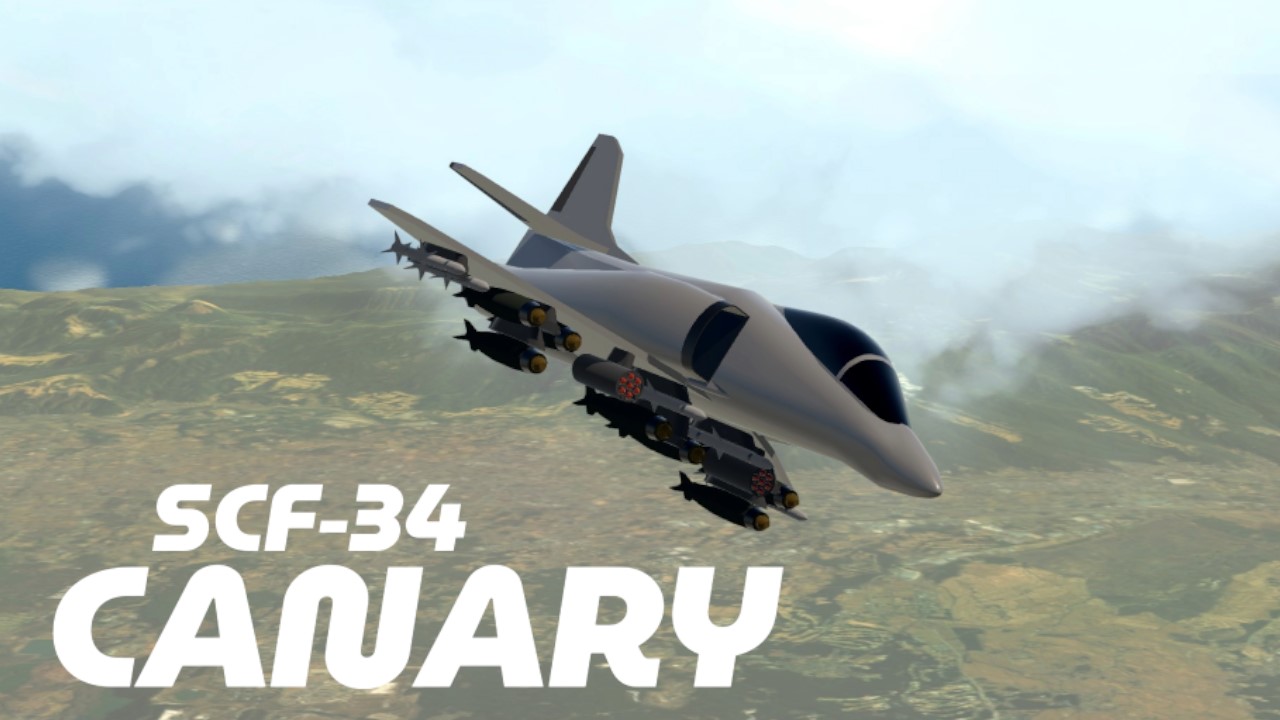
The advanced strike and training platform.
The SCF-34 Canary entered service in 1969 as a lightweight trainer and secondary strike aircraft developed to support Starcrest United’s naval aviation branches during a period of rapid fleet expansion. Designed for simplicity, robustness, and low operating cost, the Canary provided an accessible transition platform for naval pilots moving from basic trainers to frontline carrier aircraft, while retaining enough payload and endurance to perform light attack, maritime patrol, and weapons training duties. Its compact airframe and forgiving handling characteristics made it well suited to deck operations aboard smaller carriers and auxiliary aviation ships, allowing Starcrest to standardize pilot training and maintain combat readiness without tying up high-value frontline aircraft.
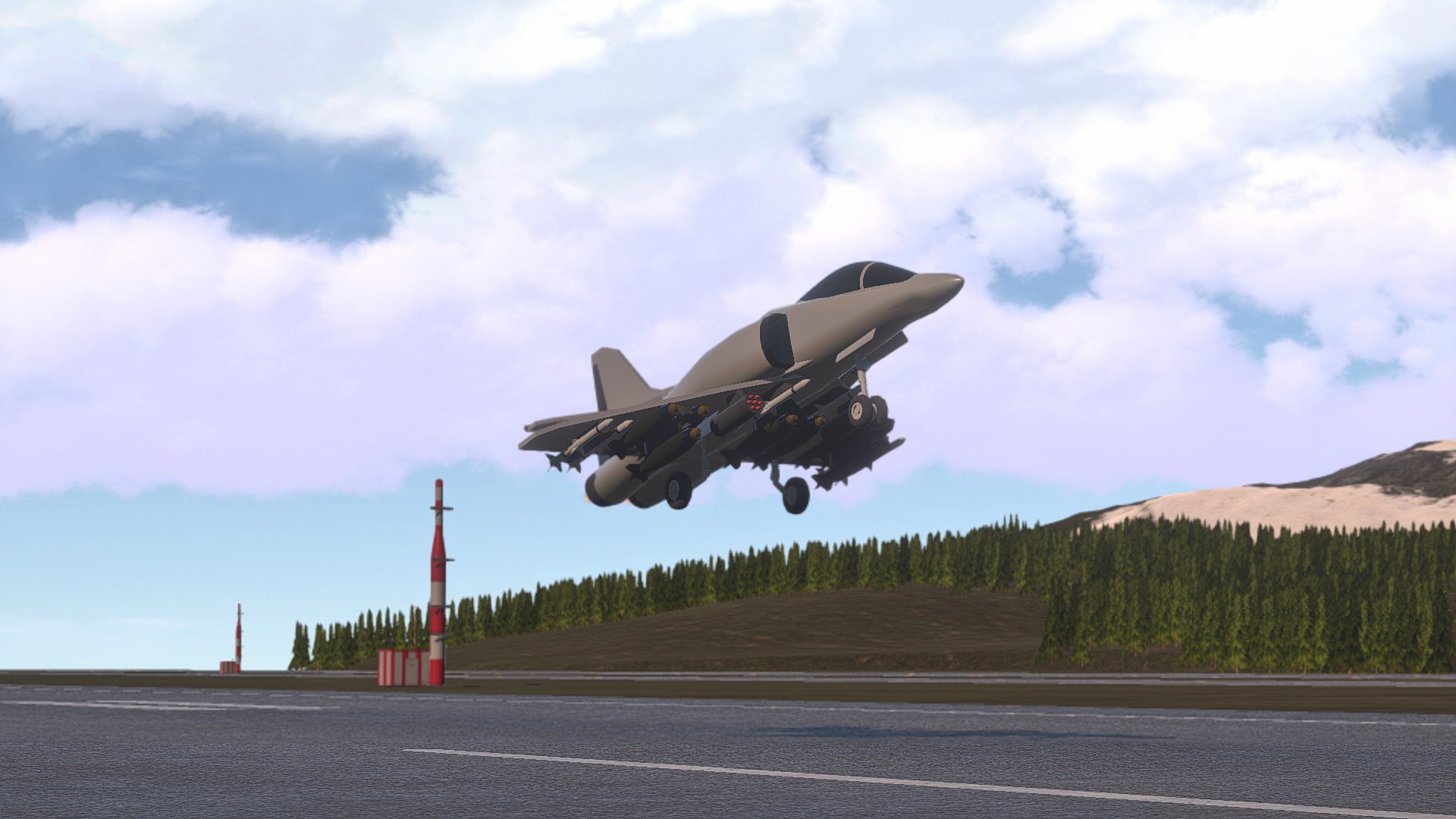
Despite its modest size and training-oriented origins, the SCF-34 Canary was notable for its surprisingly powerful weapons integration. The aircraft was designed from the outset to be munition-agnostic, capable of carrying not only Starcrest-developed ordnance but also a wide range of American, European, and Israeli weapons, a forward-thinking decision that greatly increased its export appeal and operational flexibility. Most striking for the late 1960s was its compatibility with Fox-3 active radar-guided missiles, specifically the SCATRAM Mk. II, granting the Canary beyond-visual-range engagement capability at a time when many frontline fighters still relied on semi-active guidance or guns. In keeping with prevailing doctrine, the SCF-34 was built without an internal cannon, reflecting the widespread belief that future air combat would be decided almost entirely by missile engagements at standoff range. That assumption, soon challenged by the realities of the Vietnam War and the return of close-in dogfighting, would later influence Starcrest’s subsequent designs—but at the time, the Canary stood as a remarkably advanced and doctrinally pure expression of late-Cold-War aerial combat theory.
Specifications
General Characteristics
- Created On Windows
- Wingspan 26.0ft (7.9m)
- Length 41.0ft (12.5m)
- Height 16.3ft (5.0m)
- Empty Weight 18,401lbs (8,346kg)
- Loaded Weight 26,682lbs (12,103kg)
Performance
- Power/Weight Ratio 1.516
- Wing Loading 72.6lbs/ft2 (354.3kg/m2)
- Wing Area 367.7ft2 (34.2m2)
- Drag Points 4219
Parts
- Number of Parts 89
- Control Surfaces 7
- Performance Cost 563