

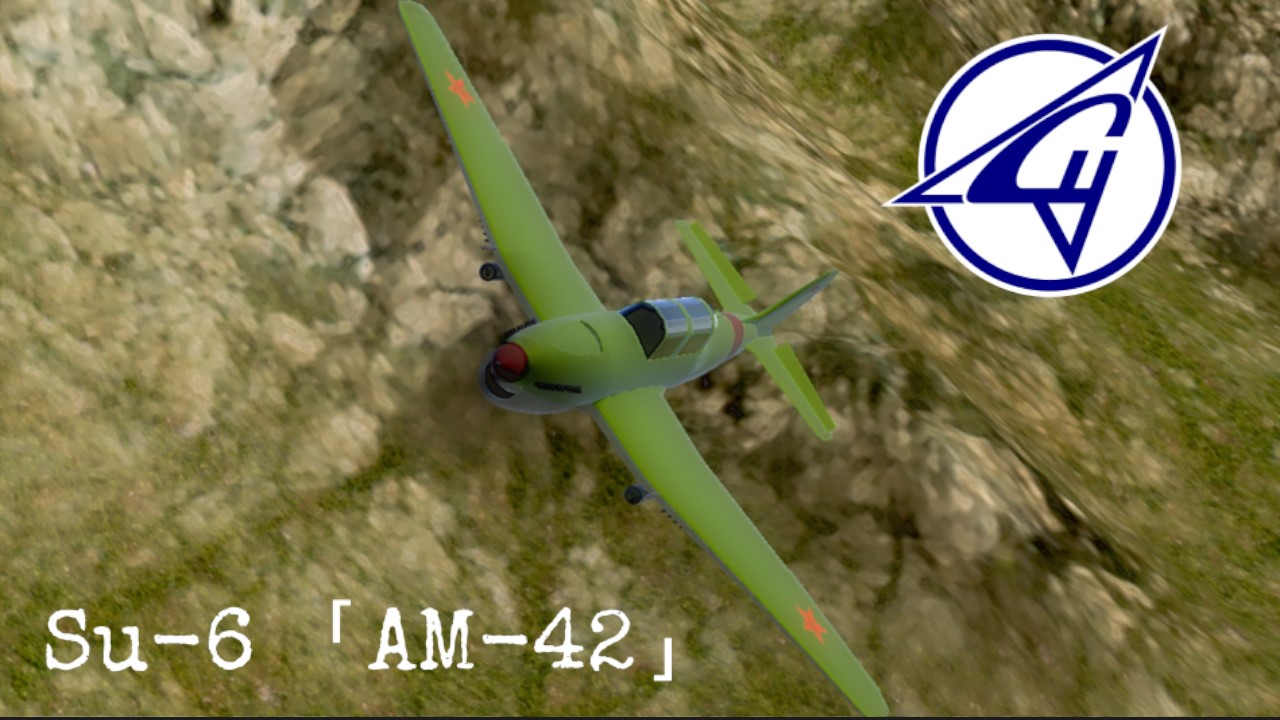
This is my first time making a replica of a real aircraft, so I apologize if some parts such as the dimensions, armament, or engine are not accurate. Also, I ran into many problems with the engine. I repaired the propeller repeatedly, but it still did not work properly. I actually did not want to use a jet engine, but after going through all of that, the jet engine was the only option I could rely on.
I built this aircraft to commemorate the fall of the Soviet Union on December 26, 1991, marking 34 years since its collapse. I pay my respects to the Mommy Soviet (Motherland).
History

The Sukhoi Su-6 originated from the Soviet Union’s late-1930s effort to develop a ground-attack aircraft superior to the Ilyushin Il-2. Sergey Sukhoi and his design bureau pursued a concept that emphasized not only survivability, but also higher speed, better maneuverability, and heavier armament. The guiding philosophy was clear: a ground-attack aircraft did not need to be slow and crude, but could instead be a fast, flexible battlefield weapon.
The first Su-6 prototype flew in 1941 and quickly demonstrated impressive test results. Powered by the Shvetsov M-71 radial engine, the Su-6 outperformed the Il-2 in speed, acceleration, and handling. Test pilots regarded it as a more modern and capable strike aircraft rather than a heavily armored platform designed solely to fly straight, absorb damage, and return.
The primary obstacle was not the airframe, but industrial reality. The M-71 engine, critical to the Su-6’s performance, never entered mass production due to complexity and wartime priorities. The Soviet Union could not afford to wait for an advanced engine while the war demanded immediate, scalable solutions. Meanwhile, the Il-2 was already being produced in vast numbers.
To salvage the project, Sukhoi redesigned the Su-6 to use the Mikulin AM-42, a liquid-cooled inline engine also employed by the Ilyushin Il-10. This variant became known as the Su-6AM-42. Prototype testing began in February 1944, featuring a reinforced structure and additional armor to protect the more vulnerable inline engine.
Unfortunately, direct comparisons with the Il-10 showed that the Su-6AM-42 no longer held a clear advantage. Sharing the same engine, the Il-10 proved lighter and more efficient overall. From both logistical and political perspectives, there was little justification to replace an aircraft already ready for mass production. As a result, the Su-6AM-42 remained a prototype, although Sukhoi’s work was recognized with the Stalin Prize for his contribution to ground-attack aircraft design.
Specification
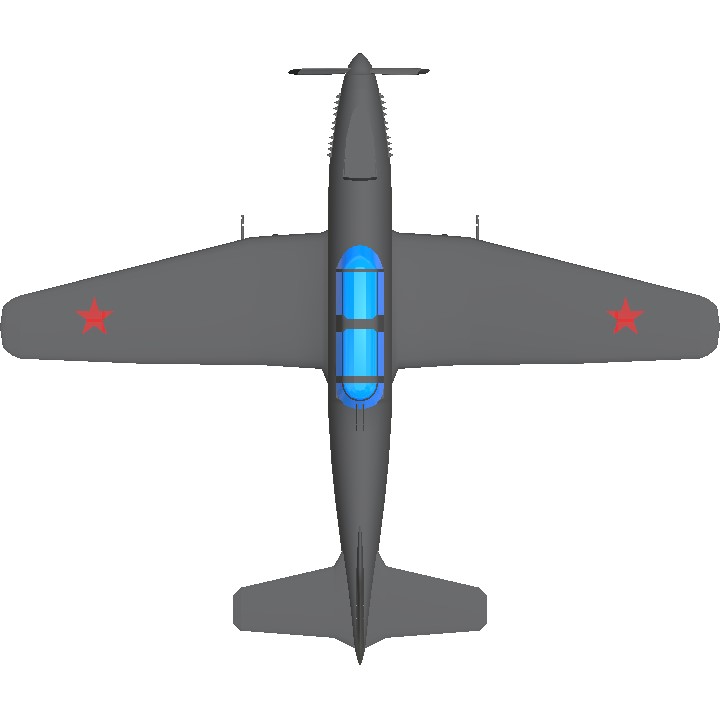
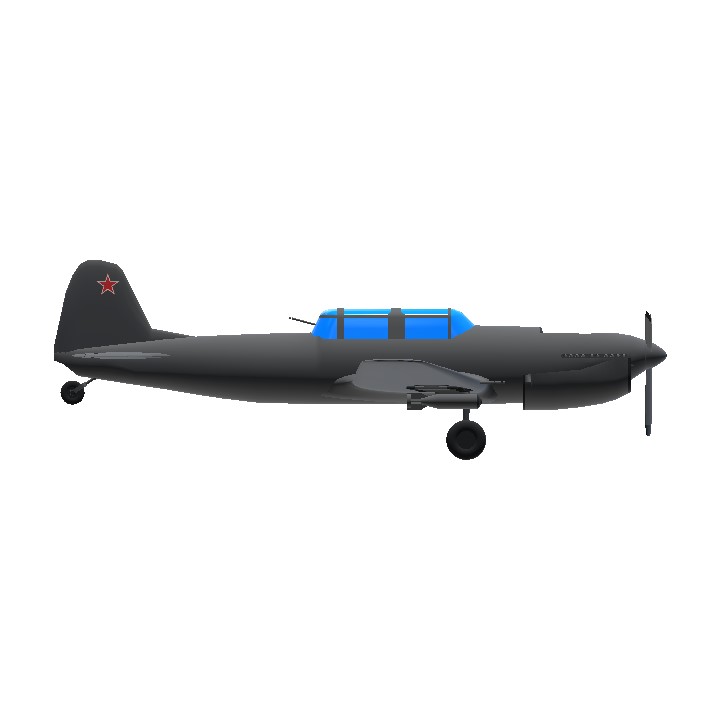
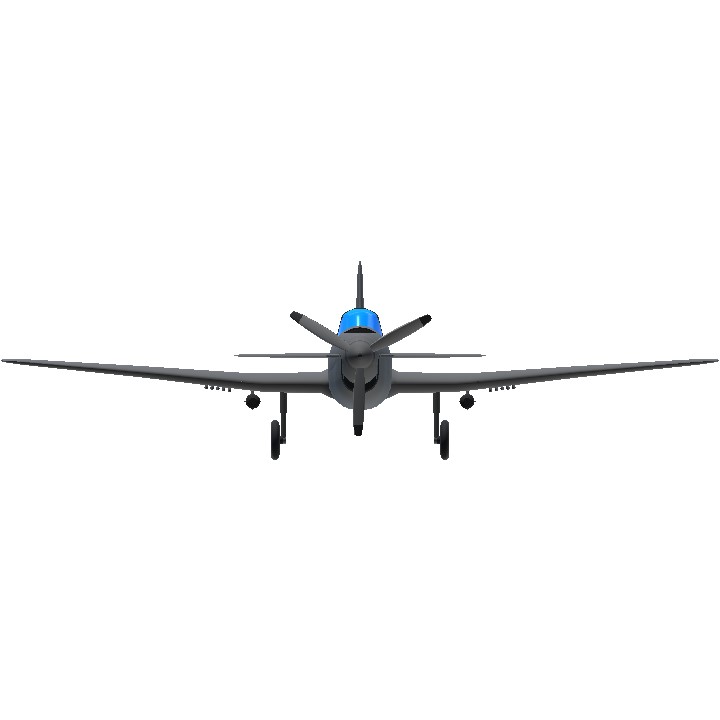
The Sukhoi Su-6AM-42 measured approximately 9.5 meters in length with a wingspan of about 13.6 meters. Its maximum takeoff weight exceeded 6 tons, reflecting its role as a heavily armored ground-attack aircraft. The airframe was built to withstand low-altitude combat and absorb significant battle damage while operating over the front lines.
Powered by the Mikulin AM-42 engine producing roughly 2,000 horsepower, the Su-6AM-42 achieved a maximum speed of around 500 km/h at low altitude. Its operational range approached 800 km, sufficient for close air support missions. While not designed for air-to-air combat, the aircraft offered stable and responsive handling for its class.

Armament
2× 37mm NS-37
2× 50kg FAB 50sv
10× M-13UK
Weaknesses and missed potential
The greatest weakness of the Su-6AM-42 lay not in its aerodynamics, but in its unfortunate timing. The aircraft was simply too advanced for the industrial environment supporting it. Early reliance on the M-71 engine, which never reached mass production, caused the entire program to lose momentum. By the time the AM-42 variant was ready, wartime demands favored immediate solutions rather than further experimentation.
What makes the Su-6 particularly regrettable is that it was arguably conceptually superior to the Il-2, yet defeated by production realities and industrial politics. It stands as a classic example of an aircraft that was “almost great” in military aviation history. Good enough to influence the development of the Il-10, but not fortunate enough to serve in operational combat units.
Gallery


I don't have any information about the cockpit of Su-6AM-42, that's why I'm not make the cockpit.
Specifications
Spotlights
- ShadowHeavyIndustry 8 hours ago
- avDude4 7 hours ago
General Characteristics
- Created On Android
- Wingspan 32.9ft (10.0m)
- Length 28.0ft (8.5m)
- Height 9.1ft (2.8m)
- Empty Weight 9,165lbs (4,157kg)
- Loaded Weight 14,704lbs (6,669kg)
Performance
- Power/Weight Ratio 0.229
- Horse Power/Weight Ratio 0.068
- Wing Loading 12.9lbs/ft2 (62.8kg/m2)
- Wing Area 1,143.7ft2 (106.3m2)
- Drag Points 1309
Parts
- Number of Parts 263
- Control Surfaces 6
- Performance Cost 1,167
@Nerofrrll87
@AguStill
@ShadowHeavyIndustry
@SumateraIndustries
@RB107
@IMCI
@SpetzavodHeavyIndustries
Jelek (jas kidding)
Nice
@ShadowHeavyIndustry Dude wtf 💀
@Cadvalto Yaudah kalau lu dapet 15 upvote wajib jadi femboy
@ShadowHeavyIndustry AJAH SENDIRI! Lagian gua ga main epep
Bang gip alok banh
@Kav :3
A true masterpiece!