

A bit of intro to get to Wzehkh service, bear with me
1. The Northstar Mimosa
1.1 Development
1.2 Design
1.3 Variants
1.4 Specifications
2. Acquisition by Wzehkh Forces
2.1 The Ayormese civil war
2.2 Eskanite Involvement in the conflict
2.3 Operation Prise-de-fer
2.4 Tupolev-61
1. Northstar Mimosa
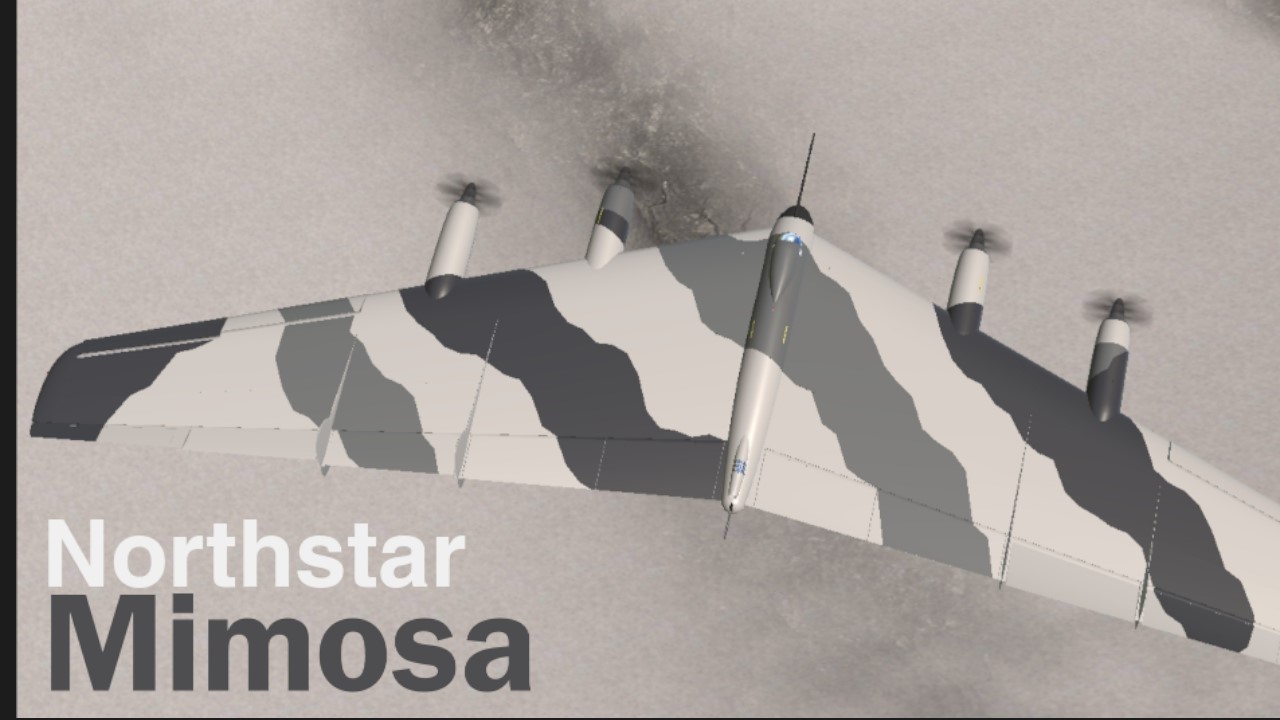
The Northstar Mimosa is an Eskanite, 4 engine, turboprop-driven, Heavy bomber that has flown in most conflicts involving eskana since it's introduction. Designed by Northstar in 1952, named after the star in the Crux constellation also known as Becrux and entering service with the Eskanite Federal Air Force in 1959 it has since excelled both at high altitude bombing and low altitude bombing and strage runs, it is expected to serve at least until 2045
1.1 Development
In 1952, eskana learned about the development of both TU-95 and B-52 bombers that would fly faster, higher and further than older, Aurican war era, bombers that still made up most of the Eskanite strategic divisions. At the time, the largest bomber operated by eskana was the Menkent, powered by four AS-9191 (3100 HP each) but that was at least 8 years behind.
In response to this, the "NaB-52" (National Bomber, 1952) specification was issued to Northstar Aviation Industries which was, by now, the single aerial military contractor in the country and would be responsible for designing an airframe that could compete with B-52s and TU-95s in at least 6 out of 7 aspects: payload capacity, low operation costs, range, speed, altitude ceiling and survivability.
The first Iquellite war was considered a "learning experience" for many in the Eskanite War offices, for the strategic air sub-office, these lessons were:
*bombers should be able to operate from unpredictable conditions, from dedicated airfields to "less prepared" ones
*Bombers have to be resiliant as more Menkents were lost to anti-air fire than expected
*Payload capacity can't be ignored, as a bomber like the Menkent sacrificed payload capacity for range
A young engineer, Elara Voss, was chosen to lead the project along with a large team of inexperienced engineers in "an effort to bring fresh ideas into the table". Elara Voss had, in fact, only experimented with gliders before and was described as being "obsessed with the concept of flying wings", which made more people to believe this would fail like the YB-35/49 in Damaris.
In November 15th,1952, 3 days after the first TU-95 flight, the "Becrux team" presented their first mockup and were given the "green light" to proceed with construction
On February 1st, 1954, the first mimosa rolled off the production line and was first flown on February 5th, 1954 reaching a top speed of 700 km/h at sea level. In February 26th, the Mimosa flew from its test field in Chehuan, Spilsmout to Worths island, Tilchlye (6,500 km) and back with a full (simulated) bomb load in a single load of fuel
After this successes, the design was further refined and would be pushed to enter service on the 19th of September, 1957, with the Eskanite War navy's 75th Patrol Brigade and on the 26th of October with the Federal Air Force's 200th bomber brigade
1.2 Design
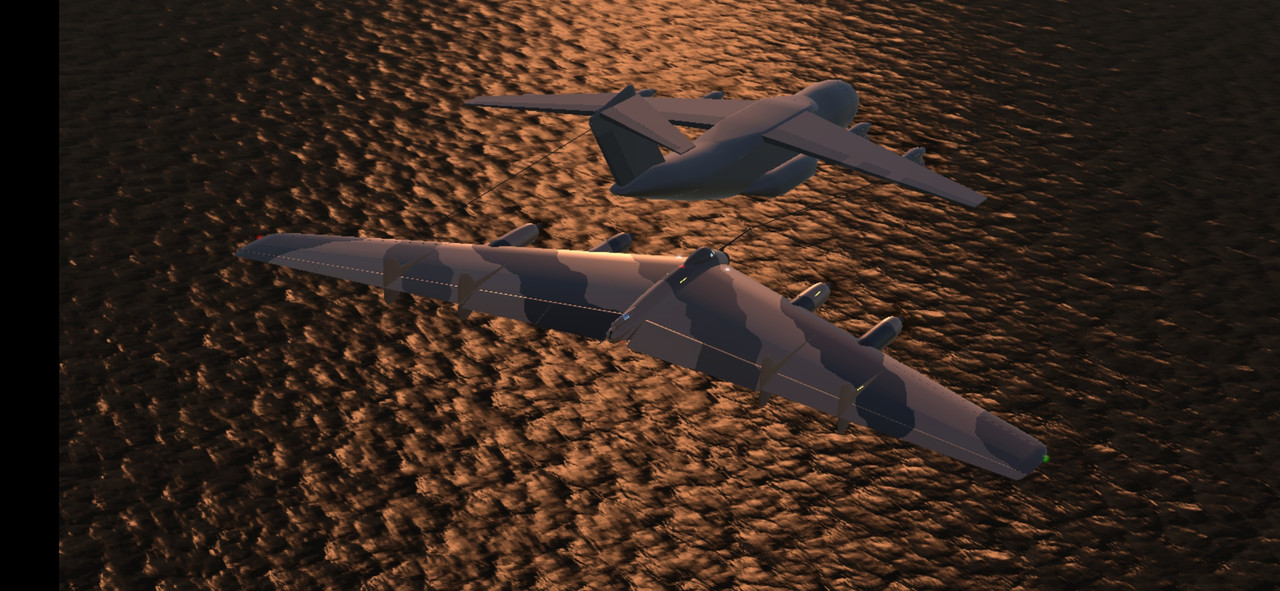
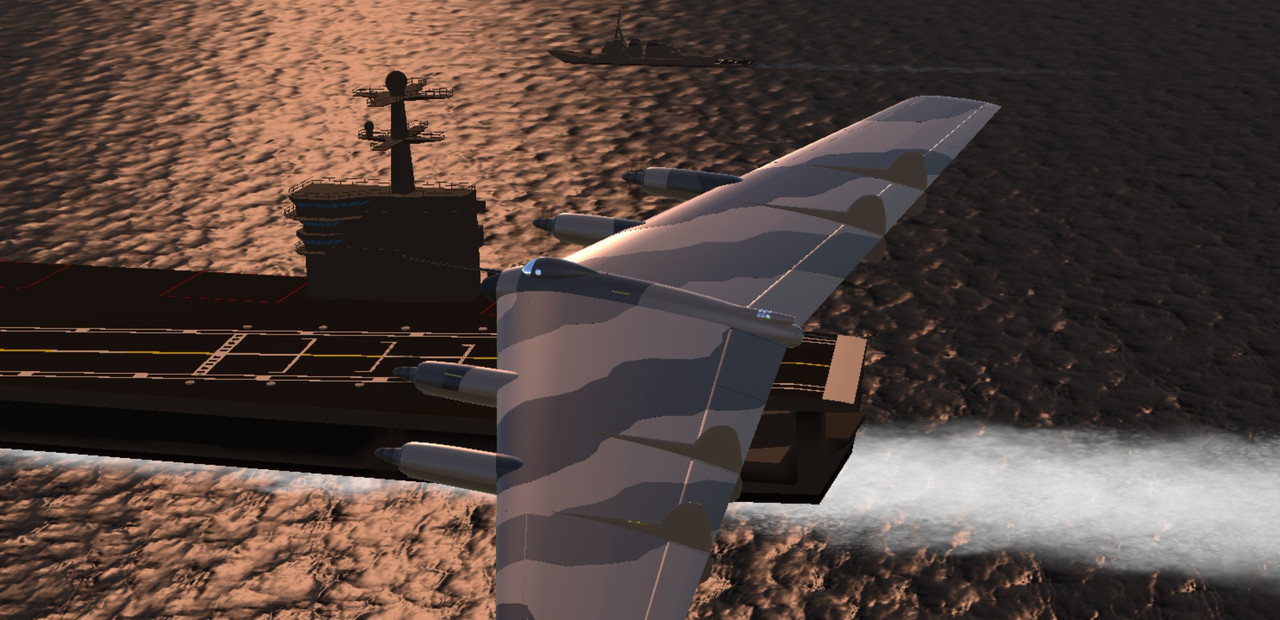
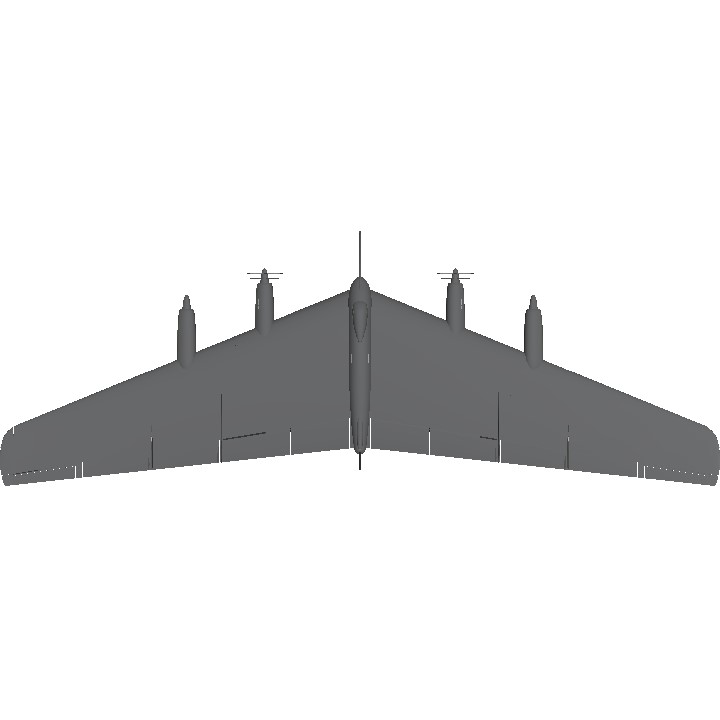
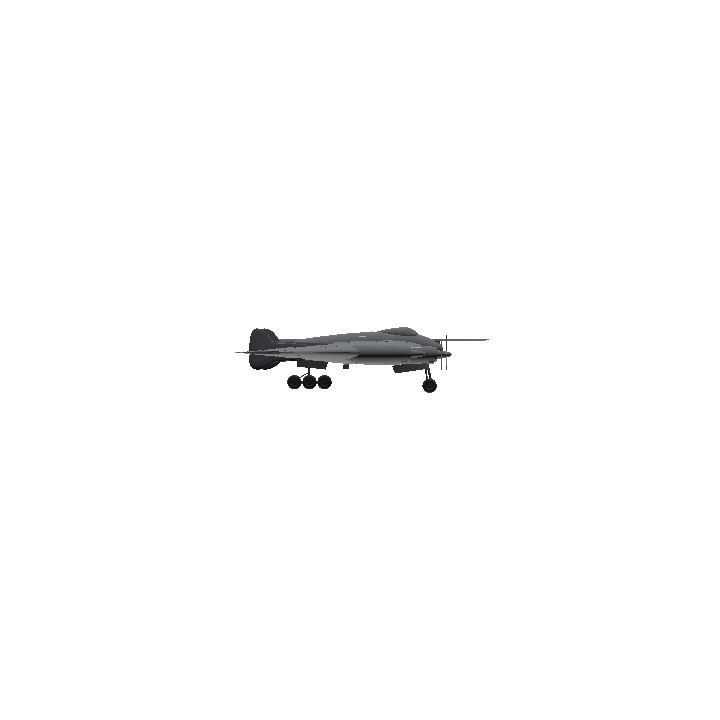
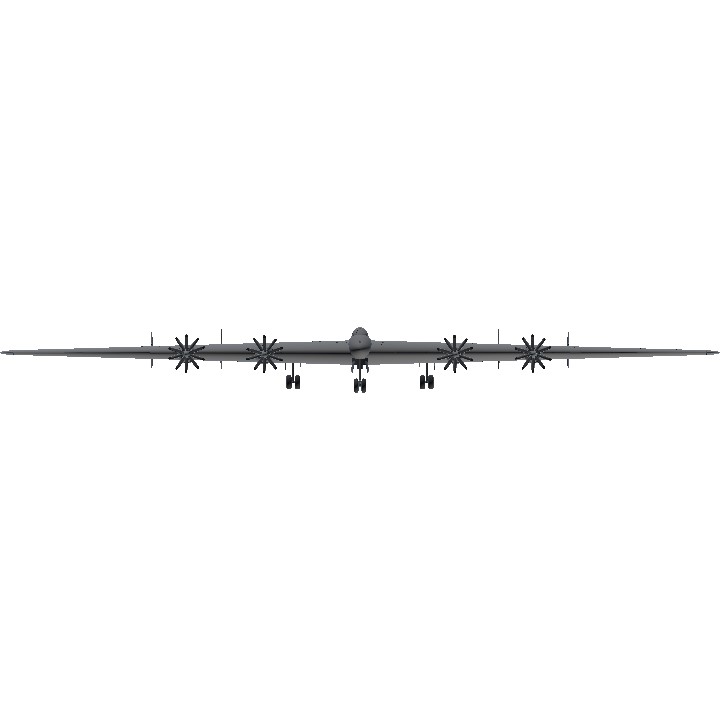
The Mimosa is a flying wing design powered by four AT-260/A Turboprop engines (13,500 SHP), featuring a large cabin in the centerline which houses all crew spaces including a cockpit, bunk beds, a kitchen, a dedicated toilet compartment, gunner compartment and other amenities. In initial versions this included an "aiming pod", a bulge under the cabin that housed targeting equipment, but was later removed to streamline the fuselage. Another change was the addition of a large refueling probe in front of the fuselage, and the addition of radar equipment in the nose. On each wing, there are four bays, the two inner bays house heavy bomb equipment and have a capacity of 10,000kg each, the third bay houses the landing gear and the fourth bay has a capacity for 8,000kg. Each wing has small, secondary tails that aid in stability but don't actually steer the aircraft, this is done through Split drag rudders on each Aileron, the wings also feature automatic leading-edge slats and large flaps to aid in shorter take-offs.
1.3 Variants (coming soon?..)
Model 0: Pre-production test airframe (Civil registration: STR-0102)
Model 1: First production Variant, 80 built
Model 3: Updated Version built in 1961 with improved avionics, 156 built
Model 5: Version developed in 1972 with an extra set of wheels in the center line and other rough field equipment, 74 built
Model 12: Version built for the EWN featuring a bulge under the cabin which houses radar equipment for anti-submarine warfare, 62 built
Model 17: Version built for the EWN based on the model 3, featuring the same bulge and further radar improvements, first variant to be able to launch missiles such as the Ansky Land Attack System (ALAS) cruise missile and Sea Ansky Anti-ship missile, 179 built
Model 19: Version built based on the M.17 for the air force, removing naval equipment but conserving missile capabilities and other improvements, 502 built
Model 22/90: 1990 modernization with better engines (AS-2615 producing 15,000 SHP), 126 built
Model 55: 1961 version built for nuclear deterrence, capable of launching gravity and guided nuclear bombs, 160 built
Model 55/1 "Thorn Flower": 1972 redesign to carry low level penetration, wing swept to 35° and engines replaced with afterburning AB-5252
Total built: 1340
1.4 Specifications
General characteristics:
Crew: 7(Pilot, Co-pilot, Flight engineer, Navigator, Radio/Radar operator, Weapon systems officer and Defensive station operator)
Length: 21.6m, 21.0m(Without refueling probe)
Wingspan: 62.3 m
Height: 5.7m
Wing area: 547m²
Empty weight: 68,744kg
Gross weight: 152,000kg
Max takeoff weight: 185,000kg
Fuel capacity(Internal): 82,000L
powerplant: AT-260/A(13,500 SHP)
Propellers: 10 bladed, contra-rotating propellers
Performance:
Maximum speed: 760 km/h, sea level
Cruise speed: 600km/h(at altitude)(didn't quite test this, you could try reducing throttle some 4% every 1,000m for optimal cruise)
Ferry range:15,000-20,000 (Approximate if you don't or do try to optimize climb and throttle)
Service ceiling: 12,000m
Wing loading: 305kg/m²
Armament:
2x Zugasti R-30 mounted in a defensive turret
(Hypothetical limit of 48 tons in bombs)
Practical bomb load of 32 tons
2. Acquisition by Wzehkh Forces
2.1 The Ayormese civil war
In 1961, during tensions in the ayormese elections led to accusations of fraud and a failed coup attempt, leading to a civil war
2.2 Eskanite Involvement in the conflict
In 1968, the kurisan faction seeked help from eskana and was covertly supported in an effort to further destabilize the region. As a part of this effort, a contingent of 100 Mimosa bombers would be sent under the "Volunteer aviation of kurisa", their crews were given fake documents and the bombers had documents claiming the sale of these bombers to private individuals within ayorm and kurisa.
As the conflict dragged on, Eskanite Involvement became more and more direct and in 1970, the "peacekeeping legionaries" were sent to directly put an end to the conflict
2.3 Operation Prise-de-fer
In 1971, after no resolution in sight, president Luis Toledo ordered "A swift solution to the Ayormese conflict is needed. Be it by negotiation or through a decisive military operation"
"Prise de fer" was envisioned as the swift solution and involved 250 mimosas which would bomb key Ayormese positions along the contact line with kurisa and the ayormese capital of Galaorta.
The operation was hastily planned and didn't have the enough numbers of escort or electronic warfare aircraft, still, the operation was carried out on the 21st of August ,1971, and would last 7 days
The operation dropped 50,000kg of ordinance over Ayormese positions but lost 32 aircraft and, with no solution to the conflict, president Luis Toledo resigned, leaving president Laura Mitley to swiftly cut ties with kurisa.
2.4 Tupolev-61
Since it's introduction, the Mimosa had garnered attention from Wzehkh and other air forces, sometimes being compared to designs like the TU-95 and TU-16.
In 1971, Wzehkh authorities had the opportunity to buy the captured airframes from the ayormese Democratic Republic, one of their closest allies and the "winner" of the Civil war. On January 2nd, 1972, 5 Mimosa airframes arrived at the Wzehkh capital, a massive propaganda blow to the Eskanite.
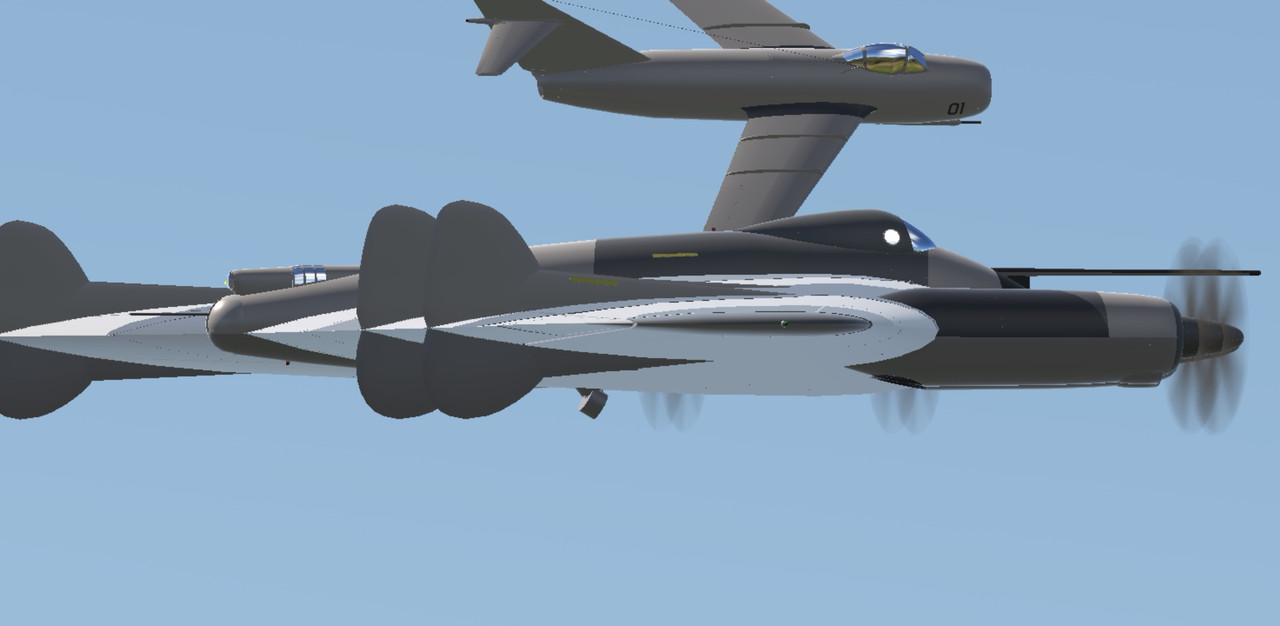
These aircraft were reverse-engineered by tupolev and one prototype was produced but no plans were made for mass production, instead, these were used to flaunt to the Eskanite but also saw large service in training as an aggressor aircraft, mainly in mock intercepts and live fire exercises
Galery:
Controls:
AG4: Lights
AG5: Bomb bays
AG8: Wheel steering
Specifications
Spotlights
- fleia262 3 months ago
- ThomasRoderick 3 months ago
- GreatHenry 3 months ago
- BlackGearCompany 2 months ago
- TheFlightGuySP 3 months ago
- Boeing727200F 3 months ago
- KatBapa20 3 months ago
- Kav 3 months ago
General Characteristics
- Predecessor Bomber/Ground attacker Challenge
- Created On Android
- Wingspan 204.3ft (62.3m)
- Length 73.4ft (22.4m)
- Height 18.7ft (5.7m)
- Empty Weight 265,365lbs (120,367kg)
- Loaded Weight 410,711lbs (186,295kg)
Performance
- Horse Power/Weight Ratio 0.126
- Wing Loading 59.6lbs/ft2 (290.9kg/m2)
- Wing Area 6,894.3ft2 (640.5m2)
- Drag Points 14213
Parts
- Number of Parts 1149
- Control Surfaces 8
- Performance Cost 4,754
Bro is too good to be in the challenge, hope you win.
Bomber contract
MUST BE FICTIONAL -1
MUST BE SUCCESSOR - 1
ONE SUBMISSION PER CONTRACT
Wzehkhastan reference points -2
Era 1950s-1970s -3
Max weight 150,000 lbs -0
Minimum max range 10,000km -3
Minimum max ceiling 11,000m - 3
Minimum max payload 30,000 lbs - 3
Minimum runway half load takeoff - Wright North Runway - 2
JATOs are allowed for this ask
Must be able to use missiles -0
Must be able to go 400 mph -2
Must contain air defense armaments (turrets eg) -2
Must be able to land on Yeager airport -NA
Must be able to mid air refuel (refuel itself not others) -2
Must have a cool name -0
Score 23
Overall scoring: good
.
I will deduct 1 point since this aircraft wasn't designed for Wzehkhastan use, it was just captured. Besides that however this is a very good craft, and obviously it couldn't score on what I couldn't test.
Still an awesome creation!
My device cannot run this, so I will not be able to sufficiently judge this aircraft, however I will anyway
@Cheeseburger33 Oh cool!
I see the vulcan cockpit now that you say it
@ADWaircrafts it's inspired on many bombers, the YB-35/49 was indeed my main inspiration but I also took from the TU-95(Engines and refueling probe), B-52(turret) and vulcan(body, landing gear and cockpit)
Nice XB-35 inspiration
Really nice
Tu-95 if it was FAT
This is amazing! Can't wait to judge
@LettuceRob119 my entry for the bomber contract