

Plane Informantion :

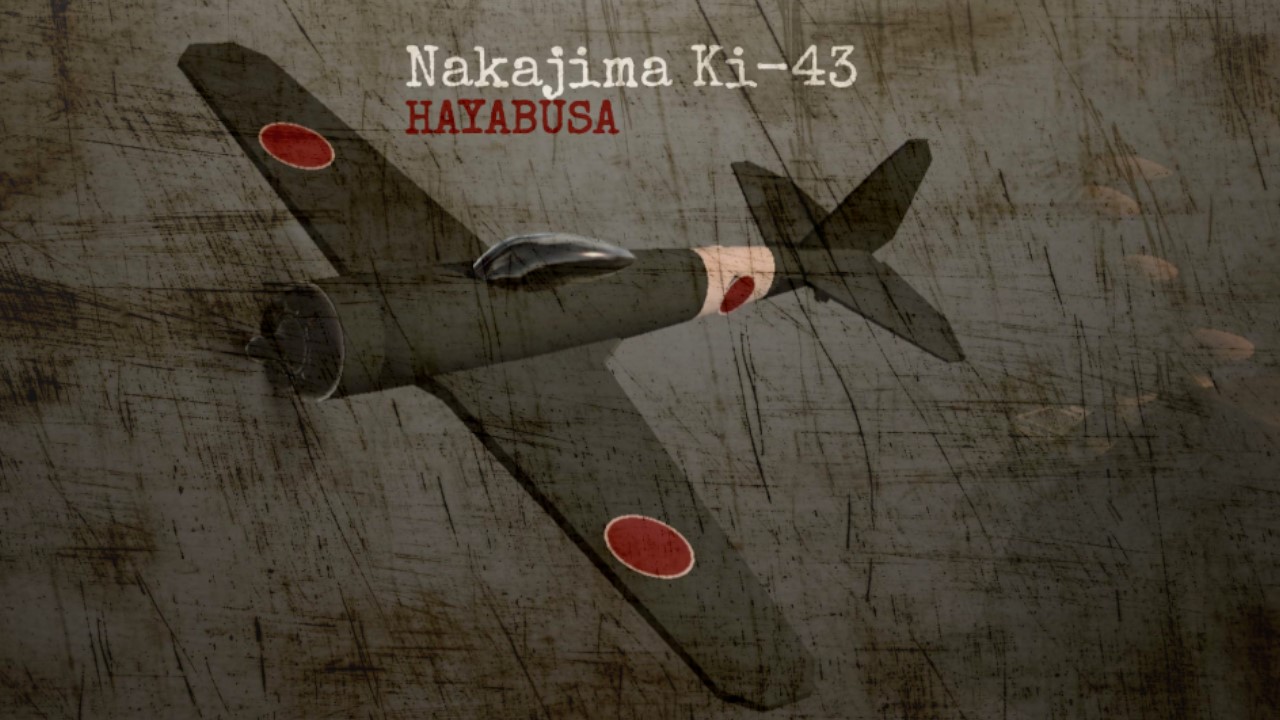
The Nakajima Ki-43 Hayabusa was a single-engine fighter aircraft of the Imperial Japanese Army Air Force and became one of the most recognizable embodiments of Japanese air combat doctrine during the Second World War. Known to the Allied forces by the reporting name “Oscar,” the Ki-43 was not designed to survive punishment or overwhelm opponents with heavy firepower. Instead, it was conceived as a pure fighter in the classical sense, prioritizing extreme maneuverability, light weight, and victory through pilot skill. In aviation history, the Hayabusa occupies a distinctive place as an aircraft that often fell short on paper, yet achieved remarkable success through how it was flown and employed.
The origins of the Ki-43 can be traced to the late 1930s, when the Imperial Japanese Army recognized that its primary fighter, the Nakajima Ki-27, was becoming obsolete. Although the Ki-27 was exceptionally agile, it lacked speed and modern features compared to rapidly advancing Western aircraft. In 1937, Nakajima Aircraft Company was tasked with developing a new fighter that would retain the legendary maneuverability valued by Japanese doctrine while incorporating a modern monoplane configuration, higher speed, and longer operational range. From this requirement, the Ki-43 was born.
Early prototypes of the Ki-43 faced significant challenges, largely due to the Army’s uncompromising demand for superior maneuverability. The aircraft was expected to outturn any potential opponent, even at the expense of structural strength and protection. To meet this requirement, Nakajima engineers introduced an innovative feature known as combat flaps, which could be deployed during tight turns to increase lift and reduce turning radius without loss of control. This system gave the Ki-43 an extraordinary edge in close-range dogfighting and became one of its defining characteristics. After extensive testing and refinement, the aircraft entered service in 1941 under the official designation Army Type 1 Fighter Hayabusa, meaning “Peregrine Falcon,” a name that reflected its agility and predatory nature.
Physically, the Ki-43 was a slim, lightweight aircraft built with minimal structural mass. Weight reduction was treated as a priority above all else, even at the cost of survivability. Early variants lacked pilot armor and self-sealing fuel tanks, making the aircraft highly vulnerable to enemy fire. Power was provided by Nakajima Ha-25 and later Ha-115 air-cooled radial engines, producing approximately 1,100 to 1,150 horsepower. This allowed the Ki-43 to reach a maximum speed of around 530 km/h, respectable for its time but not exceptional. What truly distinguished the Hayabusa, however, was its superb turning ability, responsive controls, and strong climb performance, which made it a formidable opponent in traditional dogfights.
The armament of the Ki-43 was modest by international standards. Most versions carried two 12.7 mm Ho-103 machine guns mounted in the forward fuselage. At a time when many Allied fighters were beginning to field heavier batteries of multiple heavy machine guns or cannons, the Hayabusa’s firepower appeared limited. Nevertheless, Japanese air combat doctrine emphasized precision, close-range engagement, and pilot marksmanship rather than sheer volume of fire. In the hands of experienced pilots, the Ki-43’s lighter armament was often sufficient to achieve kills, particularly in the early years of the war.
When the Pacific War erupted in late 1941, the Ki-43 was deployed widely across numerous theaters, including China, Southeast Asia, Burma, and the Southwest Pacific. During the initial phase of the conflict, the Hayabusa gained a fearsome reputation among Allied pilots. It was frequently mistaken for the Mitsubishi A6M Zero due to its similar agility and performance characteristics. In early battles over Malaya, the Philippines, and the Dutch East Indies, the Ki-43 often dominated the air against Allied aircraft such as the Brewster Buffalo and early P-40 variants, especially before Allied pilots fully understood effective counter-tactics.
The period between 1941 and 1943 marked the height of the Ki-43’s operational success. It became the backbone of the Imperial Japanese Army Air Force fighter units, and many Japanese aces achieved their victories flying the Hayabusa. Pilots praised the aircraft for its light handling and almost intuitive responsiveness, often describing it as an extension of their own bodies. In one-on-one engagements, the Ki-43 excelled at rapidly outmaneuvering opponents and positioning itself for close-range attacks, giving it a decisive advantage in turning combat.
As the war progressed, however, the fundamental weaknesses of the Ki-43 became increasingly apparent. New generations of Allied fighters such as the P-38 Lightning, P-47 Thunderbolt, and P-51 Mustang entered service with superior speed, heavier armament, and far greater durability. Allied tactics also evolved, deliberately avoiding turning engagements and instead exploiting speed, altitude, and firepower advantages. Under these conditions, the Ki-43’s lack of armor and limited armament made it increasingly vulnerable. Losses mounted, not due to a lack of pilot skill or courage, but because the aircraft itself was ill-suited to the realities of modern industrial air warfare.
Despite these shortcomings, the Ki-43 remained in service until the end of the war. Improved variants with more powerful engines and incremental upgrades were introduced, though they never fully closed the technological gap. In the final stages of the conflict, the Hayabusa was increasingly relegated to secondary roles such as ground attack and, in some cases, special attack missions. Its continued use until 1945 reflected both its importance to the Japanese Army Air Force and the limitations of Japan’s wartime industrial capacity, which struggled to field sufficient numbers of more advanced replacements.
In retrospect, the Nakajima Ki-43 Hayabusa is remembered not as the fastest, most heavily armed, or most resilient fighter of the Second World War, but as one of the most maneuverable aircraft ever to see widespread combat. It stands as a symbol of an era in which aerial victory was believed to depend primarily on pilot skill and agility rather than armor and firepower. Its early wartime successes, the loyalty it inspired among its pilots, and its extensive service across multiple fronts have secured the Ki-43 Hayabusa a lasting place as one of the most significant fighters in the history of the Imperial Japanese Army Air Force.
Specifications
Spotlights
- GGEZXD13133 18 hours ago
- TheCertifiedRedhead 18 hours ago
- Pakdaaircraftindustries yesterday
- Cadvalto yesterday
- Kav yesterday
- TheLoadingGorilla 6 hours ago
General Characteristics
- Predecessor Simple but cool challenge! [OPEN]
- Created On Android
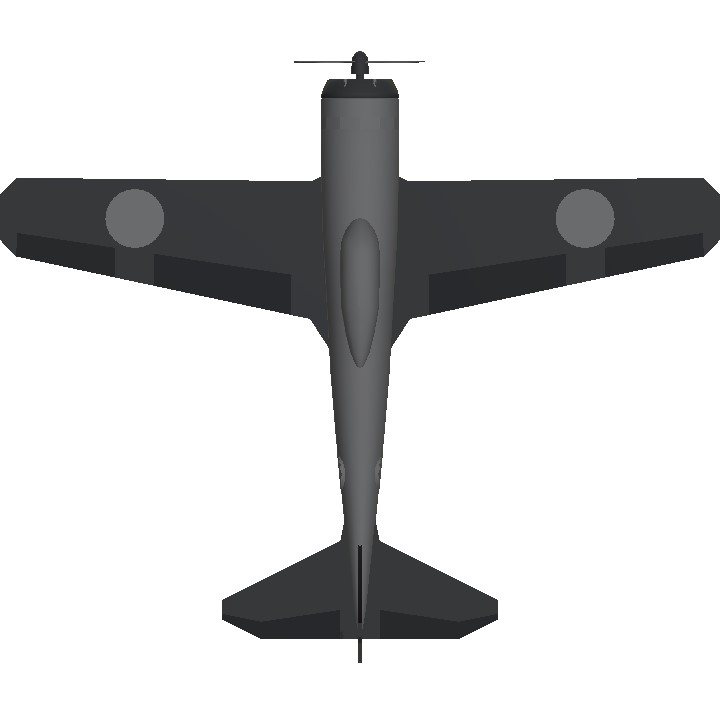
- Wingspan 30.0ft (9.1m)
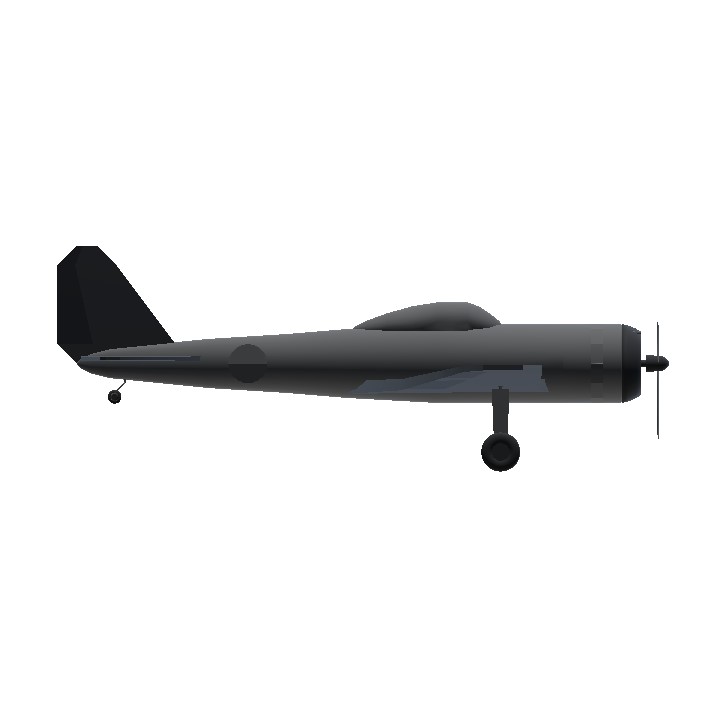
- Length 24.9ft (7.6m)
- Height 9.3ft (2.8m)
- Empty Weight N/A
- Loaded Weight 3,459lbs (1,569kg)
Performance
- Horse Power/Weight Ratio 0.578
- Wing Loading 17.6lbs/ft2 (86.1kg/m2)
- Wing Area 196.1ft2 (18.2m2)
- Drag Points 1461
Parts
- Number of Parts 67
- Control Surfaces 10
- Performance Cost 383
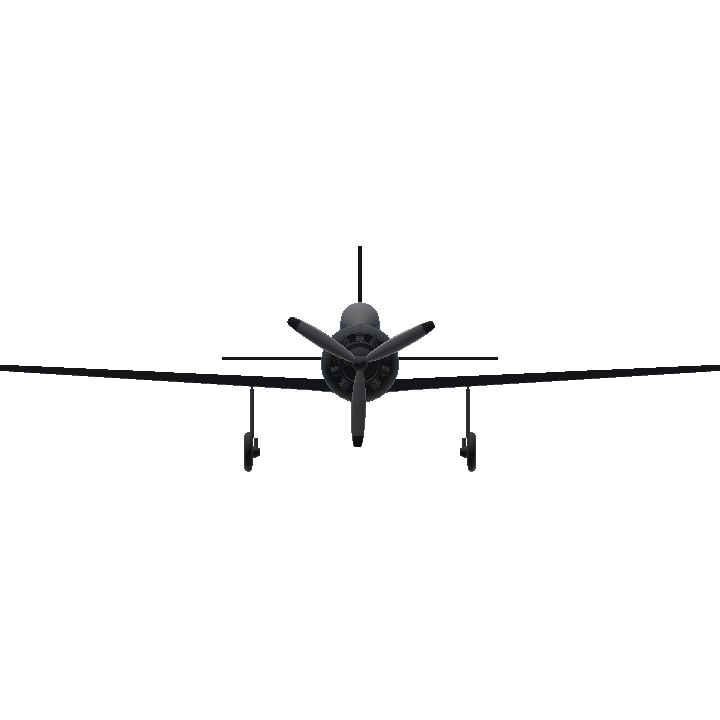
Rating :
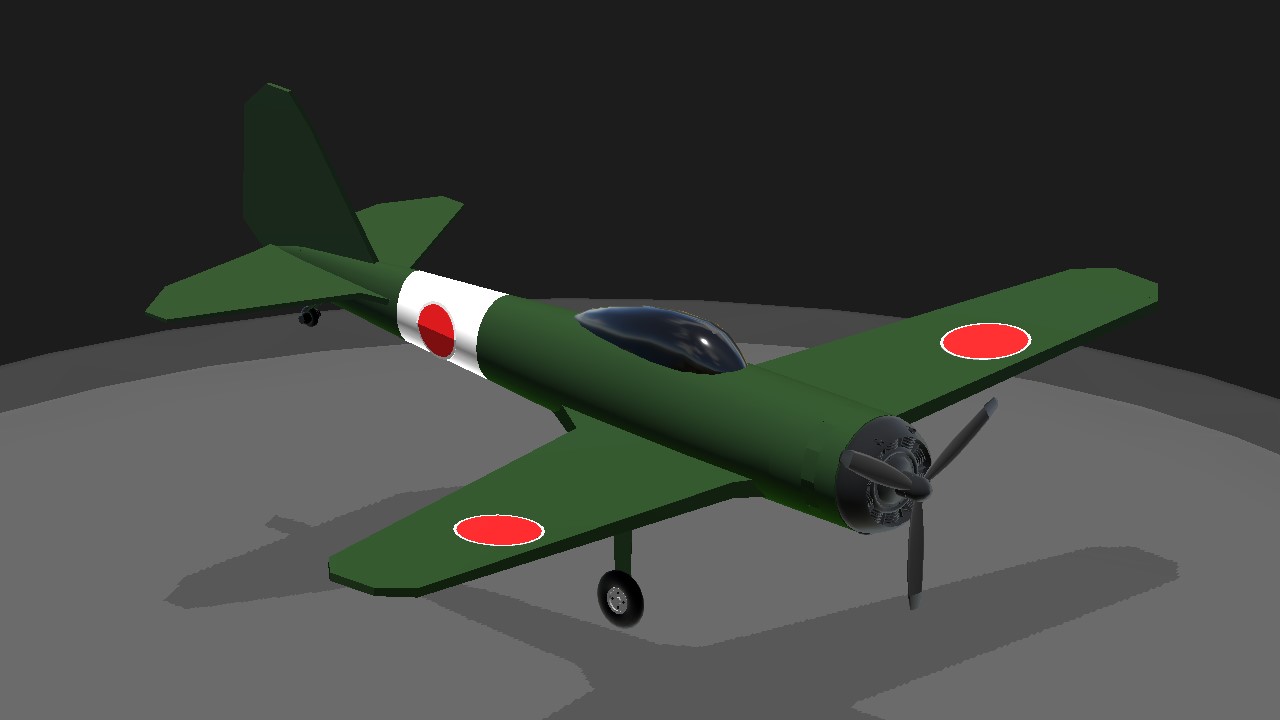
Looks : 8.5/10 (nice and simple!)
Works : 9/10
Accuracy : 8.5/10
Cockpit : nice! (+Extra point)
Creativity : 7/10 (nothing too fancy but cool!)
Overall rating : 8.5/10 (really nice!)
@Yatata77 Makes sense.
@TheLoadingGorilla That's because all I need is the wings, fuselage, and engine. And the challenge rules also require it to be under 180 parts.
Am I the only one who noticed the part count? All jokes aside, very clean plane! Simple, but very nice!
@KF Thank you!
this is totally ki-115 with green paint.
Trust me, you will be an expert.
Man you should consider making more planes , you have a great style!
@Yatata77 oh yeah sorry I forgot about that
@Pakdaaircraftindustries Where my score anyway?
@Yatata77 Uh... Okay.
@Cadvalto what? No, we're not rivals man.
@Pakdaaircraftindustries Thanks about it, but I'm not that pro.
@Pakdaaircraftindustries Fr
Shyit, another rival.
@Yatata77 man I will be honest , I was worried because of the other competitors having great planes , but this can actually fight them
@Pakdaaircraftindustries Well, you know. That's not so hard for made this.
Bro actually cooked? And it's exactly what I wanted for the challenge!
@Pakdaaircraftindustries Here