

Instructions are In-game


Wikipedia
The JF-17 Thunder
The CAC/PAC JF-17 Thunder,[a] also known as FC-1 Xiaolong,[b] is a Sino-Pakistani single-engine lightweight supersonic multirole combat aircraft developed jointly by the Chengdu Aircraft Corporation (CAC) of China and the Pakistan Aeronautical Complex (PAC). It is a fourth-generation fighter, designed and developed as a replacement for the third-generation A-5C, F-7P/PG, Mirage III, and Mirage 5 combat aircraft in the Pakistan Air Force (PAF). The JF-17 can be used for multiple roles, including interception, ground attack, anti-ship, and aerial reconnaissance. The Pakistani designation "JF-17" stands for "Joint Fighter-17", with the "Joint Fighter" denoting the joint Pakistani-Chinese development of the aircraft and the "-17" denoting that, in the PAF's vision, it is the successor to the F-16. The Chinese designation "FC-1" stands for "Fighter China-1".

The JF-17 can deploy diverse ordnance, including air-to-air, air-to-surface, and anti-ship missiles; guided and unguided bombs; and a 23 mm GSh-23-2 twin-barrel autocannon. Powered by the Chinese Guizhou WS-13 or Russian Klimov RD-93 (JF-17 Blocks 1 and 2) or Klimov RD-93MA (JF-17 Block 3) afterburning turbofan engine, it has a top speed of Mach 1.6. The JF-17 is the backbone and workhorse of the PAF, complementing the Lockheed Martin F-16 Fighting Falcon at approximately half the cost, with the Block II variant costing $25 million. The JF-17 was inducted in the PAF in February 2010.

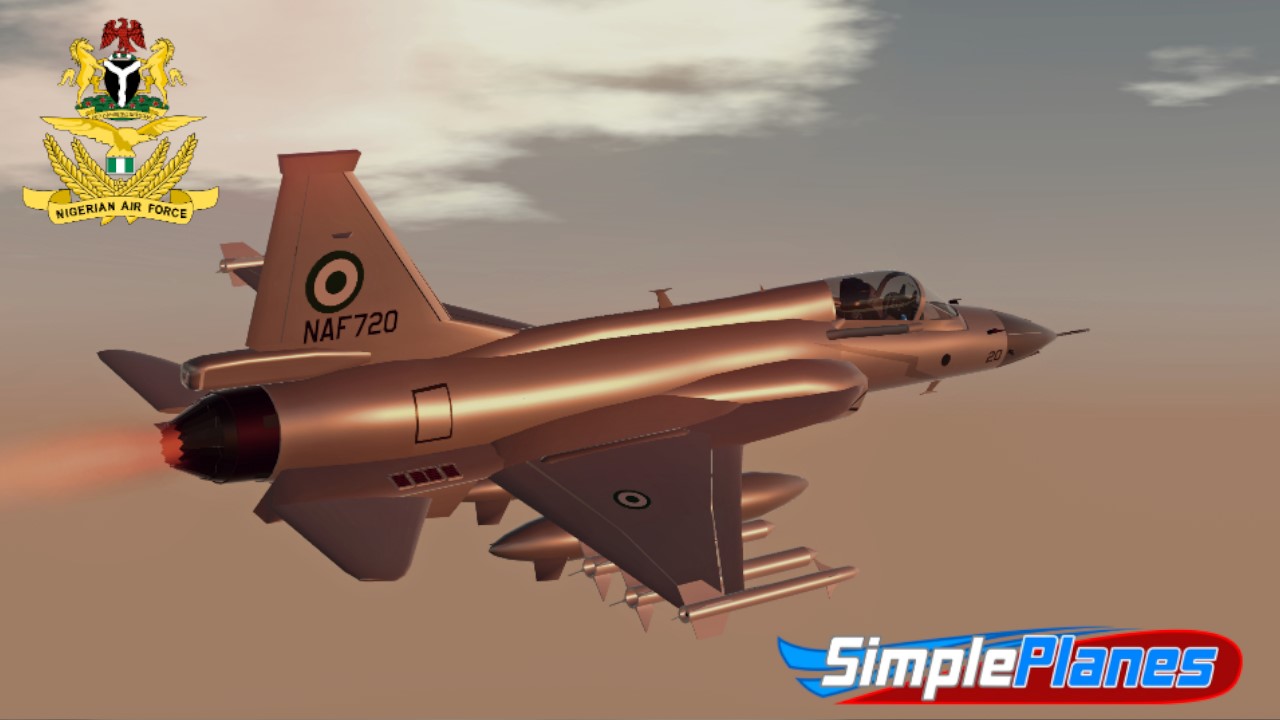
PAF JF-17s have seen military action, both air-to-air and air-to-ground, including bombing terrorist positions in North Waziristan near the Pakistan-Afghanistan border during anti-terror operations in 2014 and 2017 using both guided and unguided munitions,[18][9] shooting down an intruding Iranian military drone near the Pakistan-Iran Border in Balochistan in 2017,[19] in Operation Swift Retort during the 2019 Jammu and Kashmir airstrikes and aerial skirmish between India and Pakistan,[20] and during Operation Marg Bar Sarmachar in 2024 in which Pakistan launched a series of air and artillery strikes inside Iran's Sistan and Baluchestan province targeting Baloch separatist groups. In March and December 2024, PAF JF-17s were used in cross-border airstrikes against Pakistani Taliban hideouts inside Afghanistan.[21] Nigerian Air Force (NAF) JF-17s have seen military action in anti-terrorism and anti-insurgency operations in Nigeria.[22] Myanmar Air Force has also frequently deployed its JF-17 fleet against various insurgent groups.[23] During the May 2025 India–Pakistan conflict, the PAF deployed JF-17s in combat in both the air-to-air and air-to-ground roles.[24][25][26]

On 2 March 2007, the first consignment of two small-batch-production (SBP) aircraft arrived in a dismantled state in Pakistan. They flew for the first time on 10 March 2007 and took part in a public aerial demonstration during a Pakistan Day parade on 23 March 2007. The PAF intended to induct 200 JF-17 by 2015 to replace all its Chengdu F-7, Nanchang A-5, and Dassault Mirage III/5 aircraft. In preparation for the in-flight refuelling of JF-17s, the PAF has upgraded several Mirage IIIs with IFR probes for training purposes.[61] A dual-seat, combat-capable trainer was originally scheduled to begin flight testing in 2006;[31] in 2009 Pakistan reportedly decided to develop the training model into a specialised attack variant.[62][63]

JF-17A Block 2 — Single-seat variant of the JF-17 Thunder. Production began on 18 December 2013 and initial testing began on 9 February 2015.[270] Block 2 aircraft make use of composites in the airframe for reduced weight, air-to-air refuelling capability,[271] improved radar and avionics, enhanced load carrying capacity, data link, and electronic warfare capabilities.[85][86] Chairman of PAC, Air Marshal Javaid Ahmed said: "We will hand over 16 Block 2 JF-17s to the PAF every year", and that the manufacturing plant has the capacity to produce 25 units in a year.[272] According to local media, PAC rolled out the 16th Block 2 aircraft in December 2015 enabling the JF-17's 4th squadron formation.[87] A Block 2 JF-17 costs approximately US$25 million per unit.[273]

JF-17B Block 2 — Dual-seat variant of the JF-17 Thunder. First flight in Chengdu, China on 27 April 2017.[274][275] Serial production in China and Pakistan from 2018 to 2020. A total of 26 aircraft built - first four at Chengdu and remaining 22 at Kamra.[274] Its multi-roles include use as a (i) JF-17 conversion trainer; (ii) Lead-In Fighter Trainer (LIFT); (iii) ground-attack aircraft; and (iv) reconnaissance aircraft.[276] Apart from the dual-seat, larger dorsal spine, and a more swept-back tail, another difference between the JF-17B and the JF-17 is that the JF-17B carries fuel in its vertical stabiliser, which the JF-17 does not.[8] The JF-17B houses integral fuel tanks like the F-16. Each wing houses 550 Ib while the vertical tail houses 210 lb, which, together with the internal fuel load, totals 4,910 Ib of fuel. Together with the three external fuel drop-tanks, the aircraft can carry a total 10,000 Ib fuel load.[8] The JF-17B Block 2s will be retrofitted with the NRIET/CETC KLJ-7A Air-cooled Airborne Fire-Control Active Electronically Scanned Array (AESA) radar (license-manufactured at the Avionics Production Factory (APF) at PAC, Kamra).[8]
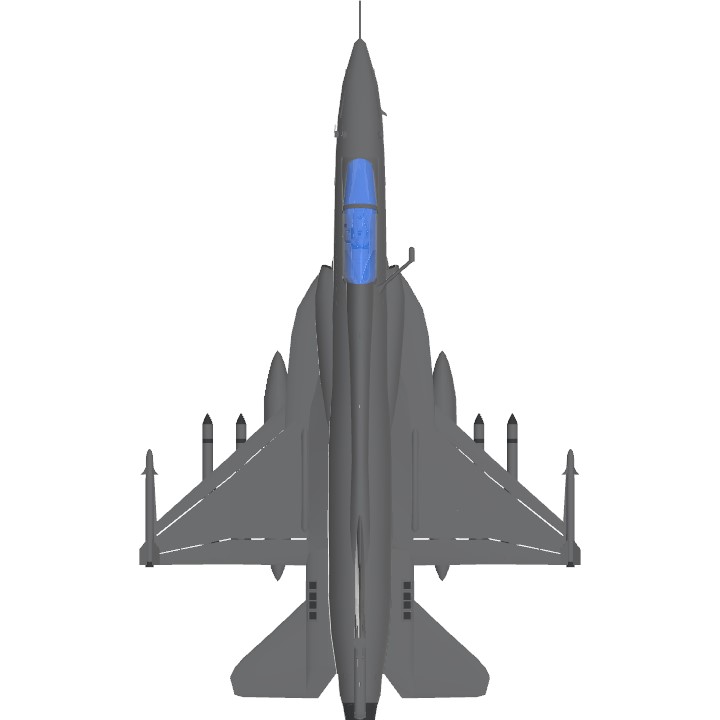
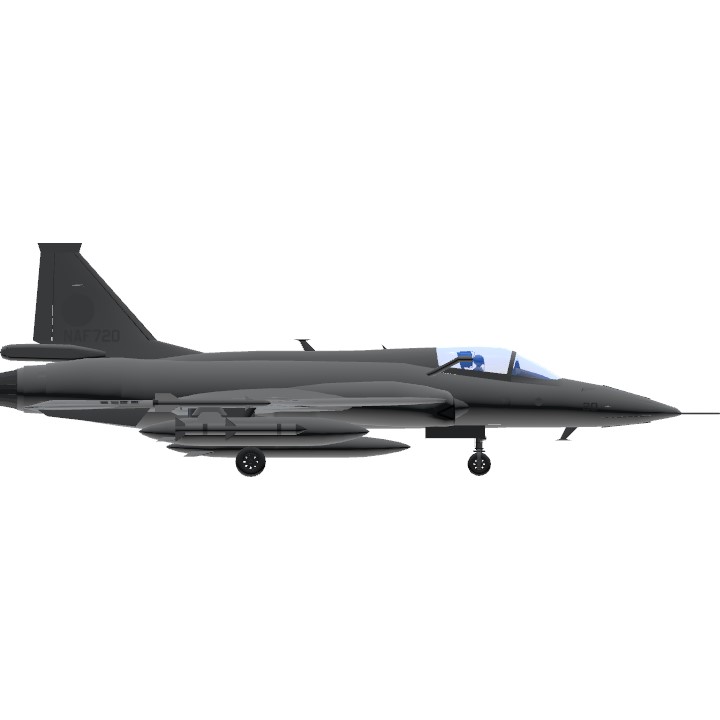
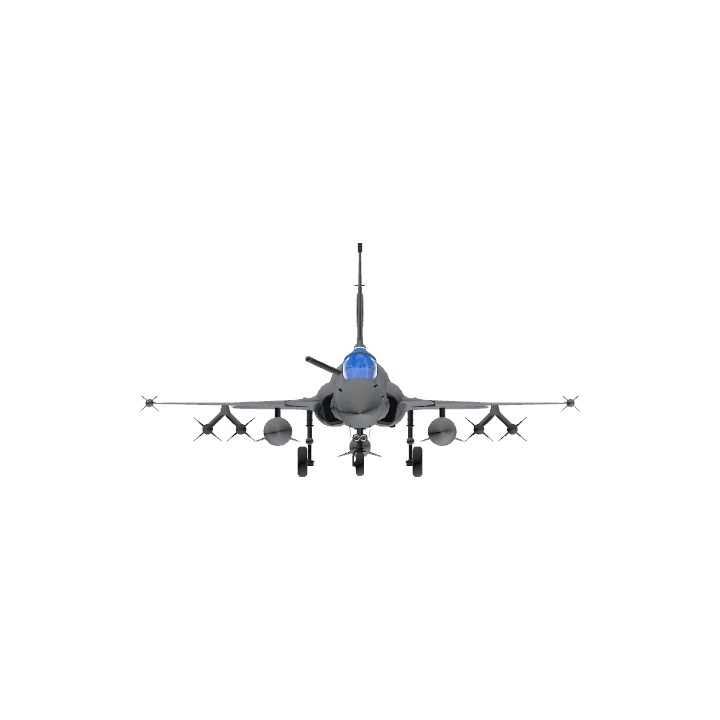
Gallery


Credits to Timplanes for the screenshots
Specifications
Spotlights
- BOSKnight 2 hours ago
General Characteristics
- Created On Windows
- Wingspan 30.3ft (9.2m)
- Length 49.5ft (15.1m)
- Height 16.1ft (4.9m)
- Empty Weight 15,431lbs (6,999kg)
- Loaded Weight 25,069lbs (11,371kg)
Performance
- Power/Weight Ratio 0.443
- Wing Loading 104.3lbs/ft2 (509.3kg/m2)
- Wing Area 240.3ft2 (22.3m2)
- Drag Points 1408
Parts
- Number of Parts 493
- Control Surfaces 2
- Performance Cost 2,561
jump in the CAAC