

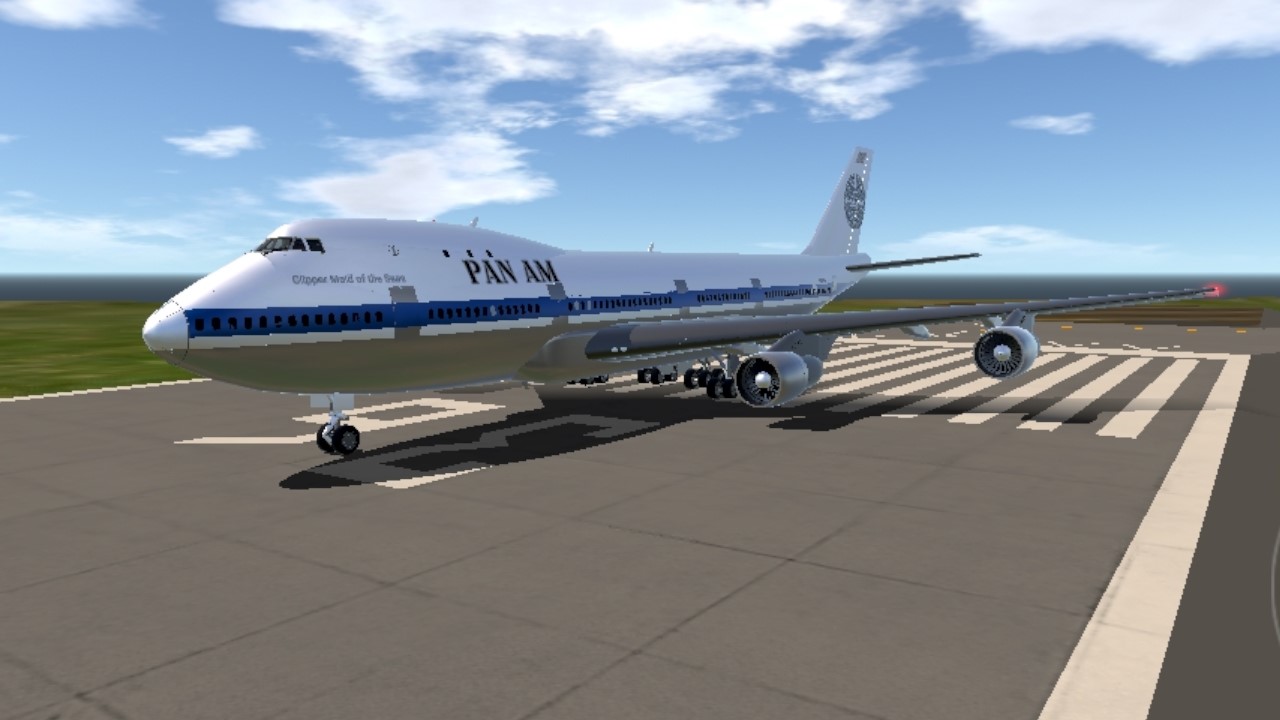
Boeing 747-100

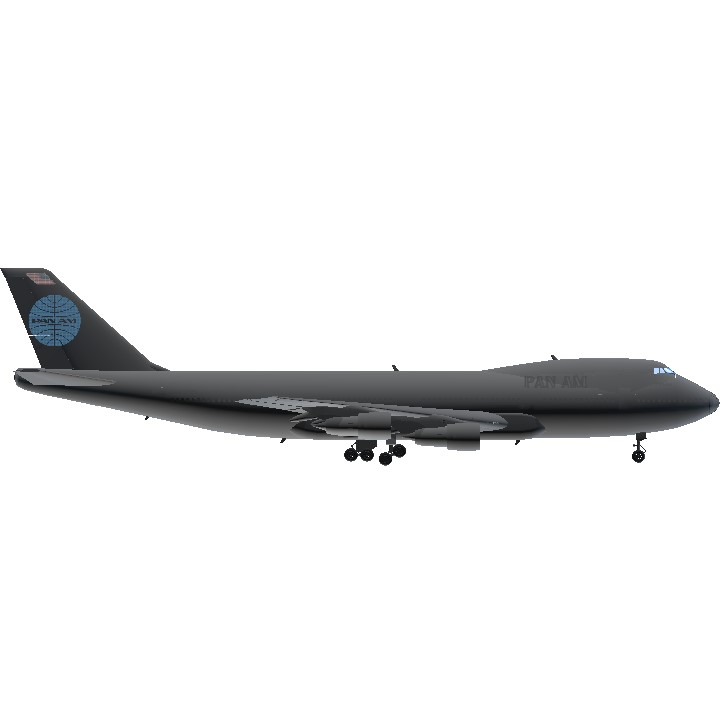
The original 747-100 has a short upper deck with three windows per side, Pan Am introduced it on January 22, 1970.
The first 747-100s were built with six upper deck windows (three per side) to accommodate upstairs lounge areas. Later, as airlines began to use the upper deck for premium passenger seating instead of lounge space, Boeing offered an upper deck with ten windows on either side as an option. Some early -100s were retrofitted with the new configuration. The -100 was equipped with Pratt & Whitney JT9D-3A engines. No freighter version of this model was developed, but many 747-100s were converted into freighters as 747-100(SF). The first 747-100(SF) was delivered to Flying Tiger Line in 1974. A total of 168 747-100s were built; 167 were delivered to customers, while Boeing kept the prototype, City of Everett. In 1972, its unit cost was US$24M (180.4M today).
Pan American World Airways (1927-1991)
Pan American World Airways, originally founded as Pan American Airways, and more commonly known as Pan Am, was an airline that was the principal and largest international air carrier and unofficial flag carrier of the United States for much of the 20th century. The first airline to fly worldwide, it pioneered innovations such as jumbo jets and computerized reservation systems, and introduced the first American jetliner in 1958. Until its dissolution on December 4, 1991, Pan Am "epitomized the luxury and glamour of intercontinental travel", and it remains a cultural icon of the 20th century, identified by its blue globe logo ("The Blue Meatball"), the use of the word "Clipper" in its aircraft names and call signs, and the white uniform caps of its pilots.

Logo (1973-1991)
Founded in 1927 by two U.S. Army Air Corps majors, Pan Am began as a scheduled airmail and passenger service flying between Key West, Florida, and Havana, Cuba. In the 1930s, under the leadership of American entrepreneur Juan Trippe, the airline purchased a fleet of flying boats and focused its route network on Central and South America, gradually adding transatlantic and transpacific destinations. By the mid-20th century, Pan Am enjoyed a near monopoly on international routes. It led the aircraft industry into the Jet Age by acquiring new jetliners such as the Boeing 707 and Boeing 747. Pan Am's modern fleet allowed it to fly larger numbers of passengers, at a longer range, and with fewer stops than rivals. Its primary hub and flagship terminal was the Worldport at John F. Kennedy International Airport in New York City.
During its peak between the late 1950s and early 1970s, Pan Am had an advanced fleet, highly trained staff, and amenities. In 1970, it flew 11 million passengers to 86 countries, with destinations in every continent except Antarctica. In an era dominated by flag carriers that were wholly or majority-owned by governments, Pan Am became the unofficial national carrier of the United States. It was a founding member of the International Air Transport Association (IATA), the global airline industry association.
Beginning in the mid-1970s, Pan Am began facing a series of challenges both internal and external, along with rising competition from the deregulation of the airline industry in 1978. After several attempts at financial restructuring and rebranding throughout the 1980s, Pan Am gradually sold off its assets before declaring bankruptcy in 1991. When it ceased operations, the airline's trademark was the second-most-recognized worldwide. To travelers and many Americans, its closure signified the end of the golden age of air travel. Its brand, iconography, and contributions to the industry remain well known in the 21st century. The airline's name and imagery were purchased in 1998 by railroad holding company Guilford Transportation Industries, which changed its name to Pan Am Systems and adopted Pan Am's logo.
Pan American World Airways Flight 103 - Lockerbie

N739PA, the aircraft involved, seen in 1986, the other aircraft behind South African Airways Boeing 747-200.
Pan Am Flight 103 was a regularly scheduled Pan Am transatlantic flight from Frankfurt to Detroit via a stopover in London and another in New York City. Shortly after 19:00 on 21 December 1988, the Boeing 747 Clipper Maid of the Seas was destroyed by a bomb while flying over the Scottish town of Lockerbie, killing all 243 passengers and 16 crew aboard. Large sections of the aircraft crashed in a residential street in Lockerbie, killing 11 residents. With a total of 270 fatalities, the event, which became known as the Lockerbie bombing, is the deadliest terrorist attack in the history of the United Kingdom.

The remains of the forward section.
Following a three-year joint investigation by Dumfries and Galloway Constabulary and the US Federal Bureau of Investigation (FBI), arrest warrants were issued for two Libyan nationals in 1991. After protracted negotiations and United Nations sanctions, in 1999, Libyan leader Muammar Gaddafi handed over the two men for trial at Camp Zeist, the Netherlands. In 2001, Abdelbaset al-Megrahi, a Libyan intelligence officer, was found guilty of 270 counts of murder in connection with the bombing, and was sentenced to life imprisonment. His co-accused, Lamin Khalifah Fhimah, was acquitted. In 2009, Megrahi was released by the Scottish Government on compassionate grounds after being diagnosed with prostate cancer. He died in 2012 as the only person to be convicted for the attack.
In 2003, Gaddafi paid more than US$1 billion in compensation to the families of the victims of the Lockerbie bombing. Although Gaddafi maintained that he had never personally given the order for the attack, acceptance of Megrahi's status as a government employee was used to connect responsibility by Libya with a series of requirements laid out by a UN resolution for sanctions against Libya to be lifted. In 2011, during the First Libyan Civil War, former Minister of Justice Mustafa Abdul Jalil said that Gaddafi personally ordered the bombing.
As all the accomplices required for such a complex operation were never identified, or convicted, many conspiracy theories have swirled, such as East German Stasi agents having a possible role in the attack. Some relatives of the dead, including Lockerbie campaigner Jim Swire, believe the bomb was planted at Heathrow Airport, possibly by a sleeper cell belonging to the Popular Front for the Liberation of Palestine – General Command, which had been operating in West Germany in the months before the Pan Am bombing, and not sent via feeder flights from Malta, as suggested by the US and UK governments.
In 2020, US authorities indicted the Tunisian resident and Libyan national Abu Agila Masud, who was 37 years old at the time of the incident, for participating in the bombing. He was taken into custody in 2022, pleading not guilty in 2023. A federal trial is set for 2026.
Pan Am 103 was the second Boeing 747 which was lost to a mid-air bombing, after Air India 182 in June 1985.

Animation of this bombing.
Specifications
General Characteristics
- Predecessor Boeing 747-100 "City of Everett" Prototype
- Successors 1 airplane(s) +7 bonus
- Created On Android
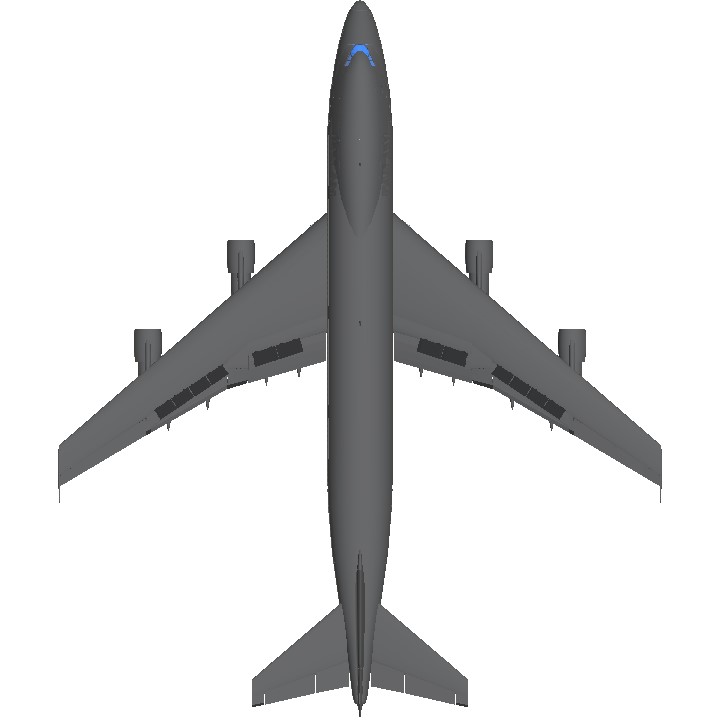
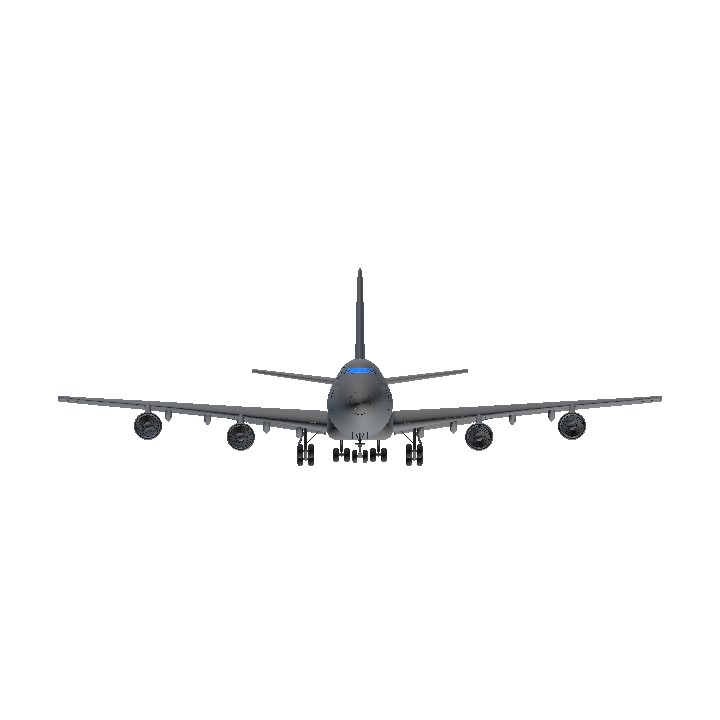
- Wingspan 194.6ft (59.3m)
- Length 232.0ft (70.7m)
- Height 68.2ft (20.8m)
- Empty Weight 328,561lbs (149,033kg)
- Loaded Weight 630,259lbs (285,881kg)
Performance
- Power/Weight Ratio 0.631
- Wing Loading 66.9lbs/ft2 (326.7kg/m2)
- Wing Area 9,417.6ft2 (874.9m2)
- Drag Points 14862
Parts
- Number of Parts 1147
- Control Surfaces 5
- Performance Cost 4,867
Thanks for the upvoter from @realSavageMan, Thanks.