

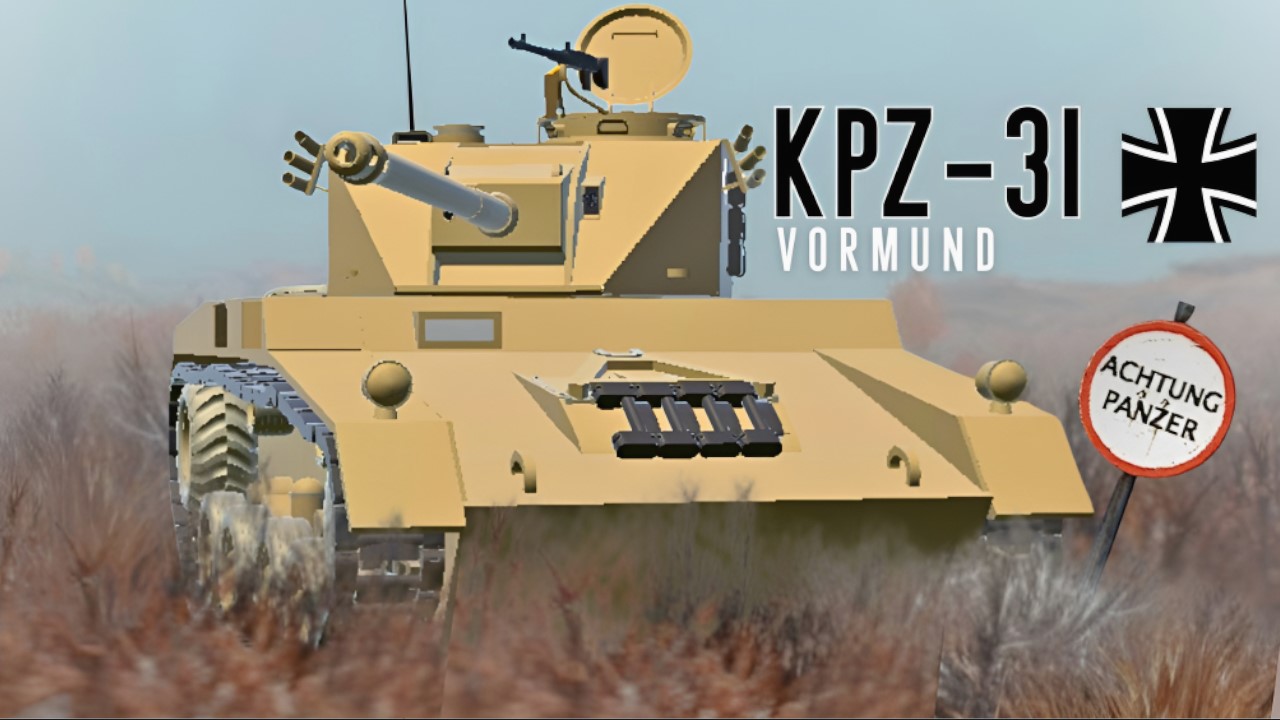
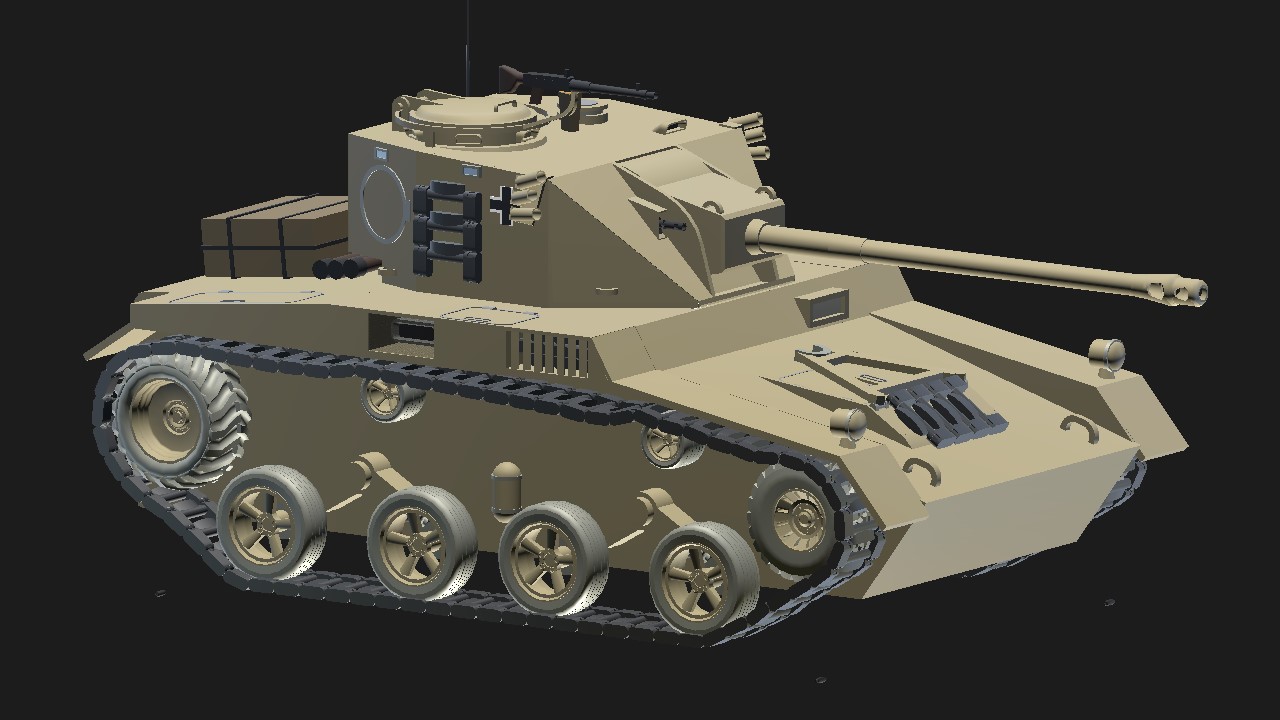
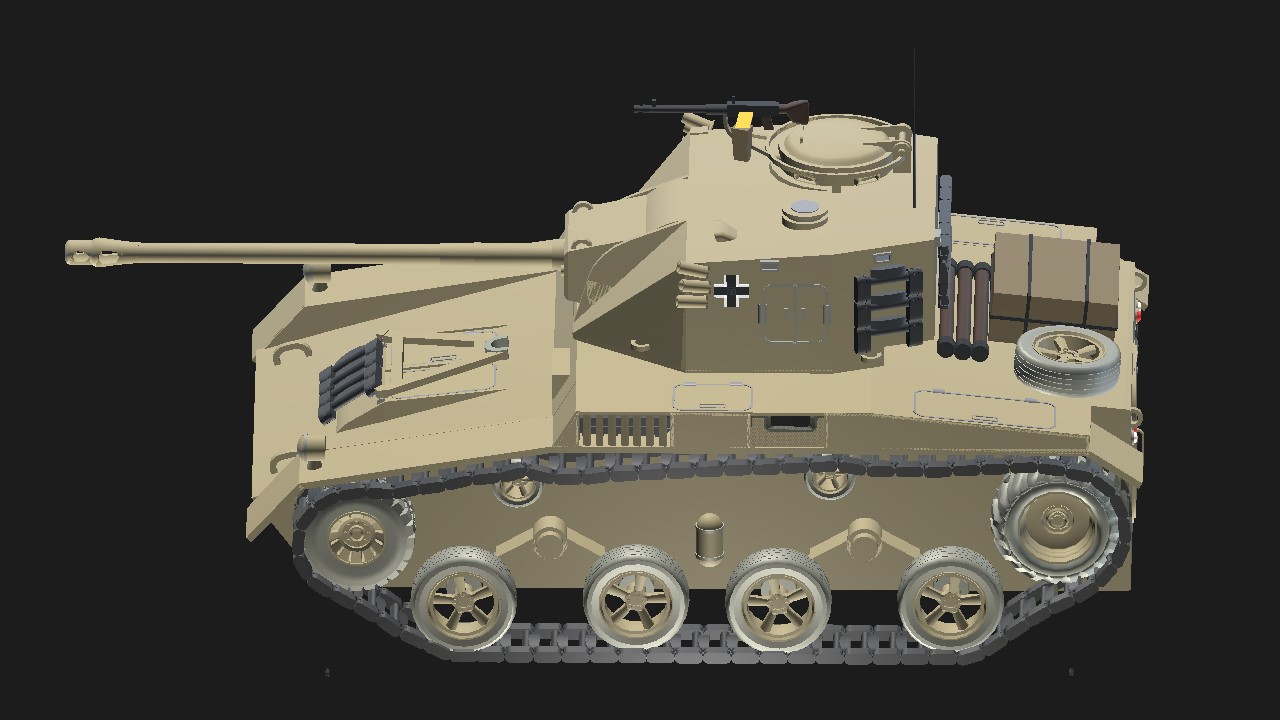
KPz-31 „Vormund“ / RMAG
Kampfpanzer, Klasse 3, Generation 1

Entered service: 1940
Primary contractor: Rheinwerk Mechanik AG (RMAG)

Armor systems: Wittelsbach Bayernische Stahlindustrie (WBS)

Systems integration: Völkner Systemwerke (VSW)

Introduction & Development Background
The KPz-31 „Vormund“ was the first German armored fighting vehicle designed entirely under the Unified Armored Doctrine of 1936, abandoning incremental development in favor of a clean-sheet, system-oriented approach. Conceived as a standard medium Kampfpanzer, the Vormund was intended to form the backbone of armored formations rather than serve as a stopgap or specialist platform.
Early doctrine assessments identified three critical failures in contemporary armored design:
crew survivability, maintenance inefficiency, and structural inflexibility. RMAG’s response was radical by German standards but mathematically sound: survivability would be achieved not by sheer armor thickness alone, but by layered mass distribution, internal spacing, and structural redundancy.
The result was the KPz-31 — a vehicle that redefined how protection, firepower, and logistics could coexist in a single 35-ton platform.


Armor Philosophy & Structural Design
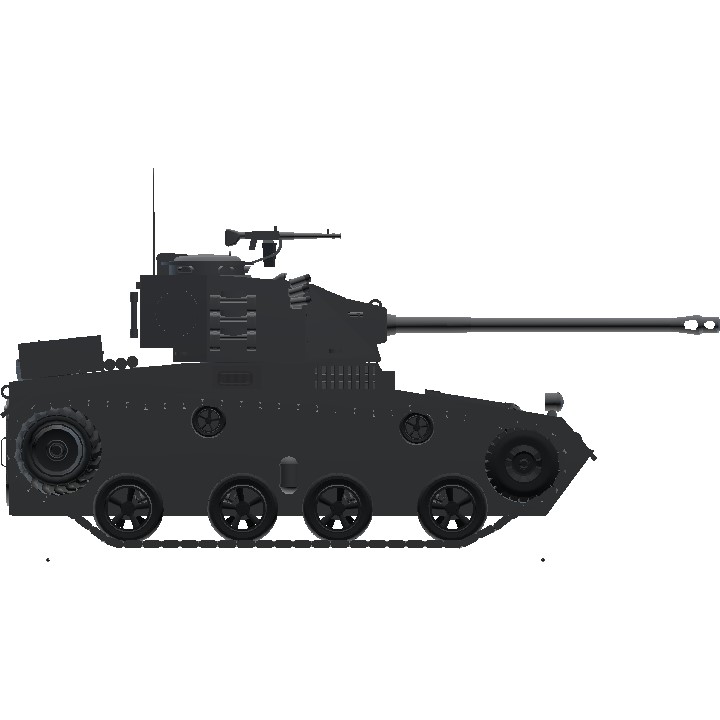
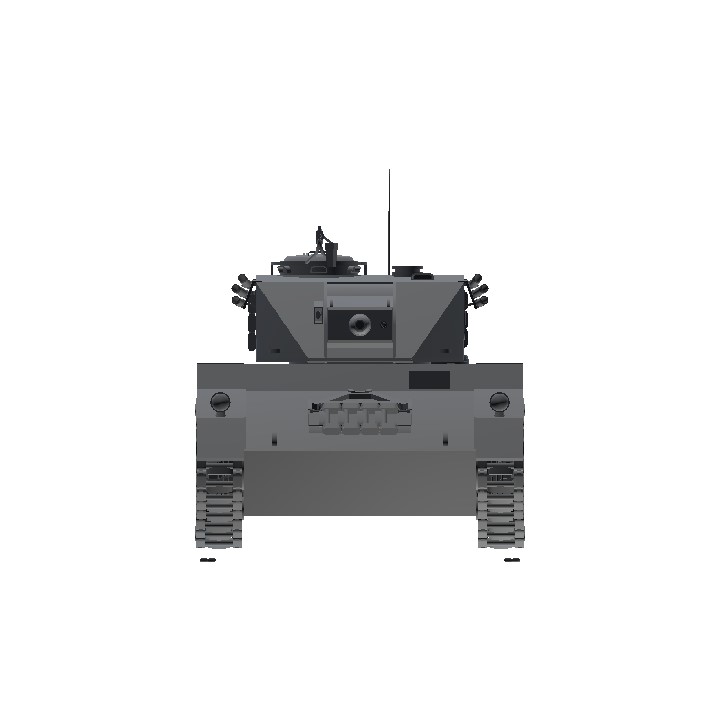
Unlike earlier German tanks with extensive flat frontal surfaces, the Vormund introduced a fully sloped hull and turret geometry, minimizing effective hit probability while maximizing protection per ton of steel.
Armor layout:
Turret:
• Front: 60 mm
• Sides: 47 mm
• Rear: 35 mm
Additional 30 mm wedged spaced armor behind the mantlet, specifically to protect the gun and crew from further penetrations and spall
Hull:
• Front: 47 mm
• Lower Plate: 55mm
• Driver plate: 75 mm
• Sides: 40 mm
• Rear: 35 mm
A notable departure from German tradition was the front-mounted powerplant. Rather than being treated as a liability, the engine was deliberately integrated into the frontal protection scheme, functioning as a sacrificial energy absorber against non-penetrating and partial-penetration impacts. Contemporary battlefield studies later confirmed that the majority of enemy anti-tank rounds lacked sufficient energy to compromise the engine block, greatly increasing crew survival rates.
Engine accessibility was preserved through externally reachable service panels, while cooling and exhaust systems were relocated to the vehicle’s sides — shielded from frontal fire yet close enough to maintain mechanical efficiency

Armament, Ammunition Stowage & Fire Control
The KPz-31 was armed with a 75 mm main gun, selected for its balance between destructive capability and logistical practicality. While sharing caliber with later heavy German guns, the Vormund's weapon employed a more compact propellant charge suited to its smaller turret, trading extreme penetration for reliability and rate of fire.
Main gun penetration:
• Up to 155 mm of flat armor under optimal conditions
Reload rate:
• 6 seconds, sustained
Gun handling:
• Elevation: +20°
• Depression: −10°
• Turret traverse: 360° in 21 seconds
Ammunition stowage was deliberately distributed to balance combat efficiency and survivability, with a total capacity of 50 rounds:
• 7 rounds stored in the rear of the turret, positioned for rapid access by the loader
• 12 rounds housed in the turret basket, allowing sustained engagement without immediate hull access
• Remaining rounds stored low in the hull, either on the floor or beneath rear crew seating, reducing the risk of catastrophic detonation
The vehicle’s generous internal volume and rear utility space allowed additional ammunition to be carried when required, often at the expense of infantry seating or general cargo. This flexibility proved valuable during prolonged operations where resupply was uncertain.
A locking travel frame was fitted to secure the gun during long road marches, reducing wear on the mantlet and trunnions — a small but telling example of the vehicle’s maintenance-first philosophy.
Secondary armament:
• 1× coaxial MG42
• 1× top-mounted MG42 for anti-infantry and limited anti-aircraft use
• 6× smoke launchers for concealment and disengagement

Mobility & Crew Layout
Despite its protective focus, the Vormund maintained excellent mobility for its class.
• Mass: 35 tons
• Maximum speed:
• 43 km/h forward (90 in game due to scale)
• 20 km/h reverse (idk)
• Suspension: Bogie system, optimized for ease of field repair
Crew:
• Commander
• Gunner
• Loader
• Driver
• Co-driver (optional)
The forward engine layout freed internal and rear hull volume, allowing the KPz-31 to transport up to six infantrymen or carry significant quantities of ammunition and equipment. This capability proved invaluable during fast-moving operations, where armored units often operated beyond immediate logistical support.
Additional automotive features — including rear convoy lights, brake lights, and forward headlights — reflected RMAG’s emphasis on coordinated movement and reduced march accidents, particularly during night operations.

Operational Impact
Entering service in 1940, the KPz-31 „Vormund“ immediately demonstrated superiority over contemporary medium and heavy Soviet designs. Its combination of sloped armor, effective firepower, and exceptional reliability allowed German armored formations to engage T-34 and KV-1 tanks on favorable terms well before equivalent Allied improvements appeared.
Crucially, the Vormund did not eliminate the need for future heavy tanks — but it delayed the crisis that historically forced rushed development. By stabilizing the battlefield balance during the early and mid phases of the war, the KPz-31 bought German industry time to pursue heavier designs with greater deliberation.

Controls
AG1> Open Rear Hull Hatch
AG2> Open Cupola (Activates Top Mounted MG)
AG3> Deploy Locking Frame
AG4> Lights
VTOL> Gun Elevation
Trim> Turret Rotation
Throttle> Forward Throttle
Brake> Brake
Roll> Turning
Pitch (Negative)> Reverse
Specifications
Spotlights
- ChihiroFujisaki 14 hours ago
- SILVERPANZER 12 hours ago
General Characteristics
- Created On Android
- Wingspan 24.2ft (7.4m)
- Length 49.6ft (15.1m)
- Height 27.8ft (8.5m)
- Empty Weight N/A
- Loaded Weight 28,492lbs (12,924kg)
Performance
- Power/Weight Ratio 4.14
- Wing Loading N/A
- Wing Area 0.0ft2 (0.0m2)
- Drag Points 36187
Parts
- Number of Parts 783
- Control Surfaces 0
- Performance Cost 5,240
This is incredible
i thought this was the flakpanzer 341 🥀🥀🥀