

History & Info
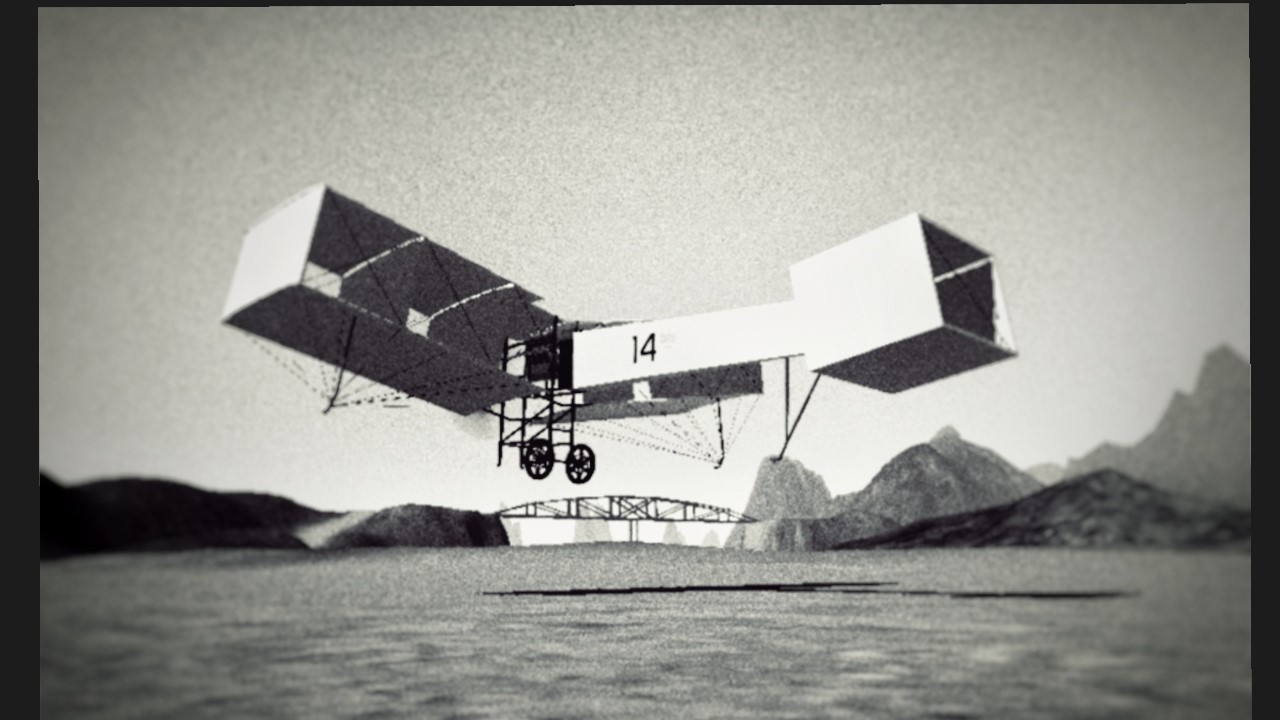
Santos Dumont's 14 bis is well known as the first aircraft to make a powered flight in Europe. In fact, for several years it was accepted as the first flight globally, as the Wright brothers did not publicly reveal their successes until 1908, and many were skeptical at first.

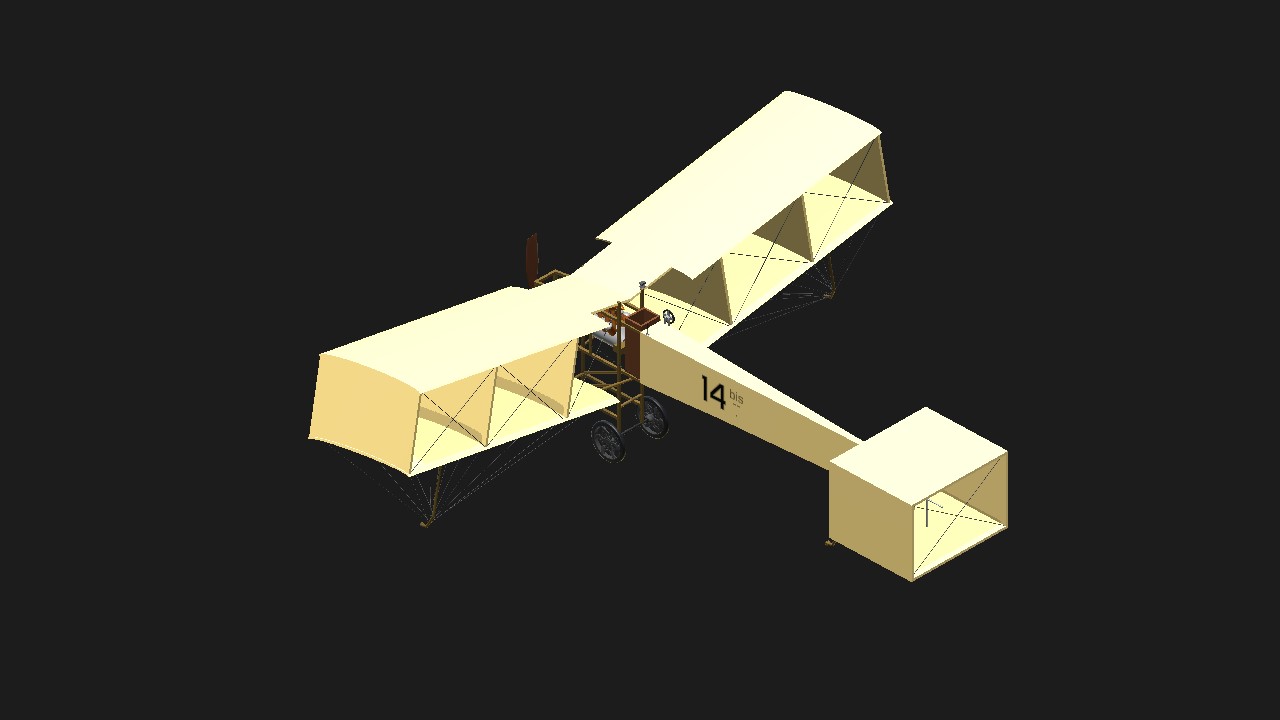
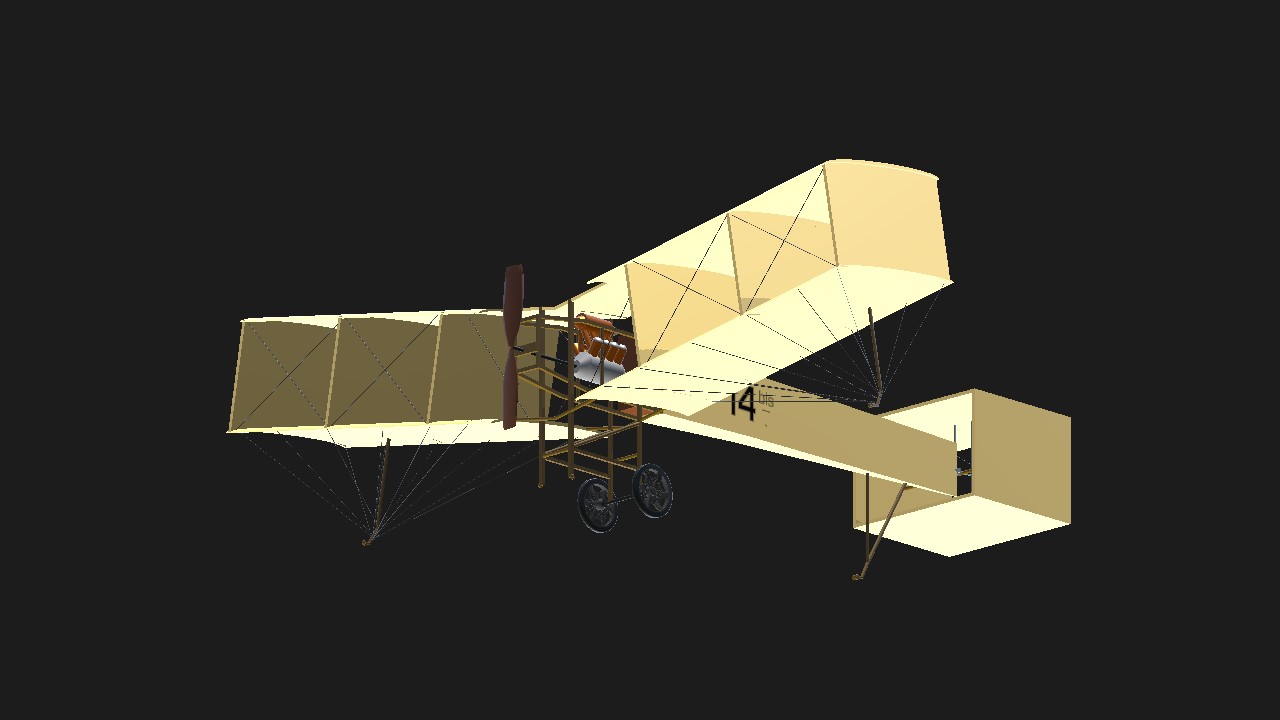
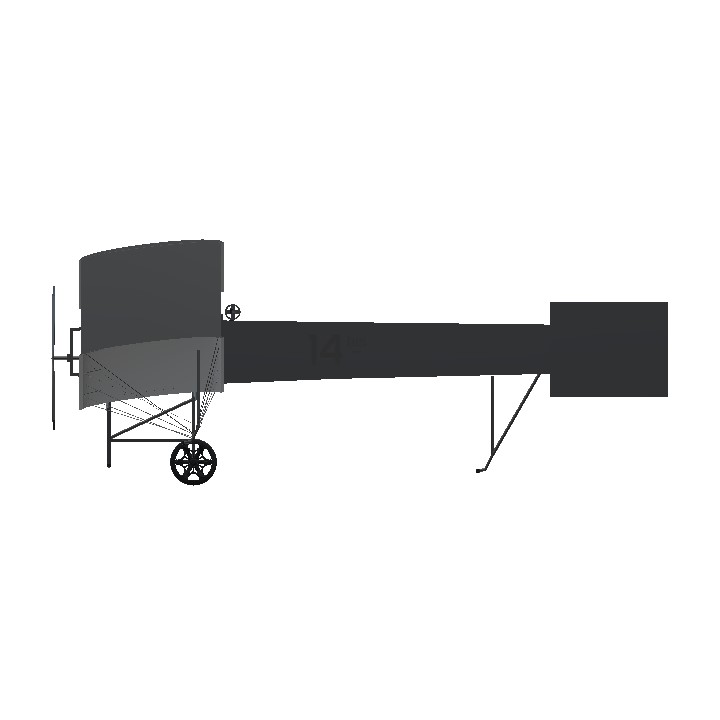
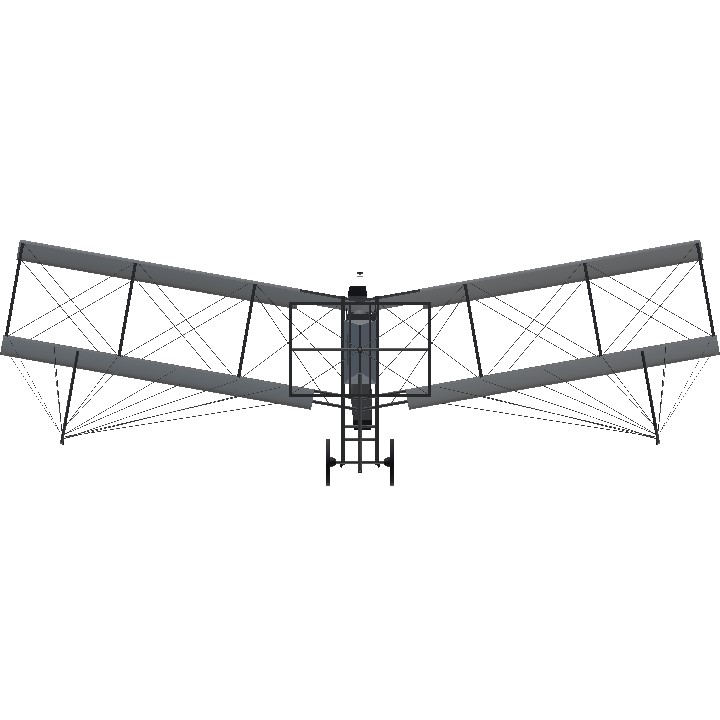
The 14 bis was an unusual design both visually and technically, being a canard biplane with boxy, kite-like wings with 3 cells each, a very long, thin fuselage, and a rigid, pivoting "universal" foreplane for rudder and elevator control. Additionally the pilot had no real cockpit, simply standing upright in a wicker basket between the wings. Power was provided by a 50hp Antoinette V8. Despite being a powerful engine for the era that would later equip many successful aircraft, the 14 bis could barely break 40km/h, likely due to its inefficient paddle-like propeller.
Despite claiming the first flight in Europe and setting a few records, the 14 bis was ultimately an unsuccessful aircraft. The design had extremely poor lateral control as Dumont did not initially install any sort of roll control. Even after installing ailerons, controlling the 14 bis remained difficult, and after several crashes Dumont abandoned it entirely to focus on newer designs.
This replica is of the 14 bis in an early configuration, without ailerons.
Flying and controls
Okay, I won't lie to you, flying this one isn't easy. I built it specifically to recorded specs and performance figures, so it has all the issues of the real one. If you download this it's for the experience, not just to have a mildly pretty 14 bis.
Takeoff
Takeoff is still fairly simple. Set the throttle to max, and let the aircraft accelerate to above 36km/h. Now you can start pulling up. You will have to pitch up quite a lot but the aircraft should lift off smoothly.
"Level" flight
No, I'm not trying to be funny with the quotes. Keeping this thing level is work. You will immediately notice you always have to pitch up - if you leave the stick the nose will pitch down sharply, and you're having an improptu meeting with the ground. The first 100m of level flight should be fine. Just keep the aircraft level in pitch.
You will soon see the aircraft will naturally start banking. This is a problem. If left to its own, this banking turns into oscillations that will make you stall eventually. There is no easy way around this - you have to very consciously counter the banking with precise, small rudder inputs.
Speaking of rudder, never yaw hard. If you do you will bank the 14 bis sharply, the canard will stall if you try to correct, and you will dive into the ground. Fortunately in the game it tends to survive this fine, but still....
Turning
Lol. Lmao, even.
In seriousness, actually turning this thing is like a fun little challenge to your sanity. All you can do is try to vaguely control the banking with your rudder and let the plane naturally turn. It's frustrating and very uncontrolled.
Landing
Hooooo boy, now this is a doozy. I'll be honest - I don't even really know how to land this thing myself. I've gotten like 1 smooth landing in over 10 flights. In fairness, it was basically impossible to land in real life as well. All I can recommend is to try and keep the nose as straight as possible and descend very slowly, then once you're on the ground cut your throttle.
Conclusion
Well, this is certainly the weirdest plane I've built. I felt like I had to given my Demoiselle replica. Maybe it'll satisfy the Brazilians.
P.S. I know there's likely several incorrect or missing details - I highly encourage you to either tell me about them or add them yourself! Finding accurate information about the 14 bis is hard, so where I wasn't sure I either went with whatever felt right or left it out completely.
P.P.S It seems somehow the rear section of the fuel tank got detached before I uploaded. This doesn't affect the aircraft in any way but don't be startled by this single loose part falling off. If you want to fix it just nudge it back a bit and auto reconnect it
Specifications
Spotlights
- VeryUnprofession an hour ago
- XProAerospaceAircrafts 16 hours ago
- PrussianAirWorks an hour ago
- LyotAeronautics 21 hours ago
General Characteristics
- Created On Android
- Wingspan 37.4ft (11.4m)
- Length 32.0ft (9.8m)
- Height 13.0ft (4.0m)
- Empty Weight 560lbs (254kg)
- Loaded Weight 693lbs (314kg)
Performance
- Horse Power/Weight Ratio 0.072
- Wing Loading 1.1lbs/ft2 (5.3kg/m2)
- Wing Area 639.1ft2 (59.4m2)
- Drag Points 4370
Parts
- Number of Parts 186
- Control Surfaces 0
- Performance Cost 703
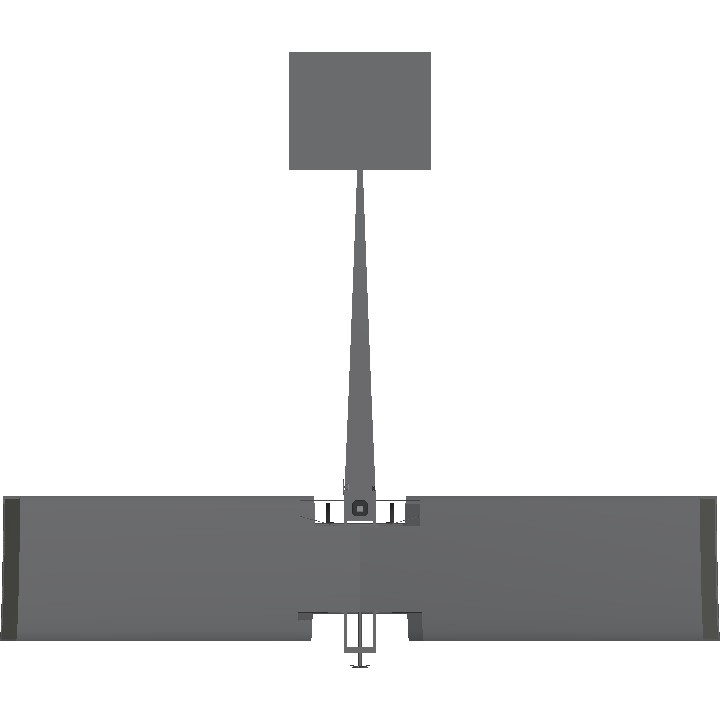
"Com catapulta,até bosta voa."
@Ericshideout oh wow, I didn't even know about that one. Definitely adding to my list
Would love to see the Epps 1907 monoplane