

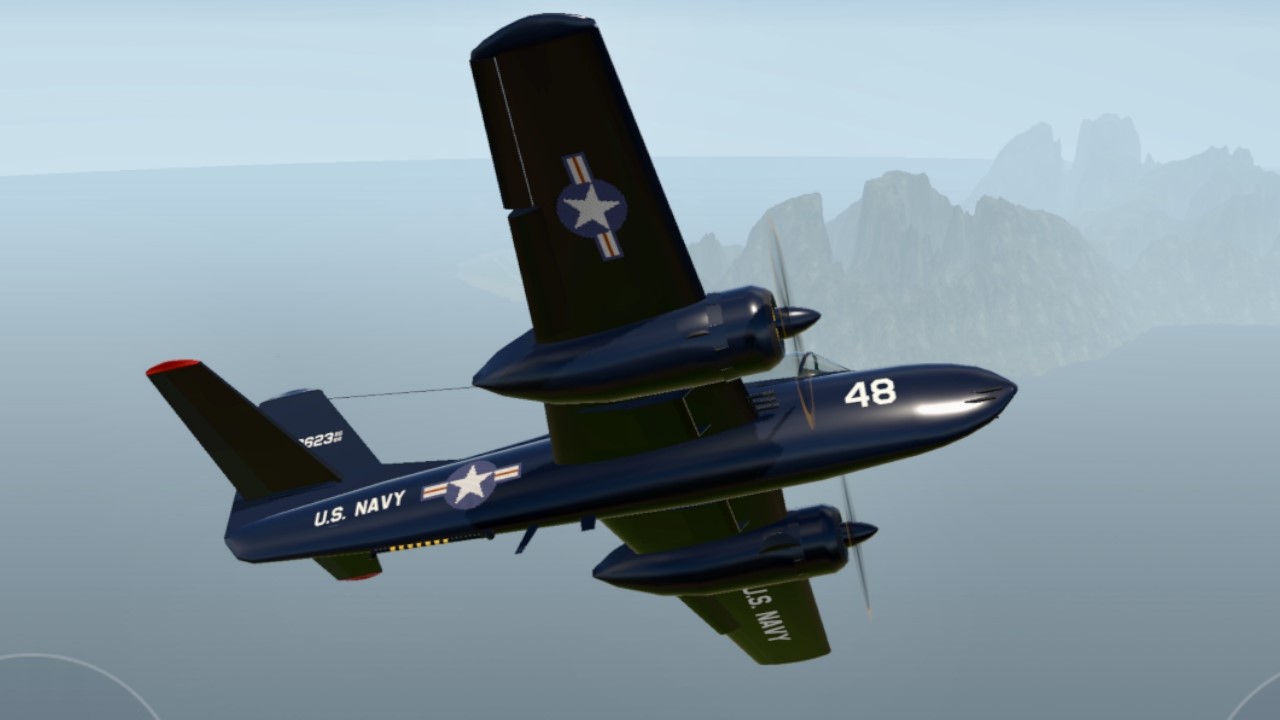
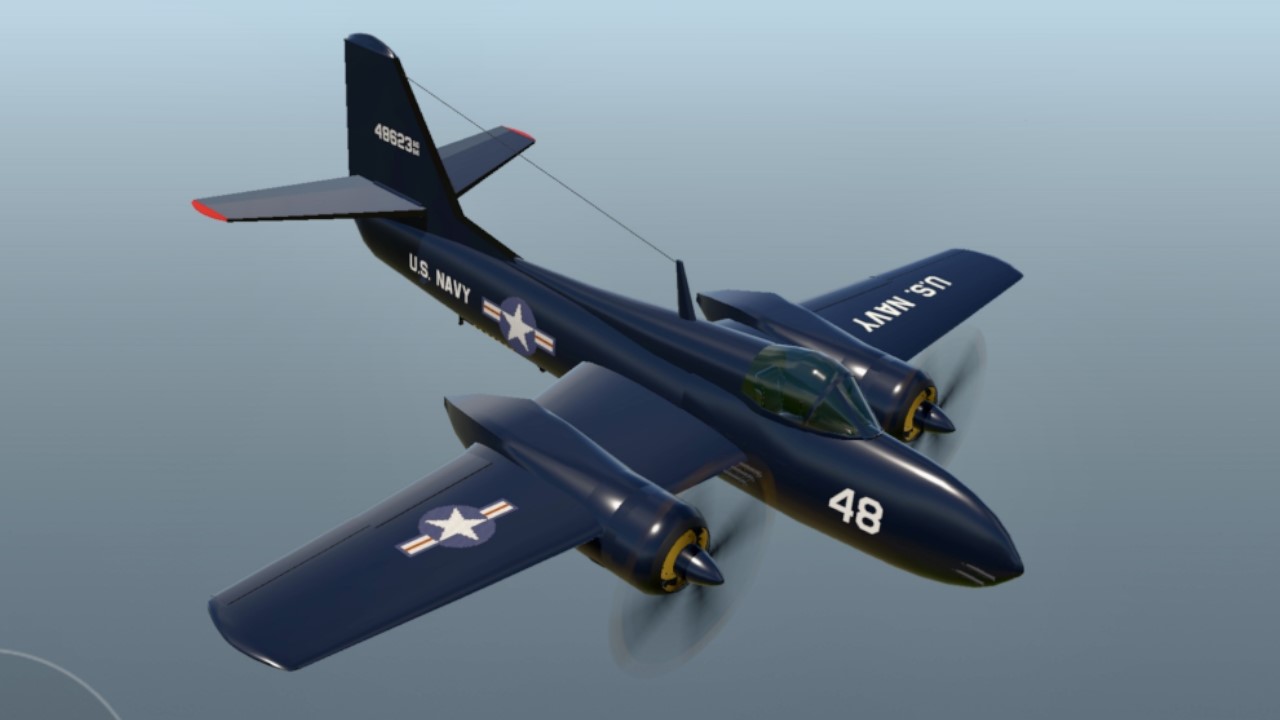
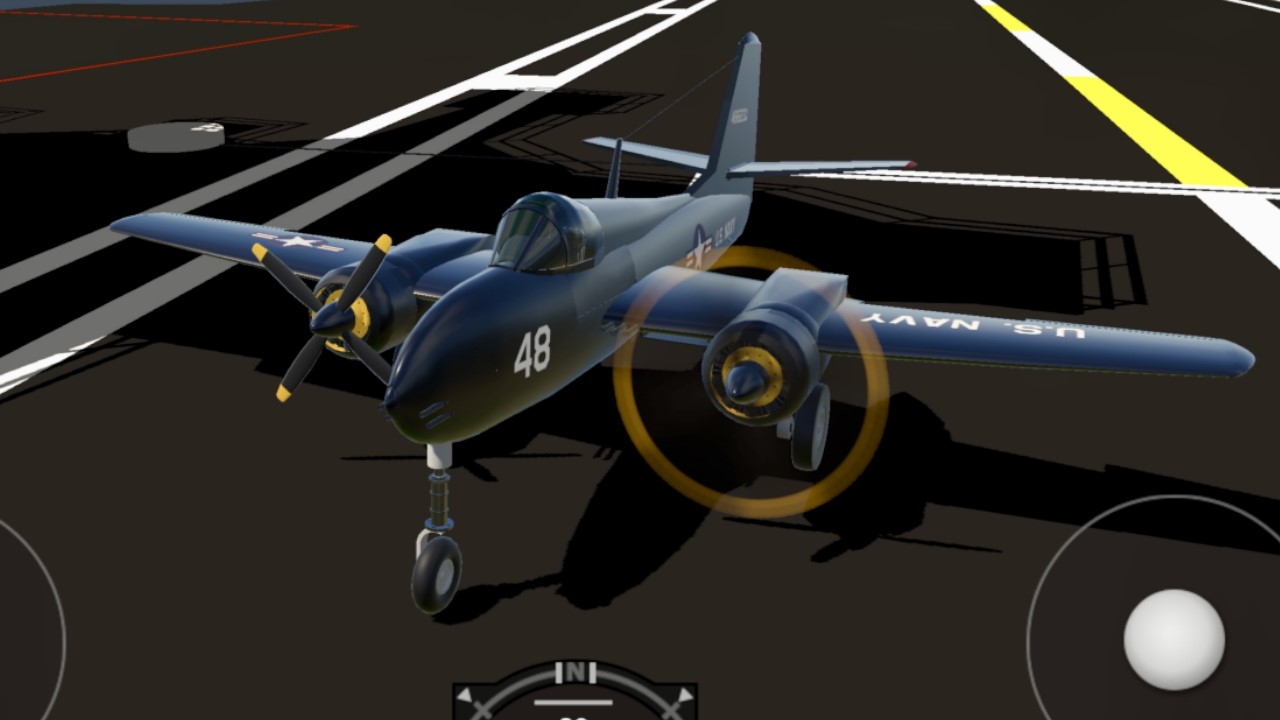
Douglas VR-12 “Sea Vindicator” Heavy Fighter
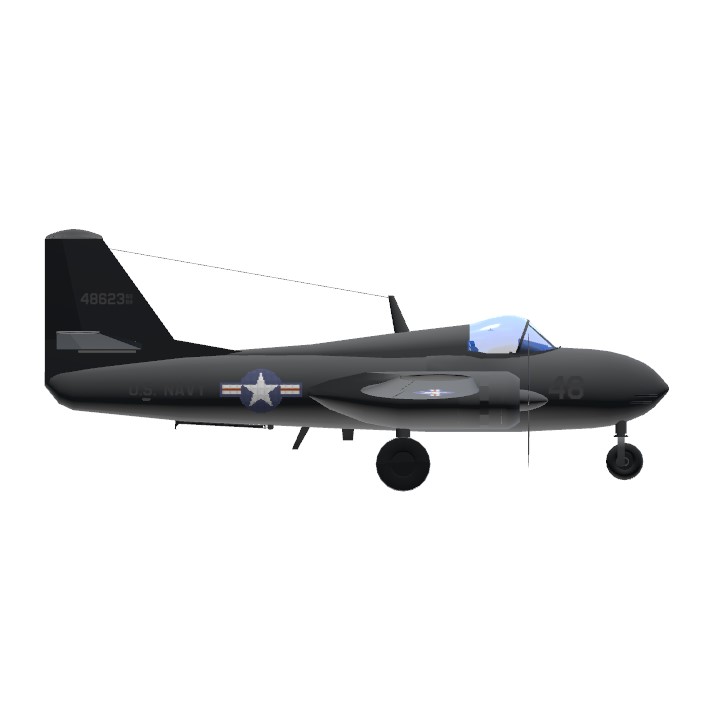
The Douglas VR-12 Sea Vindicator was a twin-engine heavy fighter developed for the U.S. Navy during the height of the Pacific War. Designed to provide long-range escort and interception capability, the VR-12 filled a unique role between carrier-borne single-engine fighters and larger land-based patrol bombers.
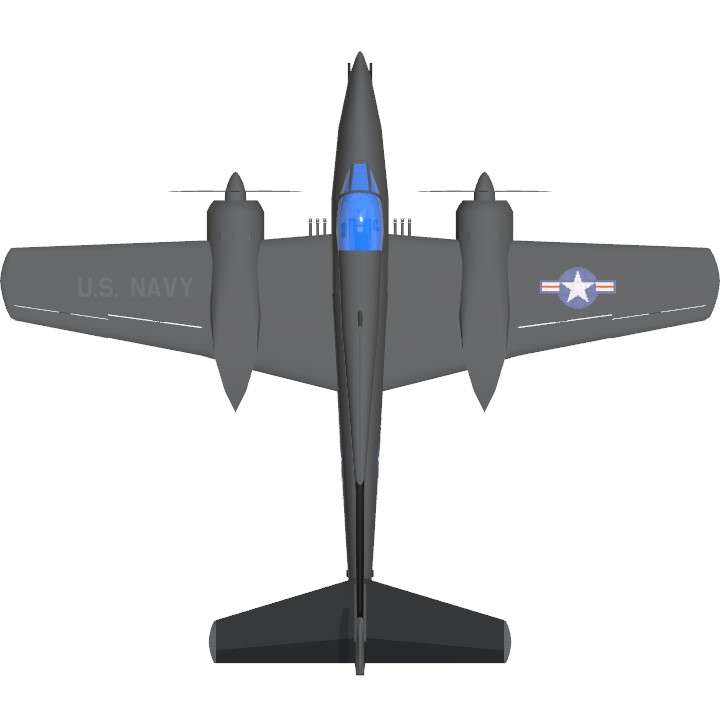
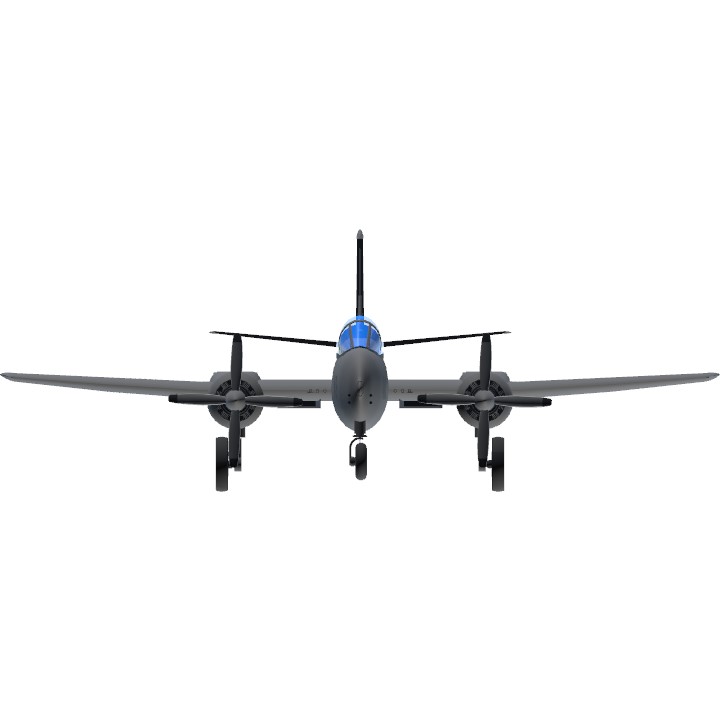
The aircraft featured a broad mid-mounted wing, folding tips for carrier storage, and robust tricycle landing gear. Powered by two Pratt & Whitney R-2800 radial engines, the Sea Vindicator achieved a maximum speed of 360 mph and could operate effectively at altitudes exceeding 25,000 feet. With a combat radius of nearly 700 miles, it was well-suited for extended operations across the vast Pacific theater.
Armament was formidable: six .50-caliber Browning M2 machine guns mounted in the wings provided concentrated forward fire, while two 20 mm cannons on the nose delivered heavy punch against armored targets and bombers. Hardpoints beneath the wings allowed the carriage of two 500-lb bombs or auxiliary fuel tanks, giving the VR-12 versatility as both an interceptor and a fighter-bomber.
Operational history began in late 1943 with deployments aboard Essex-class carriers. Pilots praised its stability, heavy armament, and survivability, though they noted sluggish maneuverability compared to lighter fighters like the F6F Hellcat. In fleet defense, the Sea Vindicator proved deadly against Japanese twin-engine bombers and offered valuable escort capability for carrier task forces during strikes on the Philippines and Okinawa.
Though overshadowed by faster single-engine fighters late in the war, the VR-12 played a crucial niche role as a heavy escort and strike fighter. Postwar, it served briefly in secondary roles before being retired in favor of jet aircraft.
The Sea Vindicator remains an evocative example of the Navy’s wartime push for innovation, bridging the gap between traditional naval fighters and emerging multirole concepts.
[Reference: Win'sWings Air Craft company, New York, 1943]
Separate engine controls with AG1 and AG2.
Features-
- VR
- Six .50-caliber Browning M2 machine guns
- Two 20 mm cannons on the nose
- AG1, AG2 for Engine 1 and Engine 2
- Carrier landing hook (AG7)
Specifications
Spotlights
- This craft is curated
General Characteristics
- Created On iOS
- Wingspan 41.0ft (12.5m)
- Length 35.9ft (10.9m)
- Height 14.9ft (4.5m)
- Empty Weight 8,425lbs (3,821kg)
- Loaded Weight 9,045lbs (4,103kg)
Performance
- Horse Power/Weight Ratio 0.331
- Wing Loading 27.0lbs/ft2 (131.6kg/m2)
- Wing Area 335.6ft2 (31.2m2)
- Drag Points 3826
Parts
- Number of Parts 166
- Control Surfaces 7
- Performance Cost 863
@SPWithLizzie Lol, it's a fictional - inspired by Grumman F7F Tigercat
@WinsWings
No probs
@KorKaiorWhatever Lol, thanks
@WinsWings
Still :3
Sea vindicator?
Where's the D vindicator?
@IMCI Thank you.
10/10 for design
@RicardoACE thanks