

Hello everyone, welcome to my first lore dumping post. Today, we will cover the 4 automobile companies I've been using in the past two years. We will go in-depth as to what they are and what their history is.
Before we start id like to say that I like shifting my lore a lot, so I'll try to keep this updated as a reference for anybody wanting to learn more about my fictional companies.
That said. Let's jump right in!
-Part 1: Shield Group Automotive (suggested song: + )

So, much like in real life, the car companies I'm gonna be talking about are all part of one mega group called "Shield Group Automotive". The name Shield group derives from the fact that most of the logos of the companies making it are shields. On a more metaphorical side, this is meant to represent that they are "the defenders" of the Erthian auto industry. In fact, this is the most profitable car company in all of Erthia, and they consistently rank among the top 5 in worldwide sales.

(if you're confused as to what an "Erthia" is, stay tuned, I guess )
So, as the national auto group, they have plants distributed all over Erthian land, placed in different regions out of either tradition (some companies already had plants in the area, so they were forced to share) or out of economic incentive. For example, the design HQ is in Markington (the capital of Erthia) since most design schools are located in the region, and the same goes for the engineering HQ. The factories are split between the "affordability plant" and the "high quality" plant; the first is the one in "Buchors" producing GIAT and TERRAM cars, the other is the "Dova" factory producing PHONIX and M.C.C. cars.
So, why does this car group even exist?
The idea behind it was simple. Increase production efficiency by sharing parts while also creating a single company that could fill every single market gap. In fact, the only reason why this group didn't fall apart like certain other car groups in real life (cough cough... Stellantis... cough cough) is because every company within it has a specific identity that makes it unique with little to no overlap compared to the others. Also, while parts are shared between cars, everyone still uses their own systems for platforms, suspensions, and the more important mechanical parts of the vehicles, to keep the already mentioned uniqueness.
Most of the cars produced by them are Electric, mostly because it's the more popular traction option in their home country, but sometimes they also offer full-hybrid or range extender options for certain cars.
In fact, EVs account for around 40% of the market on Erthia. With the rest being a 30% share for hybrids, 10% hydrogen, and the other 20% pure ICE engines, with diesel being among the most sold in that percentage. This is mostly due to a strong government push (for which I'll explain the reasons later on) that invests in affordable and accessible public infrastructure alongside private operators.

So let's talk about each company individually, shall we?
-Part 2: Giat Auto (suggested song: + )

Starting with the sales leader. Giat is the most important company in the group. They lead sales within the group, making up 40% of all sold cars, of which 70% are sold within Erthia, and the rest is sold abroad.
They specialize in cheap, practical cars. If I can think of any car brand in real life that represents them, it would be Fiat or Renault.
They cover most car segments from extra small microcars to extralarge vans. Talking of wihich their lineup is composed mostly of microcars, hatchbacks, minivans, station wagons, and full-size vans. It can also be divided into 2 different types of cars, the "affordable cars" and the "retro cars". The first is represented by the Giat B0X1, basically it's made of cheap, no-nonsense cars designed to last a long time and stand up to use and abuse, the second by the Giat T70, cars that try to be a bit more cool-looking and cute while also remaining affordable for the masses.
( kinda like Fiat has both the Panda and 500 families of cars)
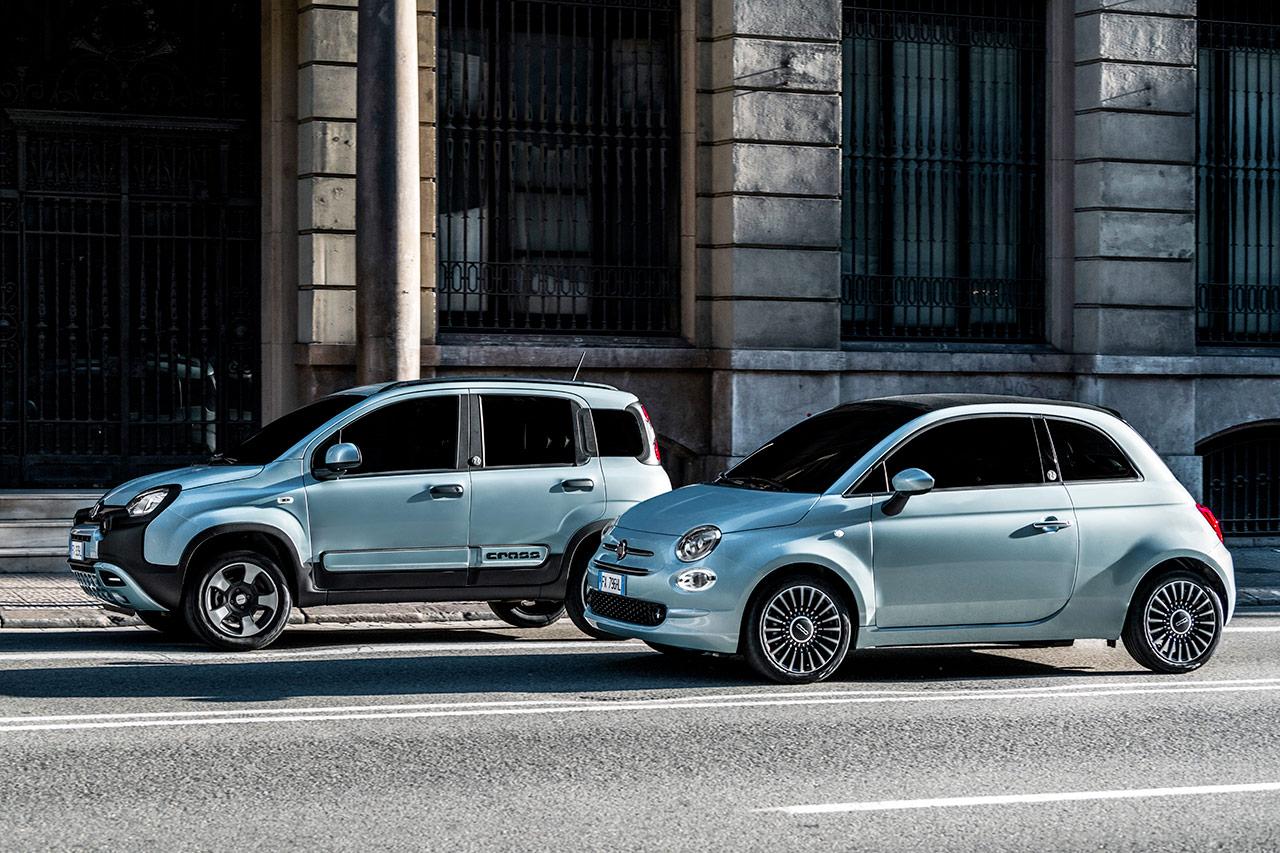
Diving into their history, they were founded by a researcher from the MRC (Marcus Research Center) called "Rober Giat", who was working on brand new battery technology that allowed him to create a brand new Lithium-Iron battery that would have allowed him to make a small, lightweight car capable of running long distances. His experiment led to the first Giat T70.
His car was a success, especially thanks to a large push from the Erthian government towards electrification (The country was in the middle of a war with the Titanian Empire; they needed large amounts of oil to power the war machine, so removing consumption of civilian oil was a priority).
This initial sales hit allowed them to launch other cars, a bigger version of the T70 called the T140, and a small bubble car called T30 (later simply called "bubble"). The company kept expanding, and they slowly managed to bring a new electric era to Erthian roads. As they expanded, they started buying other companies like Phonix (which we will talk about later), while building their reputation as builders of affordable people's cars. Decades later, they opened a massive headquarters building near the capital of Erthia with a massive structure fitted with a road on top of the building, where they would secretly test prototypes far from public eyes. Business kept going smoothly, though there were some bumps along the way; the company survived.
The last major event in their history was the Giat-M.C.C. fusion that led to the creation of the Shield Group. The two companies, faced with increasing threats from foreign car companies, decided to work together to defend the Erthian auto industry.

Also, STOP WRITING GYATT EVERY TIME I POST A CAR FROM THIS COMPANY PLEASE, the name was supposed to be a parody of "Fiat", ok :(.
-Part 3: Phonix (suggested song: + )

Phonix Is a sister company to Giat. In fact, before the creation of the Shield group, it was under direct ownership of Giat before gaining some Independence during the merger.
They are the slowest sellers of the group, making only 10% of sales. This is because they build extremely sporty and powerful cars.
Their line-up is split into 2. The HPG (High Performance Giat) line, comprising sporty versions of Giat cars, and the PE (Phonix engineered) line, which includes all cars that they have developed themselves.
Most of their sales come from the HPG line since it's the more affordable of the two. But the company doesn't really live from "selling cars". You see, Phonix is a "low-end market Ferrari" in the sense that they are more famous for their racing expertise than their cars themselves.
In fact, they are world champions in the "International GP", a racing series where every country can participate with its own racing team. Phonix is the official team representing Erthia. Among their racing legends, they have the "Sport-eva" and the "T70 HPG". The first dominated the tracks, being a lightweight hybrid car. The other is a formidable rally car that has become synonymous with the brand.
Diving into their history,
Phonix started as a humble tuning shop in the Erthian mountainous city of Ayrol. They tuned street cars into rally vehicles for people who wanted to join the many rally competitions organized in the mountains. As the T70 started becoming popular, they started specializing in turning EVs into rally monsters, and that's when they started racing themselves with a modified T70, with which they started crushing the competition.
Everything changed one day as a strange visitor appeared in their garage, it was Rober Giat himself, offering to buy a 50% stake in the company and help them with their racing ambition.
The phonix team accepted, and they started going big, from small rally competitions to the urban racing circuits of the national stock car racing series.
Until the Erthian government contacted them to do the unthinkable.
Join the International GP and beat the Titanian champions that dominated the series at the time to show "erthian superiority".
The task seemed like an uphill battle at first due to the insane jump in stakes and difficulties developing the cars and creating a reliable team. Only with the arrival of a Rally driving legend of Minorsian origin, the team started getting their first wins, all culminating in an epic fight at the end of the season where the 2 Phonix cars battled for first place with the Titanian team. Getting Erthia their first championship win in the competition.
This cemented their legacy as the national racing team. This meant that they finally could branch out into other racing series with a design philosophy of prioritizing light and extremely powerful cars.
Later on, they would use this status to add a phoenix to their logo as a tribute to Erthia (it's the national animal).
But stepping back from their racing experience, phonix started selling cars of their own (with Giat components that is). Mostly sporty sedans, light coupes, and supercars, all with 1 thing in common: a boxy 1980's retro look, and the massive "phonix fangs" dominating the designs of the front ends.
Some of their most iconic cars were:
-the 805: a big De Lorean-looking supercar powered by the same hybrid engine from the sport-eva.
-the Sportster: a small 3.2 meter long 2-seater design to be light and agile (pretty much a more aggressive looking Mazda Miata)
-the Speedan and the Familia: their family cars, built on the same platform, one a sedan, the other a station wagon.
-the Alpha-0: a sporty, boxy-looking compact car, the size of a VW Golf (Think, Lancia Delta Integrale, but with more modern touches)
As time passed, the company found its groove, making sporty cars to pass the regulations to participate in races and to make the people of Erthia dream of owning a powerful road beast, while beating the competition on the track.
Unlike Giat, they don't really have a real-life basis. You can imagine Phonix as a fusion between Abarth, Alpine, and Alfa Romeo.
-Part 4: Terram (suggested song: + )

Terram is the second-best company in terms of sales within the Shield group. Terram cars account for up to 30% of sales, and it won't really come as a surprise once you understand what kind of company they are.
Terram specializes in cheap off-roading vehicles, so they are pretty much the only company in the group that builds SUVs, crossovers, and pick-up trucks. Their popularity also comes from the fact that they have a very strong heritage. In fact, they are pretty much the "Jeep" of Erthia; their first car wasn't developed by them but by engineers at the M.C.C. who were contacted by the Erthian government to build a military vehicle designed to move troops around.
They came up with a simple and rugged buggy that had plenty of features that made it extremely practical and flexible. Among them were:
- detachable headlights that could be used as mobile torches by soldiers
- a tubular exagon-shaped structure that allowed maximum customization even on the field
- an advanced independent suspension system that made the vehicle capable of handling any terrain (think of the suspension of the 2CV)
-A proto "range extender" system for the drive train. Due to the unique design of the suspension, engineers decided to power the wheels only with electric motors. So, when cruising on an airfield, they would be powered by a small battery module built under the seats. When it needed to get up and go, a small diesel engine would act as a generator to increase range and make it easier to refuel.
So, originally, the Terram brand was only attached to this 1 vehicle called "M.C.C. Terram", and after the great titanian war, production of the vehicle stopped due to low demand from the military.
But, many people were fond of the weird boxy look of the original Terram buggy, so a factory worker who used to assemble the buggies tried to propose to the M.C.C. a Terram revival as a small off-roader (think Suzuki Jimny). The idea never really took off due to restrictions from the government on large and tall vehicles. But once Giat merged with M.C.C., the proposal started making more sense, so the new brand was founded, and the first car was introduced, the "B-Terrain", a B-segment SUV built for families that need a practical vehicle for the outdoors. The company started making tons of money thanks to their iconic "LEGO-like" look, so they started expanding downward to smaller segments with cars like the "A-Hiker" and the "0-Boxer", which were closer to the philosophy of the original Terram buggy. And also upwards, creating their biggest car, the 5.2 meter long "E-Rider".
They also started participating in rally competitions in extreme environments (like the Dakar rally) with a racing team created in cooperation with Phonix, the so-called "TERRAM DUNERS" with their appropriately named car, the "R-Duner".
Talking about the ispirations i had for this company, there's obviously Jeep, but at the same time Dacia (for the affordable character of the cars), and Rivian.
-Part 5: Marcus Car Company (M.C.C.) (suggested song: + )

It's going to be a bit more difficult talking about this company, mostly for 1 simple reason. I... haven't posted any M.C.C. yet. This is mostly due to the nature of this brand. They are a luxury brand, creating high-end vehicles that represent the pinnacle of Erthian car design.
So I'm having trouble creating a car that represents this mindset. I already have a functioning car prototype that I showed you a couple of times called the "AEPHYA". And I have thought about a lineup of cars from hatchbacks to sedans. But I don't really have the building experience to make these cars a reality yet, so I'm introducing the brand first, and you'll get to drive an M.C.C. later.
So as I said, they are a luxury brand, inspiration for them comes from brands like BMW and Mercedes in philosophy. But design wise i wanted something that gave a retro futuristic look, so vehicles like the Lancia Pura HPE have been crucial to get the design philosophy right.
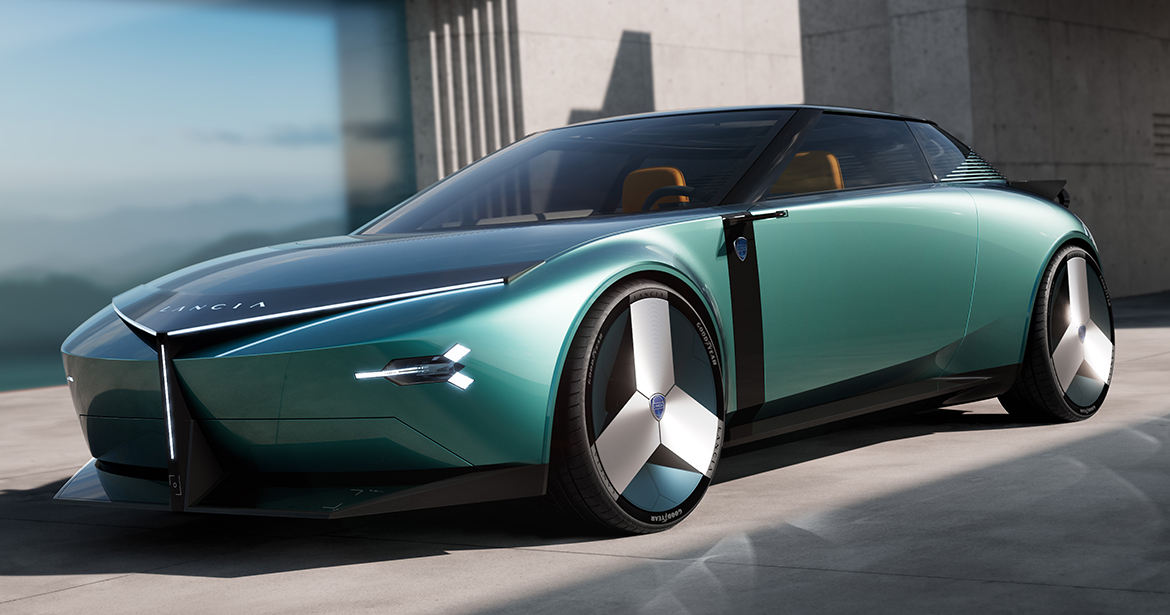
So, let's dive right in!
M.C.C. is the oldest erthian car manufacturer. In fact, it was created as part of "the great industrial leap", a project initiated when the "free nation of Erthia" was founded.
The idea behind this project was to kickstart a heavy Erthian industry based on research from the recently founded M.T.C. (the national research center), so several companies called "Marcus" in honour of who, at the time, was the president of the nation.
The M.C.C. started by testing the first Erthian cars, with the type 0 and type 1 prototypes, both of which didn't go on sale due to constant issues. But their first car would be created using the experience from the Type 0 and Type 1, resulting in the "Mark-0". The first-ever production-ready Erthian car, which was a bit strange. It featured a sleek design for the time, created mostly to reduce aerodynamic drag and give a streamlined, futuristic look. It was Front Wheel Drive, and it sported a 3-cylinder 1.5L petrol engine producing about 103HP. It was also pretty light and designed with a peculiar suspension set-up created to increase comfort, a design that would be later reused on the Terram buggy.
It was also a 2-seater with a modern interior with the most advanced feature for its time.
The vehicle quickly became a propaganda tool for the Erthian government and a symbol of pride for the Erthian people, so it became a decent success.
The M.C.C. kept updating the car, giving it more features as time went on. Later on, they would develop a brand new platform to use for new vehicles, among them the successor of the Mark-0, the "Miglia", a car specifically built for aerodynamic efficiency (very similar to the Citroen DS). On the same platform, the company would also build some of its most iconic vehicles, such as the "AEPHYA" sedan and "EARTHYA" off-road SUV.
These 3 cars started to cement their legacy as a luxury brand for middle-class people, those who wanted the most out of their money. In fact, as an example, the most luxurious cars of the time period were the Titanian "Ubermerc" and the Minorsian "Cadiac dorato", both starting at +100k, the Aephya by comparison had a slightly inferior level of quality but for 70k.
The same was true for most M.C.C. vehicles, making them a hit in countries that were friendly towards the new nation of Erthia.
Though business didn't always go as planned. As the Great Titenian War was about to start, the country needed to move the small amount of petrol and diesel they had to the war effort, so car companies were pushed to use electric or alternative fuels like LPG or methane. Suddenly, the company couldn't use its engine-building expertise and was forced to roll back to pouring massive amounts of money into new EV tech, while offering its engines with other kinds of fuels, mostly seen as cheap and difficult to manage, which created a bit of a contradiction with their futuristic attitude. They quickly started converting their petrol vehicles into EVs as soon as they could to meet government demands, but it was only after a couple of decades of having a part ICE, part EV lineup that they finally started turning a profit on their electric endeavour. Allowing them to switch to an all-EV lineup.
The company kept developing new EV tech, occasionally using designs and patents developed at the newly formed GIAT. This kind of practice did pay off in the end; they finally developed cars that could drive 1000km on a single charge, and that could fill their batteries at almost 1MW. This meant that on a road trip, they could fill up in less than 20 minutes, just enough time for an owner to sip a coffee, go to the bathroom, or just take a small break from the previous 1000 km of driving. Prices did increase sadly, bringing the cheapest Aephya 700 model (the base spec with only 700km of range and 600kw of charging capacity) to 82k. Thankfully, the company decided to start offering cheaper vehicles to not alienate buyers looking for a prestigious car. Among them, there were the "COUPEA" (a sporty coupè), the "CROSSARYA" (a compact crossover), the "Aetherya" (a sedan/ station wagon the size of a BMW 3 series), and the "Compactia", the last of which is a C-segment hatchback and the smallest car they ever put into production. They didn't dare to go even lower due to the absolute Giat domination in the A and B segments.
As time went on, they slowly changed their design philosophy by introducing the so-called "Nova Genus" family, EVs built on a new bespoke architecture featuring a design language deeply rooted in the company's previous designs.

Due to financial struggles, they would decide to merge with Giat. The merger led to the creation of the Shield group, and the rest is history.

Thank you for reading through my wall of text, guys. I hope it was grammatically correct enough to be fully understood☠️☠️
Next time we will talk about something more juicy. That is the actual fictional world I have created, not only the car companies!
I'll leave you with this poster over here, byeeeeee!

that m.c.c. coupe looks interesting
@alexJgameYTukraine000000 Thanks, man, indeed! I wanted this outing to be as good as it could be so that I could place a sort of "stepping stone" towards future posts of this series.
(P.s. I'm already working on the next one as we speak lol.)
good job brotha! i see you spent a lot of time
all tags were requested in my tag list
-@SeaplaneINC
-@YarisSedan
-@alexJgameYTukraine000000